

Report Overview
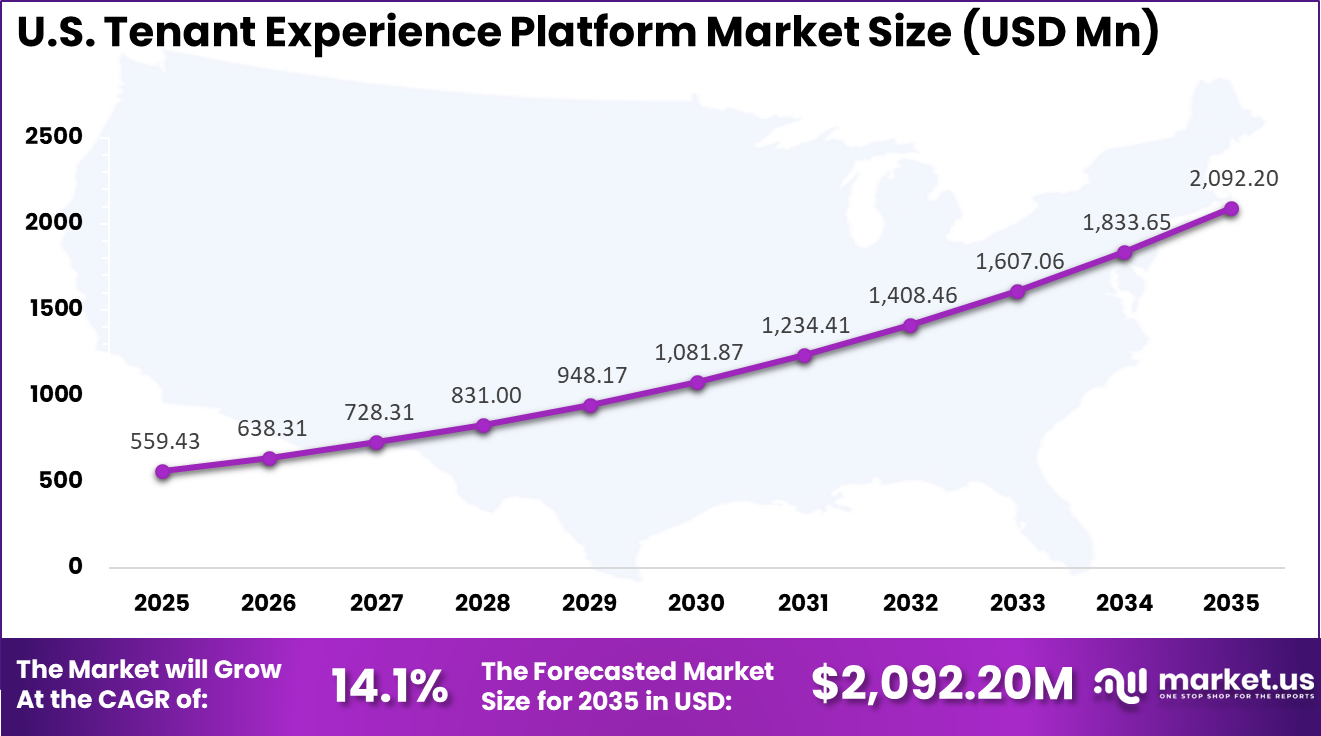
The Global Tenant Experience Platform Market size is expected to be worth around USD 7,936.5 million by 2035, from USD 1,738.2 million in 2025, growing at a CAGR of 16.4% during the forecast period from 2025 to 2035. North America held a dominant market position, capturing more than a35.8% share, holding USD 622.27 million in revenue.
Tenant Experience Platform refers to a digital system designed to improve how tenants interact with a property and its management team. It brings services such as communication, maintenance requests, payments, amenity booking, and updates into one place. This helps create a smoother, more convenient, and more connected experience for tenants.
Rising costs for property upkeep are encouraging owners to adopt smarter management tools, with about 70% of managers reporting less paperwork through automation. Tenant expectations have also shifted toward faster service, and many platforms help cut response times by half. Stronger resident engagement further supports demand, as renters stay 25% longer when they feel connected to their community.
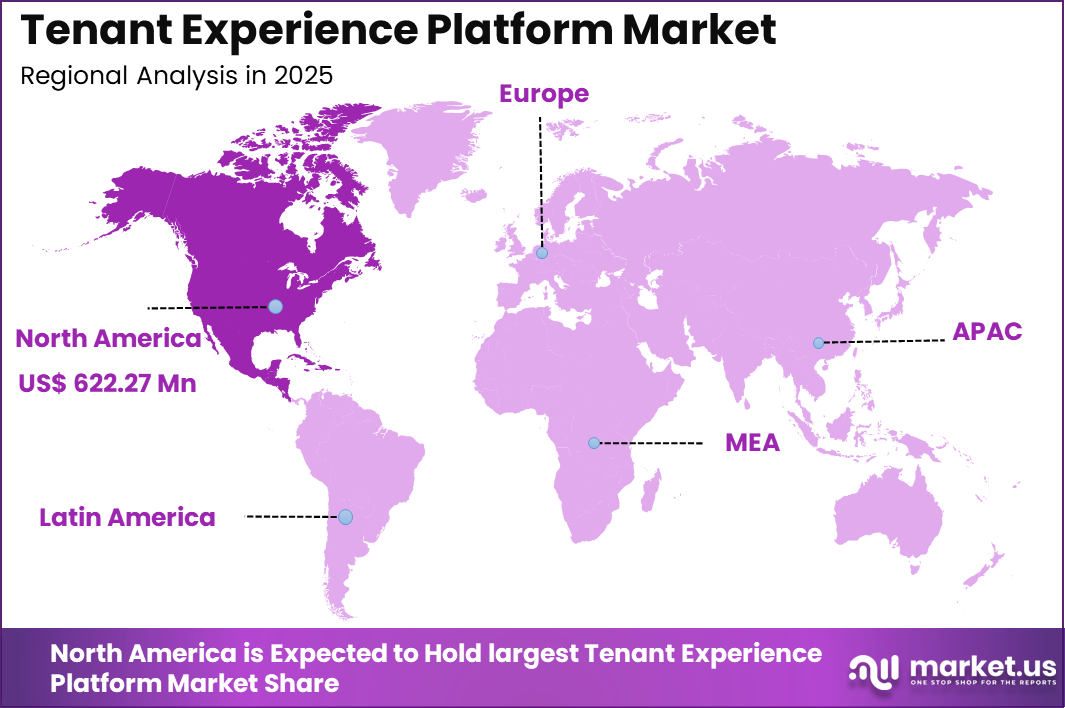
In 2025, North America held a dominant market position in the Global Tenant Experience Platform Market, capturing more than a 35.8% share, holding USD 622.27 million in revenue. This dominance is due to the strong presence of advanced commercial real estate infrastructure, high adoption of property technology, and growing demand for tenant-focused digital services across North America. Property owners in the region are investing more in platforms that improve communication, service access, and building experience. The region also benefits from early technology adoption, strong smart building trends, and a mature property management ecosystem that supports faster platform deployment. For instance, in March 2026, HqO from Boston deepened North American market leadership through a strategic integration with Building Engines, delivering enhanced workplace analytics to 500+ properties. This partnership exemplifies U.S. companies’ ability to combine top-tier tenant engagement with operational excellence. A key emerging trend in the tenant experience platform market is the integration of digital platforms with smart building systems. These platforms are increasingly connected with access control, energy systems, and facility management tools to create a unified digital environment. This allows tenants to interact with building services through a single interface, improving convenience and operational coordination. The shift reflects a broader move toward connected and intelligent real estate ecosystems. Another important trend is the rise of mobile-first tenant engagement. Tenants now expect app-based access to services such as visitor management, maintenance requests, and amenity bookings. These platforms are evolving into daily-use tools that support communication, service delivery, and community engagement. As user expectations increase, platforms are focusing on simplicity, personalization, and real-time interaction to enhance overall tenant experience. Growth is being supported by rising tenant expectations for fast and simple digital experiences. Renters increasingly want the same ease they find in online shopping, especially for rent payments, maintenance requests, and service access. Research shows 70% of users stay longer when services feel responsive and well managed. Cloud-based systems and data analytics are also contributing to market growth by helping property teams predict and address issues before they become major problems. This improves efficiency, lowers costs, and builds stronger tenant trust over time. In addition, 60% of managers cite better retention as a major reason for adopting these platforms. North America Europe Asia Pacific Latin America Middle East & Africa The market is being driven by the rising expectation for faster and more convenient digital services across residential and commercial properties. Tenants now prefer smooth communication, quick service access, and easy mobile interactions for daily needs. This shift is pushing property owners to adopt platforms that make the tenant experience more responsive and organized. Digital service demand is also growing because property teams want to improve service quality without increasing manual work. Tenant experience platforms help streamline requests, updates, bookings, and communication in one place. This creates a more efficient operating model while also making the property feel more modern and tenant friendly. For instance, in January 2026, HqO rolled out fresh tools in early 2026 to make tenant onboarding smoother with digital forms and quick service requests. Tenants now handle everything from their phones, like reporting issues or joining events, which cuts down wait times and boosts daily satisfaction. Property teams love how it keeps folks engaged without extra calls or visits. Data privacy concerns remain a major restraint for the market because these platforms collect and store a wide range of tenant information. Property operators must manage personal details, service records, and usage data with care. Any weakness in data handling can reduce trust and make both tenants and owners hesitant to rely fully on digital systems. The concern becomes greater as more connected tools are added across buildings and communities. When multiple systems share tenant data, the risk of misuse or poor control can increase. This creates pressure on platform providers and property managers to maintain strong protection standards while still delivering a smooth digital experience. For instance, in February 2026, Yardi faced pushback in February when tenants raised flags over shared personal data in their platform features. The company paused a rollout to tighten consent rules and add clearer info on data handling, showing how privacy fears slow new service launches. Renters want control, and this hiccup highlighted the need for trust-building steps first. A strong opportunity for this market comes from the wider growth of smart buildings across urban and mixed use developments. As buildings become more connected, tenant experience platforms can serve as the central point for access, communication, amenities, and service coordination. This makes them more valuable in modern property environments. Smart building growth also creates room for more personalized and efficient tenant services. When platforms connect with building systems, property teams can improve comfort, convenience, and day-to-day management. This helps create better living and working experiences, which can strengthen tenant satisfaction and support long term occupancy. For instance, in July 2025, linking air quality and occupancy data to their app for real-time tenant views. This ties into rising smart buildings, letting managers offer personalized comfort settings that draw in tech-savvy renters. Properties using it see quicker leases as folks chase these modern perks. System integration remains a key challenge because many properties still operate with separate tools for maintenance, access, payments, and communication. Bringing these systems together into one smooth platform is often difficult and time consuming. Differences in software structure and building setup can slow adoption and limit platform performance. This challenge is especially noticeable in older buildings where digital systems were added in stages over time. Property teams may face disruptions, extra training needs, and technical issues during implementation. Without proper integration, the full value of the platform may not be realized, even when demand from tenants continues to grow. For instance, in November 2025, Honest Buildings hit snags in late 2025 trying to link their platform with old HVAC systems in legacy properties. Custom coding ate up weeks, leaving some features spotty and tenants frustrated with failed bookings. It underscores how mismatched tech demands heavy lifts to get everything talking smoothly. In the Tenant Experience Platform market, iOFFICE, HqO, and Equiem are key players focused on enhancing workplace engagement and tenant satisfaction. Their platforms provide mobile apps, communication tools, and service request features that improve daily interactions within commercial properties. Building Engines and Yardi Systems also play a strong role by offering property management and tenant experience integration across large real estate portfolios. Campus Apartments, Honest Buildings, and J Turner Research contribute through specialized services such as resident engagement, construction management support, and tenant feedback analytics. These solutions help property owners better understand tenant needs and improve retention strategies. MeetingPackage, Zego, and OfficeSpace Software further strengthen the market by offering booking systems, payment solutions, and workplace management tools for flexible office environments. Procore Technologies, VTS, and Kastle Systems provide advanced solutions that combine tenant experience with operational efficiency and building intelligence. ButterflyMX and Latch enhance the ecosystem with smart access control and security-focused technologies. Other key players continue to expand the market by introducing integrated platforms that improve communication, automation, and overall tenant satisfaction across residential and commercial properties.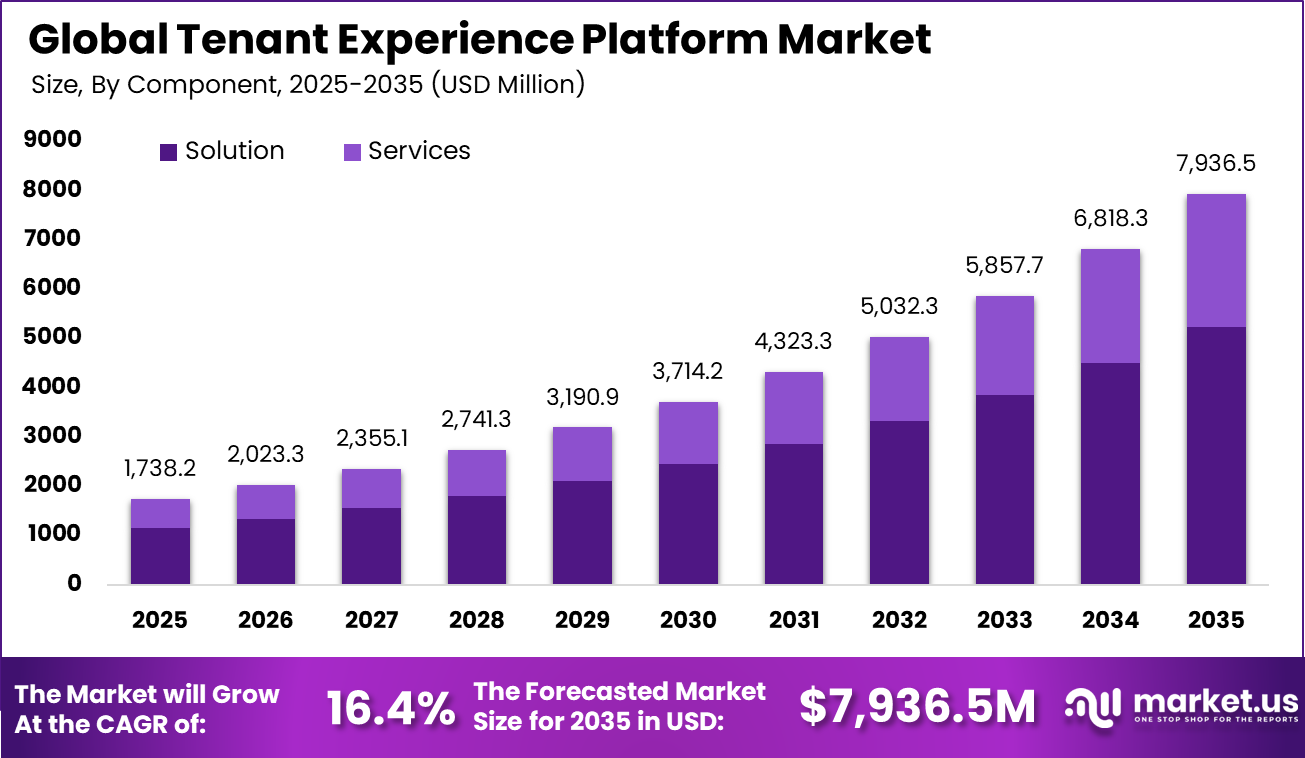
Emerging Trend Analysis
Growth Factors
Key Market Segments
By Component
By Application
By End-User
Key Regions and Countries
Drivers
Digital Service Demand
Restraint
Data Privacy Concerns
Opportunities
Smart Building Growth
Challenges
System Integration
Key Players Analysis
Top Key Players in the Market
Recent Developments