

Report Overview
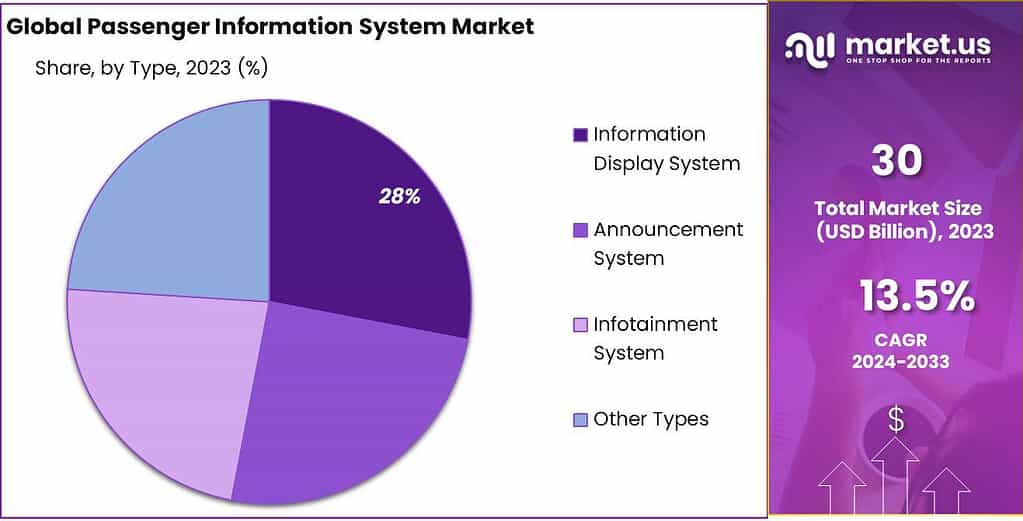
The Global Passenger Information System Market size is expected to reach USD 92.3 billion by 2032, exhibiting an impressive CAGR of 13.5% between 2024 and 2033, from its current value of USD 30 billion in 2023.
A Passenger Information System (PIS) is a technology-driven solution that provides real-time information to passengers in various transportation systems, such as trains, buses, and airports. It is designed to enhance the overall passenger experience by delivering timely and accurate information regarding schedules, delays, service disruptions, and other relevant updates.
Imagine being at a train station and wondering when your train will arrive. The Passenger Information System comes to the rescue by displaying the expected arrival time of the train on digital screens or through audio announcements. It keeps passengers informed about any changes or delays, allowing them to plan their journey accordingly.
Note: Actual Numbers Might Vary In The Final Report
Lastly, the Other Types segment has shown promising potential, encompassing a diverse range of emerging technologies and innovative solutions aimed at further enriching the passenger travel experience. This segment includes novel concepts and evolving technologies that complement existing Passenger Information Systems, contributing to the overall growth and dynamism of the market. As a result, the Other Types segment has drawn increasing interest from industry stakeholders looking to expand their offerings and cater to the evolving demands of modern passengers.
Mode Analysis
In 2023, the Roadway segment solidified its leading position in the Passenger Information System market, securing more than a 39.3% share. This segment caters to the dynamic information needs of passengers utilizing road-based transportation services, such as buses and public roadways. With a focus on providing real-time updates on bus schedules, routes, and traffic conditions, the Roadway segment has become instrumental in enhancing the overall travel experience for commuters and urban travelers.
Furthermore, the Railway segment has witnessed substantial growth, driven by its critical role in facilitating efficient and reliable travel information for passengers utilizing train and railway services. These systems ensure the timely dissemination of train schedules, platform information, and any pertinent updates, contributing significantly to the seamless operation of railway networks and the overall satisfaction of railway passengers. With their emphasis on punctuality and accurate information delivery, the Railway segment has garnered considerable attention from both transport authorities and railway operators seeking to optimize the passenger journey experience.
Moreover, the Airway & Waterway segment has gained momentum, catering to the unique information requirements of passengers utilizing air and water transportation services. These systems offer essential updates on flight schedules, boarding information, and navigational details for waterway travel, ensuring a smooth and informed travel experience for passengers. With their emphasis on safety and efficiency, the Airway & Waterway segment has become a vital component in maintaining the reliability and satisfaction of air and waterway travelers.
As the transportation landscape continues to evolve, the Passenger Information System market across various modes remains adaptive and responsive to the specific needs of different passenger segments, contributing to the development of a comprehensive and integrated travel ecosystem.
Key Market Segments
By Component
- Solution
- Services
By Type
- Information Display System
- Announcement System
- Infotainment System
- Other Types
By Mode
- Airway & Waterway
- Railway
Drivers
- As passenger demand for hassle-free and smooth travel increases, so too do passenger information systems markets – with travelers needing timely updates about their travel arrangements.
- Information technology’s rapid advancement has facilitated the creation of advanced data processing capabilities that enable efficient management and dissemination of real-time travel information to the public.
- Modern transportation networks, which include multiple travel modes and intricate routes, have increased in complexity over time, necessitating reliable Passenger Information Systems to facilitate smooth travel operations for commuters.
Restraints
- Concerns pertaining to data security and privacy pose significant challenges in the widespread adoption of Passenger Information Systems, demanding robust safeguards to protect sensitive passenger information from potential breaches.
- The integration of diverse components and technologies within the Passenger Information System framework often presents complexities, requiring meticulous planning and coordination to ensure seamless functionality across various transportation modes.
- The presence of infrastructural limitations and constraints can hinder the seamless implementation of advanced Passenger Information Systems, necessitating careful consideration of budgetary allocations and technical constraints.
Opportunities
- The market presents extensive opportunities for collaborative efforts and innovative solutions that cater to the evolving needs of modern transportation networks, fostering enhanced passenger experiences and streamlined travel operations.
- The growing emphasis on sustainable and eco-friendly technologies within the transportation sector opens new avenues for the integration of green technologies and energy-efficient solutions within the Passenger Information System framework.
- The rising demand for personalized customer services and tailored travel experiences offers a significant opportunity for market players to develop customized solutions that prioritize passenger convenience and satisfaction, thereby fostering long-term customer loyalty and engagement.
Challenges
- Persistent concerns regarding data security and privacy in the management of passenger information demand stringent adherence to robust security protocols and compliance measures to ensure the protection of sensitive data from potential cyber threats.
- Technical challenges associated with the seamless integration and synchronization of diverse components within the Passenger Information System framework necessitate careful planning and technical expertise to ensure optimal functionality and performance across various transportation modes.
- Infrastructural constraints and budgetary limitations can pose challenges to the scalability and implementation of advanced Passenger Information System solutions, requiring strategic planning and resource optimization to overcome operational and financial constraints.
Geopolitics and Recession Impact Analysis
- Geopolitics Impact Analysis: The geopolitical situation can affect the PIS market by influencing international trade and collaborations. Tensions between countries may lead to disruptions in the supply chain, impacting the availability of components necessary for PIS. On the other hand, peaceful collaborations and agreements can foster innovation and encourage the development of advanced PIS technologies through international partnerships.
- Recession Impact Analysis: During economic downturns, the PIS market may experience reduced investments and budget constraints from transportation authorities and governments. This could slow down the implementation of PIS projects and affect the overall market growth. However, the demand for cost-effective and efficient transportation solutions during challenging economic times may also drive the adoption of PIS as a means to improve operational efficiency and cost savings.
Latest Trends
The latest trends in the PIS market include the integration of AI and IoT technologies for providing more accurate and personalized information to passengers. Additionally, the focus is on developing user-friendly mobile applications and interactive displays to enhance the overall passenger experience and engagement. Furthermore, the emphasis on sustainability and eco-friendly transportation solutions is driving the development of energy-efficient PIS technologies.
Growth Opportunities
There are significant growth opportunities in the PIS market, especially with the increasing emphasis on smart city initiatives and the modernization of public transportation systems. The growing urban population and the need for efficient and reliable transportation services provide ample prospects for the implementation of advanced PIS solutions. Additionally, the rising demand for real-time information and seamless passenger experiences presents an opportunity for companies to innovate and develop user-friendly and integrated PIS platforms.
Regional Analysis
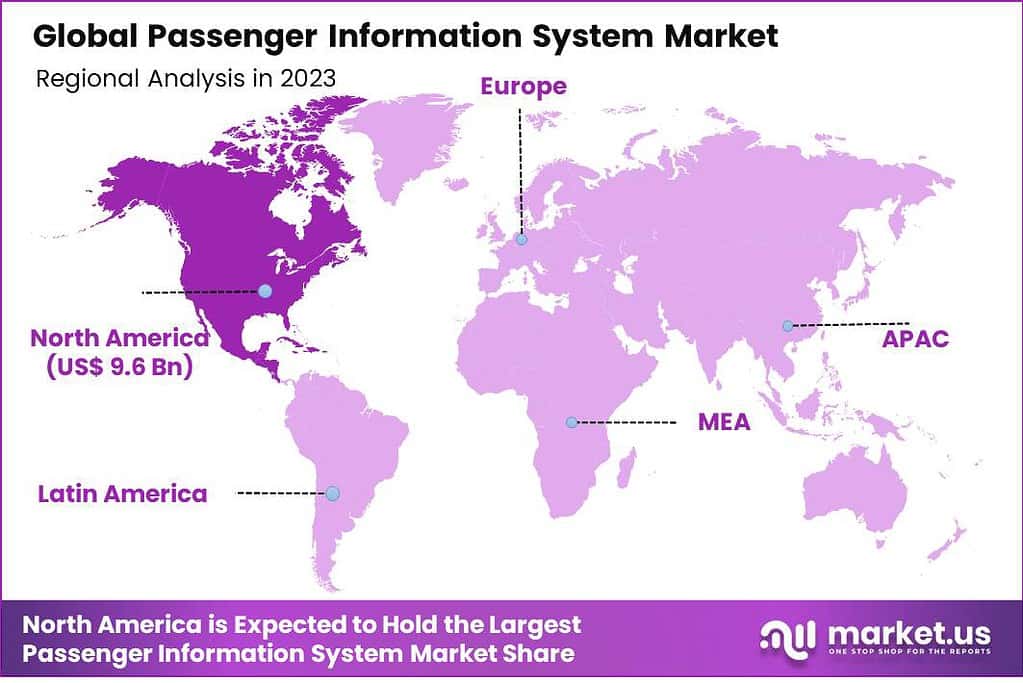
In 2023, North America held the largest share of the Passenger Information System (PIS) market at 32%. The demand for passenger information systems in North America was valued at US$ 9.6 billion in 2023 and is expected to witness substantial growth in the coming years. The region’s robust market presence can be attributed to the increasing integration of advanced technologies in the transportation sector, coupled with the rising focus on enhancing passenger experience and safety.
The Asia-Pacific (APAC) region, which includes countries like China and India, also had a big demand for PIS in 2023. This might be because these countries are growing fast, building more things, and using more technology in their transportation.
Latin America, which includes places like Brazil and Mexico, had a good demand for PIS too. This could be because more people are moving to cities and there is more money to spend on better transportation systems. The Middle East & Africa also showed some interest in PIS in 2023. This might be because they are trying to make their transportation systems better and safer.
Note: Actual Numbers Might Vary In The Final Report
Key Regions and Countries Covered in this Report
- North America
- The US
- Canada
- Europe
- Germany
- France
- The UK
- Spain
- Italy
- Russia
- Netherland
- Rest of Europe
- APAC
- China
- Japan
- South Korea
- India
- Australia
- New Zealand
- Singapore
- Thailand
- Vietnam
- Rest of APAC
- Latin America
- Brazil
- Mexico
- Rest of Latin America
- Middle East & Africa
- South Africa
- Saudi Arabia
- UAE
- Rest of MEA
Key Players Analysis
Industry players will be able to access emerging markets quickly and improve their technological capabilities by forming partnerships, strategic mergers, and acquisitions. The market will benefit from product differentiation and the enhancement of solutions. The Passenger Information System market’s growth will be supported by the increasing number of transportation website aggregators as well as the proliferation of transport apps like Wanderu Inc, Sontra Solucoes Em Transporte Ltda, and Zendrive (Zendrive Inc.).
Маrkеt Kеу Рlауеrѕ
These are some prominent Passenger Information System Market companies:
- Advantech Co. Ltd.
- Alstom
- Cisco Systems Inc.
- Cubic Transportation Systems
- Hitachi Ltd.
- Huawei Technologies Co. Ltd.
- Siemens AG
- TE Connectivity
- Thales Group
- Wabtec Corporation
- Other Key Players
Recent Development
- In June 2022, Wabtec bought Collins Aerospace’s ARINC rail business. This purchase will help improve train services in the US and Canada for different types of trains like those for cities, towns, and between cities.
- In April 2022, Alstom and ENGIE decided to work together to find a way to make freight trains more environmentally friendly. They want to replace diesel trains with ones that use hydrogen, a cleaner energy source, for their operations.
- In April 2022, Hitachi Rail bought a British company called Perpetuum that makes technology for trains. Perpetuum is good at using digital solutions to make trains work better and not break down. With this deal, Hitachi plans to use Perpetuum’s technology to make their trains work even better all over the world.