

Report Overview
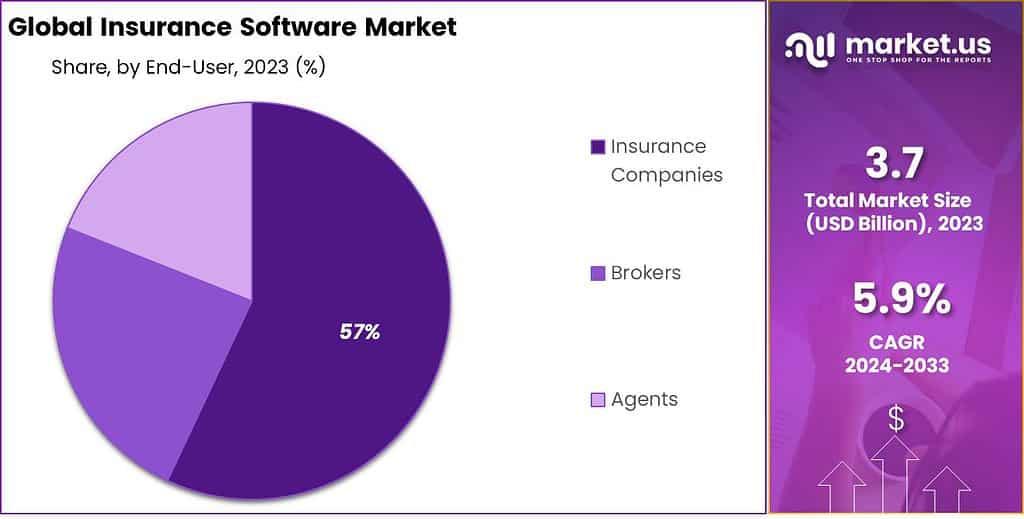
The Global Insurance Software Market size is expected to be worth around USD 6.6 Billion by 2033, from USD 3.7 Billion in 2023, growing at a CAGR of 5.9% during the forecast period from 2024 to 2033.
Insurance software refers to computer programs and applications specifically designed to assist insurance companies with various tasks and processes. These software solutions are created to streamline operations, automate manual tasks, improve efficiency, and enhance overall performance within the insurance industry.
The insurance software market is the sector that encompasses the development, distribution, and utilization of these software solutions. It includes both established software providers and emerging startups that cater to the needs of insurance companies, brokers, agents, and other industry stakeholders.
Insurance software offers a range of functionalities, such as policy management, claims processing, underwriting, customer relationship management (CRM), billing and invoicing, document management, and analytics. These solutions help insurance companies manage their policies, track claims, interact with customers, handle financial transactions, and generate reports for analysis.
Moreover, the digital transformation in the insurance sector, accelerated by the COVID-19 pandemic, has spurred insurance companies to invest heavily in technology to remain competitive. This includes the adoption of cloud-based solutions, which offer scalability and flexibility, and the implementation of blockchain for secure and transparent transactions.
Key Market Segments
Deployment Model
- On-Premises
- Cloud-Based
Type
- Life insurance
- Accident and health insurance
- Property and casualty insurance
- Other Types
End-User
- Insurance Companies
- Brokers
- Agents
Key Driver
Increased Digitalization and Automation in Insurance Processes
The global insurance software market is significantly driven by the increased digitalization and automation in insurance processes. This trend is a response to the evolving demands of a technologically advanced customer base and the need for operational efficiency in a competitive market. Digitalization in the insurance sector involves the incorporation of various technologies like artificial intelligence, machine learning, and blockchain to automate and optimize processes such as underwriting, claims processing, customer relationship management, and risk assessment.
Automation enables insurance companies to process vast amounts of data more efficiently, reduce the likelihood of human error, and offer more personalized insurance products. This shift not only enhances customer satisfaction by providing faster and more accurate services but also improves the operational agility of insurance providers. As a result, companies that invest in advanced software solutions are better positioned to capitalize on market opportunities, leading to a growth in demand for insurance software.
Key Restraint
Data Security and Privacy Concerns
Data security and privacy concerns stand as a major restraint in the growth of the global insurance software market. Insurance companies deal with a substantial amount of sensitive personal and financial information, making them prime targets for cyber-attacks and data breaches. The implications of such incidents are substantial, including financial losses, damage to reputation, and legal consequences.
Moreover, the insurance industry is subject to stringent data protection regulations, which vary by region and are constantly evolving. Ensuring compliance while safeguarding against sophisticated cyber threats requires substantial investment in secure IT infrastructure and continuous monitoring and updating of security protocols. This challenge often hinders the adoption of new digital solutions, particularly among smaller insurers with limited resources.
Key Opportunity
Growing Demand for Cloud-Based Solutions
The growing demand for cloud-based solutions presents a significant opportunity in the global insurance software market. Cloud computing offers a scalable, flexible, and cost-effective approach to managing IT resources, which is particularly beneficial for insurance companies looking to modernize their operations without heavy upfront investments. Cloud-based insurance software can provide enhanced data storage capabilities, improved data analytics, and easier integration with other digital tools. It also allows for remote access to information, which is vital in today’s increasingly mobile and globalized business environment.
Furthermore, cloud platforms facilitate easier and more frequent software updates, ensuring that insurance providers can quickly adapt to changing market needs and regulatory requirements. This trend towards cloud-based solutions is expected to accelerate as more companies recognize the operational and strategic benefits of cloud computing in the insurance sector.
Key Challenge
Regulatory Compliance
Regulatory compliance remains a key challenge in the global insurance software market. The insurance industry is highly regulated, and these regulations can vary significantly across different countries and regions. Compliance involves adhering to a wide range of rules regarding financial solvency, consumer protection, data privacy, and anti-fraud measures.
As insurance companies expand their digital footprint, they must ensure that their software solutions are not only compliant with current regulations but are also adaptable to future legislative changes. This necessitates a continuous investment in updating software systems and training staff, which can be particularly burdensome for smaller insurers. Additionally, navigating the complex landscape of international regulations can be challenging for insurance companies operating in multiple jurisdictions, making regulatory compliance a continual and evolving challenge in this market.
Regional Analysis
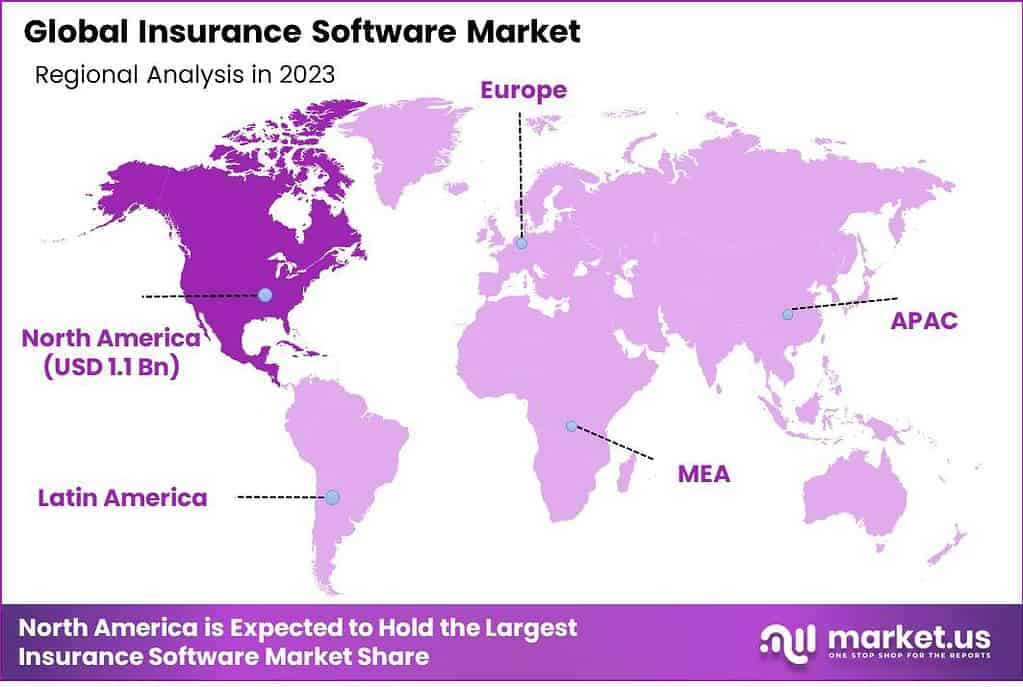
In 2023, North America held a dominant market position in the insurance software market, capturing more than a 31% share. This prominence is largely due to the region’s advanced technological infrastructure, the presence of major insurance and tech companies, and a strong emphasis on digital transformation within the insurance sector. The demand for Insurance Software in North America reached US$ 1.1 billion in 2023, and there are optimistic projections for significant growth in the foreseeable future.
The U.S., in particular, has been a driving force, with its insurance companies rapidly adopting cloud-based solutions, big data analytics, and AI-driven software to enhance customer experience and operational efficiency. The regulatory environment in North America, which encourages innovation while ensuring data security and privacy, has also played a crucial role in fostering market growth.
Europe follows closely, characterized by a strong focus on regulatory compliance, particularly with GDPR, and a growing emphasis on insurtech innovations. European insurance providers are leveraging software solutions to streamline operations and offer personalized insurance products, addressing the diverse needs of a sophisticated customer base. Countries like the UK, Germany, and France are leading in the adoption of insurance software, driven by a combination of regulatory mandates and the need for operational efficiency.
Key Regions and Countries Covered in this Report
- North America
- The US
- Canada
- Europe
- Germany
- France
- The UK
- Spain
- Italy
- Russia
- Netherland
- Rest of Europe
- APAC
- China
- Japan
- South Korea
- India
- Australia
- New Zealand
- Singapore
- Thailand
- Vietnam
- Rest of APAC
- Latin America
- Brazil
- Mexico
- Rest of Latin America
- Middle East & Africa
- South Africa
- Saudi Arabia
- UAE
- Rest of MEA
Key Players Analysis
In the insurance software market, several key players stand out due to their innovative solutions and strategic market presence. Companies like SAP SE, Oracle Corporation, and Microsoft have been instrumental in driving advancements with their comprehensive and scalable software solutions. These industry giants leverage their extensive technological expertise to offer a range of products from customer relationship management to risk and compliance management tools.
Additionally, InsurTech companies like Guidewire and Applied Systems are making significant inroads, focusing on specialized insurance software that addresses specific industry needs such as claims processing and policy administration. These players, through strategic partnerships, acquisitions, and continuous R&D, are not only enhancing their product offerings but also shaping the future dynamics of the insurance software market. Their ability to innovate and adapt to changing market demands positions them as influential entities in this sector.
Top Key Players
- Oracle Corporation
- SAP SE
- IBM Corporation
- Microsoft Corporation
- Guidewide
- Duck Creek Technologies
- SSP Limited
- Sapiens International Corporation
- Accenture
- Insly
- Prima Solutions
- EIS Group
- Other Key Players
Recent Developments
- In 2023, Oracle: Oracle Cloud for Insurance: Enhanced their cloud-based insurance platform with new features like AI-powered claims processing, automated underwriting, and omnichannel customer experience solutions.
- In 2023, SAP: SAP Cloud for Insurance: Launched their new cloud-based insurance platform, offering core insurance functionalities and pre-built solutions for various insurance lines.
- In 2023, IBM: IBM Cloud for Financial Services: Enhanced their cloud platform with insurance-specific solutions for claims processing, fraud detection, and regulatory compliance.
- In 2023, Microsoft: Microsoft Dynamics 365 for Insurance: Expanded their Dynamics 365 platform with new insurance-specific modules for policy management, claims processing, and customer service.