

Report Overview
The Global 360 Degree Feedback Software Market size is expected to be worth around USD 3.5 Billion By 2033, from USD 1.2 Billion in 2023, growing at a CAGR of 11.40% during the forecast period from 2024 to 2033. In 2023, North America captured more than 35.1% of the 360 Degree Feedback Software market, generating approximately USD 0.4 billion in revenue, thereby holding a dominant position.
360 Degree Feedback Software is a tool used by organizations to provide employees with feedback from multiple sources. This typically includes their peers, direct reports, managers, and sometimes even clients. The purpose of this software is to offer a comprehensive view of an employee’s performance, strengths, and areas for improvement.
The market for 360 Degree Feedback Software has been growing as companies increasingly recognize the importance of holistic performance reviews. This market comprises various software solutions designed to streamline the feedback collection and analysis process, making it easier for organizations to implement and manage. With the rise of remote work and global teams, demand for these tools has surged, as companies seek effective ways to maintain employee development and performance assessments across distributed teams.
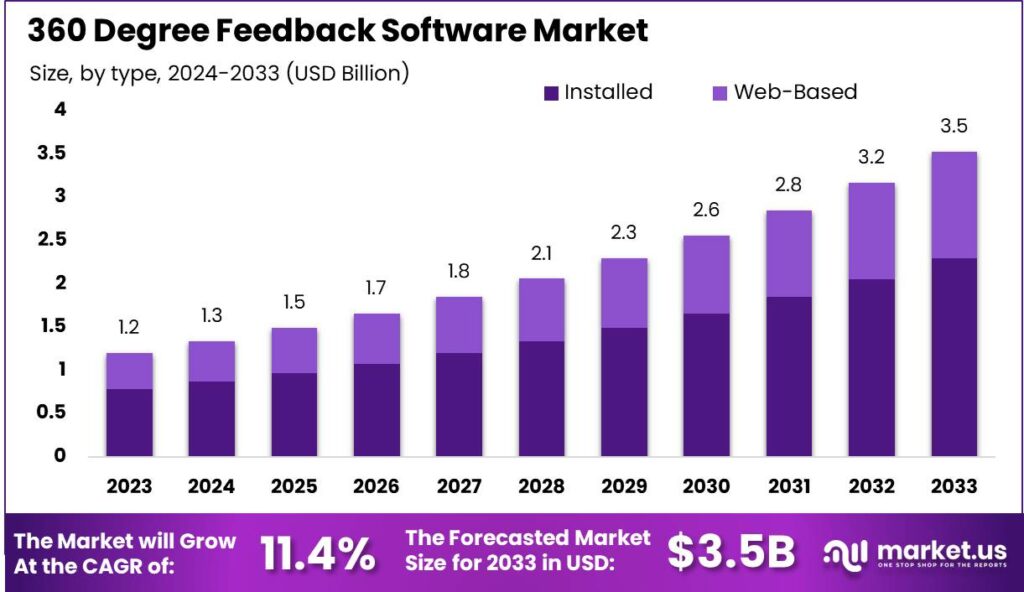
Several factors are contributing to the expansion of the 360 Degree Feedback Software market. Small and medium-sized enterprises find this software affordable and easy to access over the internet, which simplifies the feedback process. Cloud-based solutions offer advantages like reduced initial costs and easy scalability, making them increasingly popular.
These systems help organizations manage workforce development efficiently by providing insights into employee performance, which is crucial for HR management in larger organizations. The market is also benefiting from increasing technological advancements. Innovations such as machine learning and AI integration are enhancing the software’s ability to analyze feedback more effectively, thereby improving the precision and usefulness of the insights gained.
Based on insights from the 9cv9 Career platform, 360-degree feedback has proven to be a game-changer for organizations aiming to boost performance and employee engagement. Companies that implement this feedback system see an average performance improvement of 14.9%, highlighting its effectiveness in driving results.
Employee engagement also benefits significantly, with organizations reporting up to a 25% increase when 360-degree feedback is part of their strategy. This isn’t just a passing trend – 85% of Fortune 500 companies have integrated 360-degree feedback into their leadership development programs, showing its widespread adoption among top-performing organizations.
Continuous feedback plays a crucial role in employee retention as well. A remarkable 78% of professionals are more likely to stay with a company that invests in their personal growth through such systems. For businesses, this translates to lower turnover rates, as employees who receive 360-degree feedback demonstrate 15.9% better retention rates compared to those who don’t.
Performance improvements extend beyond employees. Managers who engage in 360-degree feedback processes see measurable benefits, including an 8.9% boost in profitability and a 12.5% increase in productivity. The tool also supports smarter decision-making, with 99% of companies using these surveys affirming their effectiveness.
Overall, organizations employing 360-degree feedback report a 10–20% increase in employee performance, and 67% of employees feel more engaged when they receive regular feedback. The data makes one thing clear: investing in 360-degree feedback systems is not just about development; it’s a strategic move for long-term organizational success
Technological advancements are reshaping the 360 Degree Feedback Software market. Modern feedback tools incorporate sophisticated algorithms to analyze feedback more effectively, identify trends, and predict future performance potential. The advent of AI and machine learning has introduced capabilities like sentiment analysis and automated recommendation systems, which further enhance the utility of feedback.
Key Takeaways
- The Global 360 Degree Feedback Software Market is projected to reach USD 3.5 Billion by 2033, up from USD 1.2 Billion in 2023, growing at a CAGR of 11.40% during the forecast period from 2024 to 2033.
- In 2023, the Installed segment of the 360 Degree Feedback Software market dominated, holding more than a 64.9% share.
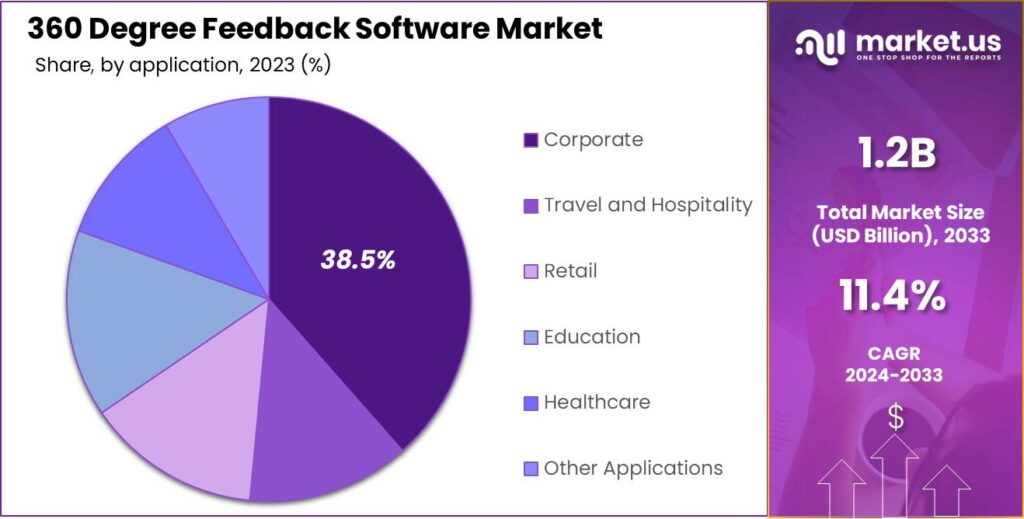
- The Corporate segment also held a dominant position in the same year, capturing more than 38.5% of the market share.
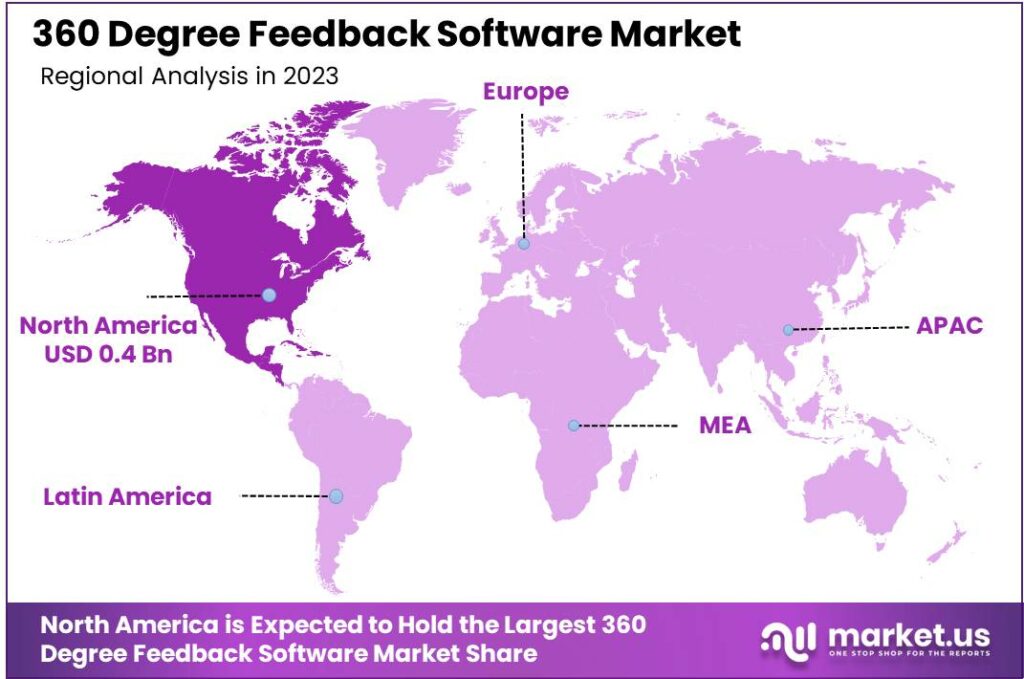
- In 2023, North America led the market, holding the largest share of over 35.1%, which equated to approximately USD 0.4 billion in revenue.
Type Analysis
In 2023, the Installed segment of the 360 Degree Feedback Software market held a dominant position, capturing more than a 64.9% share. This segment comprises software solutions that are installed directly onto an organization’s own servers or computers.
The preference for installed software can be primarily attributed to its perceived security advantages. Organizations, especially those handling sensitive data, prefer installed solutions because they allow for greater control over data storage and security measures. This control is crucial in complying with stringent data protection regulations and in maintaining confidentiality in feedback processes.
Another reason for the prominence of the installed segment is its reliability and performance stability. Installed software does not rely heavily on internet connectivity, which can be a critical factor for organizations in regions with unreliable internet service. This independence from network issues ensures that performance evaluations and feedback collection can proceed without interruptions.
Moreover, organizations that have significant investments in their existing IT infrastructure find installed software to be a more compatible option. This compatibility allows for better integration with existing systems, which can streamline processes and reduce the complexities involved in managing separate systems.
Application Analysis
In 2023, the Corporate segment held a dominant market position within the 360-degree feedback software market, capturing more than a 38.5% share. This leading stance is primarily attributed to the heightened emphasis on strategic HR practices within corporate environments.
As corporations increasingly focus on enhancing performance management systems and leadership development, the adoption of 360-degree feedback software has become integral. These tools are crucial for identifying and developing leadership potential within employees, making them indispensable in the corporate world where competition for top talent is fierce and the cost of turnover is high.
The Travel and Hospitality sector integrates feedback software effectively, albeit to a lesser extent than the corporate sector. In these industries, the software is utilized to enhance customer service by improving team dynamics and employee performance.
In Retail, 360-degree feedback systems are used to support a dynamic work environment and manage a diverse workforce. These tools help retail managers gauge and enhance customer service skills and team effectiveness, which are critical in driving sales and customer loyalty.
Key Market Segments
By Type
- Web-Based
- Installed
By Application
- Corporate
- Travel and Hospitality
- Retail
- Education
- Healthcare
- Other Applications
Driver
Enhanced Employee Development
360-degree feedback software is pivotal in modern HR practices due to its substantial impact on employee development. This tool gathers feedback from a range of sources supervisors, peers, subordinates, and occasionally clients. This provides a holistic view of an employee’s performance, helping individuals recognize their strengths and identify areas needing improvement.
Implementing this system can transform organizational culture, fostering an environment of continuous learning and improvement. Employees are encouraged to self-reflect and actively enhance their skills, leading to increased job satisfaction, higher engagement, and better retention rates. Consequently, 360-degree feedback software not only supports personal growth but also aligns individual performance with organizational goals.
Restraint
Potential for Bias and Inaccurate Feedback
Despite its benefits, 360-degree feedback systems face challenges, particularly the risk of bias and inaccurate feedback. The diversity of feedback sources can introduce personal biases, where peers may provide overly favorable comments or negative feedback driven by personal disagreements.
These biases can distort the actual performance picture, leading to inappropriate development actions or unfair assessments. Organizations need to combat this by setting clear feedback guidelines and training participants in constructive feedback delivery. Measures like ensuring anonymity can also promote honesty, although the risk of inaccuracies remains a significant limitation.
Opportunity
Integration with Continuous Performance Management
The shift towards continuous performance management (CPM) presents a key opportunity for 360-degree feedback software to integrate with real-time feedback systems, moving beyond traditional annual reviews.
Embedding 360-degree feedback into CPM enables regular, multi-source evaluations, helping organizations identify development needs in real-time. This allows employees to address areas for improvement promptly, rather than waiting for annual reviews.
It also enables personalized development plans tailored to an employee’s role. Using technology to combine these systems improves data accuracy, streamlines feedback, and provides actionable insights for individual and organizational growth.
Challenge
Administrative Complexity and Resource Intensity
Implementing a 360-degree feedback system involves significant administrative challenges and resource demands. Organizing feedback from various sources requires careful planning and robust systems to ensure confidentiality and manage data.
Additionally, meaningful data analysis requires both time and expertise. Organizations must invest in proper training and software to manage these complexities effectively. Without sufficient resources and commitment, the feedback system risks becoming a burden, leading to participant disengagement and diminishing the potential benefits of the process.
Emerging Trends
360-degree feedback software is evolving to meet the changing needs of organizations and employees. One notable trend is the integration of these tools with broader performance management systems, creating a seamless process for employee development and performance reviews.
Another significant development is the shift from annual reviews to continuous feedback cycles. This approach allows for real-time insights and more agile development processes, enabling employees to receive timely feedback that can be immediately applied to their work.
Additionally, there is an increasing emphasis on data security and privacy measures within 360-degree feedback systems. With growing concerns about data privacy, organizations are prioritizing robust security measures to protect sensitive feedback data, ensuring that employee information remains confidential and secure.
Business Benefits
- Comprehensive Performance Insights: By gathering feedback from peers, subordinates, and supervisors, businesses gain a well-rounded view of an employee’s performance. This holistic approach helps identify strengths and areas for improvement, leading to more effective development plans.
- Enhanced Employee Development: Access to diverse feedback encourages employees to understand different perspectives and fosters personal growth. This process promotes self-awareness and motivates individuals to enhance their skills and competencies.
- Improved Communication and Collaboration: Regular feedback from multiple sources opens up communication channels within teams. This transparency builds trust, encourages collaboration, and strengthens team dynamics.
- Identification of Training Needs: The feedback collected highlights specific areas where employees may require additional training or support. This targeted approach ensures that development resources are allocated effectively, enhancing overall productivity.
- Promotion of a Feedback Culture: Implementing 360-degree feedback systems fosters a culture of continuous improvement. Employees become more receptive to giving and receiving feedback, leading to ongoing development and adaptability within the organization.
Regional Analysis
In 2023, North America held a dominant market position in the 360 Degree Feedback Software market, capturing more than a 35.1% share, which equated to USD 0.4 billion in revenue.
North America, particularly the United States, has a robust and mature corporate sector that prioritizes employee development and performance management. With a growing emphasis on talent management and organizational effectiveness, businesses in this region increasingly adopt 360-degree feedback tools to enhance their performance appraisal systems, leading to higher demand for such software.
Furthermore, North America is home to several leading software vendors and technology companies that provide advanced 360-degree feedback solutions. These vendors are integrating cutting-edge technologies such as artificial intelligence (AI) and machine learning into their feedback platforms to improve the accuracy and usability of feedback data.
The North American market also benefits from a well-established infrastructure for HR and talent management, supported by a high level of digital transformation across industries. As organizations shift towards continuous performance management systems, integrating 360-degree feedback with real-time performance tracking tools has become more common.
Additionally, North America’s emphasis on regulatory compliance and data security drives the preference for 360-degree feedback software. With strict data protection laws like GDPR and CCPA, organizations favor secure, on-premise or hybrid systems, giving the installed segment a strong presence in the region.
Key Regions and Countries
- North America
- US
- Canada
- Europe
- Germany
- France
- The UK
- Spain
- Italy
- Rest of Europe
- Asia Pacific
- China
- Japan
- South Korea
- India
- Australia
- Singapore
- Rest of Asia Pacific
- Latin America
- Brazil
- Mexico
- Rest of Latin America
- Middle East & Africa
- South Africa
- Saudi Arabia
- UAE
- Rest of MEA
Key Player Analysis
The 360 Degree Feedback Software market features a competitive landscape, with several prominent players driving innovation and growth.
Qualtrics is a major player in the 360-degree feedback software market, renowned for its powerful and flexible survey tools. The company’s platform offers comprehensive feedback solutions that extend beyond traditional performance reviews, allowing organizations to gather feedback from multiple sources, including employees, managers, and peers.
Trakstar is another key player in the 360-degree feedback market, providing an intuitive and customizable feedback platform designed to enhance employee performance reviews. Trakstar’s solution focuses on simplifying the feedback process by offering a user-friendly interface and automated workflows that streamline the performance management cycle.
BambooHR LLC stands out for its holistic approach to HR management, providing an all-in-one solution that includes 360-degree feedback software as part of its broader HR suite. The company’s feedback tool is designed to help organizations assess employee performance from various perspectives, offering a comprehensive view of strengths and areas for development.
Top Key Players in the Market
- Qualtrics
- Trakstar
- Bamboo HR LLC
- SurveySparrow Inc.
- 15Five
- Culture Amp
- Synergita
- Keka
- Zoho Corporation
- Leapsome
- Other Key Players
Top Opportunities Awaiting for Players
- Integration with Employee Development Platforms: There is a growing demand for integrated HR systems that combine recruitment, training, and performance management. Companies seek platforms that merge feedback with development tools, making integration crucial for success. Aligning 360-degree feedback with talent development systems meets the need for holistic employee development.
- Emphasis on Data Analytics and Actionable Insights: The need for actionable insights derived from feedback is paramount in the modern business environment. Companies are looking for insights that go beyond raw feedback. The ability to offer tailored reports and predictive analytics based on feedback data can help businesses make strategic decisions, ultimately improving organizational performance and employee satisfaction.
- Customization to Meet Industry-Specific Needs: Different industries have distinct requirements when it comes to performance management and feedback systems. Tailoring 360-degree feedback software to meet the specific needs of sectors such as healthcare, education, and technology presents a clear growth opportunity. Industry-specific features such as role-based feedback or compliance with industry regulations can set providers apart from competitors.
- Mobile Accessibility and User-Friendly Interfaces: Mobile-first solutions are becoming increasingly important as organizations adapt to flexible work environments. A seamless, easy-to-use mobile experience can increase employee participation and improve the overall effectiveness of feedback systems, resulting in higher adoption rates.
- Global Expansion in Emerging Markets: The rapid growth of emerging economies offers a significant growth opportunity. By adapting 360-degree feedback software to local languages, cultures, and business practices, providers can capture a share of the expanding market in these regions.
Recent Developments
- In July 2023, Qualtrics, the pioneer in experience management (XM), has unveiled XM/os2, the next-gen platform powered by AI. This upgrade enables organizations to act with empathy, crafting more relevant and meaningful experiences.
- In February 2024, SurveySparrow, the creator of the world’s first chat survey software, unveils a major update to its employee success platform, ThriveSparrow. The new 360-degree performance review feature ushers in a fresh era of performance management.