

Market Projections
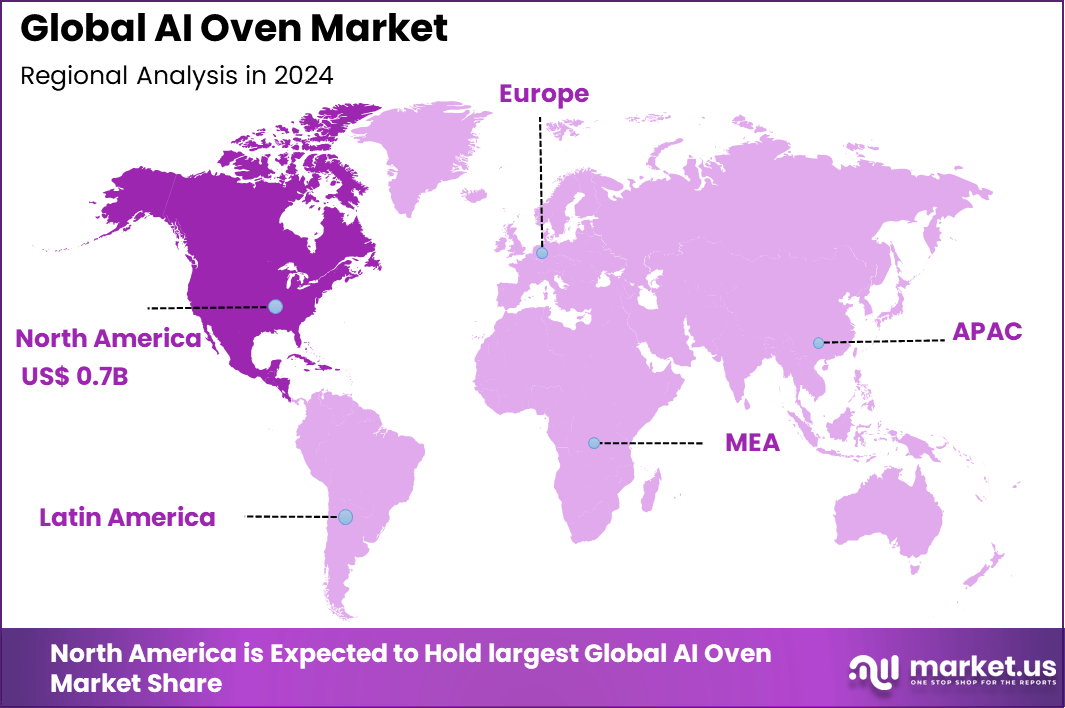
The Global AI Oven Market generated USD 2.1 billion in 2024 and is predicted to register growth from USD 2.5 billion in 2025 to about USD 13.8 billion by 2034, recording a CAGR of 20.7% throughout the forecast span. In 2024, North America held a dominan market position, capturing more than a 36.2% share, holding USD 0.7 Billion revenue.
The AI oven market is experiencing sharp growth, with advanced technology and modern consumer needs combining to transform the kitchen appliance sector. AI ovens are increasingly found in both homes and commercial food service environments, offering machine learning–driven automation and smarter cooking solutions that address the demand for convenience, energy efficiency, and consistent meal quality.
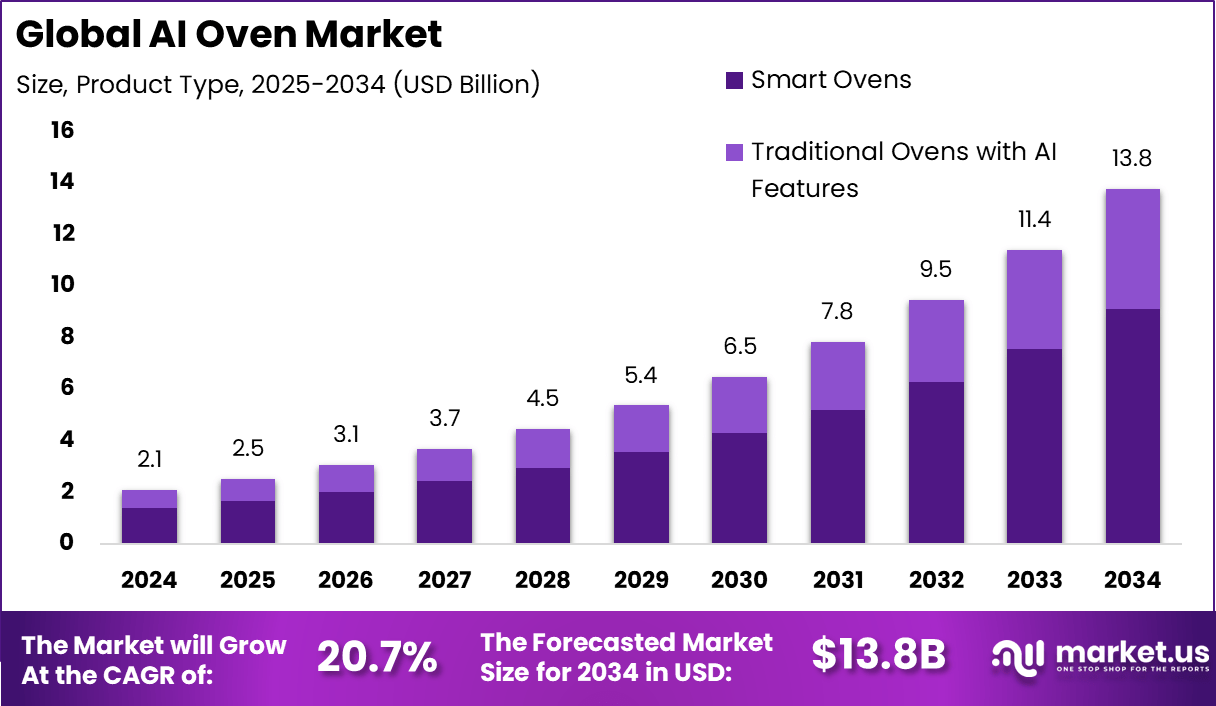
Uptake of AI ovens is strongest among urban, tech-savvy households, where more than 50% are expected to own a smart kitchen appliance by 2025. There is heightened demand for AI ovens where consumers value reliable meal outcomes and tech-enabled control. About 65% of new smart oven buyers cite convenience and automated features as the main purchasing reasons, while 42% are driven by a desire to reduce food waste and save energy.
Millennials and Gen Z consumers show the highest adoption rates, viewing AI ovens as essential to a connected home. Adoption of AI ovens is propelled by shifting consumer lifestyles and a need for time-saving devices. Demand for hands-free, precise, and customized cooking leads more buyers to smart ovens that connect with home networks and voice assistants.
Machine learning supports predictive maintenance and recipe personalization, while sensor technologies ensure enhanced accuracy and energy efficiency. Social and demographic factors, including an aging population and busy urban families, are also accelerating adoption, as AI ovens can support users with varying levels of cooking expertise.
Quick Market Facts
- By product type, smart ovens dominate with 66.3%, reflecting consumer preference for multifunctional and connected cooking appliances.
- By technology, voice-activated ovens hold 37.6%, driven by integration with smart assistants and hands-free convenience.
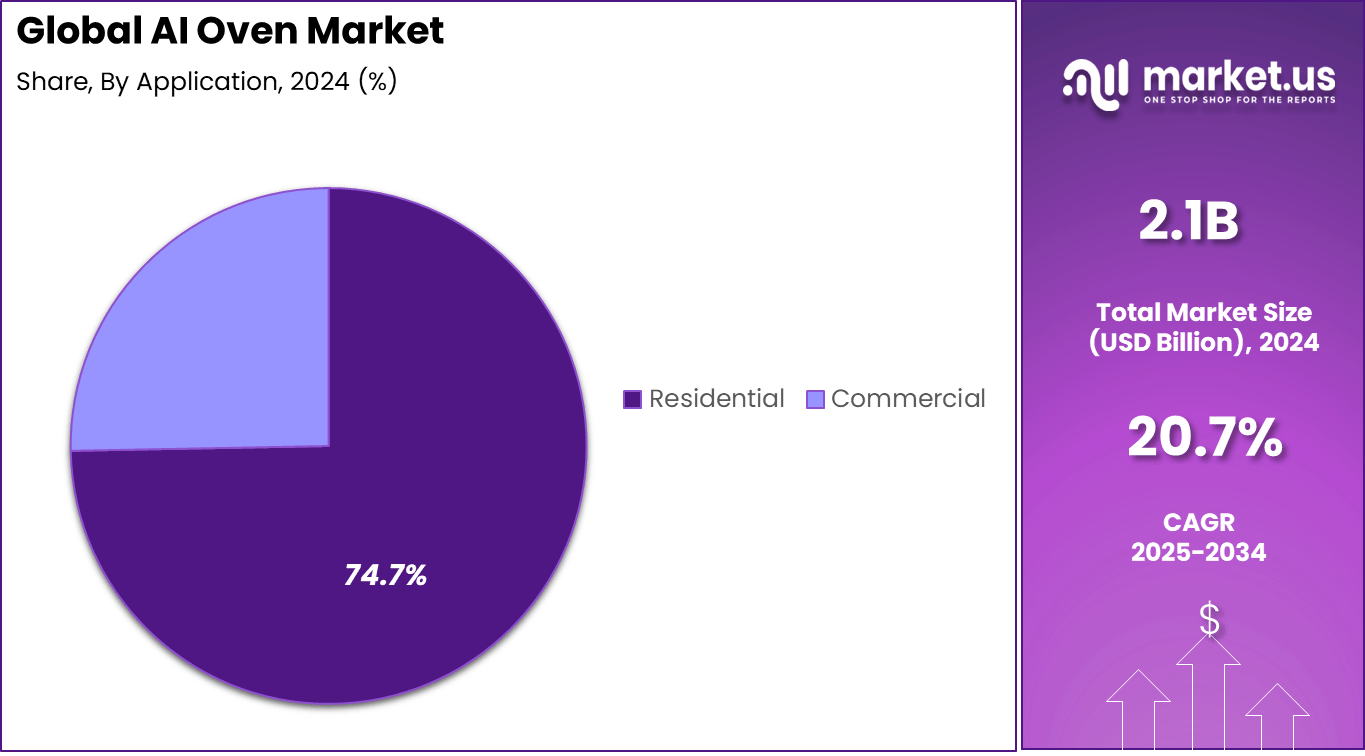
- By application, the residential segment leads with 74.7%, highlighting strong adoption in households seeking automation and efficiency.
- By sales channel, offline retail accounts for 60.0%, showing continued consumer reliance on physical stores for appliance purchases.
- North America contributes 36.2%, supported by high smart home penetration and tech-savvy consumers.
- The US market reached USD 0.64 billion and is expanding at a strong CAGR of 17.2%, underscoring rapid adoption of AI-powered kitchen appliances.
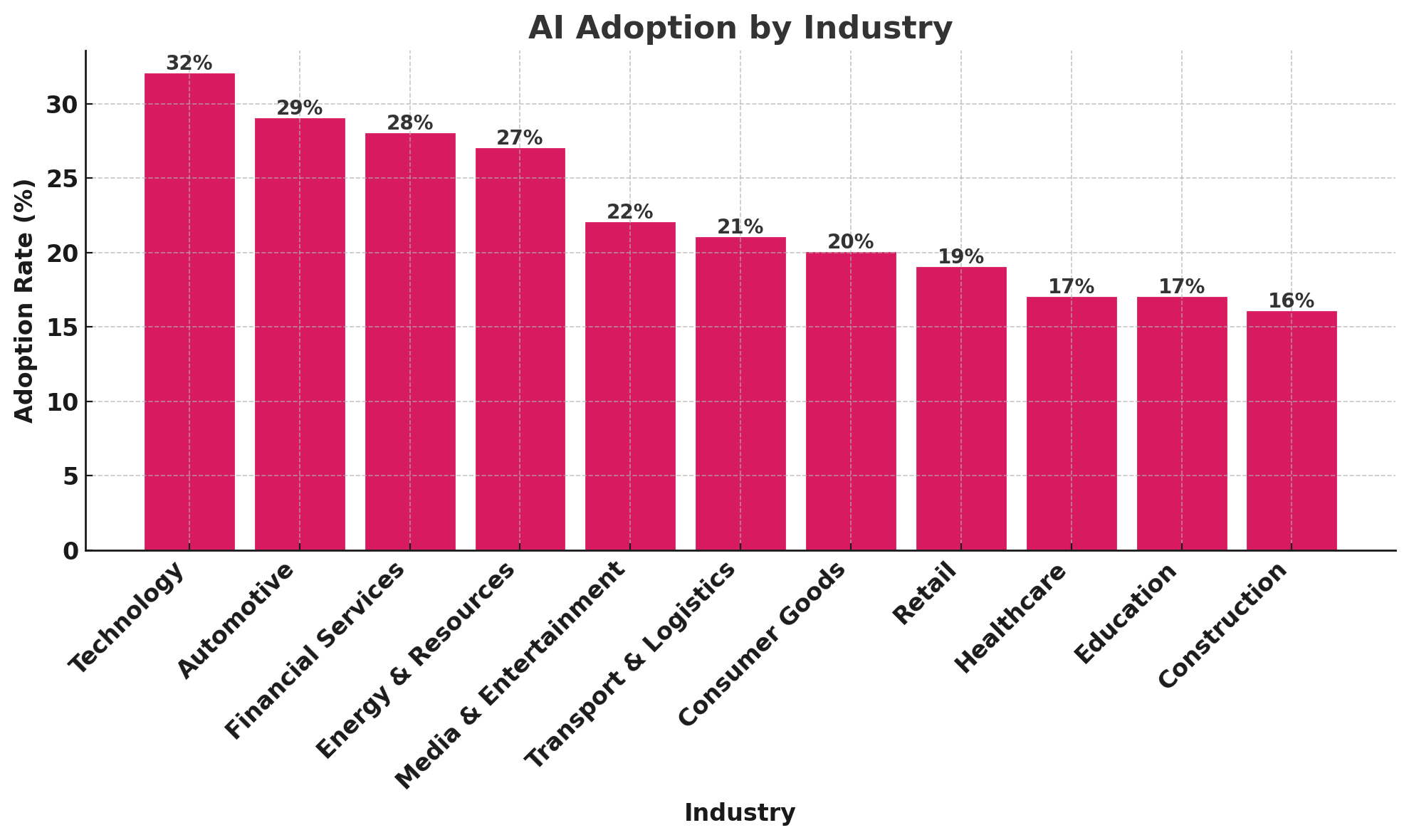
AI Adoption by Industry
Summary Table
In 2024, North America stands at 36.2% market share, making it the leading region for AI ovens. The high adoption rate of smart kitchens, robust spending on home improvement, and widespread availability of advanced appliances have accelerated demand here. Consumers in this region show a greater willingness to pay for features focused on safety, time-saving, and energy efficiency, all of which are key strengths for AI ovens.
Rapid advancements in connectivity and automation are fueling the region’s growth, helped by tech infrastructure and favorable policies promoting energy-efficient smart homes. The North American market reflects a strong appetite for integrating the latest technology into everyday living spaces.
By Product Type
Smart ovens lead the AI oven market, taking a 66.3% share.
People are increasingly choosing these ovens because of their ability to automate complex cooking tasks, offer personalized recipe suggestions, and connect with mobile phones for remote control. Smart ovens simplify meal preparation, which fits well with the growing demand for convenient and efficient home appliances. Their popularity is also boosted by built-in modes and sensors that help deliver consistent cooking results every time.
Recent trends show that countertop and built-in designs are both gaining ground, thanks to their user-friendly features. Smart ovens are no longer limited to just basic heating—they now enable healthier cooking with modes for air frying, steaming, and grilling. The growth in this segment reflects a broader trend toward smarter, more connected kitchens and the desire for tools that upgrade daily life.
By Technology
Voice-activated technologies power 37.6% of the market.
Consumers are drawn to hands-free control, making meal preparation easier and more accessible for people with full schedules or limited ability to use traditional controls. The ability to set timers, change temperatures, and start or stop cooking with simple voice commands has changed expectations around kitchen convenience.
Integration with home assistants like Alexa and Google Home not only enhances user experience but also improves accessibility for elderly or visually impaired users. The steady rise in voice-activated ovens illustrates how technology is making kitchens safer and cooking smarter, especially as people seek efficient multitasking solutions in their daily lives.
By Application
Residential applications represent 74.7% of the market.
Home users continue to be the main audience, as the trend towards smart home adoption rises. This growth is linked to busy lifestyles and the demand for time-saving appliances that do more than conventional ovens ever could. Remote management, recipe guidance, and safety features have made AI ovens a top choice for modern households.
Smart ovens also align well with current home cooking trends, where people want to experiment with healthy dishes and personalized meals with minimal effort. As more families invest in connected kitchens, these ovens have proven their value by delivering consistency, convenience, and energy savings on a daily basis.
By Sales Channel
Offline channels account for 60.0% of sales.
Shoppers still prefer buying major appliances in physical stores, where they can see and sometimes test the products. The offline market is supported by the presence of dedicated electronics retailers and large appliance stores offering customer service, installation help, and demonstrations.
Despite the growth in e-commerce, offline sales remain strong partly due to consumer trust in established retailer brands and the tangible shopping experience. The offline channel remains especially important for high-investment purchases, reinforcing its leading position in the distribution of smart ovens.
Emerging Trends
Developers in the smart appliance space are focusing on precise ingredient detection and tailored nutrition advice, which are emerging trends powered by AI. Data from early adopters shows that about 39% of smart oven owners now use ingredient scanning functions enabled by generative AI to support healthier cooking choices.
Real-time adaptation is also trending, with ovens able to adjust heat levels mid-bake, and almost 44% of users say these dynamic adjustments improve their overall cooking outcomes. Another notable trend is the integration of social media and remote connectivity in smart ovens.
Statistics gathered in early 2025 highlight that approximately 26% of users have shared their cooking experiences and recipes directly through their oven’s connected platform. The ease of sharing and learning from a wider cooking community is attracting younger households, who value instant feedback and inspiration for daily meals.
Growth Factors
Growth in this market is being fueled in part by rising health awareness and demand for convenience. According to recent user surveys, about 57% of smart oven buyers cite time savings as their primary motivation for purchasing models with generative AI capabilities.
Automated decision-making and simplified interfaces have encouraged families with busy schedules to incorporate healthy cooking at home, with more than 46% reporting improved meal quality and variety since upgrading to an AI-assisted oven.
Another driver is the push for energy-efficient appliances. Many households are reporting up to 21% lower energy use thanks to AI-driven cooking cycles that minimize wasted heat and power. The appeal of sustainable living has led manufacturers to develop ovens that intelligently stagger power consumption, which results in reduced utility bills and a lighter environmental footprint for about 19% of smart oven users.
Key Market Segments
By Product Type
- Smart Ovens
- Traditional Ovens with AI Features
By Technology
- Voice-Activated Technology
- Touchscreen Interface
- Mobile App Integration
- AI-Powered Cooking Assistance
By Application
- Residential
- Commercial
By Sales Channel
- Online
- Offline
Regional Analysis and Coverage
- North America
- US
- Canada
- Europe
- Germany
- France
- The UK
- Spain
- Italy
- Russia
- Netherlands
- Rest of Europe
- Asia Pacific
- China
- Japan
- South Korea
- India
- Australia
- Singapore
- Thailand
- Vietnam
- Rest of Latin America
- Latin America
- Brazil
- Mexico
- Rest of Latin America
- Middle East & Africa
- South Africa
- Saudi Arabia
- UAE
- Rest of MEA
Driver Analysis
Rising Smart Home Integration
Consumers increasingly seek kitchen appliances that integrate seamlessly with existing smart home platforms like Amazon Alexa and Google Assistant. This trend is particularly strong among millennials and Gen Z demographics who prioritize convenience and technological sophistication in their daily routines.
The integration allows users to control cooking remotely, receive notifications about meal progress, and coordinate with other smart appliances for optimal energy management. The widespread adoption of smart home technology creates a natural progression toward AI-powered kitchen appliances.
As more households embrace automation for security, lighting, and climate control, kitchen appliances represent the next logical expansion area. Data indicates that over 300 million smart homes are projected globally by 2025, creating substantial infrastructure support for AI oven adoption. This existing foundation reduces consumer hesitation about adding another connected device to their homes.
Restraint Analysis
High Initial Investment Costs
The AI oven market faces significant adoption challenges due to substantial price differences compared to traditional cooking appliances. Current AI-enabled ovens typically cost 3-5 times more than conventional models, creating affordability barriers for mainstream consumers. This pricing structure limits market penetration primarily to affluent households and early technology adopters who can justify the premium investment.
The high costs stem from sophisticated sensor technology, AI processing capabilities, and connectivity features that require specialized components and manufacturing processes. Manufacturing complexities further compound pricing challenges, as AI ovens require advanced sensors, machine learning algorithms, and cloud connectivity infrastructure that traditional appliances lack.
Companies must invest heavily in research and development, quality assurance, and ongoing software support, costs that inevitably transfer to consumers. Additionally, limited production volumes prevent manufacturers from achieving economies of scale that could reduce unit costs, perpetuating the premium pricing cycle that restricts broader market adoption.
Opportunity Analysis
Expansion into Emerging Markets
Significant market expansion opportunities exist in Asia-Pacific and Latin American regions where rapid urbanization and growing middle-class populations create favorable conditions for AI appliance adoption. Countries like India and China show particular promise as disposable incomes rise and consumers become more receptive to smart home technologies.
The World Bank reports these regions experience accelerating urbanization rates, leading to increased spending on modern home appliances and kitchen upgrades. Local manufacturers are developing cost-effective AI oven variants specifically designed for price-sensitive emerging markets.
The commercial foodservice sector presents additional untapped opportunities as restaurants and institutional kitchens seek consistency, efficiency, and labor cost reduction solutions. AI ovens can deliver precise temperature control and automated cooking processes that ensure food quality while reducing dependence on skilled kitchen staff.
Challenge Analysis
Data Privacy and Security Concerns
AI ovens collect extensive data about cooking habits, food preferences, and usage patterns that raise legitimate privacy concerns among potential buyers. Connected appliances can potentially access personal information about household routines, dietary restrictions, and lifestyle patterns that consumers consider sensitive.
Recent cybersecurity incidents involving smart home devices have heightened awareness about data vulnerability, making consumers more cautious about adding internet-connected appliances to their homes. Regulatory frameworks like GDPR in Europe and similar privacy laws globally require manufacturers to implement robust data protection measures.
Technical integration challenges also impede widespread adoption as many AI ovens struggle with interoperability across different smart home platforms and applications. Consumers often encounter difficulties connecting devices to existing home networks or synchronizing with preferred mobile applications. The lack of standardized connectivity protocols means buyers may face compatibility issues with their current smart home systems, leading to frustration and potential product returns.
Competitive Analysis
Bosch, Siemens, and LG focus on premium AI ovens with strong integration into smart homes. Their products emphasize precision, energy savings, and seamless connectivity. Haier and Midea compete with accessible and affordable models, which appeal to a wider base of urban households looking for convenience.
Welbilt and Unox Casa are positioned in the commercial kitchen space, serving restaurants and bakeries with ovens designed for automation and consistency. June Oven and Markov Corp focus on consumer innovation, offering adaptive cooking and AI-powered recipe learning features.
VIOMI and other regional players strengthen competition by delivering affordable, AI-enabled ovens tailored to local needs. These brands expand adoption in developing markets while global leaders invest heavily in IoT and voice technologies, creating a balanced market mix across residential and commercial use.
Top Key Players in the Market
- Bosch
- Welbilt
- Midea
- Haier
- VIOMI
- June Oven
- Markov Corp
- Unox Casa
- LG
- Siemens
- Other Major Players
Recent Developments
- September 2025, Bosch showcased major AI advancements at IFA Berlin and IFA 2025 in Berlin. They introduced the “Play Recipe” feature for the Cookit food processor, which uses AI to turn any online recipe into step-by-step cooking instructions. Bosch plans to extend this AI-powered recipe conversion to their connected ovens and cooktops, making cooking more seamless and tailored.
- March 2025, Haier showcased AI-driven innovations at AWE2025 in Shanghai, focusing on interconnected smart home ecosystems. While not strictly ovens, Haier’s AI applications in kitchen appliances reflect their strategic shift toward AI-enabled, user-friendly intelligent cooking and food preservation solutions