

Report Overview
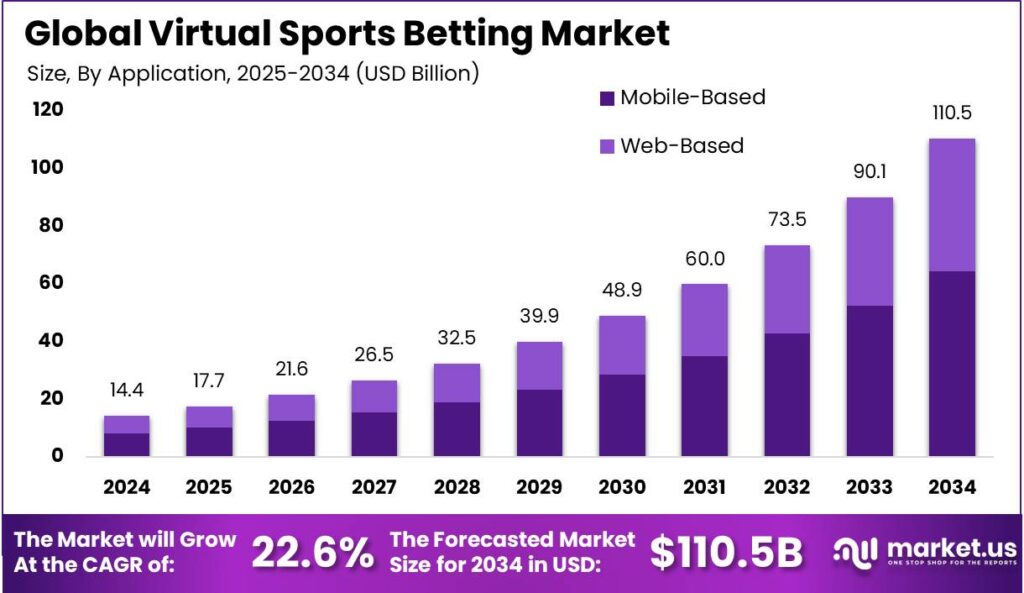
The Global Virtual Sports Betting Market size is expected to be worth around USD 110.5 Billion By 2034, from USD 14.4 Billion in 2024, growing at a CAGR of 22.60% during the forecast period from 2025 to 2034. In 2024, the Asia-Pacific region dominated the virtual sports betting market, capturing more than a 38.8% share. This dominance resulted in revenues reaching USD 5.5 billion.
Virtual sports betting is a type of gambling that allows users to wager on computer-simulated sports and events. These events range from football and horse racing to tennis and motor racing.Outcomes in virtual sports are driven by algorithms for fairness and randomness, similar to real-life sports. They operate 24/7, independent of real-world schedules, offering continuous betting opportunities.
The growth of the virtual sports betting market is being driven by several factors. The convenience and constant availability of virtual sports appeal to bettors, allowing them to place wagers at any time without the need to wait for real-world events. Additionally, advancements in animation and gaming software have greatly improved the visual quality and realism of virtual sports, enhancing their appeal and engagement for users.
Another major driver is the integration of mobile betting platforms, which allows users to place bets from anywhere, further fueling the market growth. The global reach of virtual sports, not being limited by physical or geographical constraints, opens up a wide market of potential bettors across different regions.
Virtual sports betting has gained popularity due to its convenience and accessibility. It appeals to a technologically savvy audience that appreciates the integration of digital technology and sports. The growth in popularity can be attributed to realistic graphics and simulation tech that enhance the user experience, making it more engaging for players.
According to latest report, 46% of American adults have placed at least one sports wager in the past year, highlighting the growing popularity of sports betting in the U.S. Among these bettors, 31% place at least one wager every week, showing a strong engagement with the activity. When it comes to preferred sports, basketball takes the lead, with 53% of sports bettors choosing it as their favorite sport to bet on.
DraftKings emerges as the go-to platform for more than half of all sports bettors, with 57% preferring it over others. Additionally, live betting, or in-game wagering, is the top choice for 32% of people, making it the most popular type of bet during sporting events
The virtual sports betting market holds significant potential for technological innovations, including augmented and virtual reality, which could revolutionize user interaction by providing a more immersive and interactive betting experience. Expansion into regions with more relaxed gambling regulations offers substantial opportunities for market growth.
The expansion of the virtual sports betting market is expected to continue as it adapts to global technological advancements and regulatory changes. The integration of new features and betting options, coupled with strategic partnerships and market entry into emerging economies, are likely to drive future growth.
Key Takeaways
- The Global Virtual Sports Betting Market size is expected to be worth around USD 110.5 Billion by 2034, from USD 14.4 Billion in 2024, growing at a CAGR of 22.60% during the forecast period from 2025 to 2034.
- In 2024, the Football segment held a dominant position in the virtual sports betting market, capturing more than a 26.7% share.
- The Line-in-Play segment held a dominant market position within the virtual sports betting market in 2024, capturing more than a 24.7% share.
- In 2024, the Random Number Generation (RNG)-based segment held a dominant market position, capturing more than a 62.8% share of the virtual sports betting market.
- The Mobile-Based segment held a dominant market position in 2024, capturing more than a 58.4% share of the virtual sports betting market.
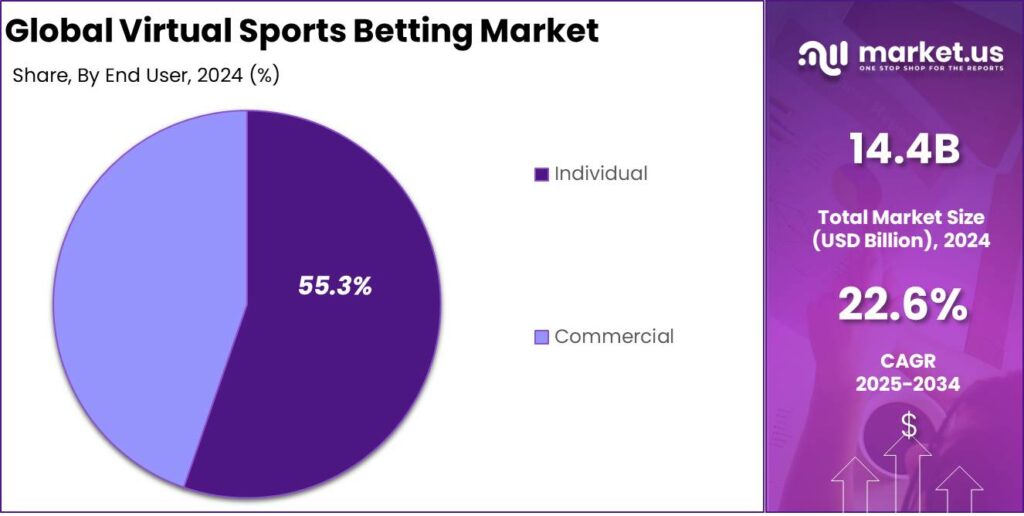
- In 2024, the Individual segment held a dominant market position in the virtual sports betting market, capturing more than a 55.3% share.
- The Asia-Pacific region held a dominant position in the virtual sports betting market in 2024, capturing more than a 38.8% share, with revenues reaching USD 5.5 billion.
China Virtual Sports Betting Market size
The virtual sports betting market in China is experiencing robust growth, evidenced by its significant expansion within the broader sports betting sector. The market’s size was reported at USD 2.3 billion in 2024, with a notable compound annual growth rate (CAGR) of 23.4%. This growth is underpinned by a confluence of technological adoption and evolving consumer behaviors that favor digital and mobile betting platforms.
The rising trend towards virtual sports betting in China is partly driven by increasing digitalization and the adoption of mobile internet services across the country. This transformation has allowed users greater access to virtual betting platforms anytime and anywhere, enhancing user engagement and market growth potential. Additionally, the growth trajectory is supported by the legal frameworks being adjusted to accommodate online gambling, thereby fostering a secure environment for consumers and operators alike.
Challenges such as ensuring data security and addressing consumer skepticism regarding the fairness of virtual outcomes remain significant. Operators are increasingly focusing on implementing robust cybersecurity measures to protect user data and employing transparent random number generation systems to assure fairness in betting outcomes.

In 2024, the Asia-Pacific region held a dominant position in the virtual sports betting market, capturing more than a 38.8% share, with revenues reaching USD 5.5 billion. This leading status can be attributed to several key factors, including the high population density and the growing internet penetration across the region.
Countries like China, Japan, and South Korea, with their tech-savvy populations, have quickly embraced virtual sports betting. More relaxed regulations in Asia, compared to stricter Western laws, create a favorable environment for growth. Major gaming companies in the region invest heavily in marketing and user-friendly platforms, fueling further expansion.
Advanced connectivity and the widespread use of smartphones make virtual sports betting more accessible to the masses, even in remote areas. This technological edge supports high engagement levels, with platforms offering real-time betting, high-quality graphics, and seamless user experiences.
Asia-Pacific’s market dominance is bolstered by strategic partnerships between local betting companies and international sports leagues. These collaborations help tailor the virtual betting experience to regional preferences, incorporating local sports icons and popular regional sports into virtual formats.

Sports Type Analysis
In 2024, the Football segment held a dominant position in the virtual sports betting market, capturing more than a 26.7% share. This prominence can be attributed to football’s global popularity and its established fan base, which naturally extends into virtual betting.
Football’s gameplay makes it easy for bettors to understand and engage with virtual matches, enhancing its appeal. Furthermore, major betting platforms heavily market virtual football, providing various betting options and frequent matches, which attract more participants.
The market leadership of the football segment is also reinforced by extensive media coverage and the cultural significance of the sport in many countries. Football events like the World Cup and European Championship are celebrated worldwide, creating year-round interest and a steady influx of new and seasoned bettors.
Another factor contributing to the dominance of the football segment in virtual sports betting is the advanced technology used to simulate games. The high-quality graphics and realistic animations offer an immersive experience, closely mirroring real-life football matches.
Type Analysis
In 2024, the Line-in-Play segment held a dominant market position within the virtual sports betting market, capturing more than a 24.7% share. This segment’s leadership can be attributed to its dynamic betting structure, which allows bettors to engage in wagering while a virtual game is ongoing.
The appeal of the Line-in-Play segment is further bolstered by its ability to offer a wide range of betting options within a single event. Bettors can make decisions based on the unfolding action, adjusting their bets as the game progresses.
Line-in-Play betting uses advanced technology with real-time data and analytics, helping bettors make quick, informed decisions. Interactive features and live data feeds cater to tech-savvy users, boosting the segment’s popularity and growth.
The leading position of the Line-in-Play segment is also reinforced by strategic marketing and user engagement strategies. Operators in this segment have successfully leveraged targeted promotions and bonuses that specifically appeal to those interested in dynamic and interactive betting formats.
Simulation Type Analysis
In 2024, the Random Number Generation (RNG)-based segment held a dominant market position, capturing more than a 62.8% share of the virtual sports betting market. This substantial market share can be attributed to the established trust and reliability in RNG systems within the gaming and betting industries.
RNG-based betting platforms offer unpredictability and fairness in game outcomes, which are critical factors that appeal to both operators and participants. These systems use complex algorithms to generate random results, ensuring that each outcome is independent and not influenced by external factors, thus preserving the integrity of the betting process.
The preference for RNG-based virtual sports betting also stems from its regulatory compliance and ease of integration. Most jurisdictions with legalized betting require certified RNG systems to ensure fair play. This regulatory endorsement provides a secure environment for bettors and boosts their confidence in the platform’s credibility.
Furthermore, the RNG-based segment benefits from a wider acceptance among traditional bettors who favor the conventional form of betting. The familiarity with RNG mechanics, as seen in other forms of online gambling and video games, helps in retaining and expanding the customer base.
Application Analysis
In 2024, the Mobile-Based segment held a dominant market position, capturing more than a 58.4% share of the virtual sports betting market. This leadership can largely be attributed to the global increase in smartphone penetration and the growing consumer preference for mobile devices as a primary means of accessing the internet.
Mobile platforms offer unparalleled convenience, allowing users to place bets and monitor live sports from anywhere at any time. This convenience is particularly appealing in the fast-paced world of sports betting, where the ability to make quick decisions and bets is crucial.
The advancement in mobile technology has also played a significant role in the prominence of the Mobile-Based segment. Modern smartphones are equipped with powerful processors and enhanced graphics capabilities that can support sophisticated betting applications with rich multimedia content and live streaming features.
Additionally, mobile-based platforms benefit from the integration of various payment gateways and the increasing security measures, which simplify the transaction process for users. The ease of making secure and swift payments directly from mobile devices enhances the attractiveness of mobile betting.
End User Analysis
In 2024, the Individual segment held a dominant market position in the virtual sports betting market, capturing more than a 55.3% share. This notable dominance can be attributed to several key factors that appeal to individual consumers.
The increasing availability of mobile betting applications has made it easier for individuals to engage in betting activities from the comfort of their homes or on the go, fostering a more personalized and convenient betting experience.
The preference for virtual sports betting among individuals is further supported by the integration of advanced technologies such as artificial intelligence and virtual reality. These technologies enhance the user experience by offering more engaging and realistic virtual betting environments.
Additionally, the regulatory landscape has played a crucial role in shaping the individual segment’s growth. In regions where virtual sports betting has been legalized, there has been a marked increase in the number of individual users. Regulatory approval provides a safe and secure environment for bettors, which in turn boosts their confidence in participating in virtual sports betting.
Key Market Segments
By Sports Type
- Football
- Horse Racing/ Riding
- Car Racing
- Cricket
- Hockey
- Boxing
- Baseball
- Others (Basketball, & Tennis, etc.)
By Type
- Line-in-Play
- Fixed Odds Betting
- Exchange Betting
- Daily Fantasy
- Spread Betting
- Others
By Simulation Type
- Random Number Generation (RNG)-based
- AI-based
By Application
- Web-Based
- Mobile-Based
By End User
- Individual
- Commercial
Key Regions and Countries
- North America
- US
- Canada
- Europe
- Germany
- France
- The UK
- Spain
- Italy
- Rest of Europe
- Asia Pacific
- China
- Japan
- South Korea
- India
- Australia
- Singapore
- Rest of Asia Pacific
- Latin America
- Brazil
- Mexico
- Rest of Latin America
- Middle East & Africa
- South Africa
- Saudi Arabia
- UAE
- Rest of MEA
Driver
Technological Advancements Enhancing User Experience
The virtual sports betting market has experienced significant growth, largely due to technological advancements that enhance user experience. The integration of artificial intelligence (AI) and machine learning (ML) has enabled the creation of highly realistic virtual sports events, closely replicating real-world sports.
These technologies analyze vast amounts of data to produce lifelike simulations, providing bettors with engaging and immersive experiences. Additionally, the rise of mobile betting platforms has made virtual sports betting more accessible, allowing users to place bets conveniently from their devices.
The proliferation of smartphones and high-speed internet has further facilitated this accessibility, contributing to the market’s expansion. As technology continues to evolve, the quality and engagement level of virtual sports betting are expected to improve, attracting a broader audience and driving market growth.
Restraint
Regulatory Challenges and Legal Constraints
Despite its growth, the virtual sports betting market faces significant challenges due to varying regulatory frameworks across different regions. In many areas, online gambling laws are either restrictive or ambiguous, creating compliance difficulties for operators. These legal constraints can limit market expansion and deter potential entrants.
Moreover, concerns about gambling addiction and the ethical implications of betting have led to calls for stricter regulations, which could further impede market growth.Operators must comply with diverse regulations and promote responsible gambling to avoid fines and reputational damage, which can hinder industry growth.
Opportunity
Expansion into Emerging Markets
The virtual sports betting market holds substantial opportunities for expansion into emerging markets, particularly in regions experiencing increased internet and smartphone penetration. As digital infrastructure improves in areas such as Asia-Pacific, Latin America, and parts of Africa, a larger demographic gains access to online betting platforms.
Additionally, the growing acceptance of online entertainment and changing consumer behaviors in these regions present a fertile ground for introducing virtual sports betting. By tailoring offerings to local preferences and ensuring compliance with regional regulations, operators can effectively capitalize on these emerging opportunities, driving further growth in the global market.
Challenge
Building Consumer Trust and Awareness
A significant challenge in the virtual sports betting market is the lack of consumer awareness and trust, particularly in regions where this concept is relatively new. Many potential users are unfamiliar with the idea of betting on simulated sports events, leading to skepticism about the fairness and transparency of outcomes.
This skepticism can hinder user adoption and engagement. To address this challenge, operators must invest in educational initiatives that explain how virtual sports betting works, emphasizing the use of advanced algorithms and random number generation to ensure fairness. Strong customer support and transparent practices build trust, driving market growth.
Emerging Trends
The integration of artificial intelligence (AI) and virtual reality (VR) has enhanced the realism of virtual sports, providing bettors with immersive experiences that closely mimic real-world events. This technological progression has broadened the appeal of virtual sports betting, attracting a diverse audience seeking engaging and accessible betting options.
The shift towards mobile platforms is another notable trend. With the proliferation of smartphones and high-speed internet, bettors increasingly prefer the convenience of placing wagers via mobile applications. This accessibility allows users to engage in virtual sports betting at any time, contributing to the sector’s expansion.
Furthermore, the continuous availability of virtual sports events, unbound by real-world schedules, offers bettors constant opportunities to place wagers. This 24/7 accessibility caters to the modern demand for instant gratification and flexibility, distinguishing virtual sports betting from traditional sports wagering.
Business Benefits
The adoption of virtual sports betting offers several advantages to businesses in the gambling industry.A key benefit of virtual sports is the steady revenue stream from constant event availability. Unlike traditional sports, which have seasons and disruptions, virtual sports operate 24/7, providing continuous betting opportunities and income.
The integration of advanced technologies, such as AI and VR, enhances user engagement by providing realistic and interactive experiences. This heightened engagement can lead to increased customer loyalty and higher betting volumes, positively impacting profitability.
Additionally, virtual sports betting platforms can reach a global audience without the geographical limitations associated with traditional sports events. This expanded reach opens new markets and diversifies the customer base, offering significant growth opportunities for businesses in the gambling sector.
Key Player Analysis
Virtual sports betting is a fast-growing part of online gambling, offering real-time simulated events. Key players in this market lead with innovative platforms and enhanced gaming experiences.
- Bet365 Group Ltd. Bet365 Group Ltd. is a leading global online gambling platform, offering high-quality virtual sports betting options like football, horse racing, and tennis. Their advanced technology provides smooth and immersive experiences, making them a top player in the virtual sports market.
- Betsson AB is another prominent player in the virtual sports betting market. Headquartered in Sweden, Betsson is recognized for its strong presence in multiple regions, offering virtual sports betting through an innovative online platform. The company is known for partnering with leading game developers to provide highly engaging and realistic virtual sports experiences.
- Evoke plc, although smaller than some other players, has carved a niche in the virtual sports betting landscape. The company focuses on providing cutting-edge technology to simulate sports events. Evoke has made a name for itself by offering a user-friendly interface and interactive virtual sports games that appeal to a broad audience.
Top Key Players in the Market
- Bet365 Group Ltd.
- Betsson AB
- Evoke plc (formerly 888 Holdings Plc)
- DraftKings Inc.
- Betway Group
- William Hill plc
- Paddy Power Betfair
- Unibet
- Betfred
- PointsBet Holdings Limited
- BetMGM
- BetVictor
- Parimatch
- LeoVegas AB
- Betsson Group
- Others
Top Opportunities Awaiting for Players
The virtual sports betting market is brimming with opportunities that could benefit industry players significantly in the coming years.
- Expansion into New Markets: With the global adoption of online betting, there is an expanding opportunity for virtual sports betting platforms to enter new geographic markets. Increased internet and smartphone penetration worldwide allows more consumers to access these services, thereby broadening the customer base and increasing potential revenue streams.
- Leveraging Advanced Technologies: The use of AI and machine learning technologies in virtual sports betting can offer more immersive and realistic gaming experiences. These technologies enable the simulation of real-life sports events, enhancing the user experience and potentially increasing user engagement and loyalty.
- Addressing and Enhancing Data Security: As the industry grows, so does the concern for data security and fraud. By investing in robust cybersecurity measures, companies can not only protect their customers but also strengthen their market position by building trust,reliability among users.
- Regulatory Compliance and Adaptation: Adapting to and navigating the varying regulatory landscapes across different regions can be a significant opportunity. By ensuring compliance, companies can avoid potential legal issues and fines, while also potentially influencing new regulations that favor the growth of virtual sports betting.
- Market Diversification and Specialization: Offering a diverse range of betting options can attract a wider audience. This includes not only traditional sports simulations but also niche and less common sports, which can appeal to different segments of bettors and provide continuous betting opportunities throughout the year.
Recent Developments
- In August 2024, DraftKings announced its acquisition of Simplebet, a company specializing in in-play betting technology. This strategic move aims to enhance DraftKings’ real-time wagering offerings by integrating Simplebet’s advanced AI and machine-learning capabilities.
- In September 2024, Flutter Entertainment acquired Snaitech, a leading Italian gambling operator, for €2.3 billion. This acquisition is expected to strengthen Flutter’s presence in the European market, particularly in the virtual sports betting sector.
- In October 2024, PointsBet was reportedly approached with a takeover bid exceeding $300 million from an overseas entity, potentially signaling significant changes in its operations and market strategy.