

Report Overview
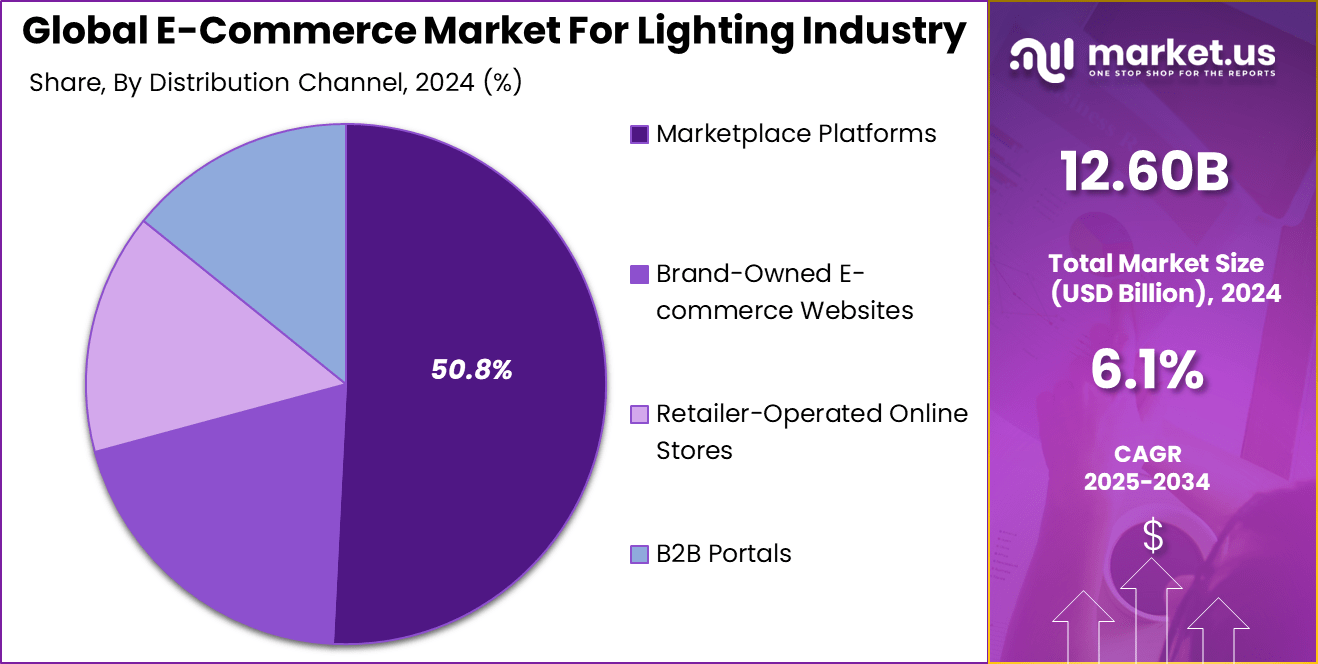
The Global E-Commerce Market For Lighting Industry size is expected to be worth around USD 22.78 Billion By 2034, from USD 12.6 billion in 2024, growing at a CAGR of 6.1% during the forecast period from 2025 to 2034. In 2024, North America held a dominant market position, capturing more than a 40.8% share, holding USD 5.1 Billion revenue.
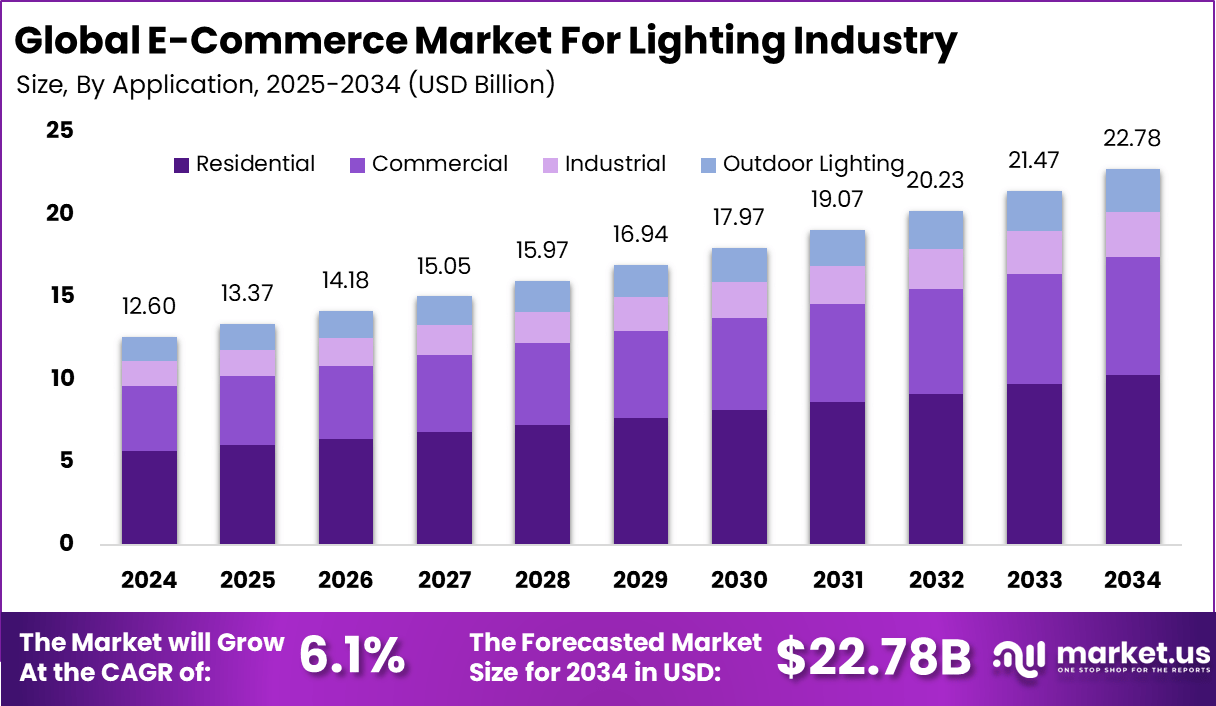
The e-commerce market for the lighting industry is undergoing a remarkable transformation, driven by evolving consumer behavior and advances in digital technology. As people increasingly seek convenience and variety in their shopping experiences, more are turning to online channels to fulfill their lighting needs. This shift is strong in residential and commercial sectors, where buyers prefer comparing products, wider choices, and better prices.
A core driver behind this surge is the widespread adoption of smart technologies and connected home solutions. The popularity of Internet of Things (IoT) devices, smart bulbs, and app-controlled lighting systems is fueling demand for online lighting solutions. Consumers are looking for products that offer not just illumination, but automation, energy savings, and integration with voice assistants.
According to Market.us, the E-commerce Market is projected to reach approximately USD 151.5 Trillion by 2034, up from USD 28.29 Trillion in 2024, reflecting a robust compound annual growth rate of 18.29% from 2025 to 2034. This remarkable expansion is driven by increasing digital penetration, rising smartphone usage, and the convenience of online shopping across global demographic.
Scope and Forecast
| Driver | Details |
|---|---|
| Smart Home Adoption | Spike in demand for smart, app-controlled, and voice-activated lighting solutions integrated with platforms like Alexa/Google. |
| Convenience & Accessibility | E-commerce enables easy price/product comparisons, access to a wider selection, reading reviews, and home delivery benefits. |
| Energy Efficiency Awareness | Growing emphasis on LED and efficient solutions for cost and environmental savings. |
| Digitalization | Expanding internet penetration, comfort with digital transactions, and mobile commerce acceleration. |
| Regulatory Shifts | Global and regional mandates phasing out inefficient lighting, fueling LED adoption. |
Key Features & Trends
| Feature/Trend | Details |
|---|---|
| Smart & Connected Lighting | Rise of IoT-enabled, customizable lighting (e.g., color change, remote control, scheduling, automation). |
| Visualization Technologies | Use of AR, 3D models, and virtual tools to let shoppers preview lighting in their homes online. |
| Personalization Options | Custom lighting configurations for ambiance, style, and individual preference. |
| Sustainability | Focus on eco-friendly, energy-efficient LEDs, solar-powered, and recyclable/lightweight materials. |
| Subscription Models | Maintenance or replacement subscriptions building customer loyalty. |
| Influencer & Social Marketing | Social commerce, influencer campaigns, and livestream promotions are fueling online sales. |
| Comparison & Guidance Tools | Platforms integrate calculators, comparison charts, and expert advice for informed purchasing. |
Opportunities & Challenges
| Category | Highlights |
|---|---|
| Opportunities | – Expansion into fast-growing emerging markets – Innovation in connected/smart lighting – Partnerships with major e-commerce platforms – Value-added services (installation, support, AR tools) – Regulatory momentum for energy efficiency |
| Challenges | – High upfront cost of smart lighting – Installation complexity for connected products – Security risks (IoT devices) – Fierce online competition – Ensuring compliance and authenticity – Online limitations (color/size accuracy, returns) |
Key Market Segments
By Application
- Residential
- Commercial
- Industrial
- Outdoor Lighting
By Distribution Channel
- Marketplace Platforms
- Brand-Owned E-commerce Websites
- Retailer-Operated Online Stores
- B2B Portals
By Product Type
- LED Bulbs & Tubes
- Smart Lighting
- Decorative Lighting
- Outdoor & Garden Lighting
- Commercial & Industrial Fixtures
- Others
Key Regions and Countries
- North America
- US
- Canada
- Europe
- Germany
- France
- The UK
- Spain
- Italy
- Russia
- Netherlands
- Rest of Europe
- Asia Pacific
- China
- Japan
- South Korea
- India
- Australia
- Singapore
- Thailand
- Vietnam
- Rest of Latin America
- Latin America
- Brazil
- Mexico
- Rest of Latin America
- Middle East & Africa
- South Africa
- Saudi Arabia
- UAE
- Rest of MEA
Key Player Analysis
In the E-Commerce Market for Lighting Industry, established players such as Savant Systems Inc., Osram Licht AG, and Signify NV are prioritizing smart lighting integration. These companies are known for offering advanced connected solutions through digital platforms. Their focus remains on energy efficiency, IoT-enabled lighting, and intuitive user experiences.
Retail-centric firms like Amazon Basics, Wayfair, Walmart, and BulbAmerica have captured strong consumer trust through competitive pricing and faster delivery models. These platforms are capitalizing on bulk inventory, personalized recommendations, and aggressive marketplace strategies. Their dominance in the online retail space enables high visibility and streamlined access to lighting products.
Global manufacturers such as Zumtobel Group AG, Panasonic Corporation, Acuity Brands Inc., and Hubbell Incorporated are optimizing their e-commerce strategies by expanding direct-to-consumer models. Companies like BestBuy, IKEA, Bajaj Electricals, Dialight PLC, and Nichia Corporation are also accelerating digital transformation to strengthen logistics, inventory control, and customer interface. These firms are increasingly focusing on omnichannel strategies to align in-store and online operations.
Major players
Leading companies in the E-Commerce Market For Lighting Industry market include:
- Savant Systems Inc.
- Osram Licht Ag (AMS OSRAM AG)
- Signify NV
- Amazon Basics
- Wayfair
- Walmart
- BulbAmerica
- Alibaba.com
- Zumtobel Group AG
- Panasonic Corporation
- Acuity Brands Inc.
- Hubbell Incorporated
- BestBuy
- IKEA
- Bajaj Electricals
- Dialight PLC
- Nichia Corporation
Recent Developments
- January 2025: Chauvet made headlines by acquiring LiteGear, a leader in cinematic LED lighting, officially effective from January 22, 2025. This strategic acquisition strengthens Chauvet’s position in high-end, professional lighting and signals increased investment into cinematic and specialty lighting markets.
- In July 2024, Signify launched its NatureConnect lighting at the India Light Festival, an industry-first product designed to mimic natural sunlight, enhancing indoor well-being. This biophilic lighting solution aligns with the growing demand for health-oriented smart lighting.
- Amazon Basics expanded its home lighting collection in March 2024 with smart, color-changing LED bulbs, tapping into consumer demand for affordable, app-controlled lighting systems. MCGOR under-cabinet LED lights, showcased as a trending Amazon Choice product later in December 2024, reflect shifting retail momentum towards DIY and home upgrades.