

Report Overview
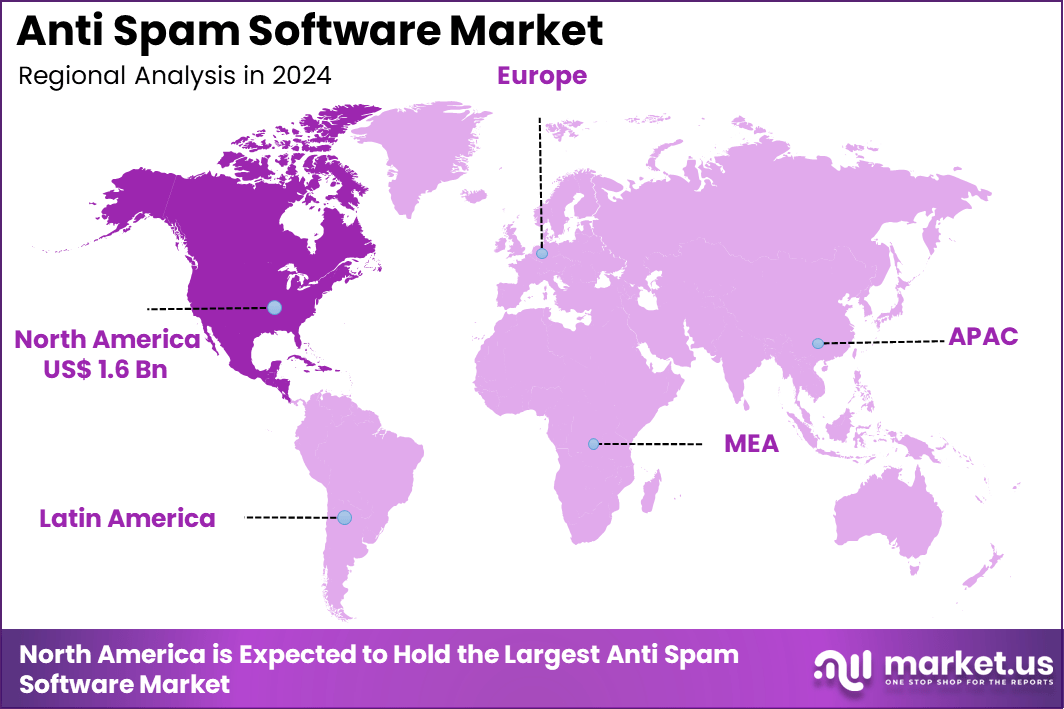
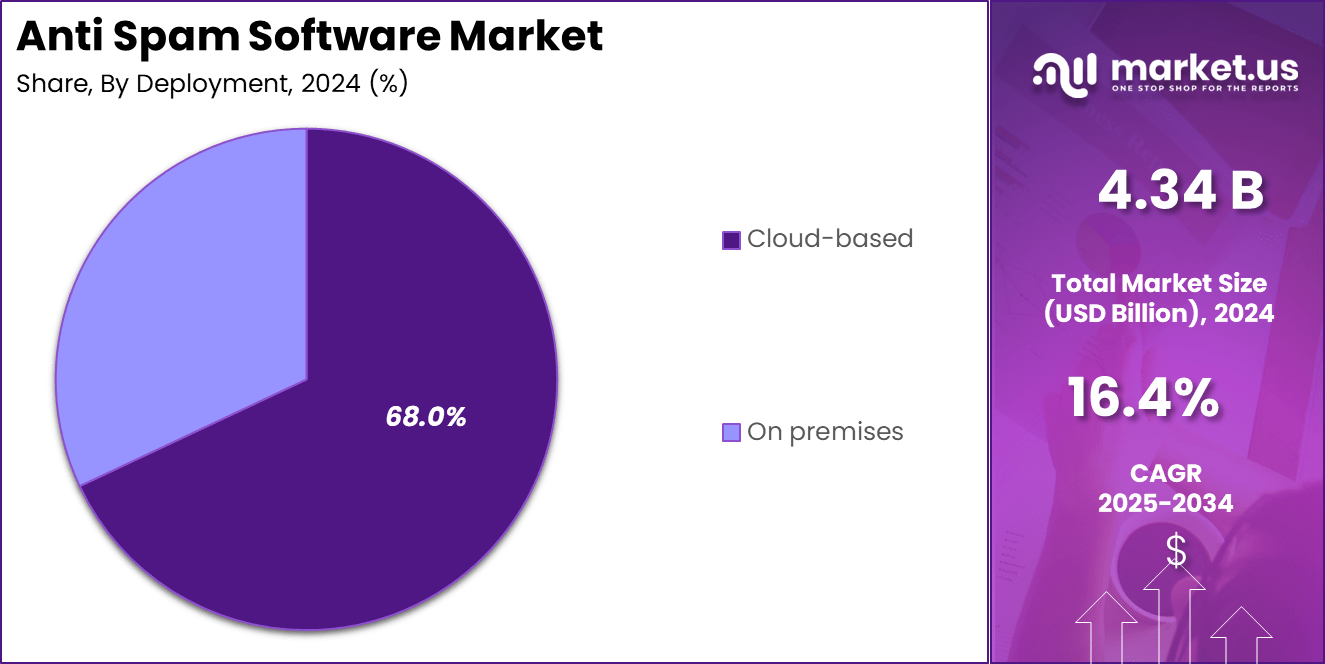
The Global Anti Spam Software Market size is expected to be worth around USD 19.82 Billion By 2034, from USD 4.34 billion in 2024, growing at a CAGR of 16.4% during the forecast period from 2025 to 2034. In 2024, North America held a dominant market position, capturing more than a 40% share, holding USD 1.6 Billion revenue.
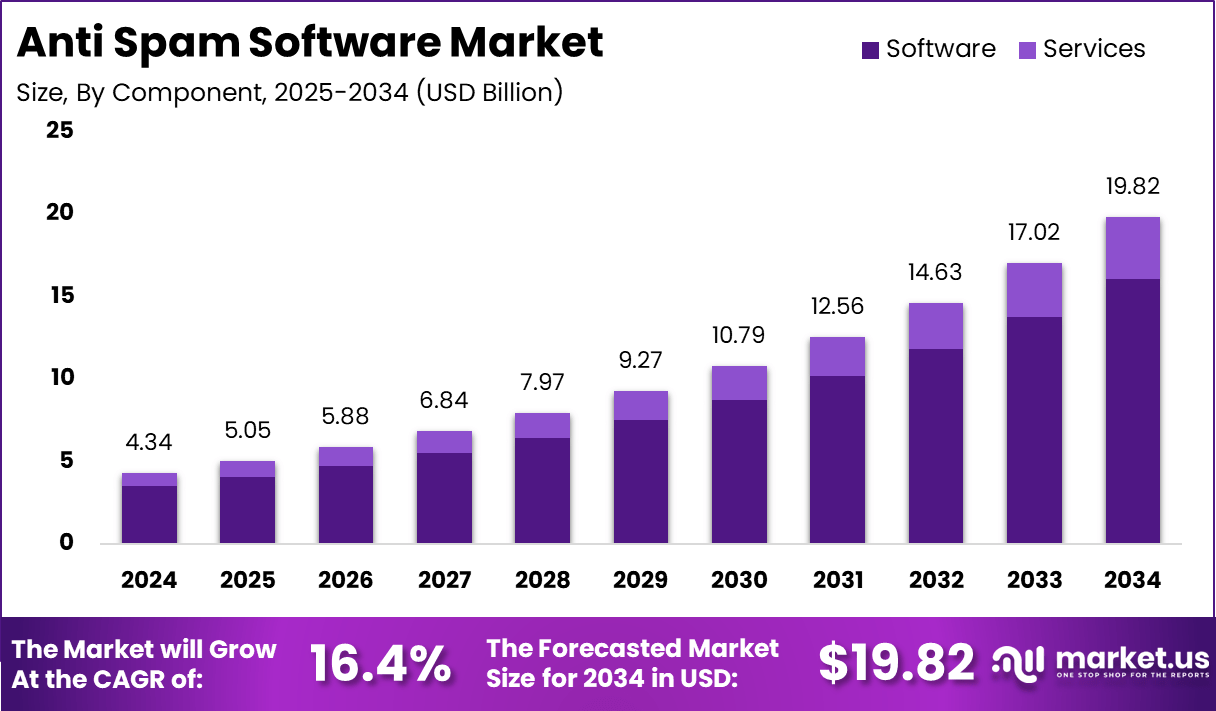
The Anti‑Spam Software Market reflects a sector dedicated to solutions that automatically detect and filter unwanted or malicious email communications. Core techniques such as Bayesian filtering, rule‑based detection, DNS‑based blacklists, authentication protocols and real‑time content analysis are commonly deployed. Deployment models span both on‑premise systems and cloud‑based platforms that integrate seamlessly with email infrastructures, enabling organizations to maintain productivity and security.
Based on data from 9cv9 Blog, Organizations using Keepnet Labs have seen up to a 90% drop in risky employee behavior, showing how well training works against phishing. In Australia, cybercrime rose by 13% in 2022, with around 76,000 cases, highlighting the urgent need for stronger anti-spam tools. Keepnet also earned a 95% willingness-to-recommend score, proving customer trust and strong results in email threat protection.
The platform has helped reduce phishing attack risk by 92% and cut security incidents by 85%, offering real value for businesses aiming to stay secure. Companies using these tools avoid losses of nearly $1 million each year due to fewer spam-related breaches. Also, about 75% of organizations now rely on AI-based spam filters, which block threats faster and more accurately than old systems.
Market Size and Growth
| Growth Factor | Description |
|---|---|
| Rising Cybersecurity Threats | More attacks like phishing, malware, and data breaches are pushing businesses to adopt anti-spam software for protection. |
| Increase in Email Usage | A sharp rise in business and personal emails makes filtering essential to productivity and security. |
| Remote Work and Digitalization | As companies shift to digital work, protecting remote communications from spam becomes critical. |
| Regulatory Compliance Requirements | Laws like GDPR and CAN-SPAM force organizations to invest in email security to avoid fines and maintain trust. |
| Advanced Technologies (AI/ML) | Machine learning and AI have made spam detection smarter and more accurate, improving defenses against new threats. |
Key Features and Latest Trends
| Key Feature / Trend | Description |
|---|---|
| AI and Machine Learning Detection | These technologies help software adapt quickly to new spam tactics and improve detection rates. |
| Cloud-Based Anti-Spam Solutions | Cloud deployments offer scalability and easy updates, making them attractive, especially for small businesses. |
| Real-Time Threat Analysis | Software now monitors and reacts instantly to suspicious messages, limiting damage. |
| Integration with Other Security Tools | Anti-spam solutions are now built to work with broader cybersecurity suites and existing email platforms. |
| User-Friendly Management | Improved dashboards and easy setup reduce the burden on IT staff. |
| Focus on Reducing False Positives | New features aim to stop junk mail but let real messages through, so productivity isn’t hurt. |
Drivers
The growth of the Anti-Spam Software Market is driven by several key factors, primarily the increasing volume and sophistication of email-based cyber threats such as phishing, ransomware, and business email compromise (BEC). With over 91% of cyberattacks originating from email, organizations are prioritizing advanced spam filtering to safeguard sensitive data and ensure operational security.
The widespread adoption of cloud-based email platforms like Microsoft 365 and Google Workspace has further accelerated the demand for scalable, real-time anti-spam solutions. Additionally, strict data protection regulations such as GDPR, HIPAA, and CCPA are compelling businesses to implement robust email security systems to maintain compliance.
The integration of AI and machine learning into anti-spam tools has significantly enhanced detection accuracy and adaptability against evolving threats. Moreover, the shift to remote and hybrid work environments, increased use of mobile email access, and the availability of cost-effective SaaS models are contributing to widespread adoption, especially among SMEs. These drivers collectively reinforce the critical need for efficient and intelligent anti-spam software across sectors.
Restrains
Despite its strong growth, the Anti-Spam Software Market faces several restraining factors that can limit its adoption. One of the primary challenges is the high cost of advanced enterprise-grade solutions, which may be unaffordable for small and medium-sized businesses with limited IT budgets. Additionally, false positives- where legitimate emails are mistakenly marked as spam – can disrupt communication and reduce user trust in the software.
The complexity of integration with existing IT systems, especially in legacy environments, can also slow down deployment and adoption. In some cases, a lack of awareness or understanding about the evolving nature of email threats leads to underinvestment in proper spam protection, particularly in smaller organizations.
Furthermore, the constant evolution of spam techniques – such as AI-generated phishing emails – makes it difficult for traditional filters to keep up, requiring frequent updates and monitoring. These factors collectively create barriers to broader implementation, particularly in cost-sensitive or less tech-savvy environments.
Opportunities
The Anti-Spam Software Market presents several promising opportunities as digital communication continues to expand. One of the most significant opportunities lies in the integration of artificial intelligence (AI) and machine learning (ML) to create smarter, self-learning spam filters that can detect and respond to emerging threats in real time.
As more organizations transition to cloud-based infrastructures, there is growing demand for cloud-native anti-spam solutions that offer flexibility, scalability, and remote protection. The rise of mobile email usage and Bring Your Own Device (BYOD) policies also opens up opportunities for mobile-focused anti-spam tools.
Additionally, increasing regulatory pressures around data privacy and cybersecurity are encouraging businesses, especially in regulated industries like finance and healthcare, to invest in more comprehensive email protection. Emerging markets, where digital transformation is accelerating, offer untapped potential for vendors to expand their reach. These factors create a favourable environment for innovation and expansion within the anti-spam software space.
Challenges
The Anti-Spam Software Market faces several challenges that could impact its growth and effectiveness. One of the biggest challenges is the rapid evolution of spam and phishing techniques, often powered by AI, which makes it difficult for traditional filters to keep up.
Cybercriminals are constantly finding new ways to bypass detection systems, making spam harder to identify without causing false positives. Another major challenge is the difficulty in balancing security with user experience – overly aggressive filters can block legitimate emails, disrupting communication and causing frustration.
Another challenge is the high rate of false positives, where legitimate emails are mistakenly classified as spam. This can disrupt business communication, lower productivity, and cause frustration among users, particularly in organizations that rely heavily on external email traffic. Striking the right balance between security and usability remains a critical concern. Integration complexities also pose a hurdle, especially for large enterprises with diverse IT environments.
Key Market Segments
By Component
- Software
- Services
By Deployment
- On-premises
- Cloud-based
By Enterprise Size
- Small & Medium Enterprises (SMEs)
- Large Enterprises
By Industry Vertical
- BFSI
- IT & Telecom
- Healthcare
- Government
- Retail
- Others
Key Regions and Countries Covered
North America
- The US
- Canada
Europe
- Germany
- France
- The UK
- Spain
- Italy
- Russia
- Netherland
- Rest of Europe
APAC
- China
- Japan
- South Korea
- India
- Australia
- New Zealand
- Singapore
- Thailand
- Vietnam
- Rest of APAC
Latin America
- Brazil
- Mexico
- Rest of Latin America
Middle East & Africa
- South Africa
- Saudi Arabia
- UAE
- Rest of MEA
Key Players Analysis
Several key players dominate the anti-spam software market by offering advanced email protection, threat detection, and filtering capabilities. Symantec Corporation, Trend Micro Inc., and Cisco Systems Inc. are known for integrating artificial intelligence and machine learning into their spam detection engines. These companies focus on minimizing phishing attacks and spam threats in enterprise and consumer settings.
Vendors such as Barracuda Networks Inc., Proofpoint Inc., Mimecast Limited, and Sophos Group plc offer strong cloud-based spam protection tools. These firms have prioritized multi-layered filtering, sandboxing, and email encryption as key strategies. Their scalable solutions are popular among SMEs and global enterprises.
Other notable participants include Fortinet Inc., McAfee LLC, Kaspersky Lab, F-Secure Corporation, Comodo Group Inc., and GFI Software. These vendors continuously enhance their spam filtering algorithms and integrate anti-malware features. Emerging companies like SpamTitan Technologies, ZEROSPAM Security Inc., AppRiver LLC, Clearswift Ltd., and Hornetsecurity GmbH are gaining traction by offering customized, compliance-ready solutions.
Top Key Players
- Symantec Corporation
- Trend Micro Inc.
- Cisco Systems Inc.
- Barracuda Networks Inc.
- Proofpoint Inc.
- Mimecast Limited
- Sophos Group plc
- Fortinet Inc.
- McAfee LLC
- Kaspersky Lab
- F-Secure Corporation
- Comodo Group Inc.
- GFI Software
- SolarWinds MSP
- FireEye Inc.
- SpamTitan Technologies
- ZEROSPAM Security Inc.
- AppRiver LLC
- Clearswift Ltd.
- Hornetsecurity GmbH
- Other Key Players
Recent Developments
- June 2025: TitanHQ’s SpamTitan (Skellig 9.07) update garnered industry awards, achieving a malware and phishing catch rate of 100%, a spam catch rate of 99.9%, and a negligible false positive rate. Enhanced display name anti-spoofing and more granular control features highlight the leap in usability and security for managed service providers and business users alike.
- September 2024: Bharti Airtel introduced India’s first network-native, AI-powered spam detection system. This solution scans over 1 trillion records in real time, flags 100 million spam calls and 3 million SMSes each day, and aims to drastically reduce consumer exposure to digital spam. It automatically protects Airtel’s customers nationwide, requiring no user intervention.