

Report Overview
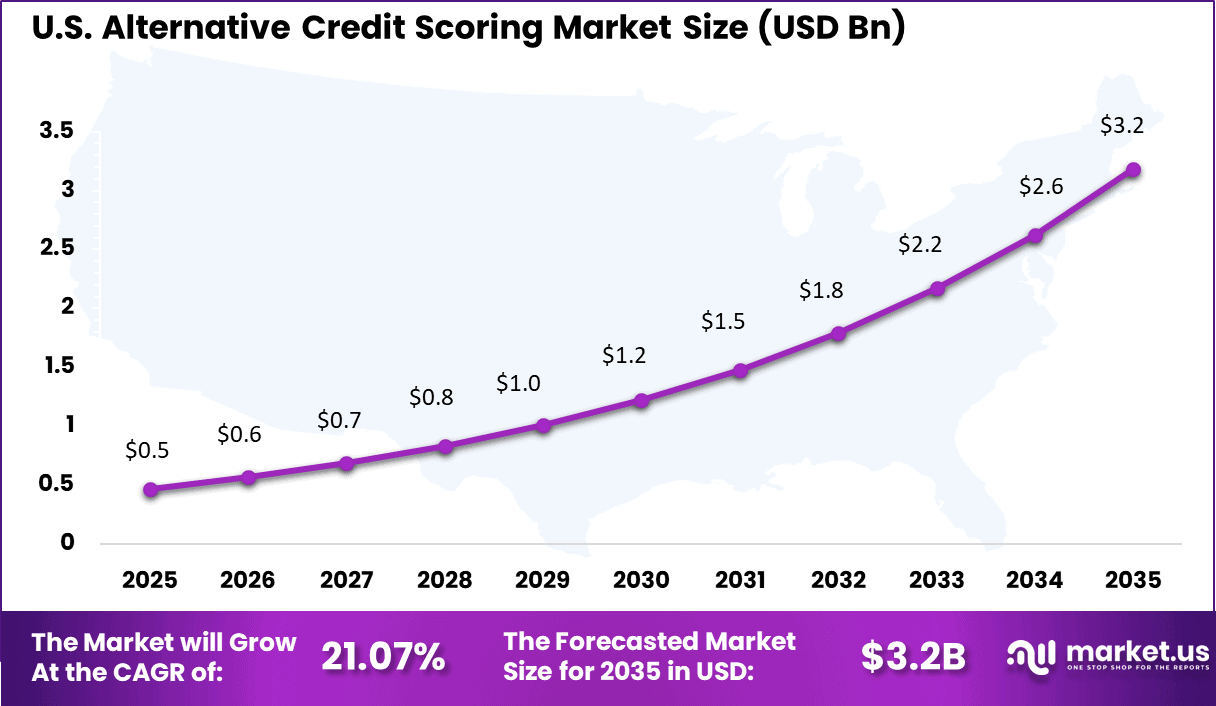
The Global Alternative Credit Scoring Market generated USD 1.5 billion in 2025 and is predicted to register growth from USD 1.8 billion in 2026 to about USD 11.7 billion by 2035, recording a CAGR of 23.10% throughout the forecast span. In 2025, North America held a dominan market position, capturing more than a 35.6% share, holding USD 0.52 Billion revenue.
The alternative credit scoring market refers to credit assessment systems that rely on non traditional data instead of only credit bureau records. Data such as banking transactions, utility payments, mobile usage, and digital behavior are increasingly used to evaluate borrower risk. This approach has expanded access to credit for individuals and small businesses with limited or no formal credit history. The growth of digital lending platforms and open banking frameworks has supported wider adoption of these models.
Alternative credit scoring systems operate alongside or as complements to traditional credit models. They are widely used in consumer lending, small business finance, and short term credit products. Industry observations indicate that nearly 40% of adults in emerging economies remain underbanked or credit invisible, creating a strong use case for alternative scoring methods.
Global credit bureaus and scoring leaders such as Experian plc, Equifax, Inc., and TransUnion hold a strong position in the alternative credit scoring market. They extend traditional bureau data with utility payments, rental history, and transactional signals. FICO enhances this segment through advanced modeling and explainable scoring frameworks. These players benefit from deep lender trust, regulatory alignment, and large data assets. Data intelligence and identity-focused providers such as LexisNexis Risk Solutions, Jumio Corporation, and Advan Research Corporation emphasize behavioral, device, and digital footprint data. Credolab, Ltd. and Aire, Inc. use consent-based data and machine learning to assess thin-file customers. These solutions support faster credit decisions and reduced default risk. Adoption is strong among fintech lenders and digital banks. Emerging market specialists and AI-driven lenders such as Trusting Social, Inc., LenddoEFL, and CreditVidya, Inc. address underbanked populations. Upstart Network, Inc. and Enova International, Inc. integrate alternative scores into lending workflows. The Credit Bureau Singapore, Ltd. supports regional adoption. Other providers expand competition and innovation, supporting broader access to credit globally. The future outlook for the Alternative Credit Scoring Market is promising as financial institutions and lenders seek new ways to assess borrower creditworthiness. Demand for alternative scoring methods is expected to increase because these systems use non-traditional data such as digital footprints, payment history, and social data to evaluate risk. Adoption of advanced analytics, machine learning, and artificial intelligence will further enhance prediction accuracy and support faster decisions. Growth can be attributed to the need for financial inclusion, improved risk assessment, and expansion of credit access for underserved populations. Overall, the market is expected to grow as lenders pursue more flexible and comprehensive scoring solutions.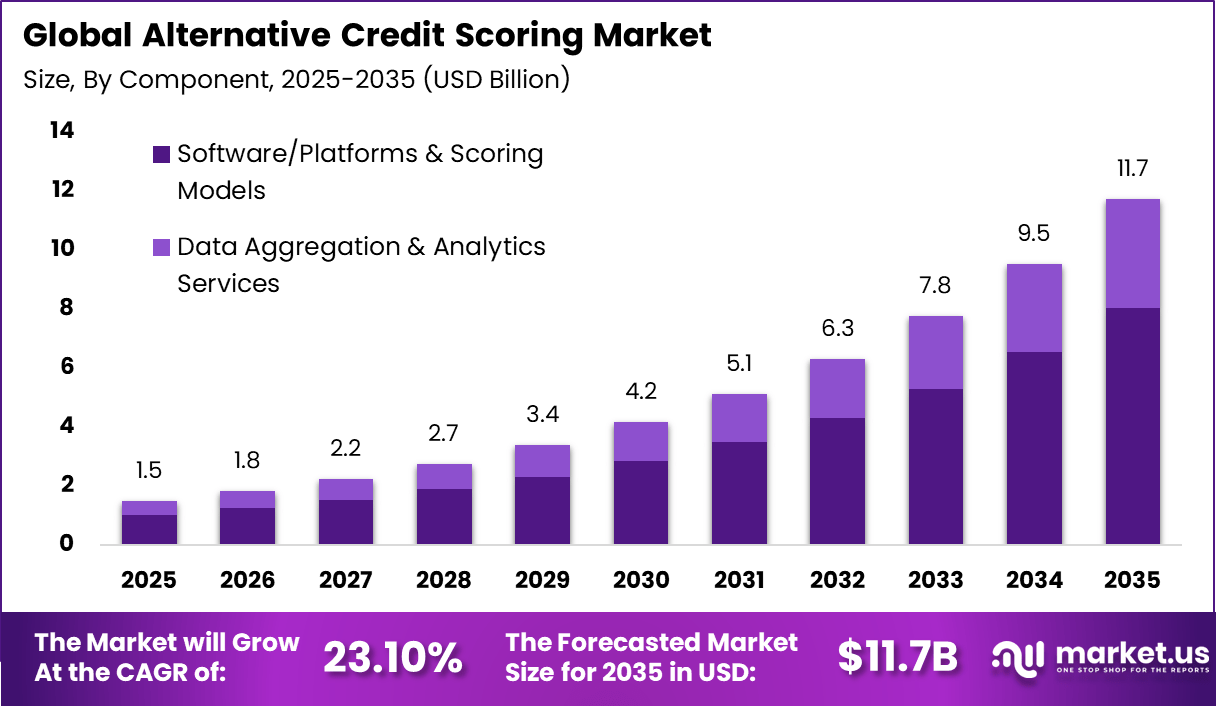
Key Regions and Countries
Competitive Analysis
Top Key Players in the Market
Future Outlook
Recent Developments