

Report Overview
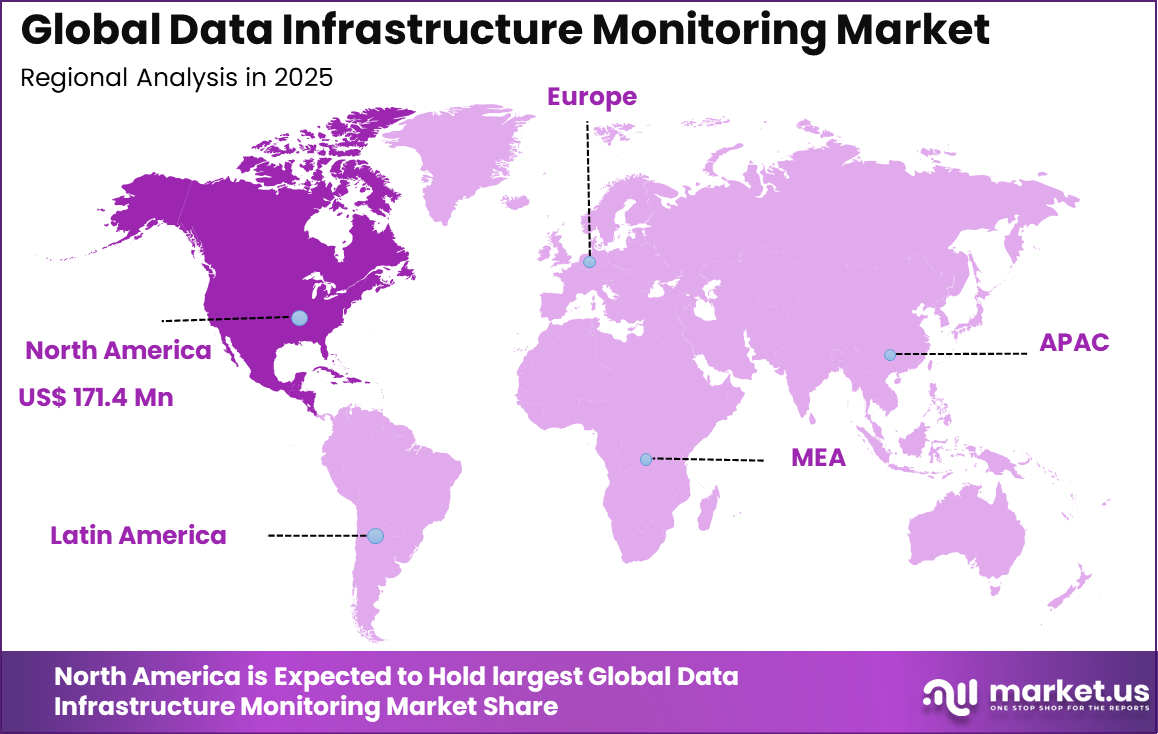
The Global Data Infrastructure Monitoring Market size is expected to be worth around USD 2,019.3 million by 2035, from USD 486.3 million in 2025, growing at a CAGR of 15.3% during the forecast period from 2025 to 2035. North America held a dominant market position, capturing more than a35.26% share, holding USD 171.4 million in revenue.
The Data Infrastructure Monitoring Market refers to tools and platforms used to track the performance, availability, health, and reliability of data infrastructure components across modern IT environments. These components include data pipelines, storage systems, databases, data processing engines, and network layers that support analytics and business operations. Monitoring ensures that data systems operate as expected and that failures are detected before they affect users or applications.
The market has become critical as organizations rely on continuous data availability for decision making. Modern data infrastructures are distributed across cloud, hybrid, and on premises environments. This complexity makes traditional infrastructure monitoring insufficient for data specific issues. Industry observations indicate that more than 65% of enterprises experience data related outages that are not immediately detected by standard IT monitoring tools.
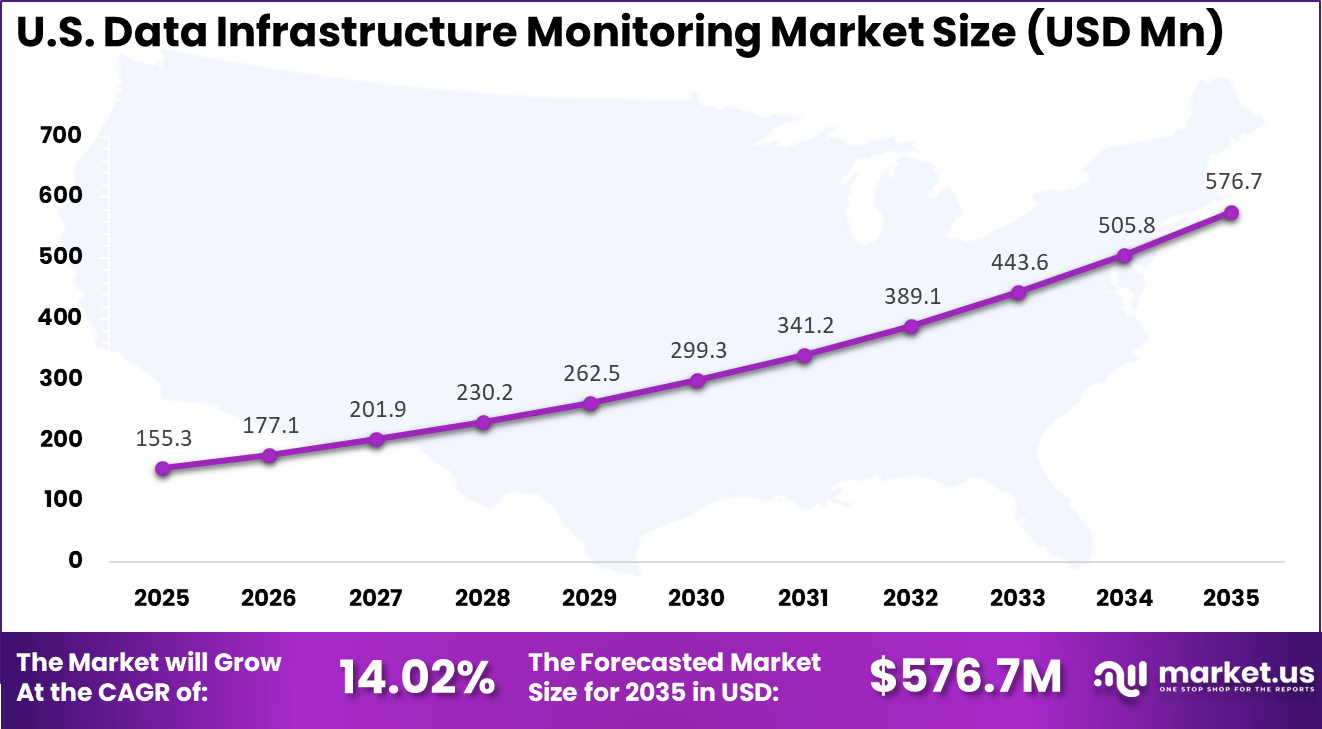
For instance, in November 2025, Splunk launched Database Monitoring in Observability Cloud, built on OpenTelemetry for SQL Server and Oracle. It spots slow queries, links app issues to database root causes, and offers AI fixes with code snippets. SRE teams resolve performance drags quicker, fitting the need for efficient warehouse analytics. The IT and technology sector accounts for 58.7% of total market demand, making it the leading end-user industry. Companies in this sector operate complex digital ecosystems that require uninterrupted performance and high system availability. Infrastructure monitoring supports service reliability, application uptime, and efficient workload management. As digital products and online platforms expand, monitoring tools become essential for maintaining operational stability. Technology firms are often early adopters of observability frameworks and automated monitoring systems. Integration with DevOps practices and agile development cycles further increases demand within this segment. Continuous infrastructure oversight allows rapid detection of system failures and performance degradation. This strengthens service quality and supports competitive positioning in a highly dynamic market environment. For Instance, in March 2025, ScienceLogic partnered with GlobalConnect to deliver AI-driven IT monitoring for a vast 152,000-mile network. The SL1 platform unifies observability, cuts noise, and automates root cause analysis for IT ops. Tech firms gain 24/7 visibility, speeding resolutions in complex IT landscapes. North America holds 35.26% of the global market share, establishing it as the largest regional contributor. The region benefits from advanced digital infrastructure, high cloud adoption rates, and strong enterprise IT spending. Organizations across industries such as finance, healthcare, retail, and technology rely heavily on monitoring platforms to ensure system stability. For instance, in September 2025, Splunk unveiled AI infrastructure and agent monitoring capabilities, featuring unified telemetry correlation and predictive analytics. This reinforces North American dominance by accelerating root cause analysis and ensuring reliable AI operations across complex infrastructures. Within North America, the United States market was valued at USD 155.3 million, supported by a compound annual growth rate of 14.02%. The country demonstrates high adoption of cloud services, data analytics platforms, and digital transformation initiatives. Enterprises in the US continue to invest in infrastructure monitoring to reduce downtime and manage hybrid IT environments effectively. For instance, in October 2025, Datadog unveiled major AI innovations at DASH 2025, including Bits AI SRE for autonomous incident response, GPU Monitoring, and Flex Frozen for cost-efficient log storage. These advancements solidify U.S. leadership in data infrastructure monitoring by enabling proactive observability across cloud and AI workloads. An emerging trend in the data infrastructure monitoring market is unified observability platforms that combine infrastructure monitoring with application performance monitoring (APM) and data observability. This convergence offers end-to-end visibility from user interaction through backend systems and data layers. Unified observability supports faster diagnosis across the entire stack. Another trend is increased automation in alerting and remediation workflows. Integration with incident management platforms and automated playbooks helps reduce mean time to resolution. Intelligent routing, automated diagnostics, and collaborative incident handling improve operational efficiency. One of the key growth factors for the data infrastructure monitoring market is widespread adoption of cloud and hybrid IT environments. As workloads migrate to cloud services, distributed computing and multi vendor infrastructure become common. Monitoring solutions that provide consistent coverage across clouds and on-premise systems remain essential. Another growth factor is rising emphasis on digital service reliability. Organisations competing on user experience must minimise service disruptions and maintain high performance. Data infrastructure monitoring supports these expectations by providing early warning and actionable insights. Reliability driven investment continues to support steady market expansion. A significant opportunity in the data infrastructure monitoring market lies in artificial intelligence and machine learning integration. These capabilities enhance anomaly detection, predictive analytics, and automated root cause analysis. Platforms that use AI to distinguish between normal and abnormal behaviour reduce manual effort and improve operational accuracy. Intelligent monitoring supports proactive optimisation. Another opportunity is expansion into edge and IoT enabled environments. As enterprises deploy data processing closer to endpoints, monitoring requirements extend beyond centralised data centres. Data infrastructure monitoring solutions that scale to edge locations and offer unified reporting across distributed sites meet growing demand in IoT intensive industries. A major challenge for the data infrastructure monitoring market is balancing deep visibility with performance overhead. Continuous monitoring requires collection and processing of significant telemetry data. If not architected efficiently, monitoring itself can consume infrastructure resources and impact the very systems it observes. Optimising performance and resource use remains a key challenge. Another challenge is aligning technical insights with business impact. Technical metrics such as CPU usage or query latency must be translated into meaningful business outcomes. Teams must correlate infrastructure signals with user experience and operational objectives. Without clear context, monitoring data may be underutilised. North America Europe Asia Pacific Latin America Middle East & Africa Leading observability and monitoring providers such as Datadog, Dynatrace, New Relic, and Splunk hold strong positions in the data infrastructure monitoring market. Their platforms provide real-time visibility across servers, containers, databases, and cloud workloads. AI-driven anomaly detection and root cause analysis improve incident response. These vendors benefit from strong enterprise adoption and broad integration ecosystems. Demand is driven by hybrid cloud expansion and rising system complexity. IT operations and infrastructure management specialists such as SolarWinds, LogicMonitor, and ScienceLogic focus on unified monitoring across on-premises and multi-cloud environments. BMC Software and Micro Focus strengthen legacy system visibility and service management integration. AppDynamics and Riverbed enhance performance analytics. Adoption is supported by increasing downtime costs and digital transformation initiatives. Cloud platform providers such as Amazon Web Services, Microsoft, Google, and IBM embed monitoring capabilities within native cloud services. These tools offer scalability, automation, and integration with DevOps workflows. Other vendors add competitive depth and regional specialization. This landscape supports continuous innovation and broad adoption of data infrastructure monitoring solutions worldwide.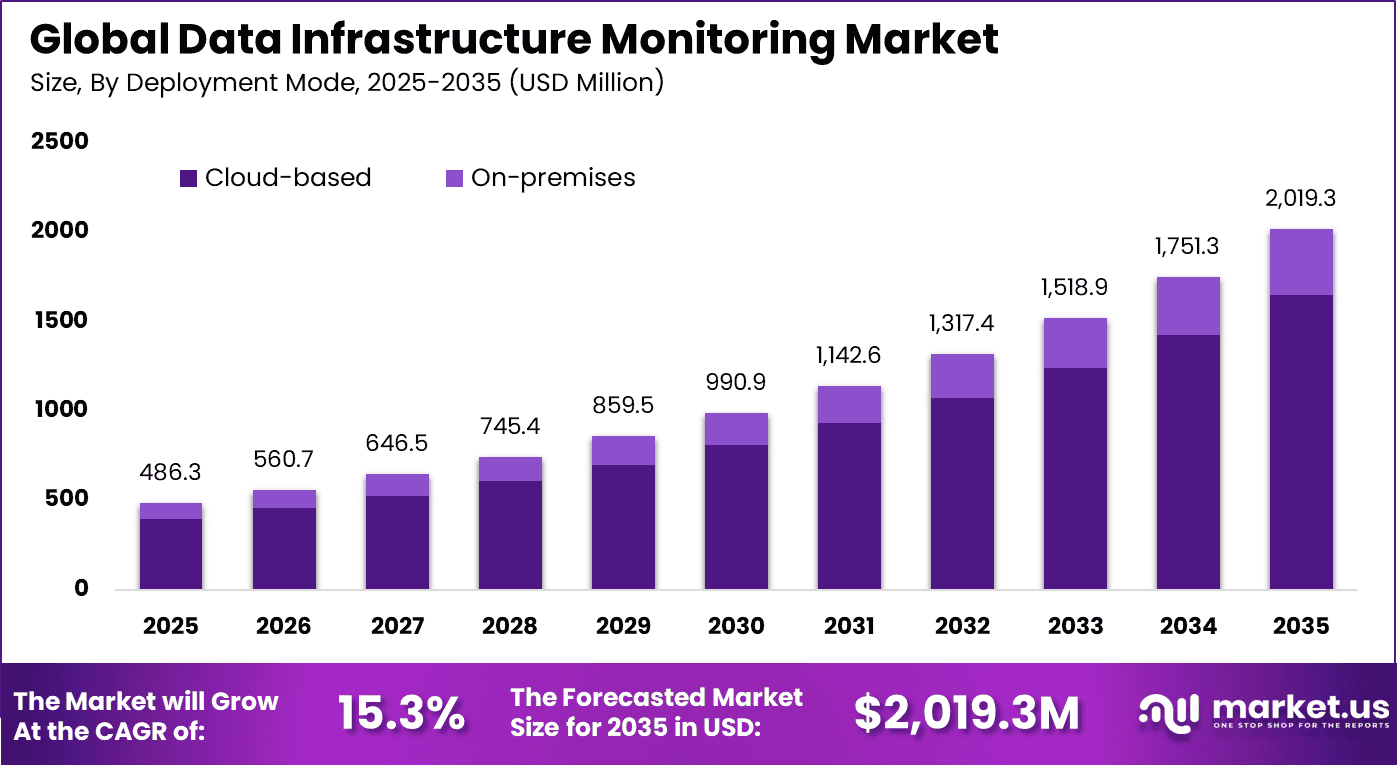
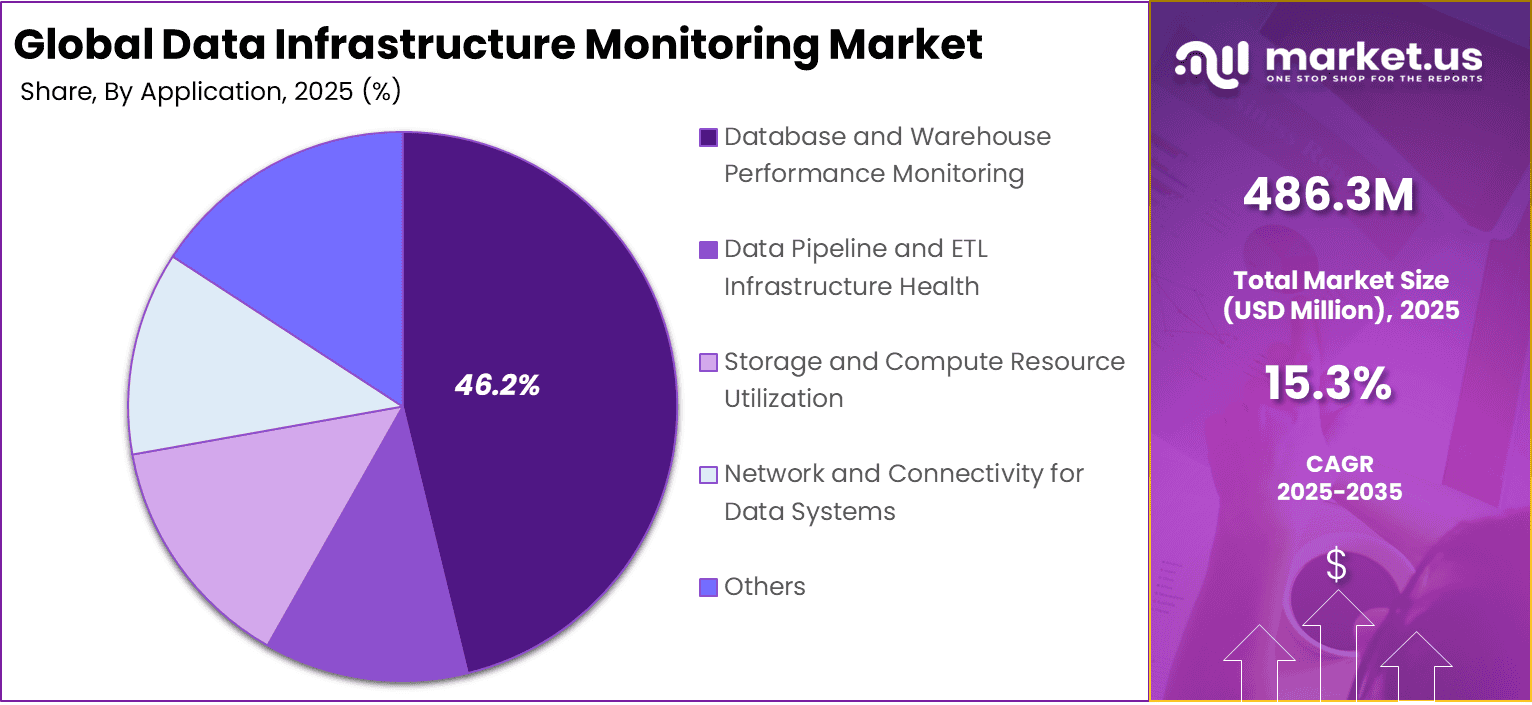
By End-User Industry
Regional Analysis
Emerging Trends Analysis
Growth Factors Analysis
Opportunity Analysis
Challenge Analysis
Key Market Segments
By Deployment Mode
By Application
By End-User Industry
Key Regions and Countries
Key Players Analysis
Top Key Players in the Market
Recent Developments