

Report Overview
The Global SaaS Data Management Market size is expected to be worth around USD 38.96 billion by 2035, from USD 2.52 billion in 2025, growing at a CAGR of 31.5% during the forecast period from 2025 to 2035. North America held a dominant market position, capturing more than a35.63% share, holding USD 0.89 billion in revenue.
The SaaS data management market refers to cloud delivered platforms and services that help organisations collect, store, organise, and govern their data assets through software delivered as a service. These solutions enable centralised control of data without the need for extensive on-premises infrastructure, making them accessible to organisations of varying size and maturity. The market includes tools for data integration, cleansing, quality control, and governance that are hosted and managed by third party providers.
Adoption of SaaS based data management supports broader enterprise initiatives to improve data accessibility, reduce operational complexity, and enhance decision making. SaaS data management platforms are designed to be scalable and flexible, allowing organisations to adjust capacity in line with evolving business needs. These solutions often provide subscription based pricing and regular updates, which reduces the need for in-house maintenance and system upgrades.
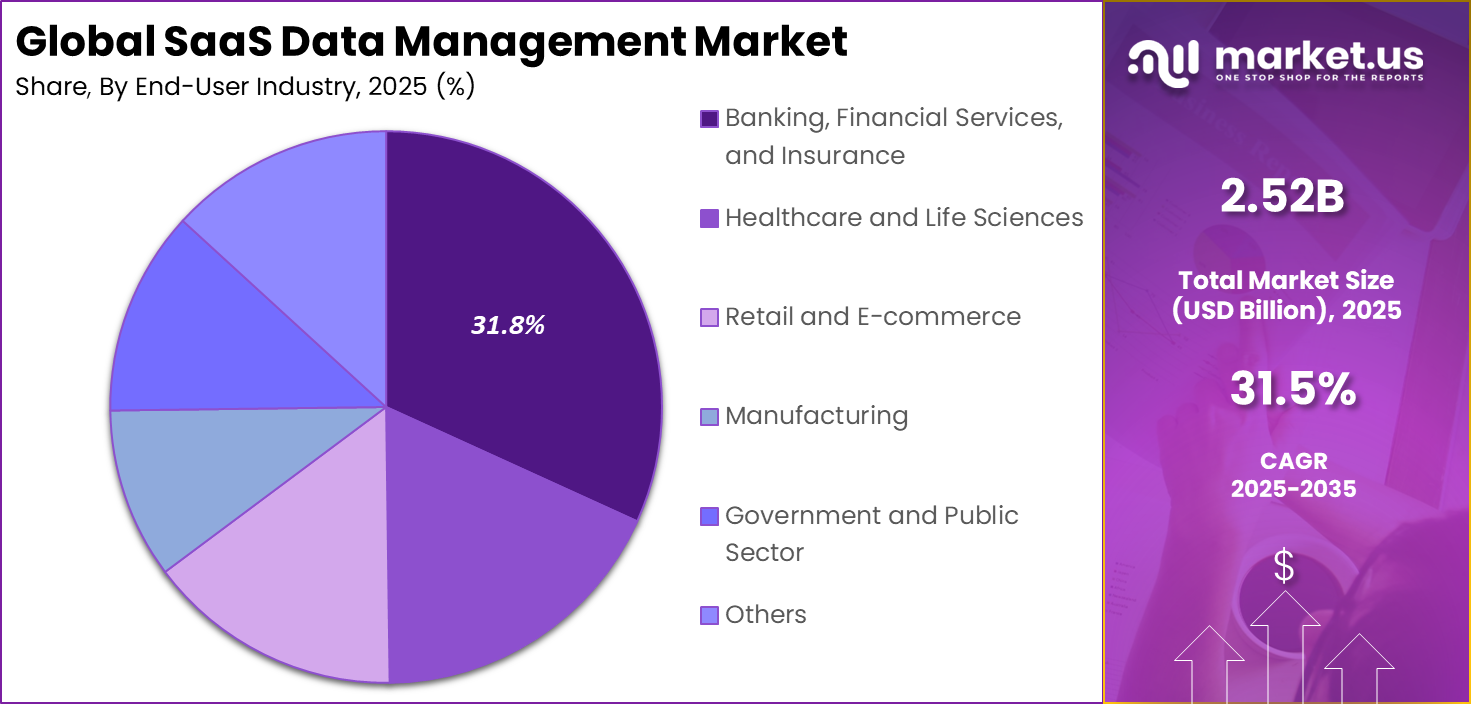
For Instance, in March 2025, Google LLC extended Datastream for Salesforce Data Cloud extraction to BigQuery. This CDC service captures changes from Salesforce into public cloud destinations effortlessly. It simplifies merging SaaS data with operational sources, making public cloud deployments ideal for analytics and AI without integration pains. Large enterprises hold 67.4% of total market share in SaaS data management. These organizations manage complex data ecosystems across departments and regions. Centralized SaaS platforms help standardize governance policies and maintain consistent data quality. Enterprise-level adoption is supported by high data volumes and regulatory requirements. Effective data oversight strengthens operational transparency and reporting accuracy. Large enterprises also require advanced analytics and real-time insights to support strategic planning. SaaS data management platforms provide scalable infrastructure for handling high transaction volumes. Automation reduces system complexity and improves efficiency across global operations. Integration with enterprise resource planning and customer relationship management systems enhances performance visibility. The scale and technical maturity of large enterprises explain their dominant position. For Instance, in September 2025, Workday, Inc. introduced Workday Data Cloud with zero-copy partnerships like Snowflake and Salesforce. Tailored for large firms, it unifies HR and finance data for AI insights without exports. Enterprises benefit from governed access in familiar tools, streamlining big-scale operations. The Banking, Financial Services, and Insurance sector represents 31.8% of the market. Financial institutions manage sensitive and high-frequency transactional data that require secure storage and continuous monitoring. SaaS data management platforms ensure encryption, access control, and audit readiness. These capabilities support compliance with strict regulatory frameworks. Real-time data processing strengthens fraud detection and risk management systems. Financial institutions also rely on data analytics for customer insights and product development. Centralized SaaS solutions enable seamless integration across digital banking platforms and payment systems. Automated governance tools reduce operational risk and enhance transparency. Strong regulatory oversight continues to drive investment in secure and scalable data management platforms. The sector’s reliance on accurate and secure data supports its significant market share. For Instance, in June 2025, Datadog, Inc. launched compliance-focused log retention for regulated industries like BFSI. Features like Archive Search help manage SaaS data securely with residency controls. BFSI firms optimize costs while meeting audit needs, spurring public cloud log management growth. Moreover, expanding SaaS adoption across emerging markets and industry verticals presents further growth potential. Businesses in sectors such as healthcare, finance, retail, and logistics are increasingly embracing cloud-based data solutions to modernize operations, improve scalability, and enhance competitive positioning. Tailored SaaS data management solutions that address industry-specific regulatory requirements, scalability needs, and analytics demands can unlock new customer segments. A significant challenge in the SaaS data management market is maintaining performance and scalability while managing growing volumes of diverse data types. As enterprises accumulate larger datasets from multiple sources, ensuring responsive performance for ingestion, storage, processing, and querying can strain SaaS infrastructures. Organizations must balance resource allocation for optimal performance without disproportionately inflating operational costs. Effective scalability strategies remain a fundamental technical and financial challenge. Another persistent challenge involves the shortage of skilled professionals capable of designing, integrating, and managing advanced SaaS data environments. Expertise in cloud architecture, data governance, and cybersecurity is critical for successful deployment and ongoing optimization, yet such skills are in high demand and limited supply. This talent gap can delay project timelines, increase dependency on external consultants, and elevate total cost of ownership. Bridging this skills deficit is essential for enterprises seeking to fully realize the strategic value of SaaS data management investments. North America Europe Asia Pacific Latin America Middle East & Africa Global cloud and platform providers such as Microsoft Corporation, Amazon Web Services, Inc., Google LLC, and Alibaba Cloud dominate the SaaS data management market. Their platforms offer scalable storage, integration, and analytics tools delivered through subscription models. Strong ecosystem integration and global infrastructure support enterprise adoption. Demand is driven by rapid digital transformation and multi-cloud deployment strategies. Enterprise application and database vendors such as Oracle Corporation, SAP SE, Salesforce, Inc., Adobe Inc., Workday, Inc., and ServiceNow, Inc. integrate SaaS-based data management within business applications. Snowflake Inc. strengthens data warehousing and sharing capabilities. These vendors benefit from strong enterprise customer bases and API-driven architectures. Observability and storage-focused providers such as Datadog, Inc., NetApp Inc., IBM Corporation, and ZoomInfo Technologies Inc. expand advanced monitoring, governance, and enrichment capabilities. These players emphasize automation, compliance, and performance optimization. Other vendors enhance competition and innovation, supporting sustained growth in SaaS data management solutions globally.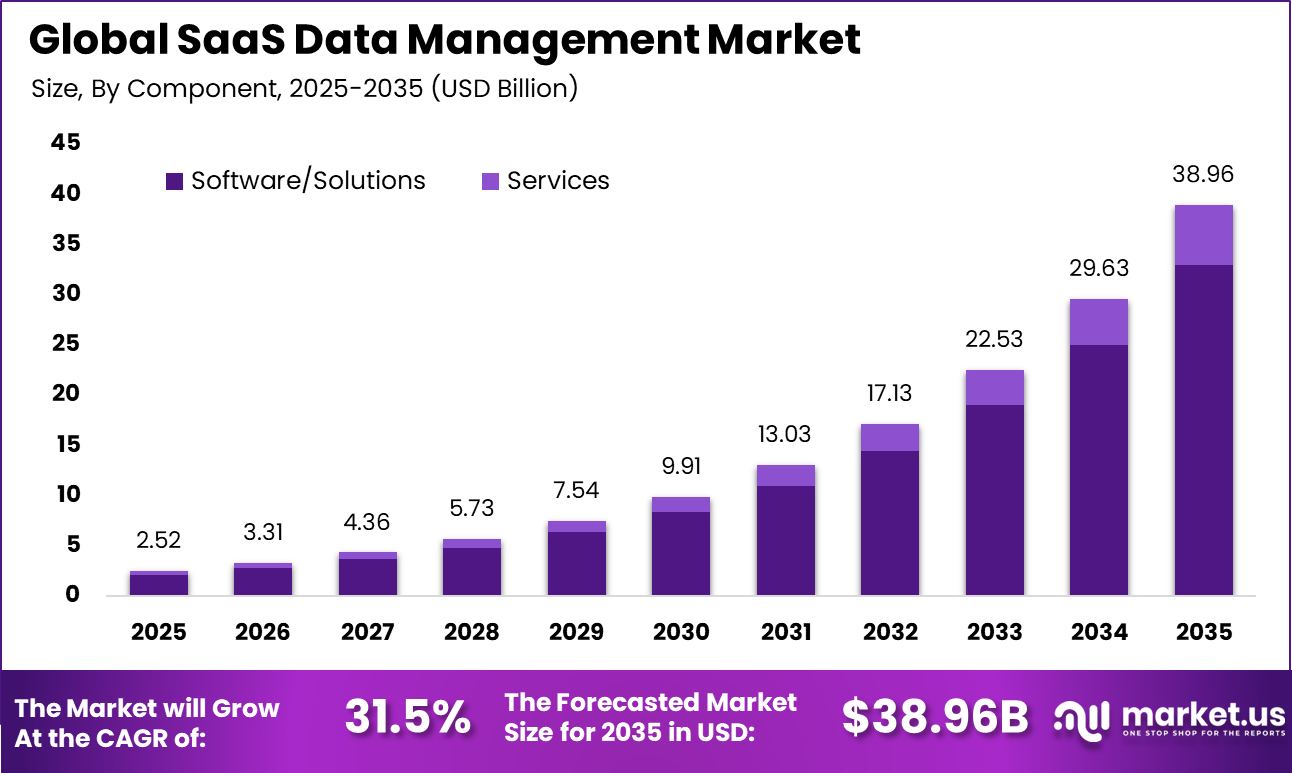
By Organization Size: Large Enterprises
By End-User Industry: BFSI
Challenge Analysis
Key Market Segments
By Component
By Service Type
By Deployment Mode
By Organization Size
By End-User Industry
Key Regions and Countries
Key Players Analysis
Top Key Players in the Market
Recent Developments