

Report Overview
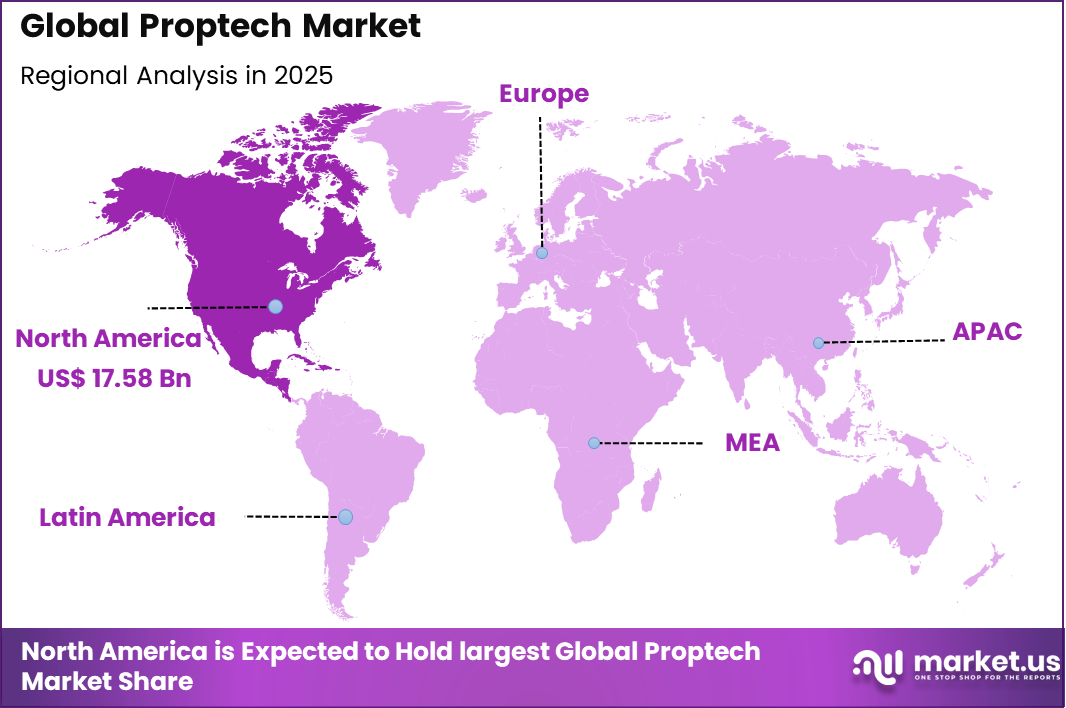
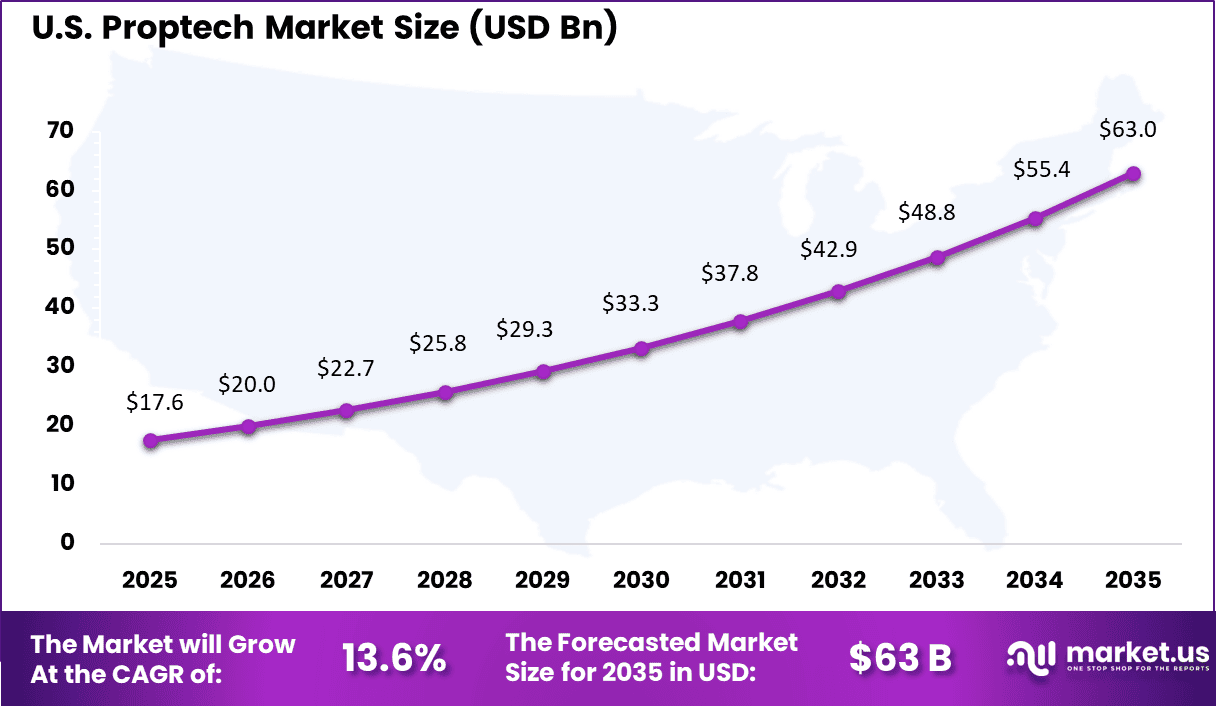
The Global Proptech Market generated USD 45.7 billion in 2025 and is predicted to register growth from USD 52.3 billion in 2026 to about USD 178.5 billion by 2035, recording a CAGR of 14.60% throughout the forecast span. In 2025, North America held a dominan market position, capturing more than a 38.7% share, holding USD 17.58 Billion revenue.
The Proptech Market refers to technologies and digital solutions that are applied to real estate processes, assets, and transactions to improve efficiency and user experience. These solutions include digital property listings, intelligent building management systems, virtual tours, data analytics platforms, and automated transaction tools. Proptech brings software driven capabilities to sectors such as residential sales, commercial leasing, facilities management, and property investment.
The market has grown as investors, developers, brokers, and tenants seek greater transparency and faster decision making in property activities. Proptech platforms enable enhanced access to data, optimized workflows, and reduced manual effort in processes such as property search, valuation, and asset performance monitoring. Increasing demand for digital engagement and remote access further reinforces the use of technology in property markets.
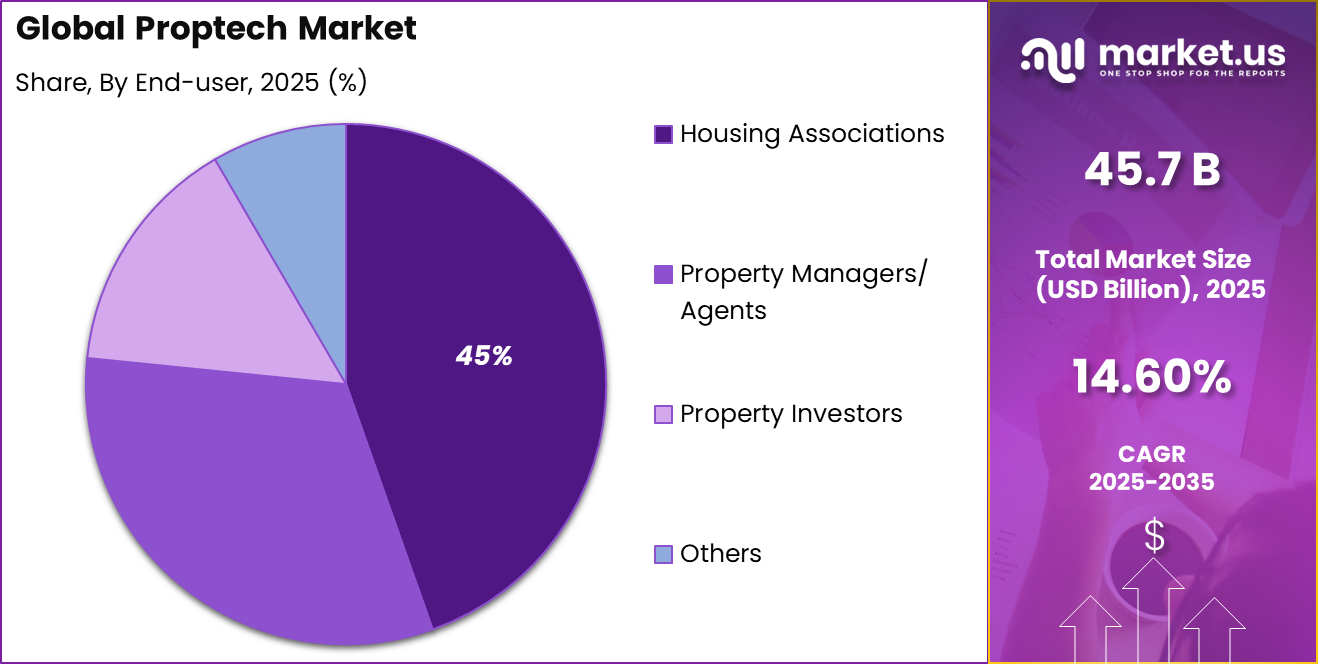
Property managers use dashboards to monitor occupancy rates, financial performance, and asset utilization. Integration with payment gateways and customer management systems improves service delivery. Cloud connectivity and mobile accessibility also enhance user engagement. These technological advantages explain the strong market share held by software solutions. On-premises deployment represents 58.5% of the proptech market. Many real estate organizations prefer localized control over sensitive tenant and financial data. On-premises systems provide direct oversight of security configurations and compliance processes. This is particularly important for housing authorities and large property portfolios managing regulated data. Internal infrastructure ensures stable performance and customized integration with legacy systems. Organizations operating under strict regulatory requirements often prioritize data sovereignty. On-premises deployment allows tailored security frameworks aligned with national compliance standards. Real estate firms with established IT infrastructure also benefit from predictable long-term operational control. Although cloud adoption is growing, on-premises systems remain relevant for data-sensitive environments. These factors support the continued dominance of on-premises deployment. Housing associations account for 44.6% of the proptech market. These organizations manage large residential portfolios that require structured tenant management and maintenance coordination. Digital property management tools improve rent tracking, compliance reporting, and communication with residents. Automation enhances operational transparency and reduces administrative workload. As housing demand rises, associations increasingly adopt digital solutions to optimize performance. Regulatory oversight in affordable and public housing further drives technology adoption. Software platforms support documentation, inspection tracking, and financial accountability. Centralized data systems improve service delivery and tenant satisfaction. Real-time reporting also supports better asset planning and budgeting decisions. The operational scale of housing associations explains their significant share in the market. Growth can be attributed to rising demand for efficiency, transparency, and automation in real estate operations. Overall, the market is expected to expand as businesses and consumers prioritize connected and tech-enabled property solutions.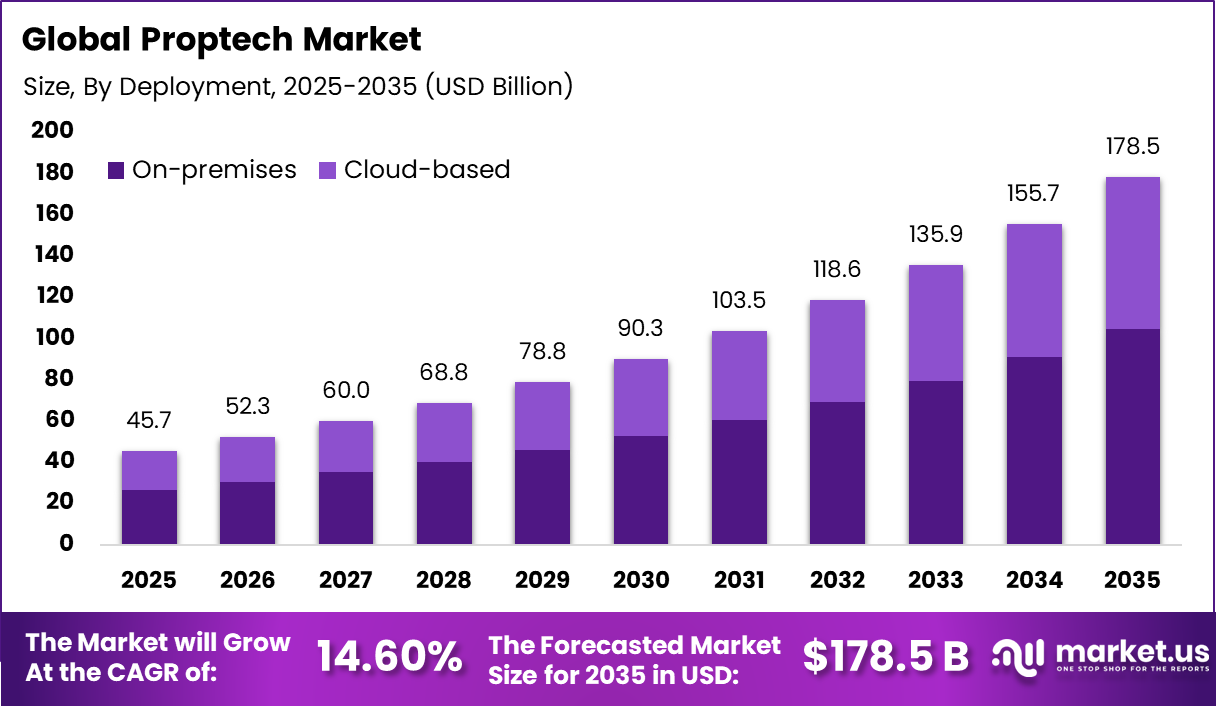
By Deployment
By End User
Recent Developments