

Report Overview
The Enterprise Data Risk Management Market is valued at USD 1.68 billion in 2025 and is projected to reach USD 6.56 billion by 2035, growing at a CAGR of 14.60%. North America holds a significant share of 36.5%, with a market size of USD 0.61 billion in 2025. Within the region, the US is expected to contribute USD 0.55 billion in 2025, growing to USD 1.89 billion by 2035, with a CAGR of 13.11%.
The market’s growth is being driven by the increasing complexity of enterprise data ecosystems, heightened regulatory scrutiny, and the rising threat of data breaches and cyberattacks. Organizations are increasingly adopting data risk management solutions to safeguard sensitive information, comply with privacy regulations, and ensure business continuity. As data becomes more distributed across cloud environments and third-party platforms, companies need integrated solutions that provide real-time risk assessment, governance, and mitigation strategies.
North America’s dominance is attributed to the region’s well-established regulatory frameworks and high adoption of advanced technologies, including AI and machine learning, to manage and mitigate data-related risks. The US, being the largest contributor in the region, is expected to continue leading the market, driven by stringent data protection laws and a growing focus on securing digital infrastructures across various industries, including finance, healthcare, and IT.
The Enterprise Data Risk Management Market presents significant growth opportunities as organizations accelerate digital transformation and expand their data ecosystems. One major opportunity lies in the rising adoption of artificial intelligence and advanced analytics for risk prediction and automated decision-making. Enterprises are increasingly seeking intelligent platforms that can analyze large datasets, detect anomalies, and provide real-time risk insights, which enhances proactive risk mitigation capabilities and operational efficiency. Another strong opportunity is the rapid expansion of cloud computing and hybrid IT environments. According to industry cloud adoption trends, a large share of enterprise workloads is shifting to cloud platforms, creating new data governance and security challenges. This transition is encouraging organizations to invest in scalable cloud-native data risk management solutions that offer continuous monitoring, encryption controls, and automated compliance tracking across distributed infrastructures. Additionally, the growing focus on third-party and vendor risk management is opening new avenues for market growth. Modern enterprises rely heavily on external partners, SaaS providers, and global supply chains, increasing exposure to data vulnerabilities beyond internal systems. As a result, companies are prioritizing integrated risk management frameworks that assess vendor data practices and cybersecurity posture. Emerging regulatory frameworks across financial services, healthcare, and technology sectors also create opportunities for solution providers to develop specialized compliance-focused tools. These evolving requirements are expected to drive sustained demand for advanced, automated, and industry-specific data risk management platforms. One of the most prominent trends in the Enterprise Data Risk Management Market is the increasing integration of artificial intelligence and machine learning into risk monitoring systems. Organizations are moving beyond traditional rule-based risk models and adopting AI-driven platforms that can identify anomalies, predict potential data risks, and automate mitigation actions. This shift is improving real-time visibility into enterprise data environments and enabling faster response to emerging threats. Another key trend is the rise of integrated Governance, Risk, and Compliance (GRC) frameworks. Enterprises are consolidating multiple risk functions into unified platforms to manage cyber risk, regulatory risk, and operational risk through a single dashboard. This approach enhances decision-making efficiency and supports enterprise-wide transparency, especially in highly regulated industries such as banking and healthcare. The growing emphasis on data privacy and ethical data governance is also shaping market trends. With increasing enforcement of global data protection regulations and stricter audit requirements, organizations are prioritizing continuous controls, monitoring, and automated audit trails. Additionally, zero-trust security architecture is gaining traction, where every data access request is verified regardless of user location. This trend is particularly relevant as remote work and distributed data access models continue to expand, increasing the need for dynamic and context-aware data risk management solutions. The competitive landscape of the Enterprise Data Risk Management market is highly driven by enterprise software leaders that provide integrated governance, risk, and compliance platforms. IBM Corporation maintains a strong position through its OpenPages platform, which enables organizations to manage operational risk, regulatory compliance, and internal audit processes within a unified system, supporting enterprise-wide risk visibility. Oracle Corporation and SAP SE compete by embedding risk analytics and compliance monitoring into their enterprise applications, helping large organizations align data governance with regulatory frameworks and operational controls. ServiceNow, Inc. has strengthened its competitive edge through its cloud-based workflow and GRC capabilities that automate risk identification, policy lifecycle management, and continuous monitoring across business operations. SAS Institute Inc. differentiates itself through advanced analytics and risk intelligence tools that allow enterprises to detect anomalies and evaluate complex risk datasets in real time. Meanwhile, NAVEX Global, Inc. and OneTrust, LLC focus on integrated risk and compliance platforms that centralize policy management, third-party risk, and regulatory tracking to enhance organizational transparency. MetricStream, Inc., Diligent Corporation, and RSA Archer LLC are recognized for scalable risk management frameworks that support enterprise governance and audit readiness, while Resolver, Inc. and LogicManager, Inc. emphasize configurable risk assessment and incident management solutions. Collectively, these companies compete through AI integration, automation, and unified risk dashboards, enabling enterprises to transition from reactive risk control to predictive data risk management strategies. Enterprise data risk management is projected to become more embedded in core business operations as organizations continue to digitize sensitive workflows and expand cloud infrastructures. Studies indicate that AI-enabled risk management platforms have already recorded around 34% growth in adoption between 2022 and 2024, reflecting the shift toward predictive and automated risk monitoring across enterprises. Additionally, cybersecurity incidents increased significantly in recent years, with some reports noting a 75% spike in cyber incidents, which is expected to push enterprises to invest more heavily in integrated risk governance systems and real-time monitoring tools. Looking ahead, enterprises are anticipated to prioritize AI-driven risk analytics, continuous controls monitoring, and unified governance dashboards to manage growing data complexity. With over 60% of organizations already using AI in production environments and many planning to expand AI budgets, enterprise risk platforms are likely to evolve toward intelligent automation and self-learning risk models. The integration of cyber risk modules, now included in more than half of new deployments, is expected to accelerate as digital ecosystems expand. Furthermore, identity governance and insider risk management tools are projected to gain traction due to the rising volume of machine and human identities within enterprises. As regulatory pressure intensifies globally and hybrid work environments expand, organizations are likely to adopt centralized, cloud-native risk frameworks that provide real-time visibility, faster incident response, and stronger compliance alignment across distributed data environments.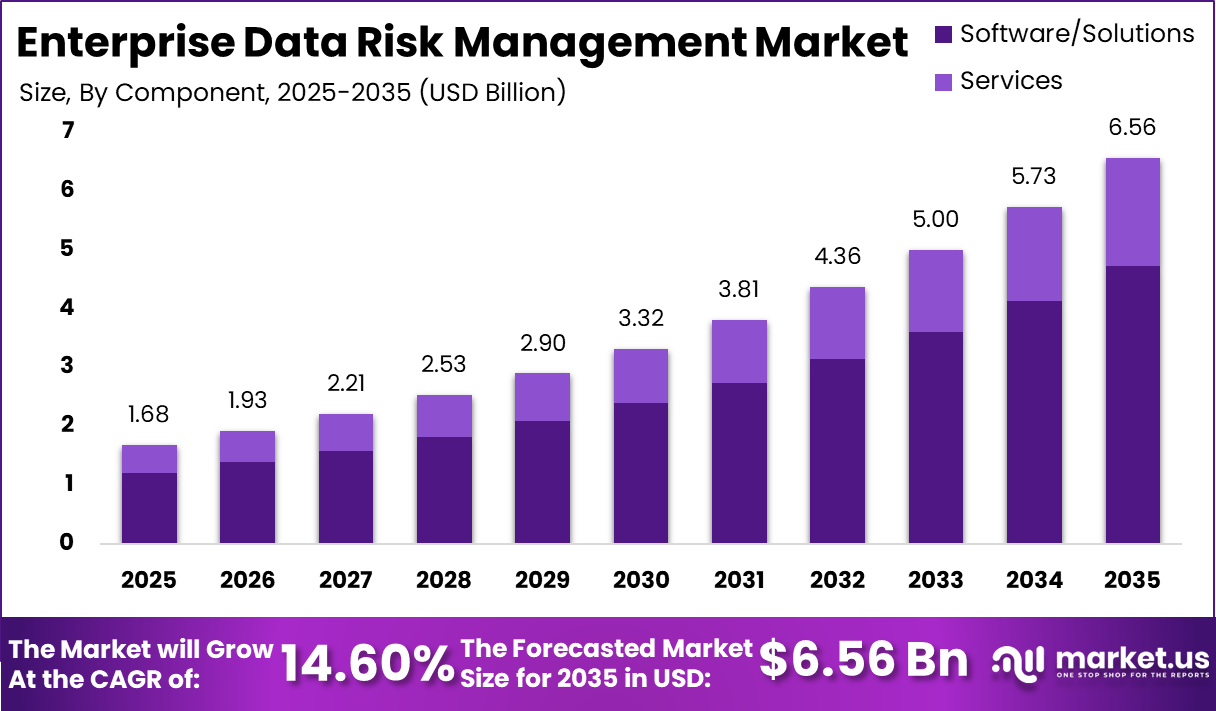
Growth Opportunities
Trending factors
Competitive Analysis
Top Key Players in the Market
Future Predictions
Recent Developments