

Report Overview
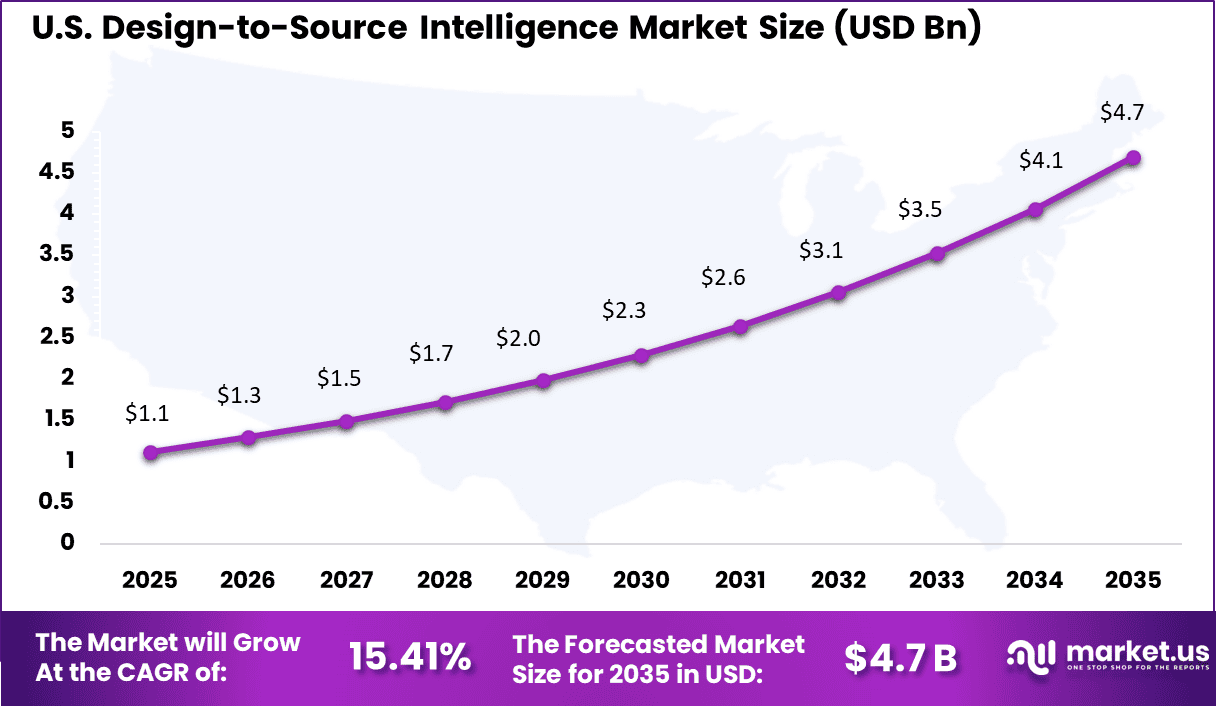
The Global Design-to-Source Intelligence Market generated USD 3.4 billion in 2025 and is predicted to register growth from USD 4 billion in 2026 to about USD 15.3 billion by 2035, recording a CAGR of 16.20% throughout the forecast span. In 2025, North America held a dominan market position, capturing more than a 36.5% share, holding USD 1.24 Billion revenue.
Design-to-Source Intelligence refers to a structured approach where sourcing and supply chain insights are embedded directly into the product design process at an early stage of development. This process enables organizations to link design specifications with real-time supplier data, cost benchmarks, material availability, and compliance requirements for more informed decision-making.
It incorporates advanced analytics, artificial intelligence, and data from supplier networks to support sourcing decisions before mass production, which can reduce time-to-market and mitigate downstream risks. The market comprises software platforms, analytics tools, and support services designed to integrate design and procurement workflows and improve sourcing efficiency.
The Design to Source Intelligence market is led by procurement and supply chain technology providers such as Supplyframe under Siemens, JAGGAER, Ivalua, Coupa Software, SAP SE, Samsung SDS, and HCL Technologies. These companies compete on end to end sourcing visibility, supplier risk monitoring, and integration with enterprise resource planning and procurement systems. Their platforms are widely adopted by large manufacturers and electronics companies that require component level cost insight, supplier availability data, and compliance tracking during product design. Specialized and mid sized providers including Luminovo, Source Intelligence, Zensar Technologies, Edited, ITMAGINATION, Linagora, IndSpec, TradeEdge, and others compete through focused analytics and flexible deployment. Competition in this segment is driven by real time component intelligence, alternative part identification, and faster supplier evaluation. These vendors are often selected by companies seeking practical design stage sourcing insights and improved resilience across global supply chains. The future outlook for the Design-to-Source Intelligence Market is positive as companies increasingly seek smarter ways to link product design with sourcing decisions. Demand for design-to-source intelligence solutions is expected to grow because these tools help teams find the best suppliers, reduce costs, and speed up development. Adoption of data analytics, automation, and real-time insights will improve decision making and collaboration across design and procurement. Growth can be attributed to rising focus on supply chain efficiency, cost management, and faster product innovation. Overall, the market is expected to expand as organizations prioritize connected and intelligent sourcing processes.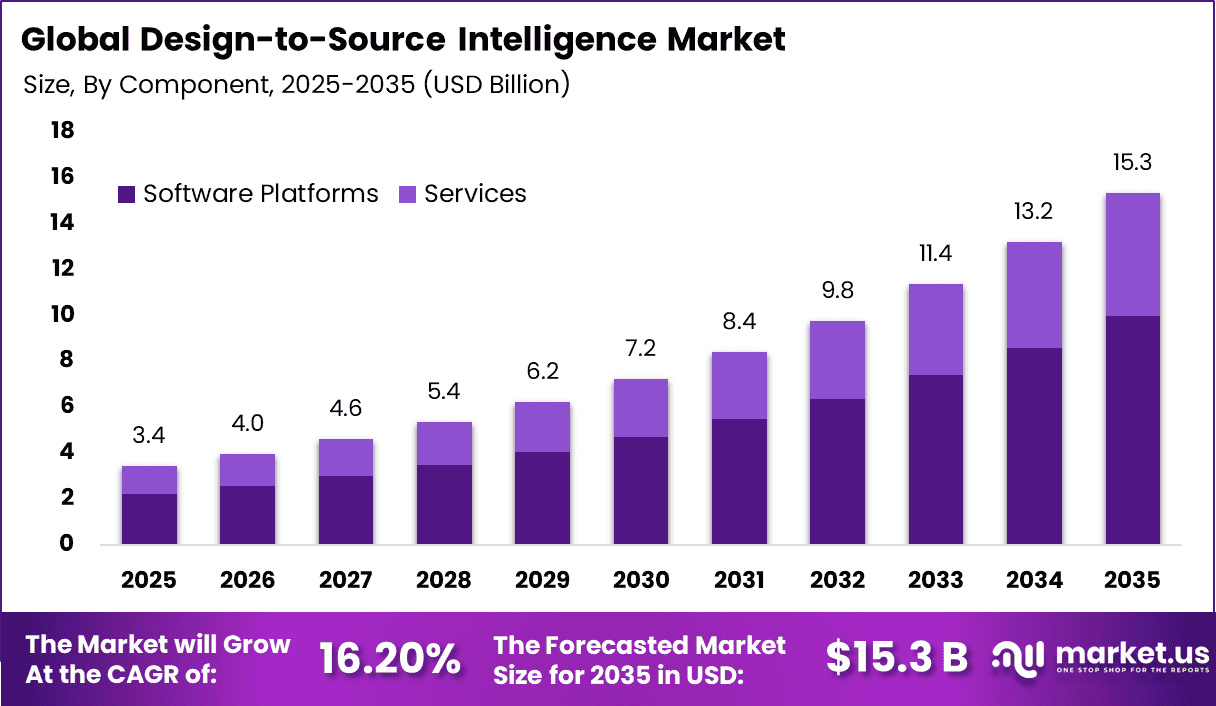
Key Regions and Countries
Competitive Analysis
Top Key Players in the Market
Future Outlook
Recent Developments