

Report Overview
The Global AI Stadium Experience Enhancement Market size is expected to be worth around USD 4,783.7 million by 2035, from USD 812.3 million in 2025, growing at a CAGR of 19.4% during the forecast period from 2025 to 2035. North America held a dominant market position, capturing more than a38.41% share, holding USD 312.0 million in revenue.
The AI Stadium Experience Enhancement market refers to the use of artificial intelligence technologies to improve fan engagement, operational efficiency, and overall visitor experience within sports and entertainment venues. These solutions integrate AI with stadium infrastructure such as cameras, sensors, mobile applications, and digital screens to analyze crowd behavior, personalize services, and optimize event management.
AI systems enable stadium operators to deliver real-time insights that improve fan comfort, safety, and entertainment value during live events. The adoption of AI in stadium environments has increased as sports organizations aim to create immersive and digitally connected experiences for spectators. Modern stadiums are evolving into smart venues where data analytics, facial recognition, predictive crowd management, and automated services help enhance fan satisfaction while improving operational performance.
One emerging trend in this market is the use of computer vision for crowd analytics and security management. AI-powered cameras can monitor crowd density, identify unusual activity, and assist security teams in maintaining a safe environment during large-scale events. These systems improve safety while enabling stadium operators to manage crowd flow more efficiently. Another trend is the integration of augmented reality and immersive digital experiences. Fans can access interactive content through mobile devices or smart glasses, allowing them to view player statistics, instant replays, and enhanced visual elements during live events. This integration transforms stadium visits into more engaging and technologically advanced entertainment experiences. North America Europe Asia Pacific Latin America Middle East & Africa A major driver of the AI Stadium Experience Enhancement market is the digital transformation of sports venues into connected entertainment hubs. Stadium operators are investing in digital platforms that integrate ticketing systems, concession services, navigation assistance, and fan engagement tools. AI technologies analyze this operational data to optimize resource allocation and improve service efficiency during events. Another driver is the increasing use of mobile applications for fan engagement. Stadium apps provide navigation guidance, real-time event updates, and personalized recommendations. AI algorithms analyze user activity within these platforms to deliver targeted content and promotions, improving fan interaction and satisfaction. For instance, in August 2025, IBM teamed up with the USTA to launch AI chat features at the US Open, giving fans instant match updates and player insights right on their phones. This move taps into fans’ love for seamless digital ties during live events, keeping them hooked with tailored content that feels personal and timely. It shows how tech firms are fueling the push for stadiums to blend physical and virtual worlds effortlessly. One restraint affecting the AI Stadium Experience Enhancement market is the high cost associated with implementing advanced technology infrastructure. Deploying AI-powered analytics systems, sensors, and high-speed connectivity networks requires significant investment. Smaller venues may face financial constraints that slow adoption of these technologies. Another restraint involves concerns related to privacy and data protection. AI systems that analyze facial recognition, crowd behavior, and user data must comply with strict privacy regulations. Ensuring responsible data usage while maintaining system effectiveness remains a critical challenge for stadium operators. For instance, in January 2026, Cisco rolled out a major network upgrade for a European soccer stadium, tackling old cabling that slowed AI sensor rollouts. The project highlighted the tough work of syncing new systems with legacy setups, often delaying fan-facing apps like real-time seating alerts. Teams note these overhauls demand careful planning to avoid game-day hiccups. A significant opportunity lies in the development of fully integrated smart stadium ecosystems. AI platforms can combine data from ticketing systems, crowd analytics, concession services, and security monitoring to create a unified operational framework. This integration enables stadium operators to improve event management, reduce waiting times, and deliver seamless experiences for fans. Another opportunity involves the expansion of AI-driven monetization strategies. Personalized promotions, targeted merchandise offers, and dynamic pricing for services can increase revenue opportunities for stadium operators. By analyzing fan behavior and purchasing patterns, AI systems enable more effective marketing and sales strategies. For instance, in March 2025, Siemens installed sensor networks in a new US baseball venue, paving the way for AI to manage crowd flow and energy use more smartly. This build lets operators layer on fan perks like dynamic pricing for food based on wait times. It opens paths for venues to evolve into fully connected spaces that adapt on the fly. A key challenge in this market is integrating AI technologies with existing stadium infrastructure. Many venues operate with legacy systems that were not originally designed for advanced analytics or real-time data processing. Integrating new AI platforms with these systems requires technical expertise and coordinated infrastructure upgrades. Another challenge involves managing large volumes of real-time data generated during live events. AI systems must process information from cameras, sensors, and mobile applications simultaneously. Ensuring reliable performance and accurate insights under high data loads remains a technical challenge for stadium operators. For instance, in November 2025, Intel shared a framework at a tech conference for secure AI processing in stadium cameras, addressing fears over facial recognition data from crowds. The tool aims to let fans enjoy personalized replays without sharing location details widely. It underscores the need for hardware that builds trust amid rising scrutiny on fan tracking ethics. The AI Stadium Experience Enhancement Market is driven by global technology companies that provide advanced computing infrastructure, connectivity, and analytics platforms for modern sports venues. IBM, Cisco, Intel, Nvidia, and Hewlett Packard Enterprise provide high performance computing, edge processing, and AI analytics platforms used in stadium environments. These technologies support real time data processing, smart security monitoring, and immersive fan engagement applications. Industrial technology and smart building solution providers play a major role in stadium automation and operational efficiency. Siemens, Honeywell, and Johnson Controls deliver integrated building management systems and IoT enabled facility controls. These platforms improve energy efficiency, crowd flow management, and safety monitoring within large sports venues. Sports analytics and media technology firms further strengthen the competitive landscape. Atos, Deltatre, Hawk-Eye Innovations, Pixellot, Stats Perform, Sportradar, and WSC Sports specialize in AI driven video analytics, real time statistics, and automated content generation. These capabilities enhance fan engagement through interactive broadcasts and digital media platforms.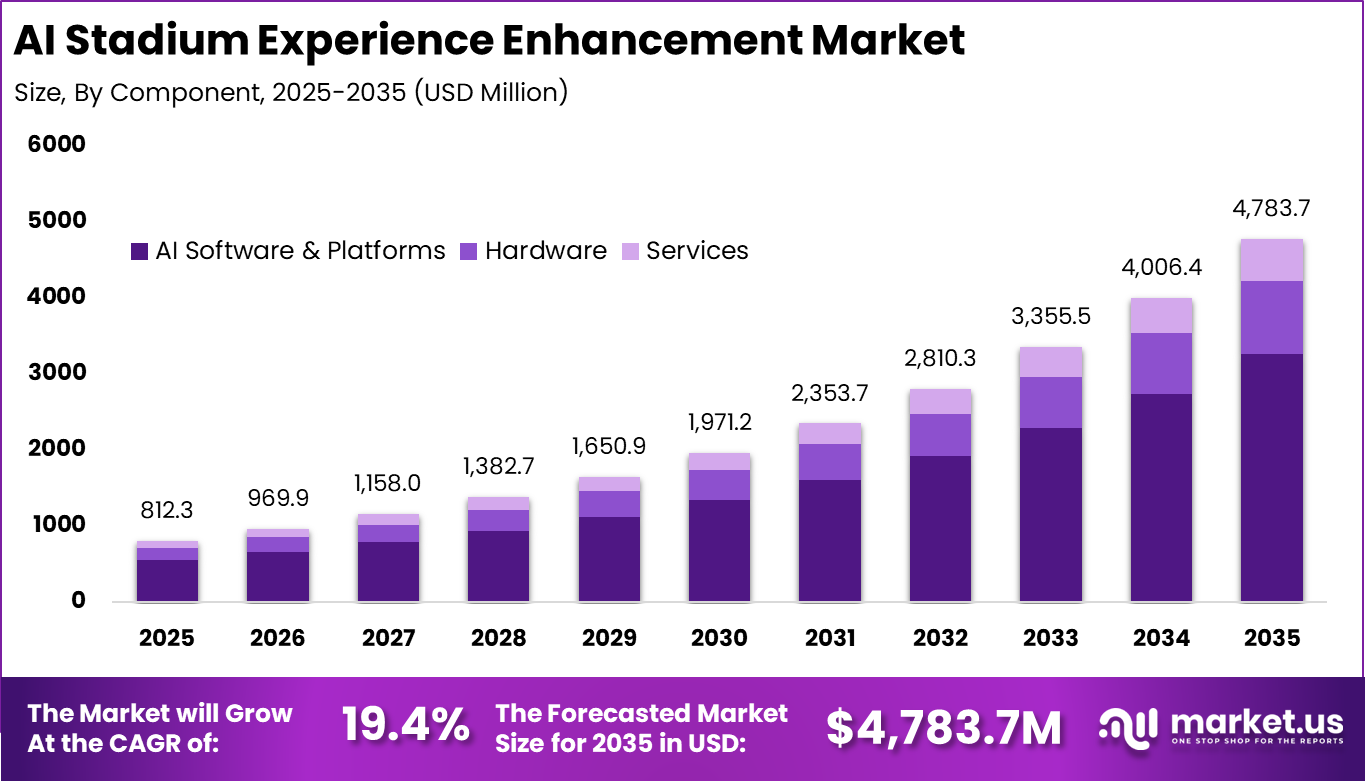
Emerging Trends
Key Market Segments
By Component
By Application
By Technology
By Stadium Type
By End-User
Key Regions and Countries
Driver Analysis
Digital Transformation of Sports Venues
Restraint Analysis
High Infrastructure Investment
Opportunity Analysis
Smart Venue Ecosystems
Challenge Analysis
Data Integration and System Interoperability
Key Players Analysis
Top Key Players in the Market
Recent Developments