

Report Overview
The Global Agriculture Termite Control Market size is expected to be worth around USD 3.7 billion by 2035 from USD 1.9 billion in 2025, growing at a CAGR of 7.1% during the forecast period 2026 to 2035.
Agriculture termite control refers to the range of products and methods farmers use to protect crops from subterranean and drywood termite infestations. These solutions include chemical termiticides, biological agents, seed-treatment coatings, and integrated pest management kits. They work across soil, roots, and foliage to prevent yield loss in field crops and plantations.
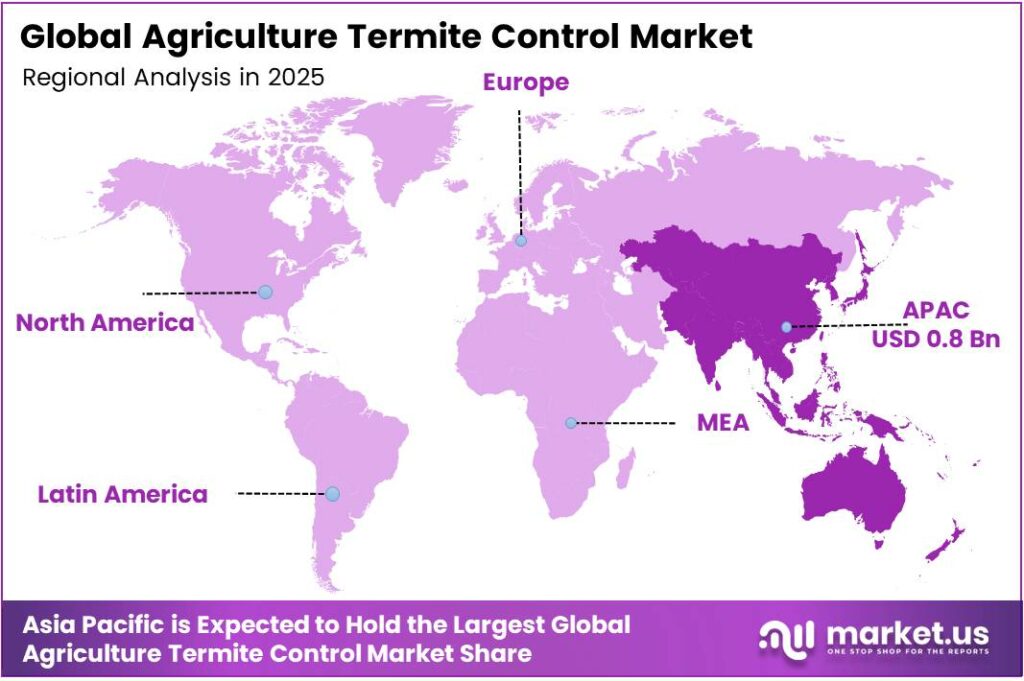
Asia Pacific leads the global agriculture termite control market with a 43.3% share, valued at USD 0.8 billion in 2025. The region’s dominance reflects vast tropical and subtropical farmland across China, India, Southeast Asia, and Australia, where termite pressure on cereal and commercial crops remains persistently high. Strong government support for crop protection programs and growing farmer awareness further reinforce regional market leadership. North America maintains a strong market position driven by large-scale commercial grain and oilseed farming operations. The region benefits from advanced regulatory frameworks that support the timely approval of new active ingredients, including diamide seed treatments. Additionally, crop-loss insurance programs that bundle preventive termite treatment uptake add a unique demand driver not present in developing regions. Europe presents a complex market shaped by tightening pesticide regulations and growing interest in biological termite control alternatives. The European Union’s drive to reduce chemical pesticide use by 2030 pushes growers and suppliers toward biorational and IPM-based termite management solutions. However, the region’s temperate climate limits acute termite pressure to southern Mediterranean agricultural zones. Middle East and Africa represent an emerging market where termite damage in dryland cereal and commercial crop farming drives growing demand. Arid and semi-arid conditions in Sub-Saharan Africa create persistent subterranean termite pressure on sorghum, millet, and maize root systems. Consequently, development aid programs that include integrated pest management components help introduce formal termite control practices to smallholder farm communities. Syngenta Group focuses on seed treatment innovation and integrated pest management platforms that address termite pressure at the point of germination and early crop establishment. The company operates strong commercial positions across Latin America and the Asia Pacific, the two regions with the highest termite control demand growth. Syngenta’s research pipeline includes next-generation biological and chemical active ingredients designed for export-compliant farming systems. Corteva Agriscience delivers a specialized portfolio of soil insecticides and seed-applied treatments that protect row crops from subterranean termite damage through the early and mid-season growth stages. The company prioritizes farmer-education programs that guide proper application timing and method selection across diverse soil and climate conditions. Corteva’s strong presence in North and South American grain markets positions it well for growth as termite pressure expands into new geographies.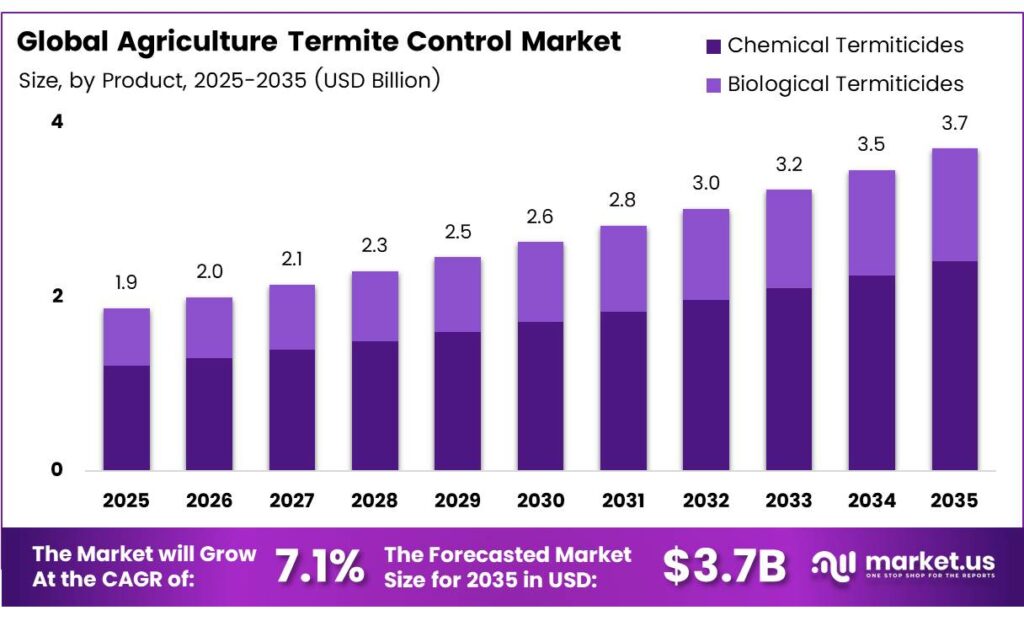
Regional Analysis
Asia Pacific Dominates the Agriculture Termite Control Market with a Market Share of 43.3%, Valued at USD 0.8 Billion
Top Key Players in the Market
Recent Developments