

Report Overview
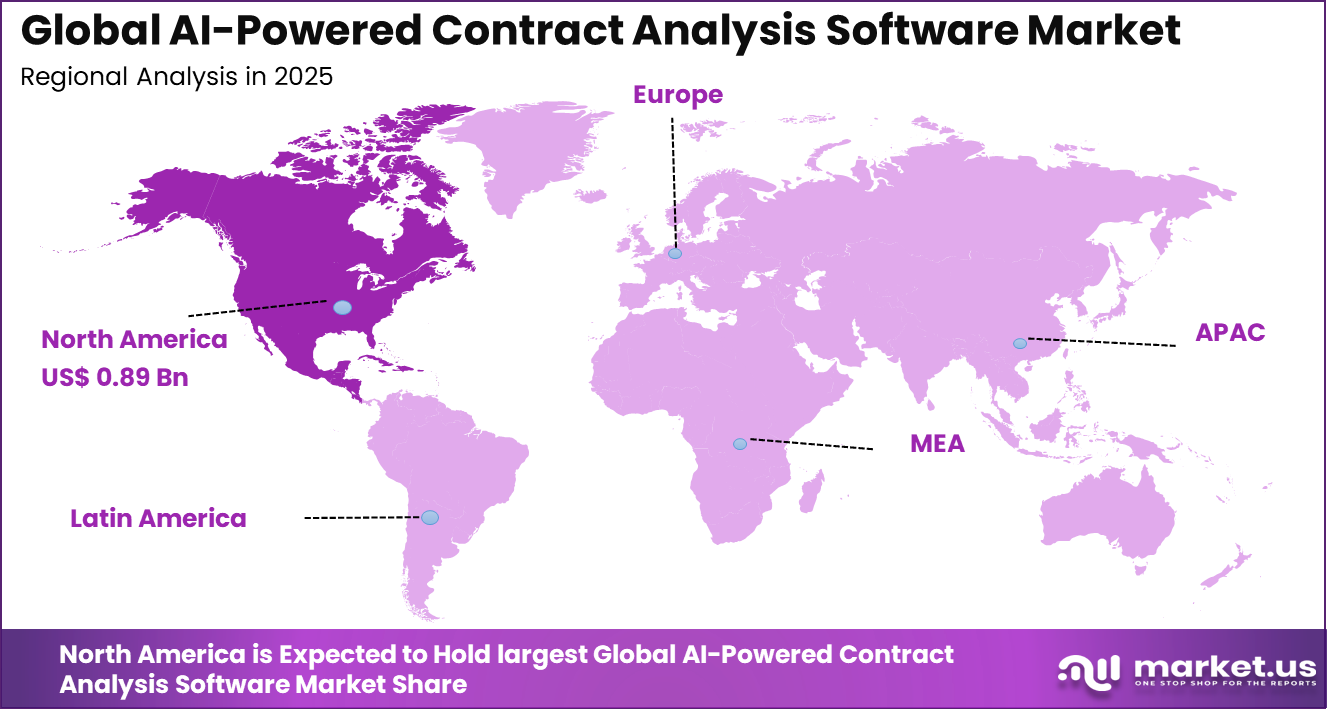
The Global AI-Powered Contract Analysis Software Market size is expected to be worth around USD 18.6 billion by 2035, from USD 2.1 billion in 2025, growing at a CAGR of 24.4% during the forecast period from 2025 to 2035. North America held a dominant market position, capturing more than a42.6% share, holding USD 0.89 billion in revenue.
The AI-Powered Contract Analysis Software Market refers to advanced legal technology platforms that use artificial intelligence, machine learning, and natural language processing to automatically review, analyze, and extract insights from legal contracts. These systems scan large volumes of agreements to identify important clauses, detect potential risks, highlight compliance issues, and suggest revisions.
AI-driven tools enable legal teams and enterprises to process contracts more efficiently while maintaining high levels of accuracy and consistency. Contract analysis traditionally required extensive manual review by legal professionals, making it a time-consuming and resource-intensive process. AI-powered software automates tasks such as clause extraction, risk detection, and document comparison, significantly accelerating the review process.
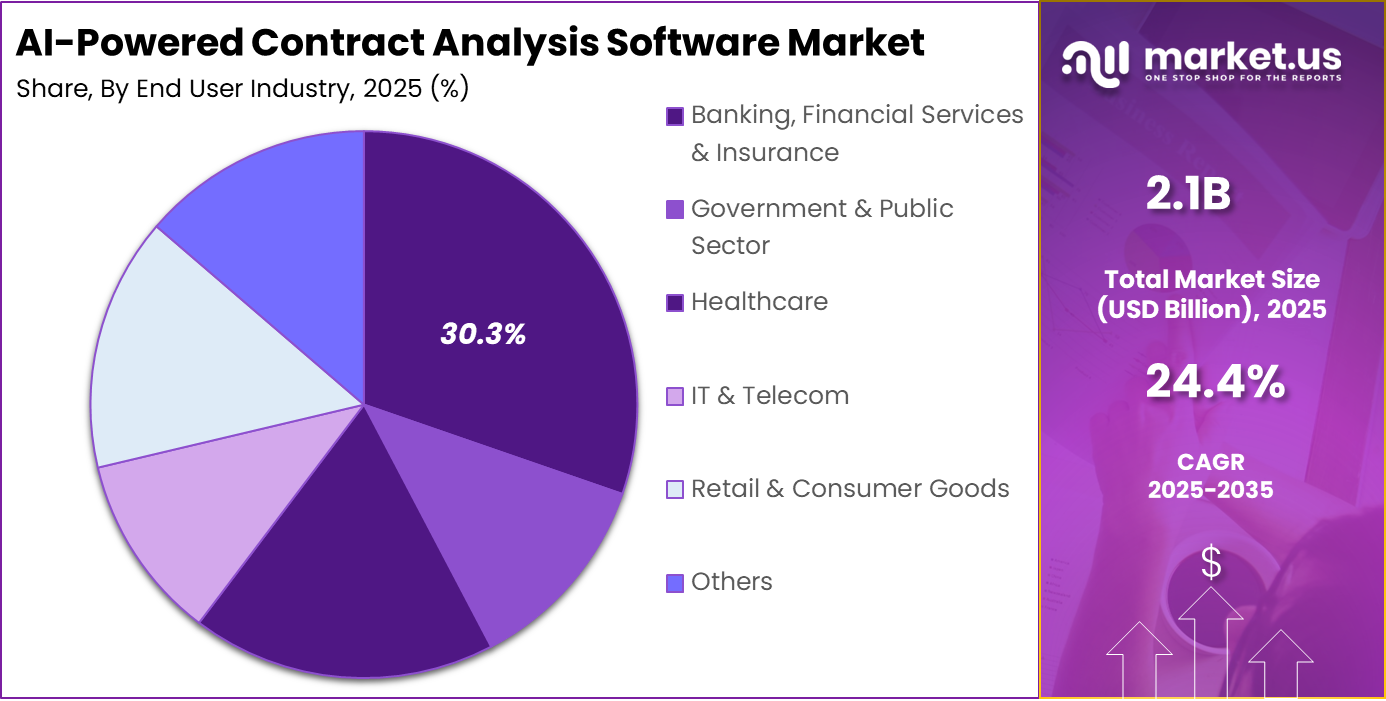
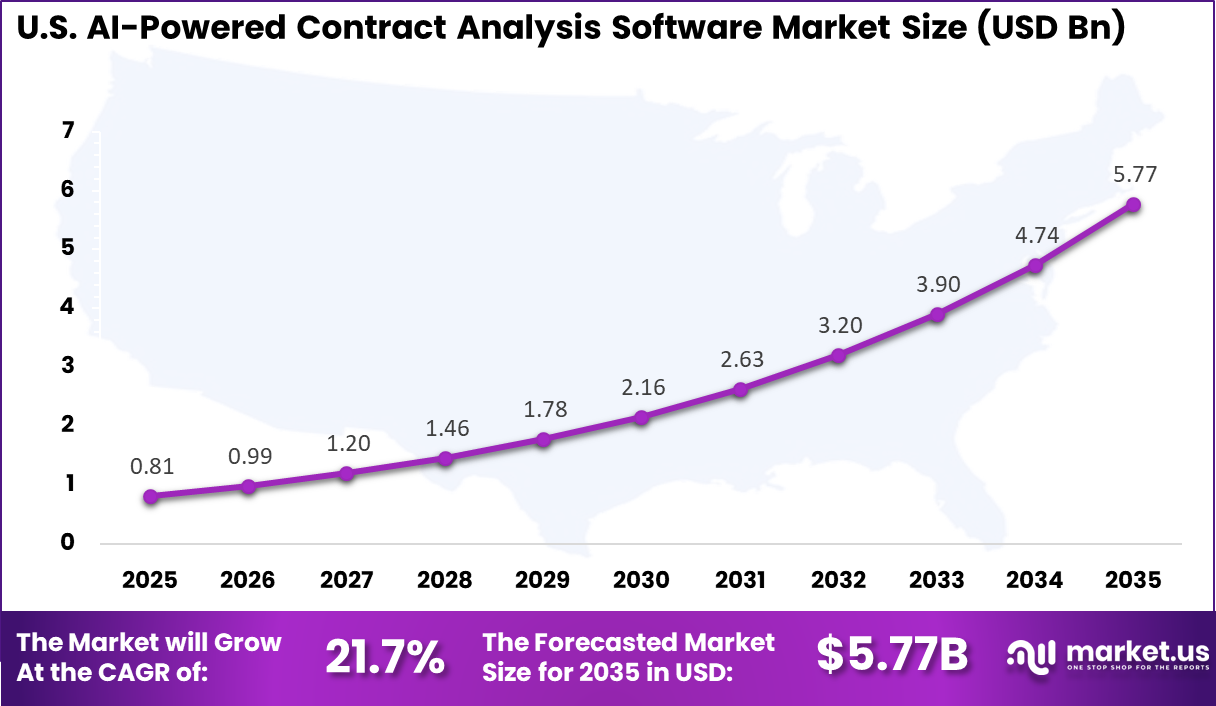
For instance, in January 2026, Agiloft, Inc. unveiled no-code AI customization for contract workflows, letting businesses tailor models to industry needs. Legal ops teams report 28% faster cycle times, making Agiloft a flexible choice for regulated sectors like finance. According to research, generative AI is increasingly transforming the contract review process by automating the extraction of critical contractual terms. Nearly 65% of contract reviews are now supported by generative AI tools that automatically identify key elements such as payment deadlines, renewal conditions, and legal obligations within seconds. This capability significantly reduces the time required to examine lengthy legal documents. As a result, legal teams are able to concentrate on higher value strategic decisions rather than manually analyzing every clause, enabling organizations to achieve nearly 40% faster deal completion cycles. Generative AI systems are also capable of producing simplified summaries of complex legal clauses, which improves clarity and accessibility for both legal professionals and business teams. In controlled user testing, these plain language summaries have reduced interpretation confusion by almost 50%, allowing stakeholders to understand contractual commitments more easily. Furthermore, more than 70% of organizations using AI assisted contract analysis report earlier identification of hidden legal risks within agreements. This early detection improves overall review accuracy, strengthens compliance, and enhances contract security while minimizing the need for prolonged negotiation processes. Software accounts for 74.8% of the market, reflecting the strong reliance on automated platforms designed to analyze contractual documents and extract critical information. These solutions use artificial intelligence algorithms to identify clauses, detect inconsistencies, and highlight potential compliance risks within agreements. Legal teams and compliance departments rely on such tools to process large volumes of contracts quickly and accurately. The widespread adoption of contract analysis software is also supported by its integration with enterprise document management and legal management systems. Automated data extraction improves the accuracy of contract interpretation while reducing manual review time. As organizations seek greater efficiency in legal operations, software platforms continue to dominate the market. For Instance, in January 2026, DocuSign launched new AI features in its eSignature tools to simplify document prep and make legal terms clearer for signers. These updates cut down manual work and speed up reviews, helping teams focus on key deals. Built on their IAM platform, it shows how software keeps evolving to handle real daily challenges in contract handling. Cloud deployment represents 88.2% of the market, indicating strong enterprise preference for scalable and accessible contract analysis environments. Cloud based platforms allow organizations to store, analyze, and manage contracts from centralized systems that can be accessed across departments and geographic locations. This deployment model improves collaboration between legal teams and business units. Cloud infrastructure also supports automated updates and integration with other enterprise applications such as procurement and compliance management systems. Organizations benefit from reduced infrastructure maintenance and faster system implementation. As enterprises digitize legal documentation processes, cloud based contract analysis platforms maintain widespread adoption. For instance, in March 2026, Ironclad expanded its cloud platform with real-time collaboration features for global teams. Users edit and track changes from anywhere, fitting remote work setups perfectly. The update stresses the cloud’s strength in seamless access and automatic backups for high-stakes contracts. Subscription based pricing accounts for 70.4% of the market, reflecting the demand for flexible and predictable cost structures. Organizations prefer subscription models because they allow access to advanced contract analysis tools without large upfront licensing investments. This model enables enterprises to scale software usage according to operational needs. The subscription model also ensures continuous software enhancements and access to updated artificial intelligence capabilities. Organizations benefit from improved functionality and analytics without complex system upgrades. As legal technology adoption increases, subscription pricing remains widely preferred across the market. For Instance, in April 2025, Agiloft updated its subscription service to include unlimited user seats for growing teams. Monthly payments cover fresh features like auto-redlining, making it easy to stay current. Subscriptions thrive as they match fluid business needs without big commitments. Large enterprises represent 82.1% of market adoption due to the volume and complexity of contracts managed across their operations. These organizations handle agreements related to procurement, partnerships, regulatory compliance, and financial transactions. AI powered contract analysis platforms help centralize document management and improve legal oversight. Large organizations also maintain dedicated legal and compliance teams responsible for managing contract risks. Automated analysis tools enable these teams to identify critical clauses, monitor contractual obligations, and ensure regulatory compliance. As enterprise legal environments become increasingly complex, large companies remain the primary adopters of contract analysis software. For Instance, in February 2026, Icertis released enterprise-grade integrations for ERP systems, streamlining workflows in big firms. High-volume users now automate across departments, cutting coordination time. It reflects how large players drive demand with tailored, scalable solutions. The BFSI sector accounts for 30.3% of market adoption due to the high volume of legally binding agreements and regulatory documentation within financial institutions. Banks and financial organizations manage contracts related to lending, partnerships, service agreements, and compliance obligations. AI powered contract analysis platforms help ensure accurate interpretation and monitoring of these agreements. Financial institutions also face strict regulatory oversight that requires transparent documentation and risk management. Automated contract analysis tools provide insights that support compliance reviews and regulatory reporting. As digital financial services expand, the BFSI sector continues to invest in advanced legal technology platforms. For Instance, in March 2026, LinkSquares partnered with banks for AI-driven compliance checks in loan docs. Financial teams flag regulatory gaps early, speeding approvals while staying safe. BFSI leads as these tools tackle their strict daily oversight needs head-on. North America holds 42.6% of the market share due to strong adoption of legal technology and enterprise automation solutions. Organizations in the region actively invest in artificial intelligence driven platforms to improve contract management and compliance monitoring. The presence of mature enterprise software ecosystems further strengthens regional market development. For instance, in February 2026, Litera Corp advanced North American supremacy in legal tech with Kira’s AI upgrade for high-volume M&A due diligence. Chicago-based innovation enables precise provision extraction across complex contracts, helping U.S. law firms handle 10x more reviews while maintaining 99% accuracy in risk detection. Within North America, the United States contributes USD 0.81 billion with a growth rate of 21.7%. The country’s large financial sector and advanced digital infrastructure have accelerated adoption of AI powered contract analysis software. Continued investment in legal technology and enterprise automation is expected to sustain market growth across the region. For instance, in January 2026, DocuSign enhanced its AI-powered contract analysis platform with advanced clause classification and risk detection features, solidifying U.S. leadership in legal tech innovation. The update enables faster compliance checks and automated redlining for enterprise clients. North American firms benefit from seamless integration with existing workflows. In 2025, The Software accounts for 74.8% of the market, reflecting the strong reliance on automated platforms designed to analyze contractual documents and extract critical information. These solutions use artificial intelligence algorithms to identify clauses, detect inconsistencies, and highlight potential compliance risks within agreements. Legal teams and compliance departments rely on such tools to process large volumes of contracts quickly and accurately. The widespread adoption of contract analysis software is also supported by its integration with enterprise document management and legal management systems. Automated data extraction improves the accuracy of contract interpretation while reducing manual review time. As organizations seek greater efficiency in legal operations, software platforms continue to dominate the market. For Instance, in January 2026, DocuSign launched new AI features in its eSignature tools to simplify document prep and make legal terms clearer for signers. These updates cut down manual work and speed up reviews, helping teams focus on key deals. Built on their IAM platform, it shows how software keeps evolving to handle real daily challenges in contract handling. In 2025, the Cloud deployment represents 88.2% of the market, indicating strong enterprise preference for scalable and accessible contract analysis environments. Cloud based platforms allow organizations to store, analyze, and manage contracts from centralized systems that can be accessed across departments and geographic locations. This deployment model improves collaboration between legal teams and business units. Cloud infrastructure also supports automated updates and integration with other enterprise applications such as procurement and compliance management systems. Organizations benefit from reduced infrastructure maintenance and faster system implementation. As enterprises digitize legal documentation processes, cloud based contract analysis platforms maintain widespread adoption. For instance, in March 2026, Ironclad expanded its cloud platform with real-time collaboration features for global teams. Users edit and track changes from anywhere, fitting remote work setups perfectly. The update stresses the cloud’s strength in seamless access and automatic backups for high-stakes contracts. In 2025, The Subscription based pricing accounts for 70.4% of the market, reflecting the demand for flexible and predictable cost structures. Organizations prefer subscription models because they allow access to advanced contract analysis tools without large upfront licensing investments. This model enables enterprises to scale software usage according to operational needs. The subscription model also ensures continuous software enhancements and access to updated artificial intelligence capabilities. Organizations benefit from improved functionality and analytics without complex system upgrades. As legal technology adoption increases, subscription pricing remains widely preferred across the market. For Instance, in April 2025, Agiloft updated its subscription service to include unlimited user seats for growing teams. Monthly payments cover fresh features like auto-redlining, making it easy to stay current. Subscriptions thrive as they match fluid business needs without big commitments. In 2025, The Large Enterprises segment held a dominant market position, capturing a 82.1% share of the Global AI-Powered Contract Analysis Software Market. This dominance is due to the complex contract environments within large enterprises that manage numerous supplier, customer, and partnership agreements. These organizations require automated systems to maintain control over contract obligations and reduce the risk of missing critical terms. Large companies also operate across multiple regions and regulatory frameworks, which increases the need for structured contract analysis. Automated platforms help enterprise legal teams coordinate reviews, maintain compliance standards, and manage agreements efficiently across departments. For Instance, in February 2026, Icertis released enterprise-grade integrations for ERP systems, streamlining workflows in big firms. High-volume users now automate across departments, cutting coordination time. It reflects how large players drive demand with tailored, scalable solutions. In 2025, The BFSI segment held a dominant market position, capturing a 30.3% share of the Global AI-Powered Contract Analysis Software Market. This dominance is due to the highly regulated nature of the financial services sector, where institutions must carefully review and monitor contractual obligations. Financial organizations handle agreements related to lending, partnerships, and regulatory compliance, which require careful evaluation. Automated contract analysis tools help financial institutions improve transparency and identify important clauses quickly. These systems support stronger governance practices and assist legal teams in maintaining accurate records of contractual commitments across complex financial operations. For Instance, in March 2026, LinkSquares partnered with banks for AI-driven compliance checks in loan docs. Financial teams flag regulatory gaps early, speeding approvals while staying safe. BFSI leads as these tools tackle their strict daily oversight needs head-on. One emerging trend in the AI-powered contract analysis software market is the adoption of generative AI technologies for automated contract drafting and analysis. These systems can summarize agreements, generate contract templates, and suggest modifications based on organizational policies or legal playbooks. This capability significantly improves productivity within legal teams and accelerates contract lifecycle management processes. Modern contract review platforms increasingly integrate real time data checks, with about 55% of new systems linking directly to compliance databases for immediate regulatory updates. Adoption rose nearly 30% among legal teams last year as hybrid workflows combining AI tools and human expertise expanded. Context aware analysis is also gaining traction, where almost 60% of advanced platforms learn from past agreements to detect unusual clauses. These capabilities reduce negotiation time by nearly one third and help firms lower errors in complex cross border contracts. One of the key growth factors in the AI-powered contract analysis software market is the increasing volume of legal documents handled by organizations. Enterprises manage thousands of agreements related to procurement, partnerships, compliance, and regulatory obligations. AI-powered tools can quickly analyze these documents, enabling organizations to reduce contract review time and improve operational efficiency. Rising contract volumes strongly influence the adoption of AI contract review platforms. Nearly 75% of companies manage double the number of agreements today due to global partnerships and remote operations. AI tools help teams manage this growth without increasing legal staffing requirements. Improved accuracy also strengthens adoption across industries. Error rates drop by roughly 45% compared with manual review methods, building trust for high value agreements such as mergers and partnerships. Around 80% of business leaders actively seek technologies that scale contract management with company growth. North America Europe Asia Pacific Latin America Middle East & Africa Organizations today manage a growing number of digital contracts as partnerships, supplier agreements, and service deals expand across industries. Legal teams often struggle to review large document volumes through manual processes. AI-powered contract analysis tools help scan agreements quickly and highlight key clauses, improving review efficiency. Digital business models and remote collaboration have increased the need for faster contract handling. Companies now sign agreements across different regions and departments, which creates pressure on legal teams. Automated analysis systems support quicker document review and help organizations manage contracts more effectively. For instance, in April 2025, DocuSign rolled out AI agents built on their Iris engine to handle the growing flood of digital agreements. These tools quickly scan contracts, pull out key details, and spot urgent tasks from huge document piles. Legal teams now manage more volume without extra staff, keeping pace with daily digital deal flow in a busy business world. Many organizations hesitate to adopt AI contract analysis tools because contracts contain confidential financial and legal information. Companies remain cautious about how sensitive documents are processed, stored, and accessed within digital systems. This concern becomes stronger when contracts involve customer data, intellectual property, or strategic business agreements. Legal departments must also comply with strict privacy and data protection regulations. Firms operating in regulated industries carefully evaluate technology vendors before sharing contract data with automated systems. These security concerns often slow adoption as organizations prioritize safeguarding sensitive information and maintaining strict internal control over legal documents. For instance, in January 2026, Luminance faced pushback on data handling when users worried about sensitive contract info in their AI training. The company responded with on-premise options to keep data in-house, easing fears of cloud leaks. This move shows how privacy worries slow adoption until trust builds through clear controls. AI contract analysis platforms present strong opportunities when integrated with broader enterprise systems such as procurement, compliance, and document management tools. When contract insights connect with operational systems, businesses gain better visibility into obligations, deadlines, and vendor relationships across departments. This integration helps organizations transform contract data into valuable operational intelligence. Legal teams can collaborate more easily with finance, procurement, and risk management departments, allowing contracts to support strategic decision making instead of remaining static legal records stored in isolated systems. For instance, in February 2026, Litera connected its AI analysis to CRM and ERP tools, letting sales see contract risks right in deal pipelines. Finance gets auto-updates on payment terms, streamlining workflows across apps. This tie-in turns isolated contract data into a company-wide asset for quicker choices. One of the key challenges in AI contract analysis technology involves ensuring high accuracy when interpreting complex legal language. Contracts often contain nuanced wording, industry specific terminology, and context dependent clauses that automated systems may find difficult to interpret correctly. Legal professionals must still review AI-generated insights to confirm their reliability. While technology improves efficiency, organizations cannot rely entirely on automation for final legal interpretation. This limitation means companies must balance technology use with expert legal judgment during contract evaluation. For instance, in January 2026, DocuSign’s new eSignature AI missed nuances in complex international terms, needing human fixes. Users noted over 20% manual tweaks on tricky clauses, highlighting accuracy gaps. This underscores why pros still oversee AI outputs for reliable results. The AI Powered Contract Analysis Software Market is shaped by enterprise software providers and legal technology firms that automate contract review and lifecycle management. DocuSign, Inc., Icertis Inc., and Conga deliver comprehensive platforms that combine AI driven contract analysis with digital agreement workflows. These solutions help enterprises identify key clauses, manage obligations, and ensure regulatory compliance across large contract portfolios. Specialized legal technology companies are expanding the use of artificial intelligence in contract review and risk assessment. Luminance Limited, Ironclad, Inc., Agiloft, Inc., LinkSquares, Inc., and LegalSifter, Inc. focus on machine learning models that analyze legal language and detect contractual risks. Their technologies help organizations accelerate due diligence and contract negotiation processes. classification. Emerging contract intelligence platforms further strengthen competition in the market. Evisort, ContractPodAi, Inc., Litera, Juro Limited, LegalOn Technologies, Inc., ThoughtRiver Limited, and HyperVerge through the HyperStart CLM platform provide AI based document analysis, contract intelligence, and automated compliance monitoring tools. These vendors emphasize cloud deployment and collaborative contract management environments.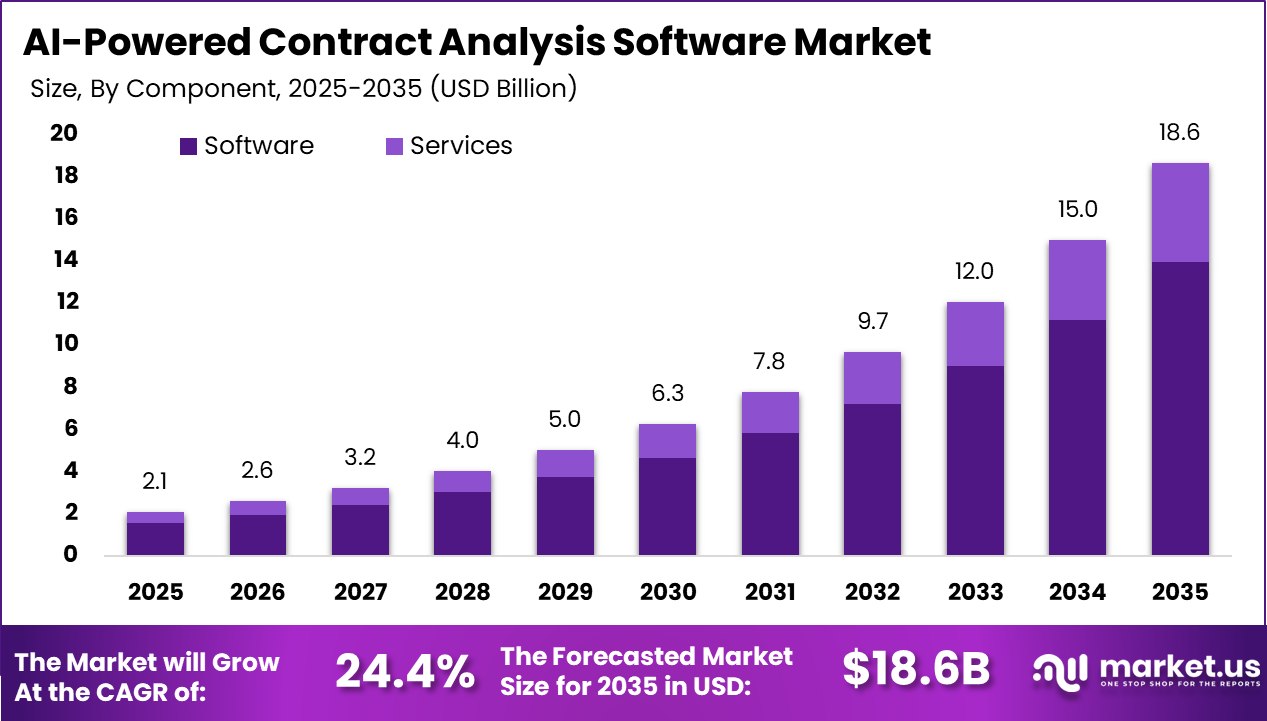
Key Takeaway
Growth and Adoption
Role of Generative AI
By Component
By Deployment
By Pricing Model
By Organization Size
By End User Industry
By Region
Component Analysis
Deployment Analysis
Pricing Model Analysis
Organization Size Analysis
End-User Industry Analysis
Emerging trends
Growth Factors
Key Market Segments
By Component
By Deployment
By Pricing Model
By Organization Size
By End User Industry
Key Regions and Countries
Drivers
Rising Volume of Digital Contracts
Restraint
Data Privacy Concerns
Opportunities
Integration with Business Systems
Challenges
Tech Accuracy Limits
Key Players Analysis
Top Key Players in the Market
Recent Developments