

Report Overview
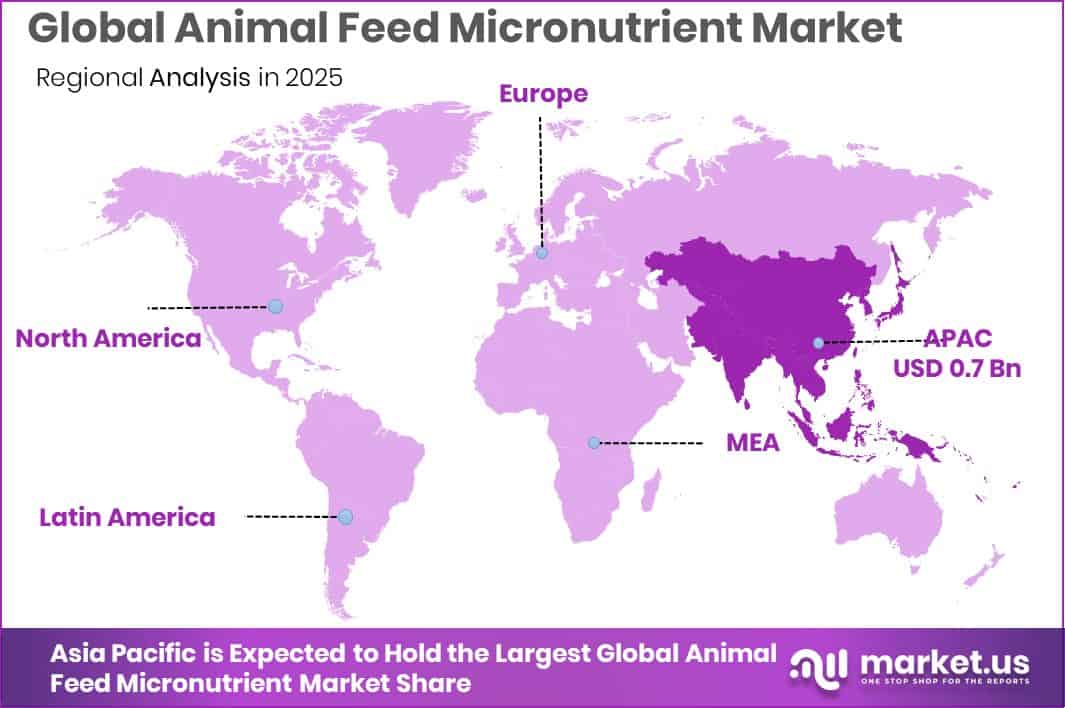
The Global Animal Feed Micronutrient Market is expected to be worth around USD 3.7 billion by 2035, up from USD 1.7 billion in 2025, and is projected to grow at a CAGR of 8.2% from 2026 to 2035. The animal feed micronutrient market in the Asia Pacific accounts for 42.7%, totaling USD 0.7 Bn.
The animal feed micronutrient market is structured across key segments, including nutrient type, form, and livestock. By nutrient type, it covers trace minerals, vitamins, amino acids, enzymes, and others, each supporting specific biological functions in animals. By form, the market is divided into dry or premix, liquid, and other delivery formats, offering flexibility in feed production and application. Livestock includes poultry, ruminants, swine, aquaculture, equine, and others, reflecting diverse nutritional requirements across species and production systems.
Innovation in the sector is supported by developments such as Chinese cellular pork producer Joe’s Future raising $11 million in Series A funding, reflecting broader technological advancements in food production. As digital solutions become more accessible, they are expected to enhance feed optimization and strengthen the role of micronutrients in modern livestock systems. In 2025, the Asia Pacific animal feed micronutrient market holds 42.7%, valued at USD 0.7 Bn. In 2025, the global animal feed micronutrient market demonstrates varied regional dynamics across North America, Europe, Asia Pacific, the Middle East & Africa, and Latin America, shaped by differences in livestock production, feed practices, and nutritional awareness. Asia Pacific emerges as the dominant region, accounting for 42.7% of the market and valued at USD 0.7 Bn, driven by its large-scale poultry and livestock industries and increasing demand for high-quality feed solutions. The region benefits from expanding commercial farming and a growing focus on improving animal productivity through micronutrient supplementation. North America and Europe represent mature markets, characterized by established feed industries and consistent demand for advanced micronutrient formulations. Meanwhile, the Middle East & Africa and Latin America show gradual growth, supported by improving agricultural practices and rising awareness of balanced animal nutrition. Across all regions, the market is influenced by the need to enhance feed efficiency, support animal health, and meet evolving consumption patterns, reinforcing steady demand for micronutrient-enriched feed solutions globally. In 2025, Cargill, Incorporated, continues to demonstrate strong positioning in the animal feed micronutrient market through its integrated approach to nutrition solutions. The company leverages its extensive supply chain capabilities and global reach to deliver consistent, high-quality micronutrient offerings. Its focus on tailored feed solutions enables it to address diverse livestock requirements, supporting productivity and health outcomes. Cargill’s operational scale and emphasis on innovation contribute to its ability to adapt to evolving feed formulation needs across different regions. ADM maintains a competitive edge by combining its deep expertise in agricultural processing with advanced feed ingredient development. The company’s structured approach to micronutrient integration supports efficient feed production and consistent nutrient delivery. ADM’s portfolio reflects a balance between functionality and scalability, allowing it to cater to both large commercial operations and emerging markets. Its continued focus on precision nutrition strengthens its role in supporting optimized animal performance. DSM-Firmenich stands out for its science-driven approach to micronutrient development, emphasizing quality and effectiveness. The company prioritizes innovation in nutrient formulation to enhance bioavailability and stability in feed applications. Its commitment to sustainable and efficient nutrition solutions aligns with the evolving expectations of livestock producers. DSM-Firmenich’s strong technical capabilities reinforce its influence in shaping advanced micronutrient strategies globally.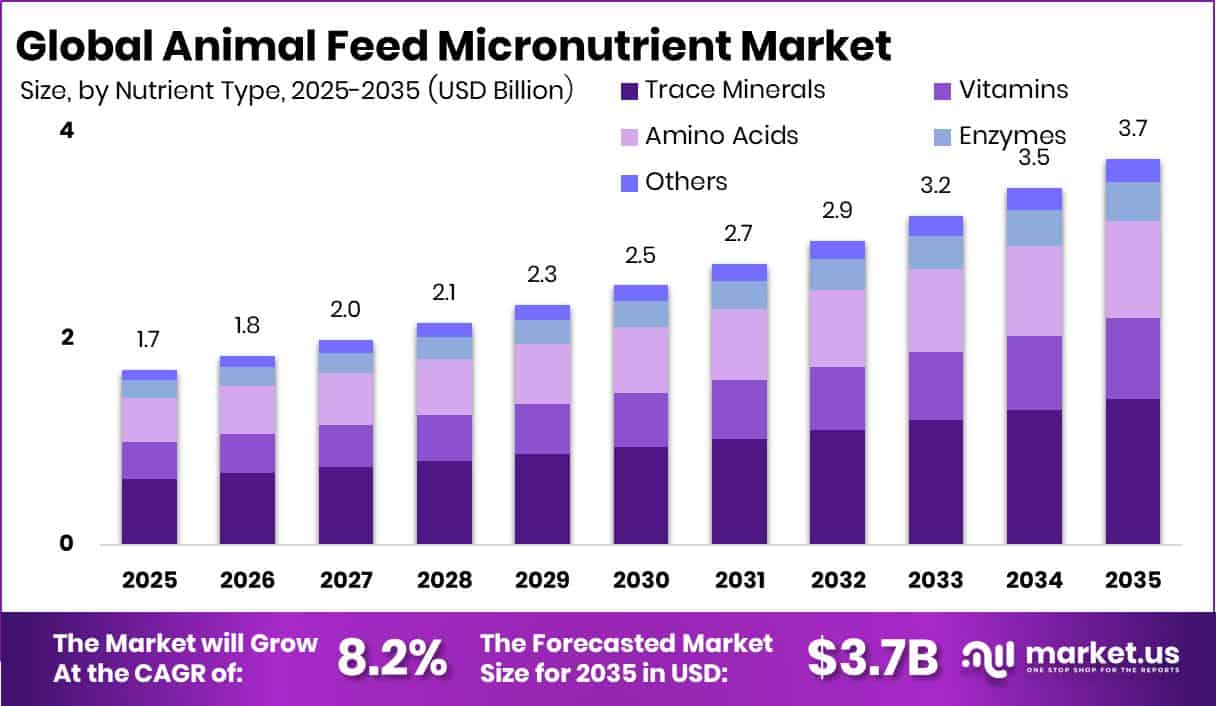
Regional Analysis
Key Regions and Countries
Key Players Analysis
Top Key Players in the Market
Recent Developments