

Market Overview
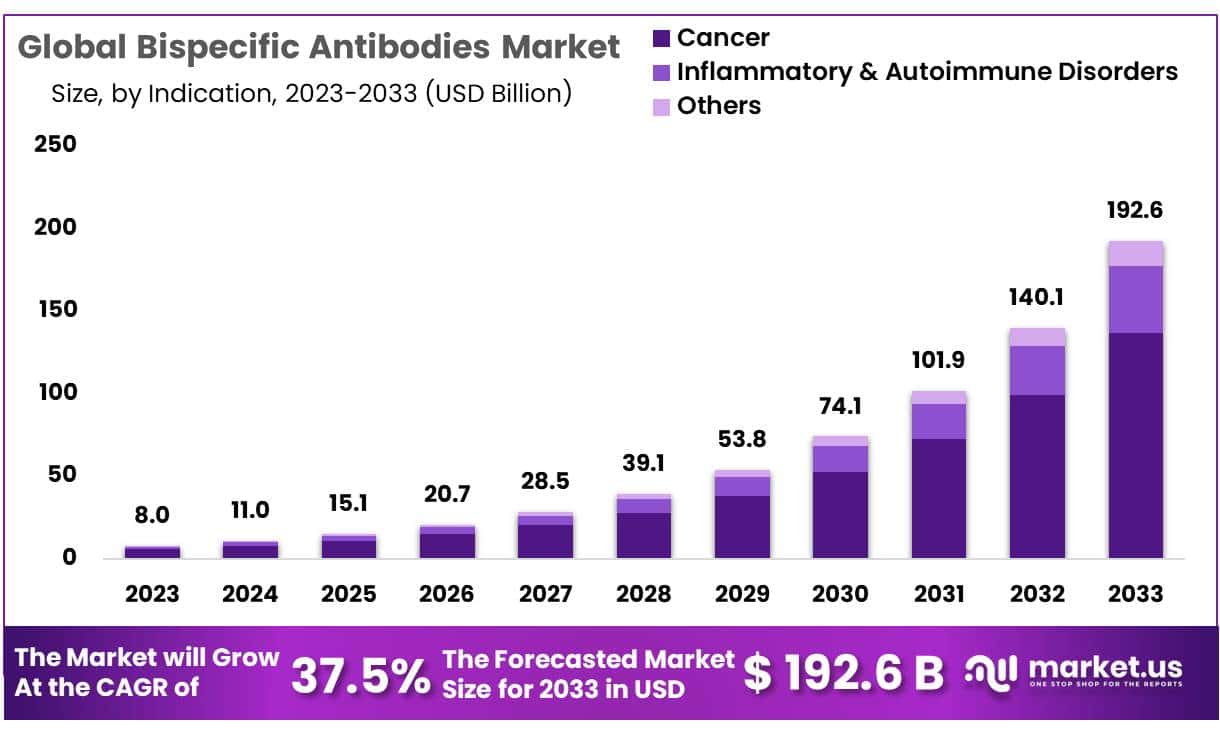
The Global Bispecific Antibodies Market size is expected to be worth around USD 192.6 Billion by 2033 from USD 8.0 Billion in 2023, growing at a CAGR of 37.5% during the forecast period from 2024 to 2033.
Bispecific Antibodies are known as artificial proteins since they are made up of two or more antigen-recognition components that are linked together to produce a single construct. Bispecific antibodies can bind to two or more targets at the same time. Furthermore, these antibodies have the ability to connect two targets and have a high likelihood of achieving therapeutic effects (bringing cancer cells within striking distance). Bispecific antibodies in various formats include bispecific antibodies with particular heterodimerization domains, quadromas, and bispecific antibodies of minimal size.
Bispecific antibodies are largely used in cancer treatment and are emerging as a revolutionary technique for two targeting strategies within a single molecule for cancer treatment. Bispecific antibodies improve and ensure the following properties in a cancer-targeted agent: binding ability, selectivity, and efficacy. Bispecific antibodies have been found to be more effective in cancer treatments than the combination therapy provided by the other two antibodies. Recombinant DNA technology is widely acknowledged as the foundation for the rapid expansion of bispecific antibody forms.
Due to obesity and unhealthy lifestyle choices, cancer incidence is projected to rise exponentially over time. Excess body weight accounts for roughly 5-10% of new cancer cases each year among men; Bispecific antibodies may help increase the efficacy of cancer treatments when combined with targeted therapies like small molecule inhibitors or monoclonal antibodies. Bispecific antibodies combined with targeted medications have the power to enhance each other’s anticancer effects by targeting tumor cells while simultaneously targeting signaling pathways or growth factor receptors, with bispecifics helping overcome resistance mechanisms and improving treatment outcomes.
Key Takeaways
- Market Size: Bispecific Antibodies Market size is expected to be worth around USD 192.6 Billion by 2033 from USD 8.0 Billion in 2023,
- Market Growth: The global growing at a CAGR of 37.5% during the forecast period from 2024 to 2033.
- Indication Analysis: Cancer indications dominate the Bispecific Antibodies Market with 71% market share.
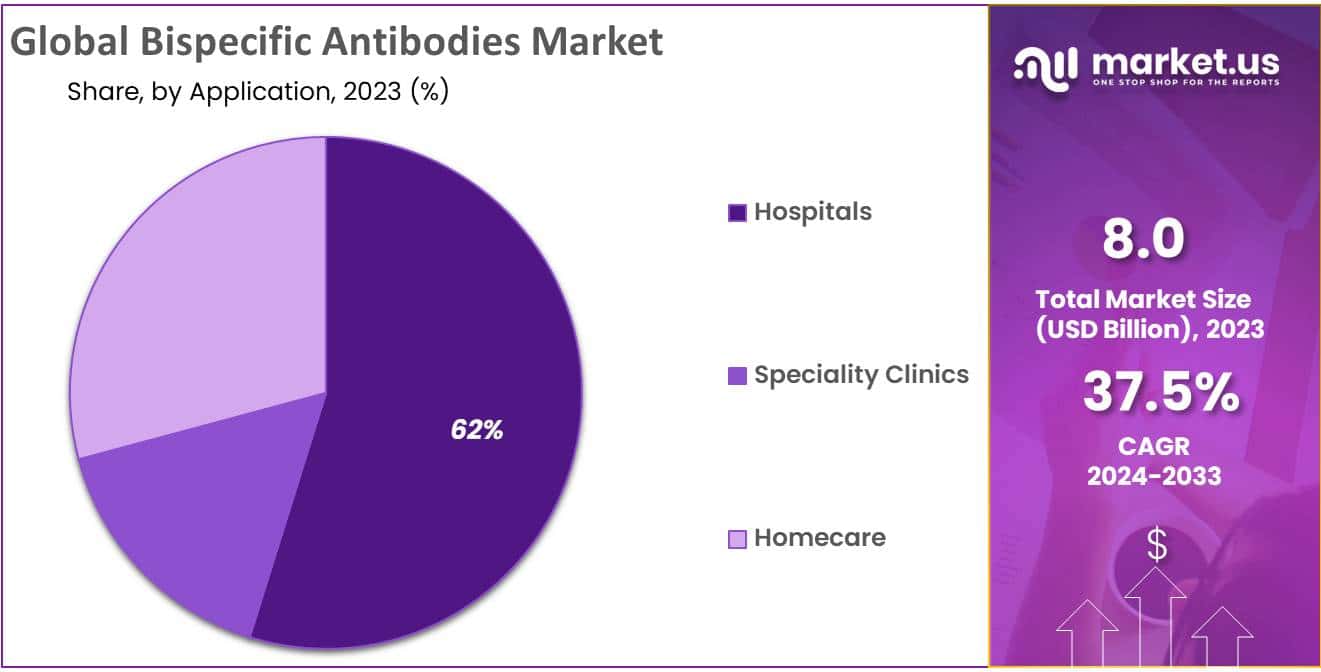
- End-Use Analysis: Hospitals dominate the Bispecific Antibodies Market with 62% market share.
- Regional Analysis: North America held an impressive 87.2% market share as of 2023.
Indication Analysis
Cancer indications dominate the Bispecific Antibodies Market with 71% market share, accounting for its extensive growth. Bispecific antibodies have transformed cancer therapy by simultaneously targeting multiple antigens simultaneously and engaging immune cells directly, and precisely targeting tumor cells. This approach has allowed groundbreaking treatments in various cancers like breast, lung, colorectal and hematological malignancies; their efficacy and specificity driving wide adoption leading to market expansion.
Additionally, bispecific antibodies offer promising potential in treating inflammatory and autoimmune disorders, making this segment an exciting growth area within the market. By targeting specific immune cells and modulating inflammatory pathways, these therapies offer novel treatment approaches for conditions like rheumatoid arthritis, psoriasis, inflammatory bowel disease, multiple sclerosis, as well as research trials investigating their use for managing inflammation or immunity-based illnesses. As clinical trials investigate bispecific antibody therapeutic applications within these conditions this segment is poised for significant expansion that will diversify markets while expanding therapeutic applications across numerous conditions.
End User Analysis
Hospitals dominate the Bispecific Antibodies Market with 62% market share. Hospitals serve as primary centers for administering complex treatments like bispecific antibodies and have advanced medical infrastructure and oncology departments, multidisciplinary teams, cutting-edge therapies for cancers targeted by bispecific antibodies as well as cutting-edge facilities that offer cutting-edge cancer and disease therapies using bispecific antibodies. Their dominance underscores their centrality to advanced medical care delivery as well as biopharmaceuticals innovation.
Bispecific Antibodies Market segments also include specialty clinics. These clinics specialize in treating specific medical conditions or patient populations by offering personalized and targeted care and therapies; with such clinics expanding access to bispecific antibodies for those who require it.
Homecare services have proven an attractive avenue for dispensing bispecific antibodies. Homecare allows patients to receive treatment without leaving their homes, providing greater convenience, flexibility, and enhanced quality of life for patients receiving care at home. As technology and patient preferences shift towards home-based healthcare delivery models, this segment presents considerable growth potential within the Bispecific Antibodies Market.
Market Segmentation
Indication
- Cancer
- Inflammatory & Autoimmune Disorders
- Others
End-User
- Hospitals
- Speciality Clinics
- Homecare
Driver
Rising Incidence of Cancer
Cancer has become one of the primary causes of mortality worldwide and as its rates continue to soar, demand for innovative therapies such as bispecific antibodies is on the rise as effective and targeted treatments become necessary to deal with various forms of this disease.
Technological Advances in Antibody Engineering
Advancements in antibody engineering technology have led to an explosion in bispecific antibody research with increased specificity, efficacy, and safety profiles. New formats such as bispecific T-cell engagers (BiTEs) and dual-targeting antibodies enable accurate targeting of tumor cells while limiting off-target effects; these technological innovations fuel market growth by giving clinicians more powerful and versatile treatment options against cancer and other diseases.
Trend
An Increased Adoption of Immuno-Oncology Therapies
Immuno-oncology therapies such as bispecific antibodies have become increasingly popular over time in clinical and patient environments alike. Utilizing the body’s immune system to target and destroy cancer cells provides long-lasting responses with improved survival outcomes; bispecific antibodies play an essential part by engaging both tumor cells and immune effector cells to boost immunity-mediated tumor cell killing; with increasing acceptance among clinicians and patients fuelling demand for such bispecific antibodies as therapy options within treatment landscapes today.
Trend
Diversifying Therapeutic Indications Beyond Oncology
Bispecific Antibody Market trends indicate an expanding set of therapeutic indications beyond oncology, with particular interest being shown towards targeting other diseases besides cancer such as autoimmune disorders, inflammation conditions, infectious diseases and neurodegenerative conditions. Clinical trials to test efficacy are underway across these diverse applications as evidence that these antibodies could meet unmet medical needs in various forms of medicine.
Constraints to Growth of Bispecific Antibodies Market
One of the primary barriers limiting growth in the Bispecific Antibodys Market is high development costs and regulatory hurdles, combined with stringent requirements from regulatory authorities. Bispecific antibody development requires intensive preclinical and clinical research over an extended period of time and requires substantial financial investments. Navigating the regulatory pathway for bispecific antibody therapies presents numerous obstacles due to their unique structural and functional properties. High development costs and regulatory hurdles associated with their creation limit market entry and slow product commercialization efforts overall.
Restraint
Limited Manufacturing Capacity and Scalability
Another restraint affecting bispecific antibody market growth is limited manufacturing capacity and scalability of production. Due to their complex nature and stringent quality control requirements, bispecific antibody molecules present complex manufacturing challenges for large-scale manufacturing and commercialization. As demand continues to increase for bispecific antibodies, manufacturers face pressure from buyers to expand production capacities while simultaneously optimizing manufacturing processes in order to keep up with rising market demands; scaling up production while maintaining product quality remains a considerable difficulty that may cause supply chain disruptions or delays in product availability.
Limited Manufacturing Capacity and Scalability
Another restraint affecting bispecific antibody market growth is limited manufacturing capacity and scalability of production. Due to their complex nature and stringent quality control requirements, bispecific antibody molecules present complex manufacturing challenges for large-scale manufacturing and commercialization. As demand continues to increase for bispecific antibodies, manufacturers face pressure from buyers to expand production capacities while simultaneously optimizing manufacturing processes in order to keep up with rising market demands; scaling up production while maintaining product quality remains a considerable difficulty that may cause supply chain disruptions or delays in product availability.
Opportunity
Expanding Therapeutic Applications in Oncology
One avenue of market expansion lies in expanding therapeutic uses of bispecific antibodies in oncology. Bispecifics have already shown promising results against hematologic malignancies like leukemia and lymphoma; now there is increased interest in testing their efficacy against solid tumors such as breast, lung, colorectal, and ovarian cancers as well. Clinical trials evaluating these bispecifics against novel tumor antigens or immune checkpoints are under way; providing opportunities to expand upon oncology therapy while fulfilling unmet medical needs related to cancer treatments.
Emerging Markets and Untapped Patient Populations
Penetrating emerging markets is another opportunity for market expansion, while targeting underserved patient populations can expand market access strategies while creating growth opportunities in Bispecific Antibodies Market. As healthcare infrastructure improves and access to innovative therapies increases in these economies, demand for biologic therapies such as Bispecific Antibodies Market. By targeting underserved patient populations within these emerging economies and diversifying revenue streams by targeting underserved patient populations within these emerging economies pharmaceutical companies can tap new growth opportunities as well as diversify revenue streams within Bispecific Antibodies Market.
Regional Analysis
North America held an impressive 87.2% market share as of 2023. This vibrant growth can be attributed to several market players’ efforts and developments as well as technological advancements, significant R&D investments, and rising bispecific antibody demand – all factors which helped expand North America’s bispecific antibody market significantly.
As regulatory bodies approve more bispecific antibodies, companies have shown more enthusiasm and trust to invest in R&D. In October 2022, for instance, FDA granted approval of teclistamab-cqyv (Tecvayli by Janssen Biotech Inc) becoming the first bispecific B-cell maturation antigen.

Key Regions
- North America
- The US
- Canada
- Mexico
- Western Europe
- Germany
- France
- The UK
- Spain
- Italy
- Portugal
- Ireland
- Austria
- Switzerland
- Benelux
- Nordic
- Rest of Western Europe
- Eastern Europe
- Russia
- Poland
- The Czech Republic
- Greece
- Rest of Eastern Europe
- APAC
- China
- Japan
- South Korea
- India
- Australia & New Zealand
- Indonesia
- Malaysia
- Philippines
- Singapore
- Thailand
- Vietnam
- Rest of APAC
- Latin America
- Brazil
- Colombia
- Chile
- Argentina
- Costa Rica
- Rest of Latin America
- Middle East & Africa
- Algeria
- Egypt
- Israel
- Kuwait
- Nigeria
- Saudi Arabia
- South Africa
- Turkey
- United Arab Emirates
- Rest of MEA
Market Player Analysis
The competitive landscape of the bispecific antibody market offers comprehensive insights into each competitor. Key details encompass company profiles, financial performance, revenue generation, market potential, investment in research and development, new market initiatives, global presence, production sites and facilities, production capacities, strengths and weaknesses, product launches, product range, and application dominance. These data points specifically highlight each company’s strategic focus within the bispecific antibody market.
Market Key Players
- Amgen
- F. Hoffmann-La Roche Ltd
- Genentech
- Akeso, Inc.
- Janssen
- Taisho Pharmaceutical
- MacroGenics, Inc
- CELGENE CORPORATION
- Immunocore
- Sanofi
- AstraZeneca
Recent Development
- Amgen: Announced a significant investment in a new bispecific antibody manufacturing facility in 2023, showcasing their commitment to expanding production capabilities.
- F. Hoffmann-La Roche Ltd (Roche): Roche’s bispecific antibody pipeline includes drugs targeting cancers and other diseases. Look for updates on their ongoing clinical trials.
- Akeso, Inc.: They might have ongoing clinical trials or recent publications related to their bispecific antibody candidates.
- Taisho Pharmaceutical: They might have ongoing clinical trials or recent publications related to their bispecific antibody candidates, especially in areas like oncology or immunology.