

Market Overview
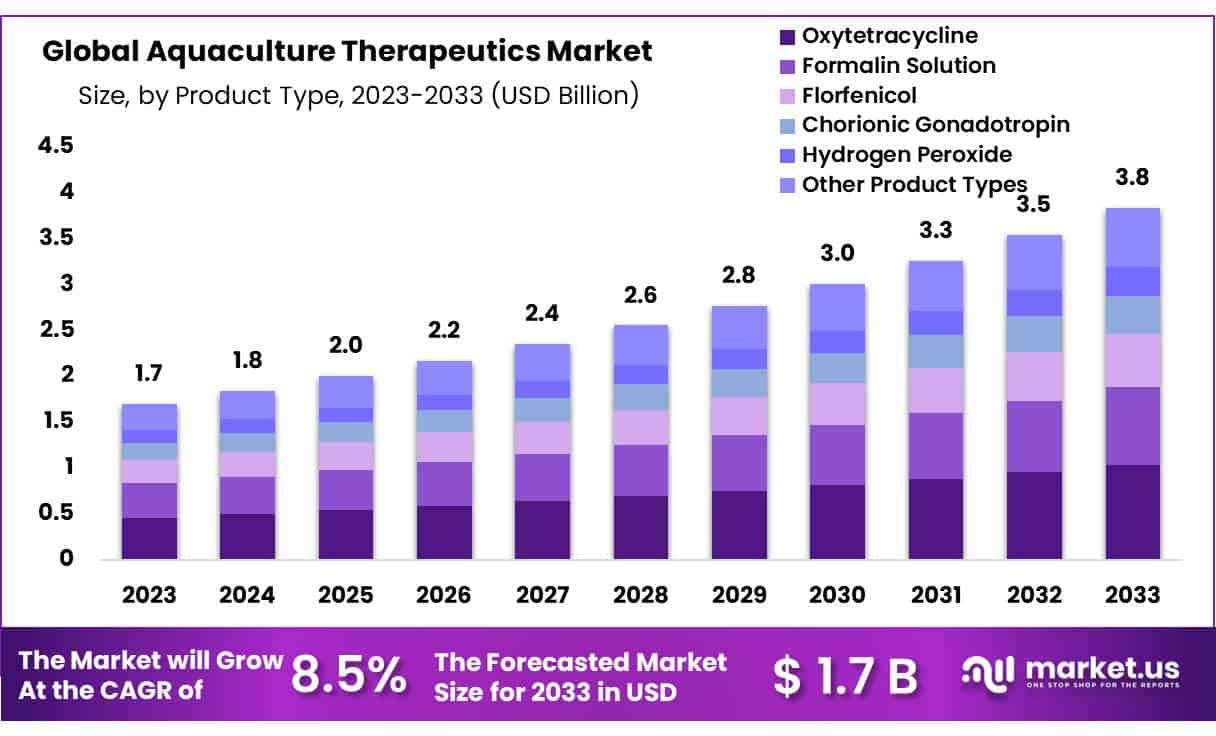
The Global Aquaculture Therapeutics Market size is expected to be worth around USD 3.8 Billion by 2033 from USD 1.7 Billion in 2023, growing at a CAGR of 8.5% during the forecast period from 2024 to 2033.
Aquaculture therapeutics is a rapidly growing and advancing sector within the aquaculture industry, with a primary focus on advancing and applying therapeutic methods for aquatic animals. This emerging field combines principles from aquaculture, veterinary medicine, and biotechnology to enhance the health and well-being of aquatic species, including fish, shellfish, and other marine organisms.
The realm of aquaculture therapeutics encompasses a wide spectrum of treatments, encompassing the utilization of vaccines, antibiotics, probiotics, immunostimulants, and various pharmaceutical products. These interventions are meticulously crafted to serve multiple purposes, including disease prevention and treatment, growth and development enhancement, bolstering reproductive performance, and augmenting overall productivity within aquaculture operations.
The report on the Aquaculture Therapeutics Market offers an in-depth analysis of market trends, drivers, restraints, opportunities, etc. Along with qualitative information, this report includes the quantitative analysis of various segments in terms of market share, growth, opportunity analysis, market value, etc. for the forecast years. The global aquaculture therapeutics market is segmented based on type, application, and geography.
Key Takeaways
- Market Size: Aquaculture Therapeutics Market size is expected to be worth around USD 3.8 Billion by 2033 from USD 1.7 Billion in 2023.
- Market Growth: The market growing at a CAGR of 8.5% during the forecast period from 2024 to 2033.
- Product Type Analysis: Oxytetracycline stands out as a dominant segment, commanding an impressive 27% market share.
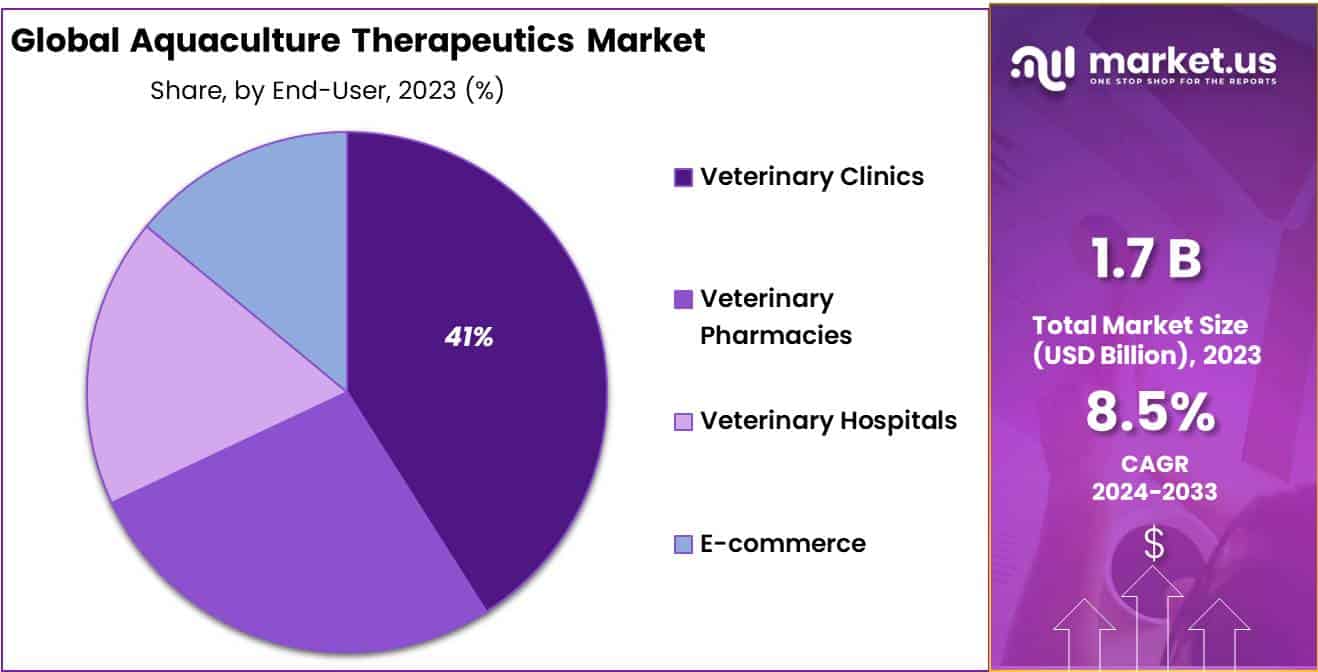
- End User Analysis: Veterinary Clinics accounted for 41% market share in 2023.
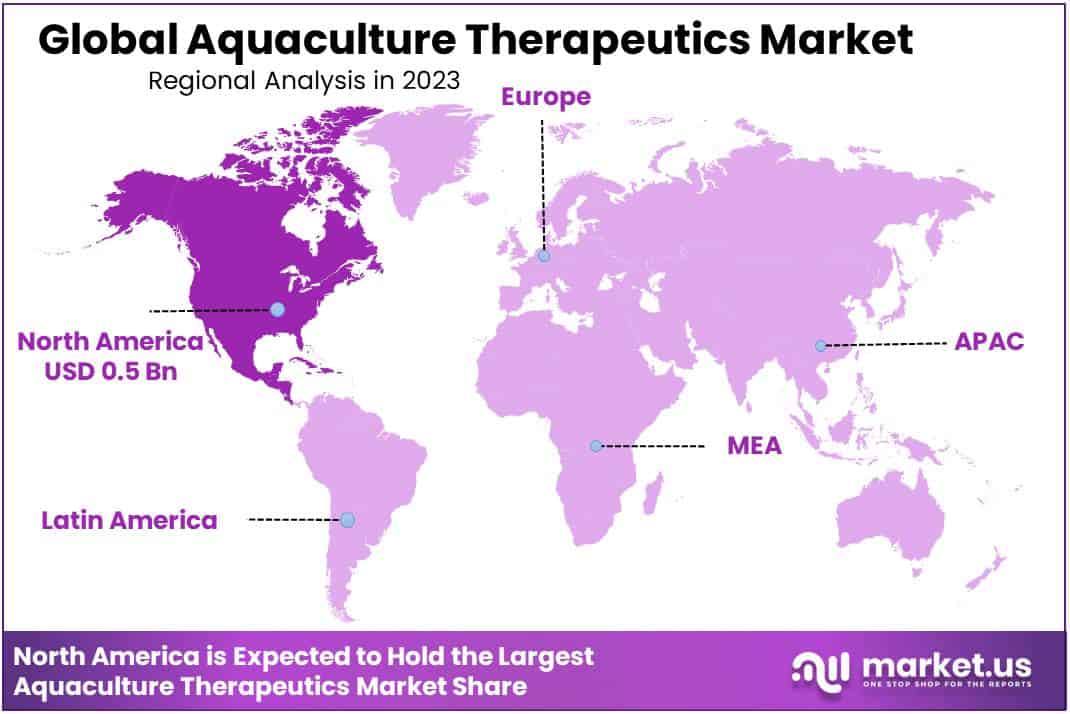
- Regional Analysis: North America is poised to capture a substantial market share of 35% and generate approximately USD 0.5 billion in market revenue.
- Rising Demand for Sustainable Seafood: The market is driven by a growing global demand for seafood, leading to increased investments in aquaculture therapeutics to ensure the sustainable production of aquatic species.
- Shift Towards Natural Products: There is a notable trend towards the use of natural and eco-friendly products in aquaculture therapeutics, aligning with consumer preferences for sustainable and healthier seafood.
- Environmental Concerns: The expansion of aquaculture can have environmental impacts, necessitating the development of sustainable practices and technologies.
Product Type Analysis
In the thriving Aquaculture Therapeutics market, Oxytetracycline stands out as a dominant segment, commanding an impressive 27% market share. This antibiotic is widely recognized for its effectiveness in treating various bacterial infections in aquatic species, contributing significantly to the industry’s growth.
Additionally, the market showcases a diverse array of therapeutic products. Formalin Solution, known for its ability to combat external parasites and fungal infections, plays a crucial role in maintaining the health of aquatic populations. Florfenicol, another notable product, is valued for its broad-spectrum antibiotic properties, ensuring the prevention and treatment of various bacterial diseases.
Chorionic Gonadotropin, a hormone-based therapeutic, aids in improving the reproductive performance of aquatic species, which is essential for sustaining aquaculture operations. Hydrogen Peroxide, with its disinfectant and antiseptic properties, contributes to maintaining water quality and preventing disease outbreaks in aquaculture systems.
As the Aquaculture Therapeutics market continues to evolve, these diverse products, along with Oxytetracycline, underscore the industry’s commitment to enhancing the health and well-being of aquatic species, supporting sustainable aquaculture practices, and meeting the growing global demand for seafood products.
End User Analysis
In the Aquaculture Therapeutics market, the largest share, a substantial 41%, is held by Veterinary Clinics, highlighting their pivotal role in the industry. These specialized clinics are at the forefront of providing essential healthcare and therapeutic interventions for aquatic species, ensuring their well-being and the sustainability of aquaculture operations.
Complementing the landscape are Veterinary Pharmacies, which offer a wide range of therapeutics and pharmaceutical products tailored to the specific needs of aquatic animals. Their expertise and accessibility contribute significantly to the market’s growth, catering to the demands of aquaculture professionals.
Veterinary Hospitals also play a crucial role, particularly in cases requiring advanced treatments and surgeries. These facilities ensure comprehensive care for aquatic species, addressing complex health issues and contributing to the overall health of the industry.
E-commerce platforms have gained prominence in recent years, providing a convenient avenue for aquaculture professionals to access a diverse range of therapeutics and healthcare products. Their presence in the market reflects the growing trend of online accessibility and convenience in sourcing aquaculture therapeutics.
Key Market Segments
Product Type
- Formalin Solution
- Florfenicol
- Chorionic Gonadotropin
- Oxytetracycline
- Hydrogen Peroxide
- Other Product Types
End User
- Veterinary Pharmacies
- Veterinary Clinics
- Veterinary Hospitals
- E-commerce
Drivers
Rising Global Demand for Seafood
The increasing global population, coupled with a growing awareness of the health benefits associated with seafood consumption, has led to a surge in the demand for fish and other aquatic products. This demand is a significant driver for the aquaculture therapeutics market as it necessitates the sustainable growth of aquaculture to meet consumer needs.
Disease Outbreaks in Aquaculture
Disease outbreaks in aquaculture can result in significant economic losses. This challenge has spurred the development of aquaculture therapeutics, including vaccines and pharmaceuticals, to control and prevent diseases. The need for effective disease management solutions is driving research and investment in this market.
Trends
Use of Natural Products
There is a notable trend towards the use of natural and environmentally friendly products in aquaculture. This includes the development of herbal and probiotic-based therapeutics that can enhance the health of aquatic species without relying heavily on chemicals. This trend aligns with the broader consumer preference for sustainable and natural products.
Advanced Biotechnology
The application of advanced biotechnology tools, such as genomics and genetic engineering, is gaining prominence in aquaculture therapeutics. These technologies enable the development of genetically improved and disease-resistant aquatic species, representing a significant trend in the industry.
Restraints
Regulatory Challenges
Aquaculture therapeutics are subject to strict regulatory oversight to ensure the safety of both aquatic species and consumers. Meeting these regulatory requirements can be time-consuming and expensive, serving as a restraint for market players.
Environmental Concerns
The expansion of aquaculture can have adverse environmental impacts, including water pollution and habitat destruction. These concerns may limit the growth of the industry, necessitating sustainable practices and technologies to mitigate these issues.
Opportunities
Emerging Markets
There are significant growth opportunities in emerging markets where aquaculture is still in its early stages. These regions offer untapped potential for the aquaculture therapeutics market, especially as they seek to meet the increasing demand for seafood.
Technological Advancements
Continued advancements in aquaculture technology, including automation, artificial intelligence, and monitoring systems, present opportunities to improve the efficiency and sustainability of aquaculture operations. Market players can capitalize on these technologies to enhance their products and services.
Regional Analysis
In terms of geographical regions, the market is segmented into Asia Pacific, North America, Latin America, Europe, and the Middle East & Africa. North America is poised to capture a substantial market share of 35% and generate approximately USD 0.5 billion in market revenue within the specified timeframe. This is attributed to the region’s advanced healthcare therapeutics infrastructure and a significant level of awareness among its population regarding the benefits of aquaculture therapeutics. Furthermore, government initiatives aimed at raising awareness and promoting the adoption of aquaculture therapeutics are bolstering the expansion of the regional market during the projected period.
On the other hand, the Asia Pacific market is expected to witness significant growth soon. This growth is primarily driven by the abundant aquatic life in the region and the diverse range of organisms with a high prevalence of diseases in various parts of the Asia Pacific region.
Key Regions and Countries
North America
- The US
- Canada
- Mexico
Western Europe
- Germany
- France
- The UK
- Spain
- Italy
- Portugal
- Ireland
- Austria
- Switzerland
- Benelux
- Nordic
- Rest of Western Europe
Eastern Europe
- Russia
- Poland
- The Czech Republic
- Greece
- Rest of Eastern Europe
APAC
- China
- Japan
- South Korea
- India
- Australia & New Zealand
- Indonesia
- Malaysia
- Philippines
- Singapore
- Thailand
- Vietnam
- Rest of APAC
Latin America
- Brazil
- Colombia
- Chile
- Argentina
- Costa Rica
- Rest of Latin America
Middle East & Africa
- Algeria
- Egypt
- Israel
- Kuwait
- Nigeria
- Saudi Arabia
- South Africa
- Turkey
- United Arab Emirates
- Rest of MEA
Market Player Analysis
The report covers Aquaculture Therapeutics Market key players with detailed profiles covering company specifics, product offerings, production capabilities and sales figures, revenue generation, pricing strategies, and profit margins. This 2024-2033 forecast gives you a clear picture of their current standing and future trajectory.
Market Key Players
- TunaTech GmbH
- ViAqua Therapeutics Ltd
- Alpharma, Inc.
- Blue Ridge Aquaculture
- Cermaq ASA
- Cooke Aquaculture
- Unima Group
- Nireus S.A.
- Selonda Aquaculture S.A.
- StarKist Taylor
- The Trendlines Group
Recent Developments
- TunaTech GmbH: Focusing on vaccines derived from natural sources like seaweed to boost sustainability and address concerns about antibiotic resistance.
- ViAqua Therapeutics Ltd: Developing diagnostic tools and personalized treatment plans for fish, allowing for targeted and effective interventions.
- Alpharma, Inc.: Developing affordable therapeutics to make disease prevention and treatment more accessible to small-scale farmers.
- Blue Ridge Aquaculture: Exploring the use of algae as a sustainable and nutritious feed ingredient to promote fish health and reduce environmental impact.