

假性脑瘤市场
假性脑瘤市场:2026年市场规模约为48.7亿美元,2031年市场规模约为70.7亿美元;预测期复合年增长率为7.73%;当前最大市场为北美;增长最快的市场为亚太地区。
市场研究正文
规模、增长、细分、驱动因素与关键问题
当前质量分 100.00,审核状态 accepted。结构化字段已按 RoboInd 内容层级组织。
核心结论
假性脑瘤市场:2026年市场规模约为48.7亿美元,2031年市场规模约为70.7亿美元;预测期复合年增长率为7.73%;当前最大市场为北美;增长最快的市场为亚太地区。
市场走势
结构化指标
| 指标 | 年份 | 数值 | 性质 |
|---|---|---|---|
| 复合年增长率 | 2031 | 7.73% | 机构预测 |
| 市场规模 | 2026 | USD 4.87 billion | 机构预测 |
| 市场规模 | 2031 | USD 7.07 billion | 机构预测 |
细分市场份额
市场结构
| 维度 | 细分项 | 年份 | 份额 |
|---|---|---|---|
| disease_severity | Mild or Stable Disease | 2025 | 43.440% |
| end_user | Hospitals | 2025 | 58.240% |
| geography | North America | 2025 | 42.610% |
| offering | Treatment | 2025 | 74.310% |
关键结论
- disease_severity 维度中,Mild or Stable Disease 在 2025 年的公开份额为 43.44%。
- end_user 维度中,Hospitals 在 2025 年的公开份额为 58.24%。
- geography 维度中,North America 在 2025 年的公开份额为 42.61%。
- offering 维度中,Treatment 在 2025 年的公开份额为 74.31%。
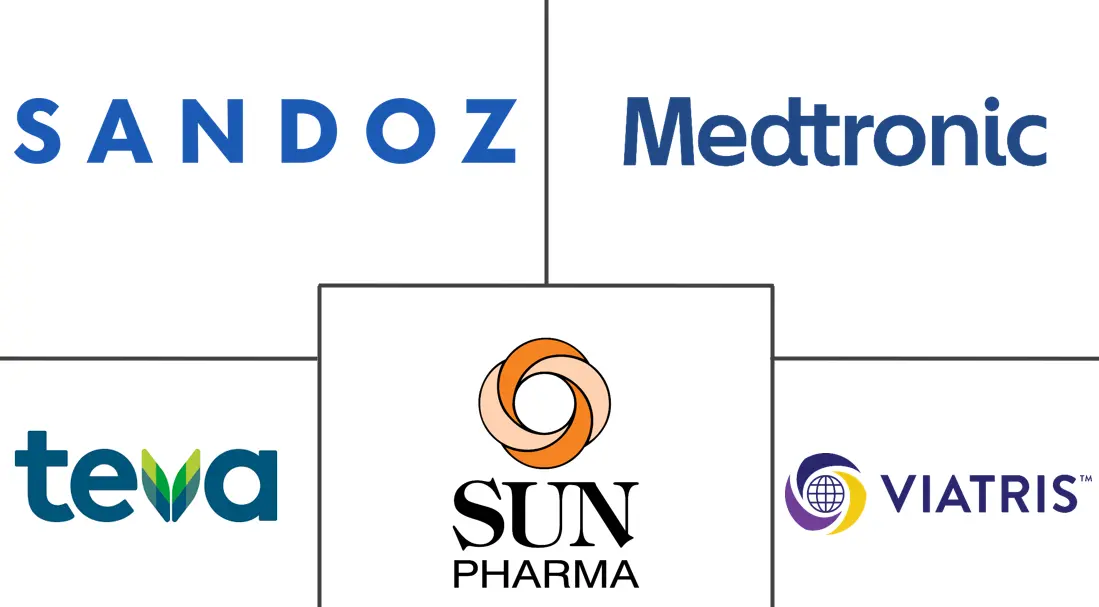
主要参与者
- Teva Pharmaceutical Industries Ltd.
- Sandoz Group AG
- Sun Pharmaceutical Industries Ltd.
- Viatris Inc.
- Medtronic plc
增长驱动因素
| 因素 | 影响 CAGR | 地区相关性 | 影响周期 |
|---|---|---|---|
| Rising Obesity-Associated IIH Incidence | +2.100% | Global, most acute in North America, Europe, and emerging-obesity APAC | Long term (≥ 4 years) |
| Increasing Recognition of Vision-Threatening Disease | +1.300% | North America and Europe, accelerating in APAC after the 2025 China consensus | Medium term (2-4 years) |
| Expansion of Neuro-Ophthalmology Diagnostic Capacity | +0.900% | North America and Europe, with early gains in GCC and Australia | Medium term (2-4 years) |
| Increasing Use of Venous Sinus Stenting for Refractory Disease | +1.200% | North America, Europe, GCC, and Australia | Medium term (2-4 years) |
| Emerging GLP-1 and Metabolic Therapies for Disease Modification | +1.500% | Global, concentrated in GLP-1 RA reimbursed markets | Long term (≥ 4 years) |
| Increasing Adoption of Non-Invasive Intracranial Pressure Monitoring | +0.500% | North America and Europe, with early academic use in APAC | Medium term (2-4 years) |
市场制约因素
| 因素 | 影响 CAGR | 地区相关性 | 影响周期 |
|---|---|---|---|
| Absence of a Broadly Approved Disease-Specific Pharmacotherapy | -1.200% | Global, most acute in markets with restrictive off-label reimbursement in APAC and MEA | Long term (≥ 4 years) |
| Diagnostic Delay and Specialist Shortages | -0.800% | Global, most acute in APAC, MEA, and South America | Medium term (2-4 years) |
| Variable Surgical Evidence and Reintervention Risk | -0.500% | North America and Europe, where surgical volumes are highest | Medium term (2-4 years) |
| Reimbursement Fragmentation for Off-Label and Multidisciplinary Care | -0.700% | Global, particularly segmented payer systems in the United States and Europe | Medium term (2-4 years) |
报告关注的关键问题
What is driving growth in pseudotumor cerebri care?
Obesity-associated IIH, earlier recognition of vision risk, and wider use of OCT and MRI venography are expanding diagnosis and treatment needs.
What is the 2026 value of the Pseudotumor Cerebri Market?
The Pseudotumor Cerebri Market was valued at USD 4.87 billion in 2026 and is projected to reach USD 7.07 billion by 2031.
Which treatment settings generate the most IIH revenue?
Hospitals held 58.24% of revenue in 2025 because they provide specialist imaging, surgery, and acute care for complex cases.
Why are GLP-1 receptor agonists relevant to IIH?
They are being studied for weight loss, intracranial pressure reduction, headache control, and papilledema resolution in affected patients.
Which region is expanding fastest for IIH services?
Asia-Pacific is forecast to grow at an 8.85% CAGR through 2031 as awareness, clinical standards, and specialist capacity improve.
How does venous sinus stenting affect IIH treatment?
A 2026 U.S. study reported lower treatment-failure risk and lower perioperative morbidity for venous sinus stenting than for cerebrospinal fluid shunting.
市场概览
- 增长最快市场:亚太地区
- 最大市场:北美
- 市场集中度:中等
查看来源:Mordor Intelligence