

Antifungal Nail Drugs Market
Antifungal Nail Drugs Market By Drug Class (Allylamines, Azoles, Echinocandins, Polyenes, Others) By Medication Type (Terbinafine, Itraconazole, Fluconazole, Ciclopirox, Efinaconazole, Tavaborole, Others) By Application (Onychomycosis, Tinea Unguium, Candidal Onychomycosis, Others) By Distribution Channel (Hospital Pharmacies, Retail Pharmacies, Online Pharmacies, Dermatology Clinics), Region and Companies – Industry Segment Outlook, Market Assessment, Competition Scenario, Trends and Forecast 2026-2035
- Published date: May 2026
- Report ID: 185690
- Number of Pages: 277
- Format:
- Overview
- Table of Contents
- Major Market Players
Quick Navigation
- Report Overview
- Key Takeaways
- Drug Class Analysis
- Medication Type Analysis
- Application Analysis
- Distribution Channel Analysis
- Key Market Segments
- Driving Factors
- Trending Factors
- Restraining Factors
- Opportunity
- Regional Analysis
- Key Players Analysis
- Recent Developments
- Report Scope
Report Overview
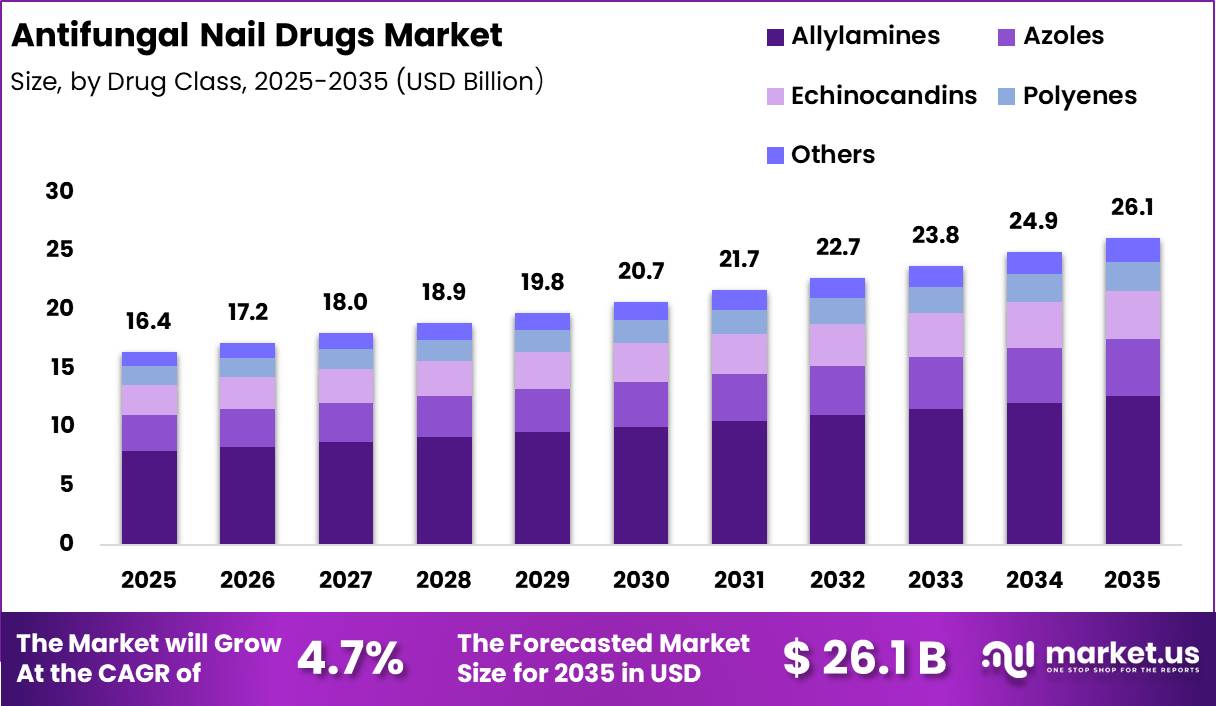
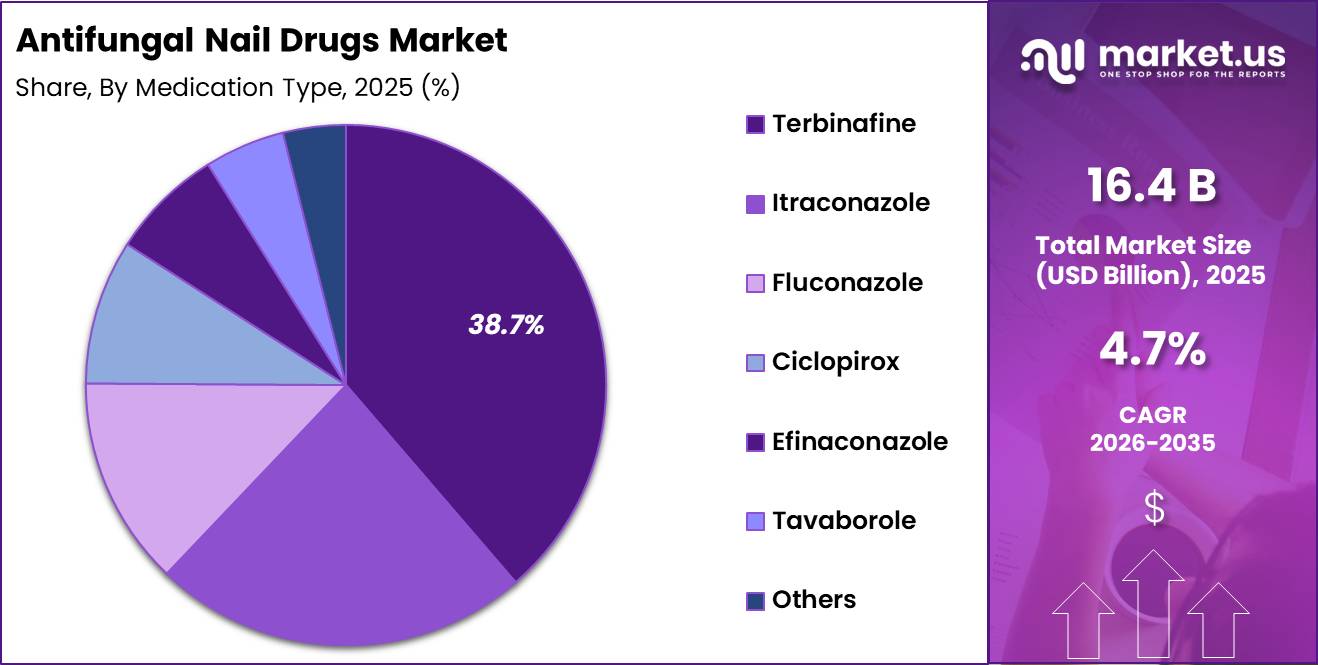
Global Antifungal Nail Drugs Market size is expected to be worth around US$ 26.1 Billion by 2035 from US$ 16.4 Billion in 2025, growing at a CAGR of 4.9% during the forecast period from 2026 to 2035. In 2025, North America led the market, achieving over 39.50% share with a revenue of US$ 5.38 Billion.
The global market for antifungal nail drugs is undergoing a structural transformation, driven by increased clinical awareness and a shift toward therapeutic eradication rather than cosmetic management.Onychomycosis, a primary fungal nail infection, is estimated to affect approximately 10–14% of the global population, with prevalence rising to nearly 20% among individuals above 60 years of age, as reported by World Health Organization and supported by dermatological studies referenced by the Centers for Disease Control and Prevention. This growing patient pool is contributing to sustained demand for effective antifungal interventions.
 The growth of the antifungal nail drugs market is primarily driven by the increasing global burden of onychomycosis (fungal nail infection). Epidemiological studies indicate that approximately 10% of the global adult population is affected, with prevalence rising to 20% among individuals above 60 years and up to 50% in those over 70 years.
Furthermore, fungal nail infections account for nearly 50% of all nail disorders, demonstrating a substantial disease burden. The condition is also linked with comorbidities such as diabetes, where up to one-third of diabetic patients are affected.
Public health bodies and clinical literature highlight that aging populations, increased urbanization, and lifestyle factors such as occlusive footwear contribute to higher incidence rates. The chronic nature of the disease, combined with discomfort and risk of secondary infections, necessitates medical intervention. As a result, sustained demand for topical and oral antifungal therapies is being observed, supporting consistent market expansion.
Trending Factors
Shift Toward Advanced and Topical Therapies
A significant trend observed in the antifungal nail drugs market is the transition toward advanced topical therapies and improved drug formulations. Clinical evidence shows that traditional oral antifungal agents such as terbinafine achieve mycological cure rates of approximately 76%, significantly higher than itraconazole at 38%.However, concerns regarding systemic side effects, including liver toxicity, have accelerated the adoption of topical alternatives. Newer topical agents such as efinaconazole have demonstrated improved outcomes, with cure rates two to three times higher than older treatments like ciclopirox.
Healthcare guidelines emphasize long-duration topical therapies (often up to 12 months) to achieve effective results. Additionally, innovations such as medicated nail lacquers and low systemic absorption formulations are gaining traction due to enhanced safety profiles.
This trend is aligned with patient preference for non-invasive treatments and increasing regulatory focus on safer therapies, thereby shaping product development pipelines and influencing prescribing patterns globally.
Restraining Factors
Low Treatment Success Rates and High Recurrence
Despite growing demand, the antifungal nail drugs market faces notable restraints due to suboptimal treatment outcomes and high recurrence rates. Clinical studies indicate that even after successful therapy, recurrence occurs in approximately 20–25% of cases within a few years.Moreover, complete cure rates remain relatively low across treatment categories, particularly for topical drugs, where effectiveness can be as low as 6–9% for certain formulations such as ciclopirox. The long duration of therapy, often exceeding 6–12 months, reduces patient adherence and overall treatment success.
Additionally, oral antifungal medications are associated with adverse effects, limiting their use in certain patient populations. Healthcare sources also indicate that the disease is difficult to eradicate due to slow nail growth and fungal persistence in nail beds. These factors collectively reduce treatment efficiency and create barriers to widespread adoption, thereby constraining market growth despite high disease prevalence.
Opportunity
Growing Geriatric Population and Untapped Patient Pool
Significant opportunities exist in the antifungal nail drugs market due to demographic shifts and underdiagnosed patient populations. The global elderly population is expanding rapidly, and prevalence of onychomycosis increases substantially with age, reaching up to 50% in individuals above 70 years.
Additionally, global estimates suggest that fungal nail infections affect between 5% and 25% of the population, translating to hundreds of millions of cases worldwide. Despite this, a considerable proportion of patients remain untreated due to lack of awareness or perception of the condition as cosmetic.
Healthcare institutions emphasize the importance of early diagnosis to prevent complications such as pain, mobility impairment, and secondary infections. Emerging markets, particularly in Asia and Latin America, present untapped opportunities due to improving healthcare access and rising awareness.
Furthermore, ongoing research into novel drug delivery systems and combination therapies offers potential to improve cure rates, thereby expanding the addressable market and supporting long-term growth.
Regional Analysis
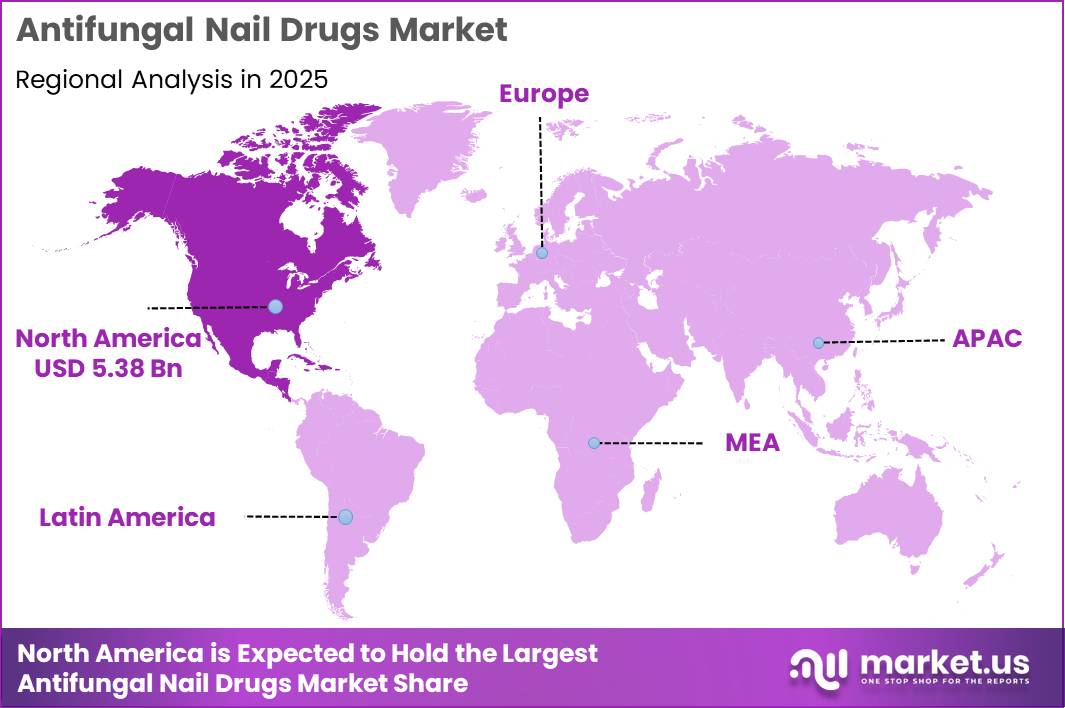
The regional landscape of the antifungal nail drugs market demonstrates a concentrated dominance in North America, which accounted for over 39.50% of the global market share in 2025, generating revenue of approximately US$ 5.38 billion. This leadership position can be attributed to a well-established healthcare infrastructure, high awareness regarding fungal infections, and increased access to advanced treatment options.
The prevalence of onychomycosis has been observed to be relatively high in this region, further supporting sustained demand for antifungal therapeutics. Additionally, strong presence of key pharmaceutical manufacturers and ongoing investments in research and development have accelerated product innovation and availability.
Europe represents the second-largest regional market, supported by favorable reimbursement policies and growing geriatric population, which is more susceptible to fungal nail infections. Meanwhile, the Asia-Pacific region is expected to witness the fastest growth rate over the forecast period, driven by expanding healthcare access, rising disposable incomes, and increasing awareness of personal hygiene and dermatological conditions.
Emerging markets in Latin America and the Middle East & Africa are also experiencing gradual growth, supported by improving healthcare infrastructure and increased penetration of over-the-counter antifungal products. However, limited awareness and affordability constraints may continue to restrict rapid market expansion in these regions.
Key Regions and Countries
North America
- The US
- Canada
Europe
- Germany
- France
- The U.K.
- Italy
- Spain
- Russia & CIS
- Rest of Europe
Asia Pacific
- China
- India
- Japan
- South Korea
- ASEAN
- Australia & New Zealand
- Rest of Asia Pacific
Middle East & Africa
- GCC
- South Africa
- Rest of Middle East & Africa
Latin America
- Brazil
- Mexico
- Rest of Latin America
Key Players Analysis
Key players in the antifungal nail drugs market are increasingly prioritizing differentiation strategies to address the saturation of generic azole-based treatments. Innovation in drug delivery technologies has become a central focus, with investments directed toward advanced systems such as transfersomes and polymeric lacquers, which are designed to improve nail plate penetration and enhance therapeutic outcomes. These advancements are expected to improve patient adherence by minimizing the need for invasive procedures.
A notable strategic approach involves the transition of prescription products to over-the-counter availability, enabling companies to expand their consumer base and extend the commercial lifecycle of established formulations. This trend aligns with the growing demand for self-care solutions in dermatology.
Collaborations with diagnostic companies are also being leveraged to develop integrated “test-and-treat” offerings, which enhance treatment precision and strengthen relationships with healthcare professionals. Additionally, sustainability initiatives, including the adoption of biodegradable packaging, are gaining importance in brand positioning.
Market consolidation remains prominent, with larger firms acquiring smaller biotechnology companies possessing late-stage pipeline assets, thereby reinforcing product portfolios and mitigating risks associated with patent expirations.
Market Key Players
- Pfizer Inc.
- Novartis AG
- GlaxoSmithKline plc
- Bayer AG
- Johnson & Johnson
- Merck & Co., Inc.
- Abbott Laboratories
- Bausch Health Companies Inc.
- Mylan N.V.
- Teva Pharmaceutical Industries Ltd.
- Cipla Inc.
- Sun Pharmaceutical Industries Ltd.
- Dr. Reddy’s Laboratories Ltd.
- Galderma S.A.
- Valeant Pharmaceuticals International Inc.
- Others
Recent Developments
- Novartis AG (Feb, 2025): Novartis expanded its oral antifungal offering for onychomycosis across selected European markets, improving access to systemic nail fungus therapies and strengthening its dermatology portfolio focus on high-need fungal indications.
- Pfizer Inc (Apr, 2025 ): Pfizer continued to leverage its recently granted patent on novel antifungal pyridine derivatives to build a broader late‑stage antifungal pipeline, positioning the company to refresh its systemic antifungal portfolio used in difficult nail and skin mycoses in the coming years.
- Bayer AG (Jun, 2025): Bayer intensified investment in antifungal research and over‑the‑counter dermatology lines, using new collaborations and R&D programs highlighted in 2025–2026 dermal mycosis market updates to expand future options for topical nail fungus therapies under its consumer health brands.
- Moberg Pharma (Jun, 2025): Terclara, a high‑penetration topical terbinafine lacquer for nail fungus, became the market leader in Norway only months after its OTC launch, underlining how rapid uptake of effective topicals can shift share away from legacy oral regimens marketed by large pharma players such as Novartis, Johnson & Johnson, and Merck.

