

Report Overview
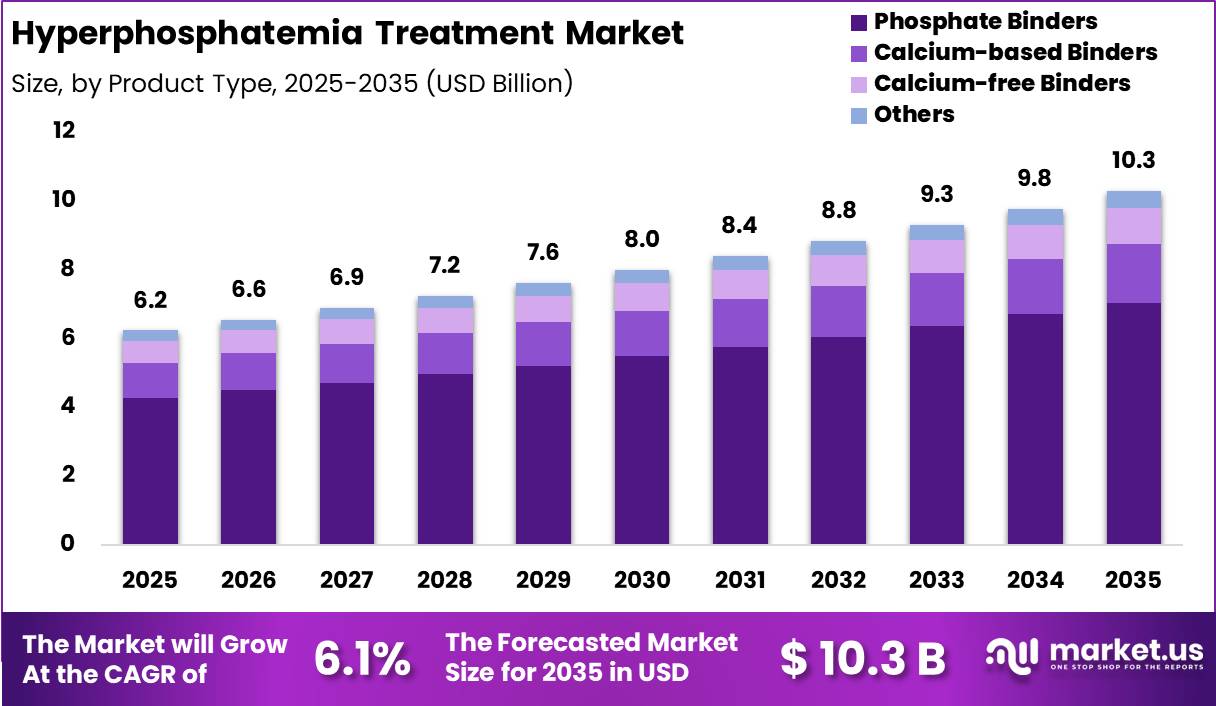
Global Hyperphosphatemia Treatment Market size is expected to be worth around US$ 10.3 Billion by 2035 from US$ 6.2 Billion in 2025, growing at a CAGR of 5.1% during the forecast period from 2026 to 2035. In 2025, North America led the market, achieving over 42.5% share with a revenue of US$ 2.6 Billion.
Hyperphosphatemia is a metabolic disorder characterized by abnormally elevated phosphate levels in the blood, typically defined as serum phosphate concentrations above 4.5 mg/dL in adults. Phosphate plays a vital role in numerous physiological processes, including bone mineralization, cellular energy production, and intracellular signaling. Approximately 85% of the body’s phosphate is stored in bones, while the kidneys are responsible for excreting nearly 90% of the daily phosphate load to maintain normal phosphate balance.
 A major driver of the hyperphosphatemia treatment market is the increasing global prevalence of chronic kidney disease (CKD) and end-stage renal disease (ESRD). Hyperphosphatemia affects approximately 50–74% of ESRD patients, compared with about 12% in the general population, creating a substantially larger treatment population in advanced kidney disease.
Clinical guidelines from the Kidney Disease: Improving Global Outcomes (KDIGO) recommend phosphate-lowering interventions, including dietary management, phosphate binders, and dialysis, for CKD patients with persistently elevated serum phosphate levels. As dialysis adoption continues to increase worldwide, the number of patients requiring long-term phosphate control is expanding.
Growing recognition of the association between phosphate management and reduced cardiovascular and bone-related complications is also supporting broader and earlier intervention, further increasing demand for hyperphosphatemia therapies.
Trending Factors
Shift to non-calcium and multifunctional therapies
A key market trend is the transition from traditional calcium-based phosphate binders toward non-calcium and multifunctional treatment options. Safety concerns related to vascular calcification have encouraged the use of alternatives such as sevelamer, lanthanum, iron-based phosphate binders, and emerging intestinal phosphate transporter inhibitors.
Iron-based binders are gaining traction because they can simultaneously support phosphate control and address iron deficiency, complementing anemia management strategies in CKD patients. In addition, recent CKD treatment guidelines emphasize individualized phosphate management and continuous monitoring, increasing demand for therapies that offer improved tolerability, lower gastrointestinal side effects, and better patient adherence. These factors are driving a more diversified and patient-centric treatment landscape.
Restraining Factors
Pill burden, adherence, and cost barriers
High pill burden, poor treatment adherence, and cost pressures remain key barriers to market growth. Many dialysis patients require multiple daily doses of phosphate binders, making long-term compliance difficult. Non-adherence is associated with poorer phosphorus control and worsening mineral-bone disorder outcomes.
Treatment complexity is further increased by the need to combine dietary restrictions, dialysis, and medication therapy. Despite available treatments, hyperphosphatemia remains highly prevalent among ESRD patients, indicating ongoing challenges in achieving recommended phosphate targets.
Cost also limits adoption, particularly in low- and middle-income countries where access to newer non-calcium binders may be restricted by affordability and reimbursement limitations. In developed markets, the long-term budget impact of branded therapies encourages formulary restrictions and generic substitution, which can slow uptake of innovative products.
Opportunity
Low-pill, personalized and earlier-stage management
Significant opportunities exist for therapies that reduce pill burden, improve tolerability, and support earlier intervention in CKD. Current clinical recommendations increasingly support initiating phosphate-lowering strategies in patients with persistently elevated phosphate levels rather than waiting for severe abnormalities, creating opportunities in earlier-stage CKD populations.
Novel therapies, including intestinal phosphate transporter inhibitors and simplified formulations such as chewable or reduced-tablet regimens, have the potential to improve adherence and treatment outcomes. Additionally, personalized phosphate management approaches that combine dietary counseling, optimized dialysis protocols, and tailored pharmacotherapy are creating opportunities for digital health solutions and clinical decision-support platforms. These innovations are expected to help healthcare systems manage CKD-related mineral and bone disorders more effectively while improving patient outcomes.
Regional Analysis
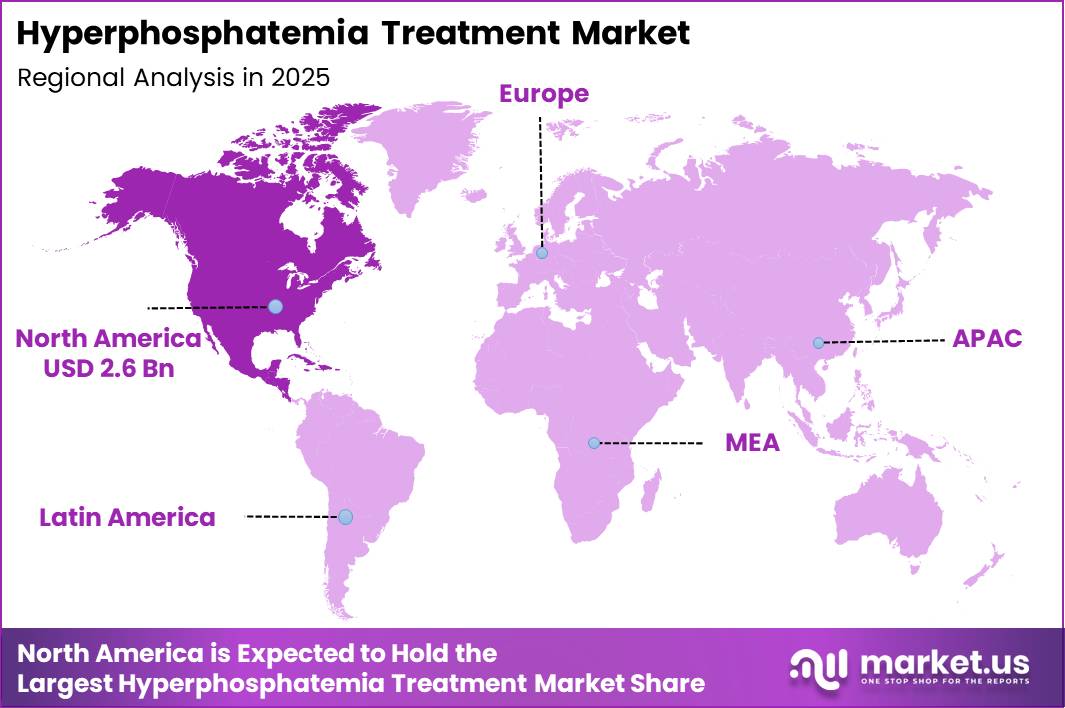
In 2025, North America dominated the Hyperphosphatemia Treatment Market, accounting for more than 42.5% of the global market share and generating revenue of approximately US$ 2.6 billion. The region’s leadership can be attributed to the high prevalence of chronic kidney disease (CKD) and end-stage renal disease (ESRD), both of which are major contributors to hyperphosphatemia.
The presence of a well-established healthcare infrastructure, widespread access to advanced diagnostic services, and strong reimbursement frameworks have further supported market growth across the United States and Canada.
The United States represented the largest share within the region due to the growing number of dialysis patients, increasing adoption of phosphate binders, and continuous advancements in renal care therapies. Moreover, the rising elderly population, which is more susceptible to kidney-related disorders, has increased the demand for effective phosphate management treatments. Strong investments in pharmaceutical research and development, coupled with the presence of leading biotechnology and pharmaceutical companies, have accelerated the introduction of innovative treatment options.
Additionally, favorable government initiatives aimed at improving kidney disease management and increasing patient awareness have contributed to higher treatment adoption rates. The growing focus on value-based healthcare and personalized treatment approaches is also expected to support market expansion. As a result, North America is anticipated to maintain its dominant position in the Hyperphosphatemia Treatment Market throughout the forecast period.
Key Regions and Countries
North America
- The US
- Canada
Europe
- Germany
- France
- The U.K.
- Italy
- Spain
- Russia & CIS
- Rest of Europe
Asia Pacific
- China
- India
- Japan
- South Korea
- ASEAN
- Australia & New Zealand
- Rest of Asia Pacific
Middle East & Africa
- GCC
- South Africa
- Rest of Middle East & Africa
Latin America
- Brazil
- Mexico
- Rest of Latin America
Key Players Analysis
The Hyperphosphatemia Treatment Market is characterized by the presence of several established pharmaceutical companies focused on expanding their product portfolios and strengthening their market positions through innovation, strategic collaborations, and geographic expansion.
Key players include Sanofi, Fresenius Medical Care, Vifor Pharma, Keryx Biopharmaceuticals, and Ardelyx, Inc.. These companies are actively investing in research and development to introduce advanced phosphate binders with improved efficacy, safety, and patient compliance. The competitive landscape is driven by the growing prevalence of chronic kidney disease and end-stage renal disease, increasing demand for effective phosphate management therapies, and regulatory approvals of novel treatment options.
Market participants are also emphasizing partnerships with healthcare providers and dialysis centers to enhance product adoption. Continuous product innovation, strong distribution networks, and expansion into emerging markets remain key strategies adopted by leading companies to maintain their competitive advantage and support long-term market growth.
Market Key Players
- Sanofi S.A.
- Fresenius Medical Care AG & Co. KGaA
- Vifor Pharma Ltd.
- Takeda Pharmaceutical Company Limited
- Kyowa Kirin Co., Ltd.
- Astellas Pharma Inc.
- Bayer AG
- Pfizer Inc.
- Novartis AG
- Mylan N.V. (Viatris)
- Teva Pharmaceutical Industries Ltd.
- Sun Pharmaceutical Industries Ltd.
- Dr. Reddy’s Laboratories Ltd.
- Lupin Limited
- Ardelyx Inc.
- Others
Recent Developments
- February 2025 – Ardelyx Inc. received regulatory approval in China for tenapanor, a first-in-class phosphate absorption inhibitor indicated for the treatment of hyperphosphatemia in chronic kidney disease (CKD) patients on dialysis. The approval was achieved through Ardelyx’s partnership with Shanghai Fosun Pharma and triggered a US$5 million milestone payment to the company. This development significantly expands tenapanor’s commercial footprint in one of the world’s largest dialysis patient populations.
- February 2025 – Novartis AG announced that the European Medicines Agency’s Committee for Medicinal Products for Human Use (CHMP) issued a positive opinion for Fabhalta (iptacopan) in the treatment of C3 glomerulopathy (C3G), a rare kidney disease. Although not a direct hyperphosphatemia therapy, the advancement strengthens Novartis’ nephrology portfolio and reinforces its strategic focus on kidney disease management, a key area linked to phosphate imbalance complications.
- 2026 – Takeda Pharmaceutical Company Limited initiated a major global restructuring and operational optimization program aimed at improving efficiency and supporting future product launches. The company indicated plans to generate annual savings exceeding ¥200 billion, enabling greater investment in high-priority therapeutic areas, including nephrology and rare disease research