

Report Overview
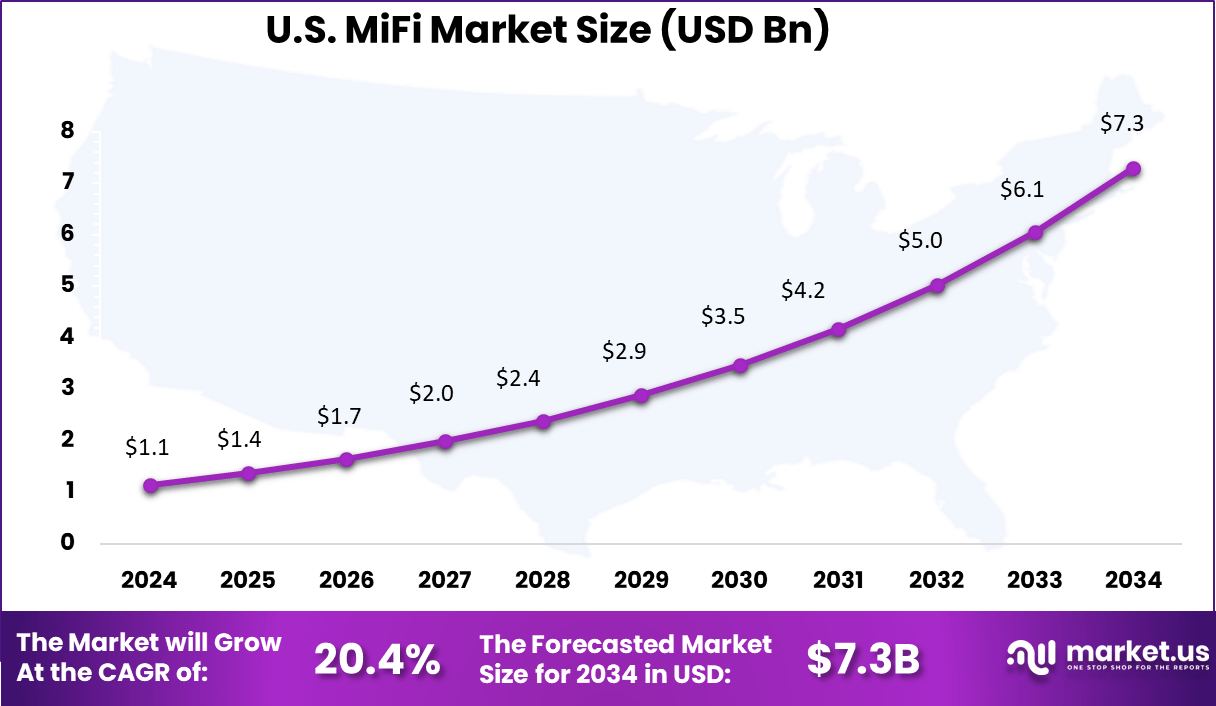
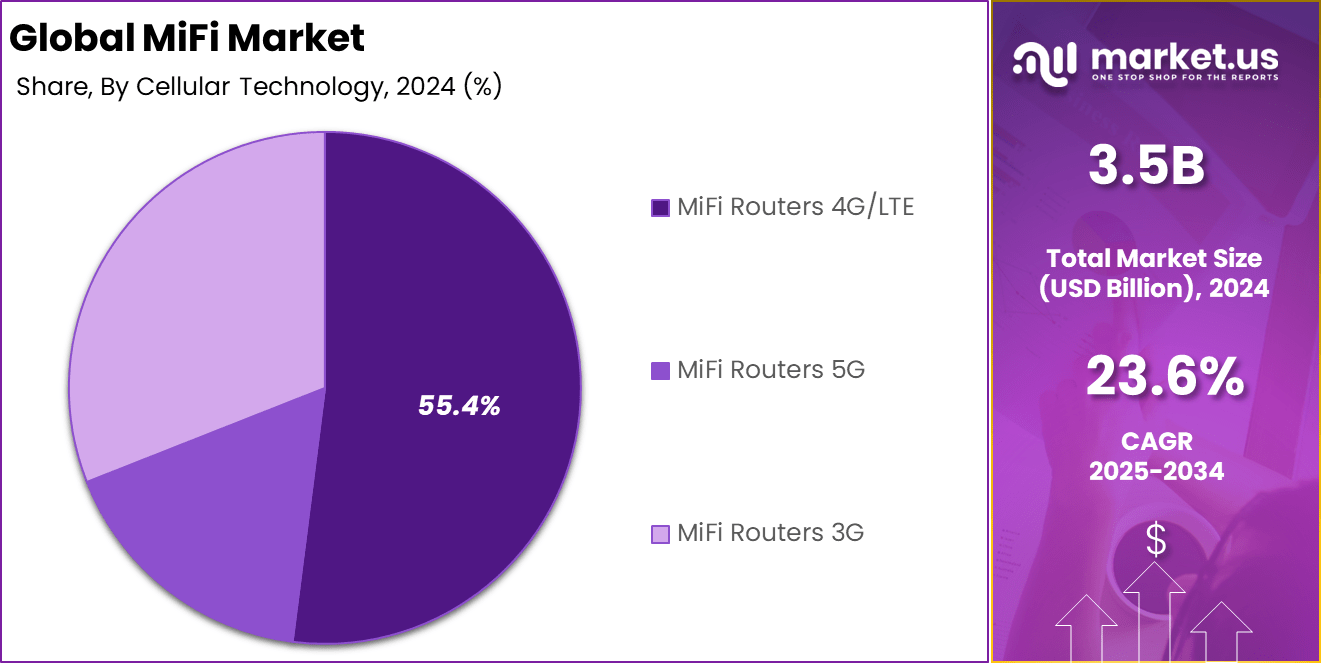
The Global MiFi Market size is expected to be worth around USD 29.1 Billion By 2034, from USD 3.5 billion in 2024, growing at a CAGR of 23.6% during the forecast period from 2025 to 2034. In 2024, North America held a dominant market position, capturing more than a 38.5% share, holding USD 1.3 Billion revenue.
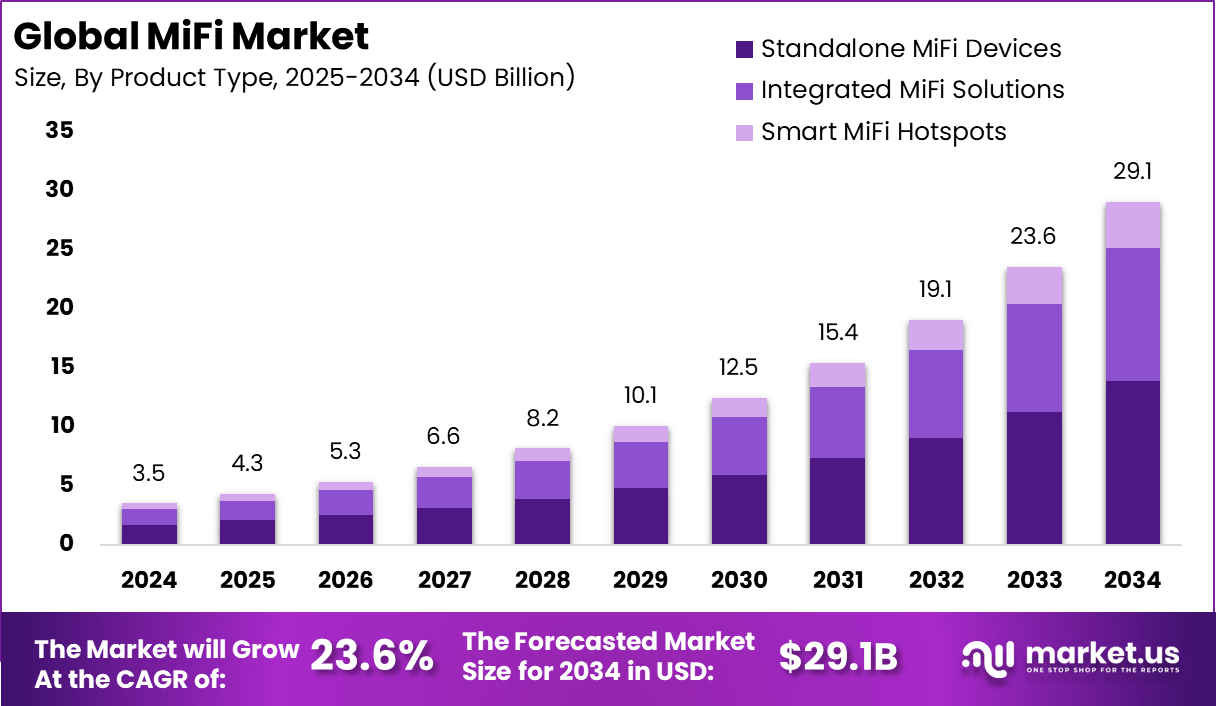
The MiFi market refers to the industry surrounding portable wireless devices that create personal mobile Wi-Fi hotspots by connecting to cellular networks. People use MiFi devices to access the internet wherever they are, without relying on fixed broadband or public Wi-Fi. These devices offer seamless connectivity for travelers, business professionals, students, and anyone needing internet on the move, particularly in locations where wired connections are unavailable or unreliable.
Top driving factors shaping the MiFi market include the explosive demand for high-speed internet access, especially via mobile devices, and the spread of remote work and distance learning. The resurgence of global travel and tourism has fueled the need for portable connectivity, while increased awareness about online security has pushed consumers and enterprises to seek personal and encrypted mobile internet solutions.
Scope and Forecast
| Driver | Details |
|---|---|
| 5G Network Expansion | Rapid deployment of 5G technology, enabling much faster speeds and lower latency for MiFi devices. |
| Remote Work & Mobile Office | Surge in remote/hybrid work models is increasing demand for secure and portable high-speed internet. |
| Travel & Tourism Recovery | International travel rebound fuels MiFi adoption for seamless, affordable connectivity abroad. |
| Digital Education & Telehealth | MiFi enables access to distance learning and remote healthcare where wired connections are unavailable. |
| Security and Privacy | Growing concern about risks from public Wi-Fi boosts demand for personal secured hotspots. |
| Device Miniaturization | Improved battery life and design portability make MiFi devices more user-friendly and versatile. |
Key Features and Trends
| Feature/Trend | Details |
|---|---|
| 5G-Enabled MiFi | Next-gen MiFi delivers gigabit speeds, ultra-low latency, supports IoT, and multitasking. |
| Enhanced Battery & Portability | Latest models feature longer battery life (30–60+ hours) and compact designs. |
| Advanced Security | Incorporation of encrypted networks, password protection, and robust authentication. |
| Multi-Device Connectivity | Support for simultaneous connections to 10+ devices – ideal for households/businesses. |
| Affordable 5G Devices | Competition and volume manufacturing are reducing costs, boosting mass-market appeal. |
| IoT Integration | MiFi increasingly powers connected devices, smart homes, and business IoT deployments. |
Opportunities and Challenges
| Category | Highlights |
|---|---|
| Opportunities | – Rapid 5G network rollout globally – High adoption in emerging markets (Asia-Pacific) – Strategic telecom-manufacturer partnerships – Government initiatives supporting digital and mobile connectivity – Growth in sectors like travel, remote work, education, and telemedicine |
| Challenges | – High upfront cost of 5G MiFi devices – Variable 5G coverage, especially in rural/remote areas – Competition from tethering/mobile plans and integrated 5G phones – Battery limitations for power users – Cyclical tariffs and supply chain disruptions – Security risks from improper device setup |
Key Market Segments
By Product Type
- Standalone MiFi Devices
- Integrated MiFi Solutions
- Smart MiFi Hotspots
By Cellular Technology
- MiFi Routers 5G
- MiFi Routers 4G/LTE
- MiFi Routers 3G
By End User
- Frequent Travelers
- Remote Workers
- Families or Teams
- Backup Users
- Others
Key Regions and Countries
- North America
- US
- Canada
- Europe
- Germany
- France
- The UK
- Spain
- Italy
- Russia
- Netherlands
- Rest of Europe
- Asia Pacific
- China
- Japan
- South Korea
- India
- Australia
- Singapore
- Thailand
- Vietnam
- Rest of Latin America
- Latin America
- Brazil
- Mexico
- Rest of Latin America
- Middle East & Africa
- South Africa
- Saudi Arabia
- UAE
- Rest of MEA
Key Player Analysis
In the MiFi market, Huawei Technologies Co., Ltd. and ZTE Corporation have established themselves as prominent players due to their extensive R&D investments and wide international presence. Their MiFi devices are known for strong performance, battery life, and multi-user connectivity. These firms have continued to scale their offerings across emerging and developed markets.
NETGEAR, D-Link Corporation, and Inseego have maintained significant positions through robust product portfolios and advanced firmware technologies. These companies offer devices catering to various connectivity needs, including home office, travel, and enterprise use. Inseego’s focus on LTE and 5G-enabled solutions is shaping premium offerings.
Companies such as Simo Holdings, Inc., TP-Link Systems, Inc., uCloudLink Group Inc., and ASUSTeK Computer Inc. are strengthening their global presence by offering affordable and feature-rich MiFi solutions. These firms focus on plug-and-play usability, compatibility with various SIM cards, and cross-border internet access. Operators like Orange also play a key role by bundling MiFi hardware with service plans.
Major Players
Leading companies in the MiFi market include:
- Huawei Technologies Co, Ltd.
- NETGEAR
- D-Link Corporation
- Inseego
- ZTE Corporation
- Simo Holdings,Inc.
- TP-Link System, Inc.
- Orange
- uCloudLink Group Inc.
- ASUSTeK Computer, Inc.
- Others
Recent Developments
- June 2025: NETGEAR acquired cybersecurity firm Exium to integrate advanced SASE (Secure Access Service Edge) into its product range, focusing on seamless networking and security for small and medium enterprises. NETGEAR reported a 14.9% revenue increase year-over-year for 2024, reflecting effective innovation and strategic shifts that supported its MiFi and wireless business.
- October 2024: Huawei launched its 5G-Aᴬ Solutions at the Global Mobile Broadband Forum, targeting the mobile AI era. These solutions boost network performance and support the advance of 5G and AI-converged services, equipping carriers for next-generation mobile broadband demands.
- February 2024: At Mobile World Congress, D-Link revealed new wireless infrastructure solutions for core-to-edge connectivity, emphasizing network scalability and manageability for enterprises. This approach reinforced their commitment to holistic, cloud-managed MiFi and networking solutions.