

Report Overview
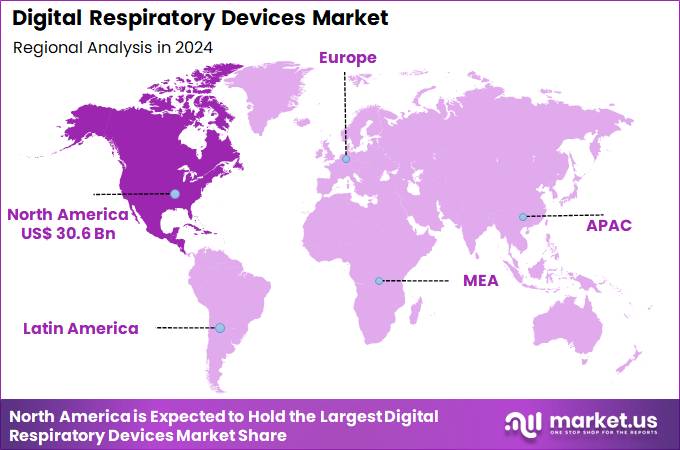
Global Digital Respiratory Devices Market size is expected to be worth around US$ 821.2 Billion by 2034 from US$ 66.9 Billion in 2024, growing at a CAGR of 28.5% during the forecast period 2025 to 2034. In 2024, North America led the market, achieving over 45.8% share with a revenue of US$ 30.6 Billion.
Increasing prevalence of chronic respiratory conditions such as asthma and chronic obstructive pulmonary disease accelerates demand for digital respiratory devices that enable real-time monitoring and personalized management strategies. Patients with asthma increasingly utilize smart inhalers equipped with sensors to track medication adherence and inhalation technique, alerting users to improper use and preventing exacerbations through app-based reminders.
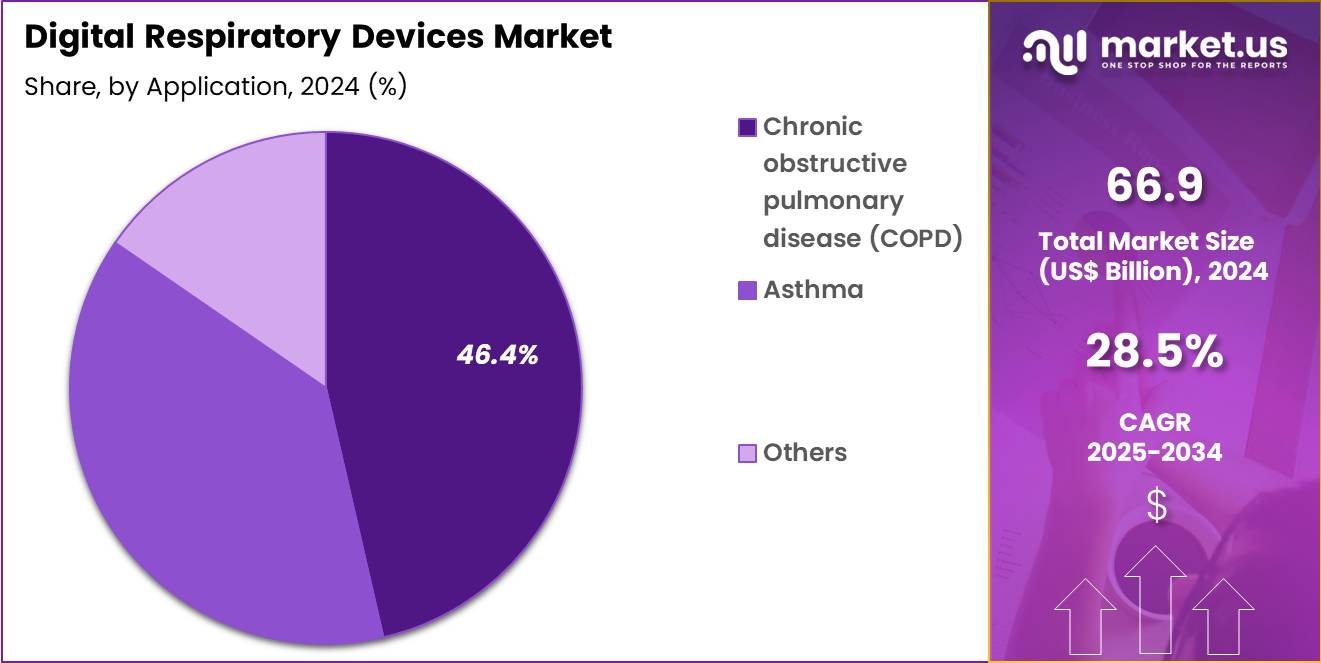
Better sensor miniaturization improves comfort and portability, which raises acceptance among older adults. The segment is projected to remain dominant due to direct therapy linkage, measurable adherence benefits, and expanding connected care models in respiratory disease management. Hospital pharmacies accounted for 43.8% of growth within distribution channels and remain the primary route for digital respiratory devices due to controlled procurement and clinical oversight. Hospitals prefer in-house distribution because respiratory devices often form part of discharge kits and inpatient care protocols. Pharmacy-led supply also supports consistent model selection that matches hospital treatment guidelines. Bulk purchasing reduces unit cost, which improves access to smart inhalers and monitored nebulizer systems. Hospital pharmacies also provide fast replacement access for wards where devices undergo frequent usage and cleaning cycles. Hospital pharmacy teams support correct device selection by coordinating with pulmonology and respiratory therapy departments. This channel improves trust because hospitals avoid counterfeit risk and ensure validated device quality. Training support often starts inside the hospital, and pharmacy distribution helps align device rollout with patient education. Electronic prescribing and inventory integration further strengthen hospital pharmacy dominance. The segment is anticipated to stay strong due to institutional purchasing concentration, discharge-driven demand, and the need for standardized respiratory device supply inside clinical settings. Chronic obstructive pulmonary disease accounted for 46.4% of growth within application and drive demand for digital respiratory devices due to high exacerbation risk and long-term therapy dependence. COPD management requires consistent inhaler adherence, symptom tracking, and early response to breathing deterioration. Digital devices help patients recognize missed doses and irregular patterns that increase flare-up probability. Clinicians also value objective usage data for optimizing maintenance therapy and reducing rescue medication overuse. Many COPD patients require nebulized therapy during acute phases, which increases demand for connected nebulizers that support monitored delivery. COPD prevalence rises in aging populations and in regions with high smoking and air pollution exposure, expanding the treated patient base. Frequent readmissions after exacerbations push hospitals to adopt connected devices as part of prevention-focused care pathways. Remote care programs use inhaler and nebulizer data to flag early warning signs and support timely intervention. Better patient confidence improves when digital reminders reduce anxiety around missed doses. The segment is projected to remain dominant due to disease burden, chronic therapy intensity, and strong clinical value of adherence and monitoring tools. Hospitals represented 44.6% of growth within end-users and lead adoption because they manage severe respiratory cases and coordinate treatment initiation. Inpatient COPD exacerbations and acute asthma episodes often require structured medication delivery supported by smart devices. Hospitals also deploy digital respiratory tools in respiratory wards, emergency departments, and discharge planning programs to lower repeat admissions. Clinicians prefer hospital-led enrollment because it ensures correct technique training and device onboarding. Procurement teams purchase at scale, enabling broad deployment across departments and faster replacement when devices wear out. Hospitals integrate digital respiratory data into follow-up care through pulmonary clinics and transitional care programs. Respiratory therapists use device feedback to correct technique errors and improve treatment response. Hospitals also benefit from outcome tracking, since digital adherence data supports population health metrics and care quality reporting. Expansion of hospital-at-home and remote monitoring strategies strengthens hospital demand for connected respiratory platforms. The segment is expected to retain dominance due to patient concentration, clinical oversight needs, and strong incentives to reduce exacerbations and readmissions. Industry efforts prioritized interoperability with electronic health records. These innovations aim to reduce hospital admissions by enabling proactive interventions. The integration of AI positions digital devices as essential tools in modern respiratory care. North America is leading the Digital Respiratory Devices Market North America holds a 45.8% share of the global digital respiratory devices market, evidencing marked progression in 2024 through widespread implementation of connected inhalers and monitoring tools for managing chronic conditions like asthma and COPD. Progress stems from heightened emphasis on telemedicine integration, allowing real-time data sharing between patients and providers to optimize treatment adherence and early intervention. Prominent manufacturers have upgraded device interoperability with electronic health systems, facilitating seamless analytics for personalized care plans in ambulatory settings. Escalating awareness of air quality impacts on lung health has prompted broader utilization in home-based therapy for vulnerable groups. Policy incentives from health authorities have promoted reimbursement for remote monitoring, spurring uptake among Medicare beneficiaries. Joint ventures with tech firms have introduced AI-driven predictive features to anticipate exacerbations, elevating clinical efficacy. Sophisticated cybersecurity measures have addressed data privacy concerns, building trust in cloud-connected platforms. In 2024, ResMed reported a 10% revenue increase in the U.S., Canada, and Latin America for its sleep and respiratory care segment, highlighting regional demand surge. The Asia Pacific region is expected to experience the highest CAGR during the forecast period Medical equipment producers and scientific groups advance connected breathing technologies throughout the Asia Pacific region during the forecast period, harnessing urbanization trends and public health campaigns to tackle pollution-induced ailments. India bolsters indigenous fabrication via incentive-linked production schemes to supply affordable monitors for widespread screening programs. Japan enhances precision engineering in portable oximeters to support aging populations with home-based chronic care. Pharmaceutical collaborators embed sensors into inhaler designs for compliance tracking in asthma management protocols. Healthcare providers adopt app-linked systems to enable virtual consultations, expanding access in remote areas. Regional trade agreements facilitate component imports while nurturing local innovation hubs. Investment in workforce training ensures effective deployment of smart ventilators in intensive units. In 2022, China’s government allocated funds to public health rose by 33.4% compared to 2021, enabling expanded procurement of advanced respiratory aids. North America Europe Asia Pacific Latin America Middle East & Africa Key players in the Digital Respiratory Devices market drive growth by integrating sensors, connectivity, and data analytics into inhalers and respiratory support tools to improve adherence and clinical outcomes in asthma and COPD care. Companies expand adoption by partnering with healthcare providers and payers to embed digital monitoring into chronic disease management programs and value-based care models. Commercial strategies emphasize platform ecosystems that combine hardware, patient apps, and clinician dashboards to deliver actionable insights rather than standalone devices. Innovation priorities focus on accurate dose tracking, user-friendly interfaces, and secure data interoperability with electronic health records. Market expansion targets regions scaling telehealth services and home-based respiratory care for aging populations. ResMed operates as a leading participant with deep expertise in connected respiratory care, a strong cloud-based monitoring platform, and global distribution capabilities that support large-scale deployment of digital respiratory solutions.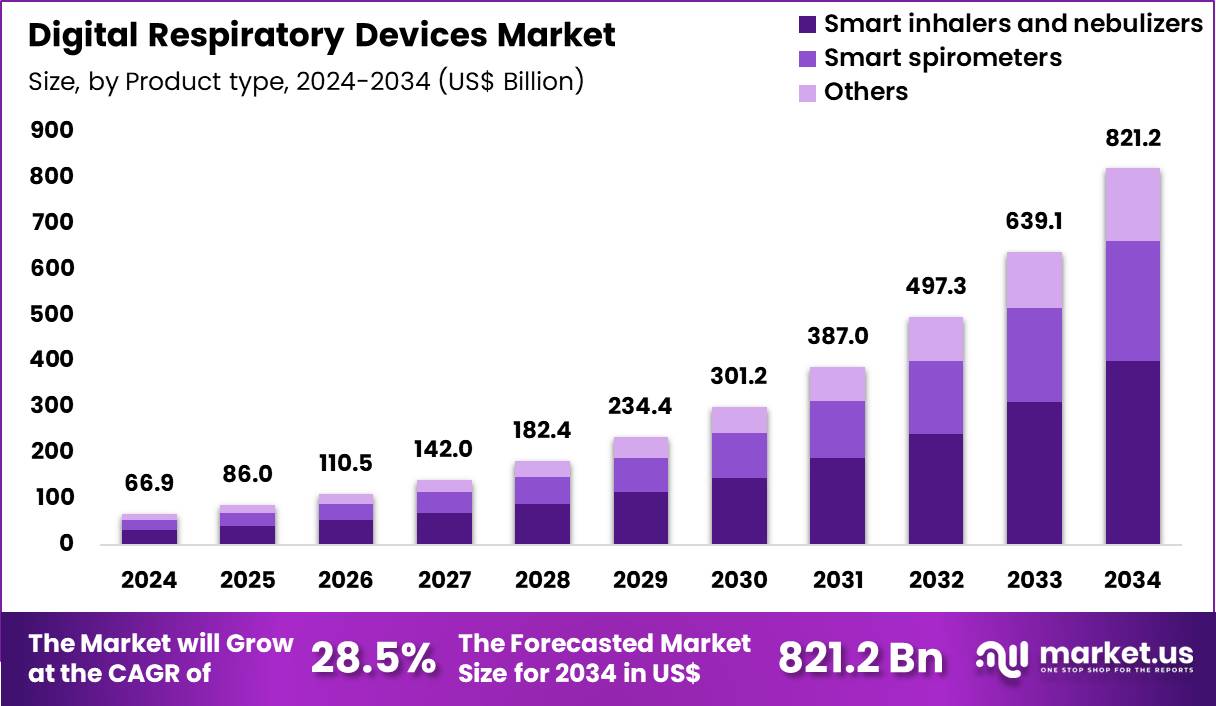
Distribution Channel Analysis
Application Analysis
End-User Analysis
Regional Analysis
Key Regions and Countries
Key Players Analysis
Top Key Players
Recent Developments