

Strategic Investment Perspective
The Global Motorcycle Insurance Market presents a compelling defensive-growth investment opportunity, growing from USD 67.8 billion in 2025 to nearly USD 101.3 billion by 2035, at a CAGR of 4.1%.Asia Pacific’s dominant position, capturing more than 49.6% share and USD 33.6 billion in revenue, underscores the region’s leadership in two-wheeler usage and long-term growth potential for insurers and investors.
The motorcycle insurance market covers insurance products designed to protect motorcycle owners against financial loss from accidents, theft, damage, and liability. These policies typically include third-party liability, comprehensive coverage, collision protection, and personal accident benefits. Motorcycle insurance is required in many regions to ensure road safety and legal compliance. The market serves individual riders, fleet operators, delivery services, and motorcycle rental providers.
Adoption supports financial protection and responsible vehicle ownership. This market development has been influenced by the growing number of motorcycles used for personal transport and commercial purposes. Urban congestion and fuel efficiency needs encourage motorcycle usage. Increased road exposure raises the importance of insurance coverage. Insurers offer flexible plans to address diverse rider profiles. As motorcycle ownership expands, insurance demand continues to grow.
These personalised products can attract safer riders with lower costs and provide incentives for improved riding habits. There is also potential for bundled services that combine roadside assistance, legal protection, and emergency support to enhance value and differentiate offerings in a competitive landscape. A central challenge confronting this market involves balancing risk assessment with fair pricing and customer trust. Insurance companies must evaluate a wide range of variables, including rider behaviour, accident history, and regional risk factors, to set premiums that cover risk while remaining affordable. Ensuring transparency in how pricing is determined and avoiding perceptions of unfair discrimination are essential to maintain customer confidence. Additionally, managing fraud, false claims, and claim disputes requires robust verification processes, which can increase operational complexity and cost. Emerging trends in the motorcycle insurance market include the integration of digital platforms that streamline policy purchase, renewal, and claims processing. Mobile-first interfaces and self-service tools reduce administrative friction and improve customer experience. Another trend is the use of data analytics and telematics to support dynamic pricing and personalised risk profiles, enabling more accurate alignment of premiums with rider behaviour. Insurers are also exploring value-added services such as safety training discounts, community engagement programmes, and digital alerts that support safer riding. Growth in the motorcycle insurance market is supported by increasing motorcycle use for commuting, delivery services, and recreational purposes. As urbanisation and traffic congestion grow, motorcycles remain a cost-effective mobility choice, driving demand for risk protection. Enhanced regulatory enforcement that requires minimum insurance coverage for road use further reinforces market expansion. Advances in digital underwriting, data collection, and mobile engagement improve accessibility and efficiency for both insurers and policyholders. As riders prioritise financial protection and convenient service, the motorcycle insurance market continues to expand as a vital component of personal and commercial risk management. Major global insurers such as Liberty Mutual, AXA Inc., and Allianz Global Investors play an important role in the motorcycle insurance market. Their offerings typically cover liability, collision, theft, and personal injury protection. Strong underwriting models and digital policy management support customer acquisition. These players benefit from broad geographic presence and diversified insurance portfolios. Large national insurers such as State Farm Insurance and Allstate focus on mass-market motorcycle riders. Their strength lies in extensive agent networks and bundled insurance products. HDI Global SE and Zurich Services support both personal and commercial motorcycle coverage. These companies emphasize claims efficiency, pricing stability, and regulatory compliance. Reinsurance and risk management providers such as Munich Re Group support the market by enabling insurers to manage high-severity risk exposure. Prudential contributes through long-term risk management expertise. Other regional and niche insurers expand competitive intensity and product customization. This competitive landscape supports steady product innovation, flexible coverage options, and broader access to motorcycle insurance across developed and emerging markets.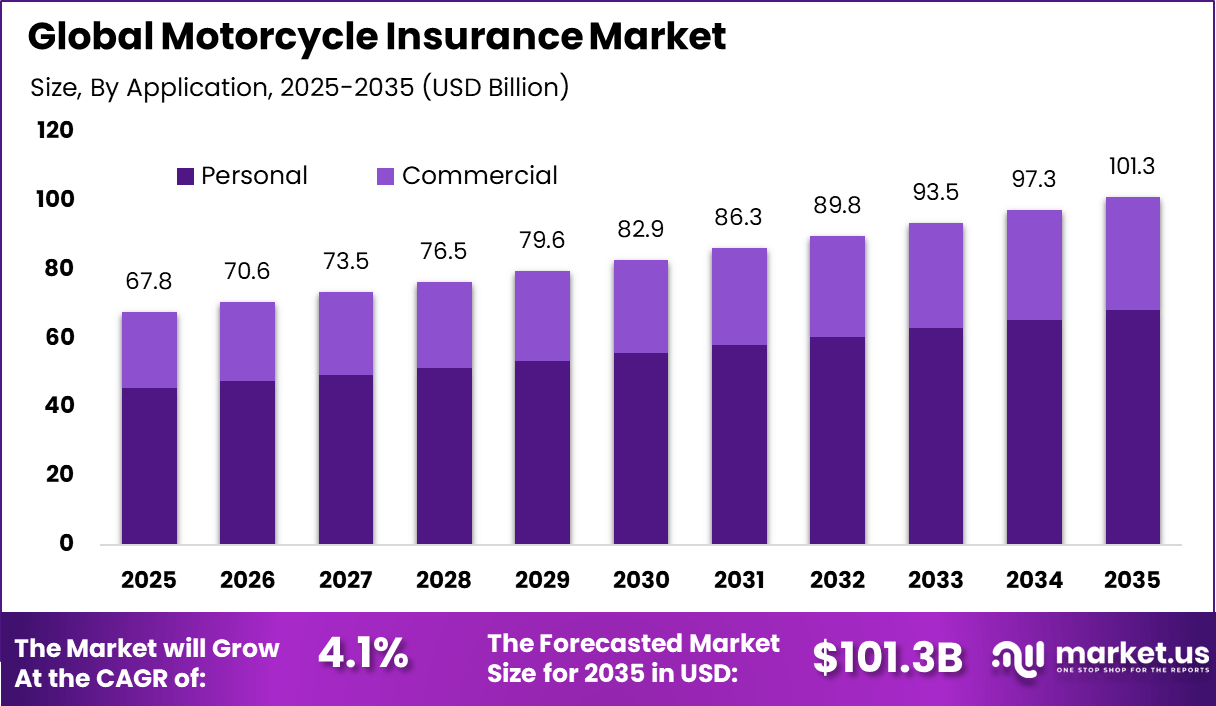
Challenge Analysis
Emerging Trends
Growth Factors
Competitive Analysis
Top Key Players in the Market
Recent Developments
Key Market Segments
By Insurance Type
By Application
Regional Analysis and Coverage