

Report Overview
The Global Connected Logistics Market size is expected to be worth around USD 129.3 Billion by 2035 from USD 35.79 Billion in 2025, growing at a CAGR of 13.71% during the forecast period 2026 to 2035.
Connected logistics represents the integration of advanced technologies including Internet of Things, artificial intelligence, and cloud computing into supply chain operations. These solutions enable real-time tracking, automated decision-making, and seamless communication across transportation networks. Moreover, connected logistics transforms traditional supply chains into intelligent, data-driven ecosystems.
The integration of IoT devices with cloud-based analytics platforms transforms traditional fleet management into intelligent, automated systems. Companies achieve significant cost savings through optimized routing, reduced idle time, and improved vehicle lifespan. Additionally, regulatory compliance becomes easier with automated reporting and documentation capabilities that track driver hours and vehicle inspections systematically. Growing demand for real-time shipment tracking and visibility accelerates connected logistics adoption across industries. Customers expect accurate delivery estimates and proactive communication regarding shipment status throughout transit. Furthermore, AI and machine learning integration enables predictive logistics that anticipates delays and optimizes supply chain operations. Therefore, technological advancement drives continuous market expansion and innovation. Connected logistics systems generate massive volumes of sensitive operational data vulnerable to cyberattacks and unauthorized access. Organizations face significant risks including data breaches, ransomware attacks, and system disruptions that compromise supply chain integrity. Consequently, companies hesitate to implement connected solutions without robust security frameworks and comprehensive risk management strategies in place. Regulatory requirements regarding data protection and privacy vary significantly across geographic regions and industries. Compliance with standards like GDPR and industry-specific regulations increases implementation complexity and costs. Moreover, organizations must invest substantially in cybersecurity infrastructure, monitoring systems, and incident response capabilities. Therefore, security concerns create barriers to adoption, particularly among small and medium-sized enterprises. Limited interoperability between legacy systems and modern connected solutions presents significant technical challenges. Many organizations operate established logistics infrastructure that lacks compatibility with new IoT and cloud-based platforms. Integration requires substantial investment in middleware, custom development, and system upgrades. Additionally, organizations face operational disruptions during migration periods, further slowing adoption rates across the market. Emerging economies experience rapid e-commerce growth and infrastructure development that drives connected logistics demand. Countries in Asia Pacific, Latin America, and Africa invest heavily in digital transformation and smart city initiatives. Moreover, improving internet connectivity and mobile network coverage enable widespread IoT deployment. Therefore, these markets represent significant untapped opportunities for technology providers and service organizations. Development of autonomous and connected delivery vehicles transforms last-mile logistics operations and urban distribution networks. Self-driving trucks, delivery drones, and autonomous robots integrate seamlessly with connected logistics platforms. These innovations reduce labor costs, improve delivery speed, and enable 24/7 operations. Additionally, autonomous vehicle technology addresses driver shortages while enhancing safety and operational efficiency across transportation networks. Integration with smart warehousing and robotics solutions creates comprehensive end-to-end logistics ecosystems. Automated storage and retrieval systems connect with transportation management platforms for seamless inventory flow. Furthermore, collaborative robots and AI-powered picking systems optimize warehouse operations while reducing human error. Consequently, integrated solutions deliver superior performance and return on investment that accelerates market adoption across industries. Adoption of 5G networks revolutionizes connected logistics through ultra-low latency and high-bandwidth communication capabilities. Real-time video streaming from vehicles, instant sensor data transmission, and immediate response to changing conditions become possible. Moreover, 5G enables dense IoT device deployments in warehouses and transportation hubs without network congestion. Therefore, next-generation connectivity unlocks advanced applications previously constrained by network limitations. Blockchain technology implementation creates transparent and secure supply chains with immutable transaction records. Smart contracts automate payment processing, customs clearance, and compliance verification across international shipments. Additionally, blockchain enables trusted data sharing among multiple stakeholders without centralized intermediaries. Consequently, the technology addresses long-standing challenges regarding transparency, fraud prevention, and dispute resolution in global logistics operations. Shift toward sustainable and green connected logistics solutions reflects growing environmental awareness and regulatory pressure. Companies implement route optimization algorithms that minimize fuel consumption and carbon emissions. Furthermore, electric vehicle integration with charging infrastructure management systems supports fleet electrification initiatives. Organizations leverage connected technologies to measure, report, and reduce environmental impact while maintaining operational efficiency and competitiveness. North America leads the global market driven by advanced technology infrastructure and high e-commerce penetration rates. The region hosts major logistics companies and technology providers that pioneer connected solutions. Moreover, strong government support for digital transformation and smart transportation initiatives accelerates adoption. The United States and Canada demonstrate particularly strong demand for IoT-enabled fleet management and warehouse automation systems. Europe experiences robust growth fueled by stringent environmental regulations and sustainability commitments across the logistics sector. Countries including Germany, France, and the United Kingdom invest heavily in green logistics and emission reduction technologies. Additionally, European Union initiatives promote digital supply chain transformation and cross-border logistics integration. Therefore, the region represents a significant market for connected logistics solutions. Asia Pacific demonstrates the fastest growth rate driven by rapid e-commerce expansion and manufacturing sector digitalization. China, Japan, South Korea, India, and Australia lead regional adoption with massive logistics networks requiring sophisticated tracking systems. Furthermore, government smart city initiatives and infrastructure investments create favorable conditions. Consequently, Asia Pacific presents substantial opportunities for market participants. Latin America shows increasing adoption as countries modernize logistics infrastructure and expand digital commerce capabilities. Brazil and Mexico lead regional implementation driven by growing consumer demand and cross-border trade requirements. Additionally, improving telecommunications infrastructure enables wider IoT deployment. Organizations increasingly recognize connected logistics as essential for competitive advantage in evolving markets. Middle East & Africa markets grow steadily with investments in smart ports, logistics hubs, and transportation infrastructure. GCC countries particularly focus on technology adoption to diversify economies beyond traditional sectors. South Africa leads sub-Saharan adoption with established logistics networks. Moreover, regional trade agreements and economic zones drive demand for sophisticated supply chain visibility solutions. North America Europe Asia Pacific Latin America Middle East & Africa Bosch Service Solutions GmbH leverages its extensive industrial automation expertise to provide comprehensive connected logistics platforms. The company integrates IoT sensors, cloud analytics, and AI-driven optimization across supply chain operations. Moreover, Bosch’s solutions emphasize predictive maintenance and real-time asset tracking for manufacturing and retail sectors. Their established reputation in automotive and industrial markets positions them strategically for logistics technology expansion. Cisco Systems Inc. delivers enterprise-grade networking infrastructure and IoT connectivity solutions essential for connected logistics ecosystems. The company provides secure, scalable network architecture supporting millions of connected devices across distributed logistics operations. Additionally, Cisco’s cybersecurity expertise addresses critical data protection concerns in supply chain digitalization. Their comprehensive portfolio spans edge computing, cloud connectivity, and analytics platforms that enable intelligent logistics networks. AT&T Inc. provides cellular connectivity and IoT network services powering connected logistics applications across transportation modes. The company’s nationwide network infrastructure supports real-time tracking, fleet management, and warehouse automation systems. Furthermore, AT&T offers managed services and consulting expertise helping organizations implement and optimize connected solutions. Their 5G network deployment accelerates next-generation logistics applications requiring ultra-low latency and high bandwidth capabilities. IBM Corporation offers blockchain-based supply chain visibility platforms and AI-powered logistics optimization solutions. The company’s Watson AI technology enables predictive analytics for demand forecasting, route optimization, and inventory management. Moreover, IBM’s blockchain networks facilitate transparent, secure transactions among multiple stakeholders across global supply chains. Their enterprise integration capabilities help organizations connect legacy systems with modern connected logistics platforms effectively.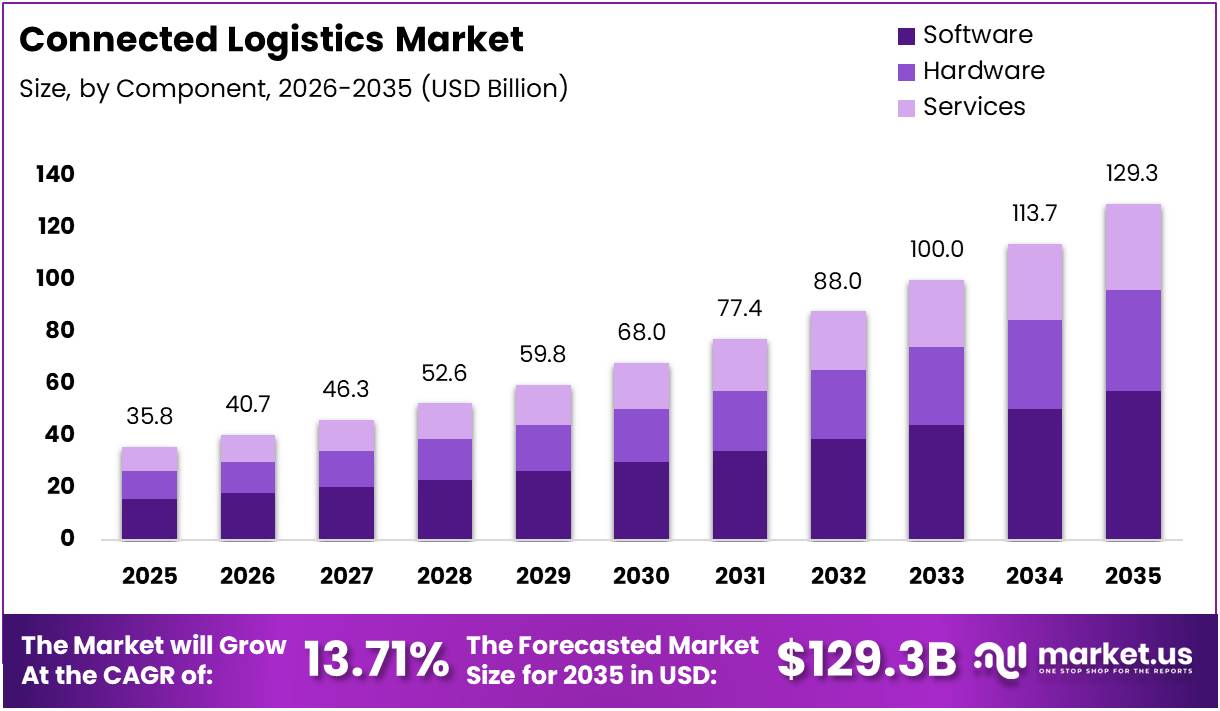
Restraints
Data Privacy and Cybersecurity Concerns Limit Market Adoption
Growth Factors
Expansion into Emerging Markets Accelerates Market Growth
Emerging Trends
5G Technology Enhances Real-Time Data Transmission Capabilities
Regional Analysis
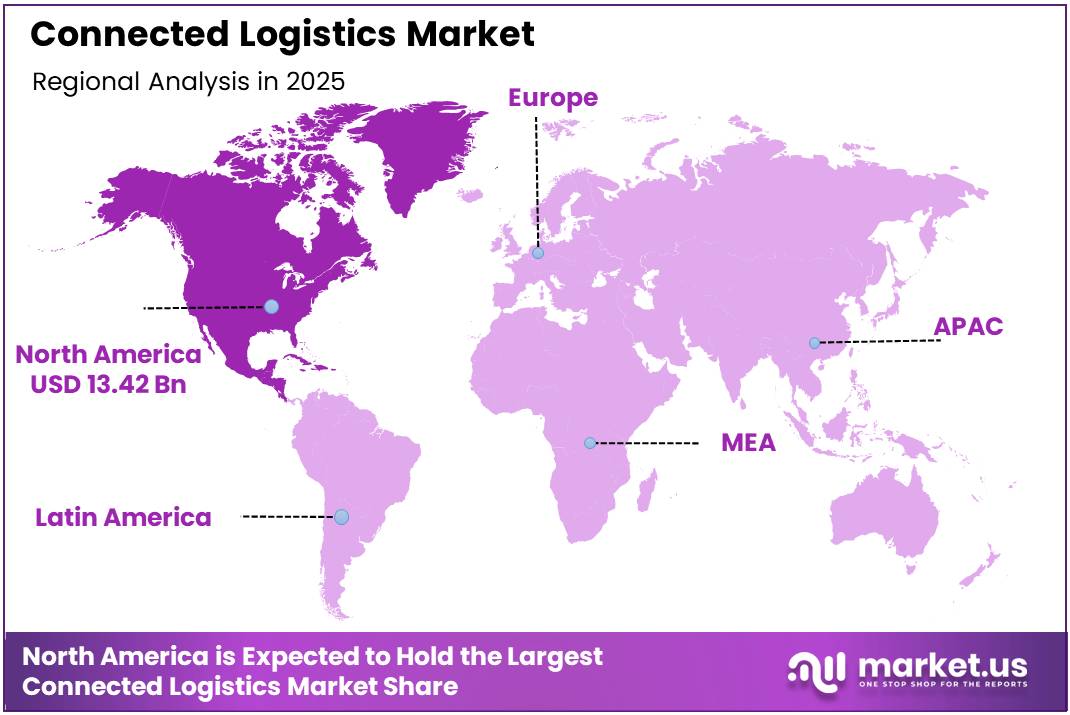
North America Dominates the Connected Logistics Market with a Market Share of 37.54%, Valued at USD 13.42 Billion
Europe Connected Logistics Market Trends
Asia Pacific Connected Logistics Market Trends
Latin America Connected Logistics Market Trends
Middle East & Africa Connected Logistics Market Trends
Key Regions and Countries
Key Company Insights
Key players
Recent Developments