

Report Overview
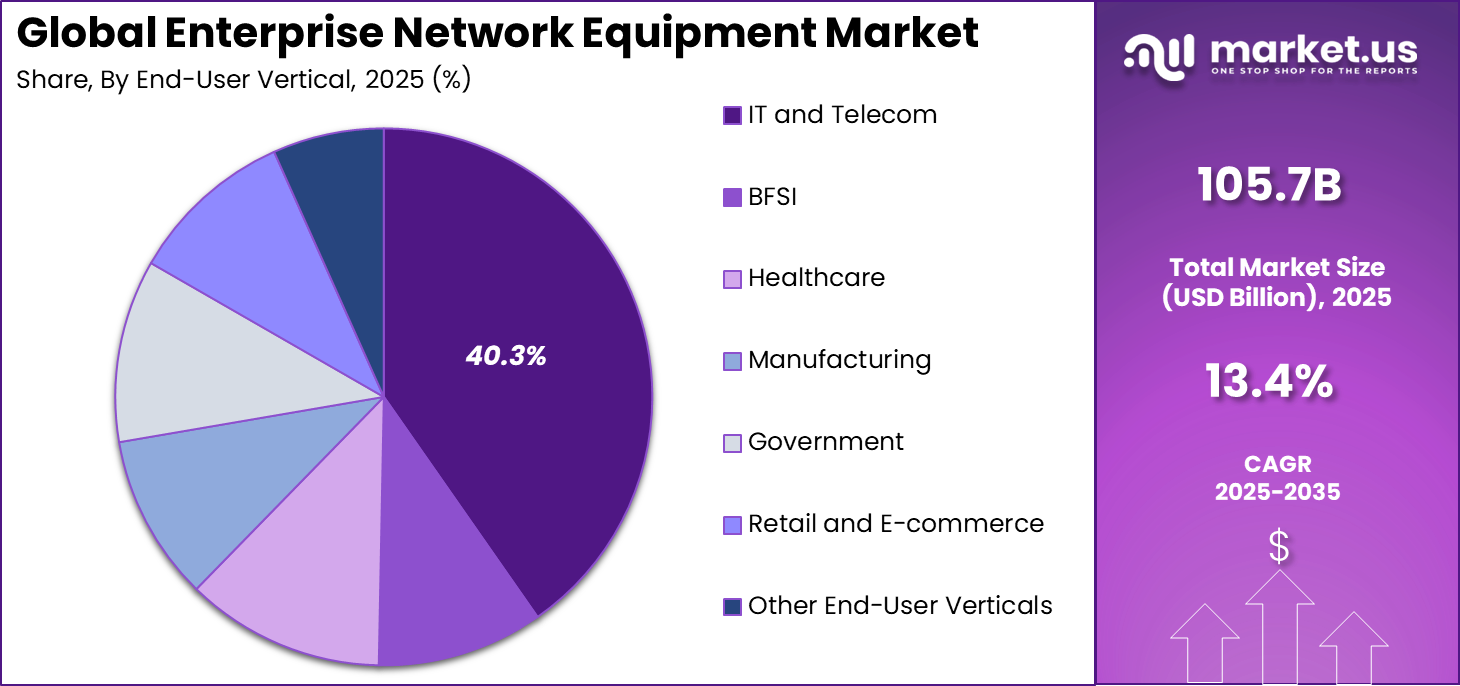
The Global Enterprise Network Equipment Market size is expected to be worth around USD 371.99 billion by 2035, from USD 105.78 billion in 2025, growing at a CAGR of 13.4% during the forecast period from 2025 to 2035. North America held a dominant market position, capturing more than a34.5% share, holding USD 36.49 billion in revenue.
The enterprise network equipment market comprises hardware and software tools that enable data communication and connectivity within organizations. These components include routers, switches, wireless access points, network security appliances, and related infrastructure. The market is fundamental to supporting digital operations by enabling fast, reliable, and secure data transfer. As enterprises expand their digital footprint, investment in network equipment becomes essential for business continuity and performance.
Enterprise network equipment supports internal and external connectivity across office locations, data centers, and cloud environments. These solutions play a critical role in enabling employees to access applications and data with minimal delay. The market is shaped by the need for resilient network infrastructure that can support increasing data volumes and complex communication requirements. Demand for network equipment has continued to rise as enterprises adopt new digital technologies and hybrid work models.
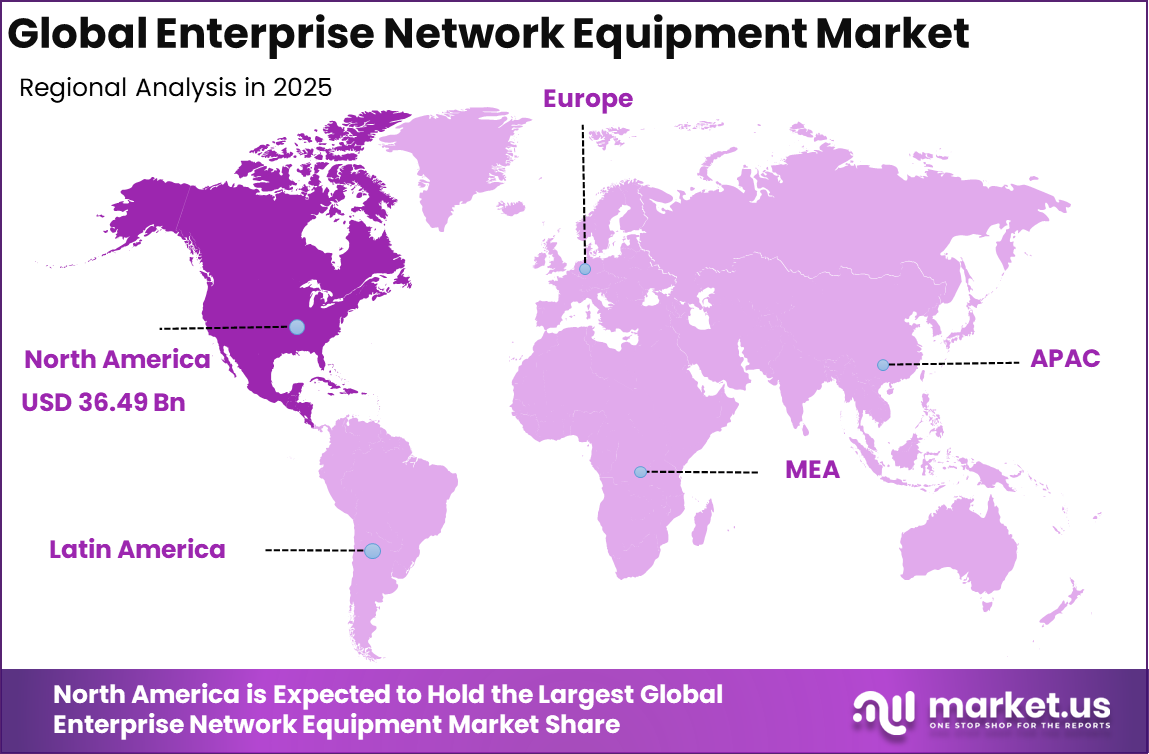
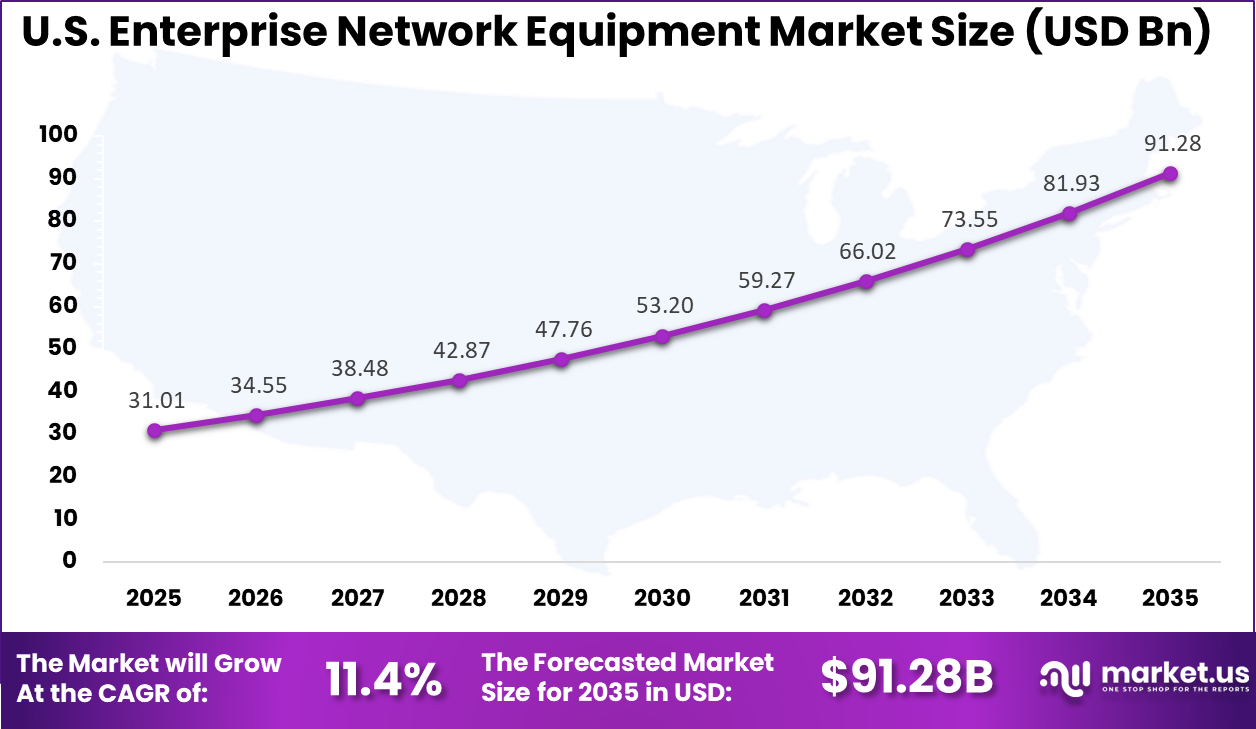
North America holds 34.5% of the enterprise network equipment market, reflecting strong digital infrastructure investment across industries. Enterprises in the region prioritize modernization of data centers and campus networks. High adoption of cloud services and advanced connectivity solutions supports consistent demand for network hardware. The region benefits from mature IT ecosystems and widespread enterprise digitization. The United States market contributes significantly, with a recorded value of USD 31.01 Bn and a CAGR of 11.4%. Growth is supported by ongoing enterprise digital transformation and increasing deployment of advanced networking technologies. Investments in cybersecurity and high-speed connectivity infrastructure further sustain equipment demand. The regional outlook remains stable as enterprises continue upgrading network performance and resilience. One emerging trend within the enterprise network equipment market is the increasing integration of software-defined and AI-driven networking capabilities into traditional hardware platforms. Enterprises are prioritizing solutions that offer automation, real-time performance monitoring, and predictive analytics alongside core routers and switches to support complex, high-performance environments. This trend reflects the broader market shift toward dynamic network operations that can adapt to cloud, hybrid workforce, and IoT demands. As a result, networking equipment is no longer viewed solely as hardware but as part of intelligent infrastructure that can optimize traffic and enhance security. Additionally, the demand for cloud-managed and hybrid network deployments is gaining prominence as enterprises seek greater scalability and operational flexibility. Cloud-managed networking solutions reduce on-premise complexity and enable centralized visibility across distributed sites, a critical capability in geographically diverse organizations. This aligns with broader enterprise digital transformation strategies, where agility and rapid service delivery are priorities. Continued adoption of technologies such as SD-WAN and SASE further exemplifies this trend toward hybrid networking models that balance performance with centralized control. A significant opportunity within the enterprise network equipment market lies in expanding demand for edge computing solutions. Edge computing requires distributed networking hardware that can process data closer to its source, reducing latency and improving real-time decision-making. Enterprise network equipment vendors can benefit as manufacturing, healthcare, and logistics adopt edge architectures for automation and mission critical operations. Furthermore, growing markets in Asia-Pacific and other developing regions present substantial opportunity due to rapid digital infrastructure investments and expanding enterprise IT environments. These regions are witnessing accelerated adoption of 5G, cloud services, and IoT applications, driving the need for robust network infrastructure. Vendors that tailor solutions to meet regional scalability, cost, and compliance requirements are well positioned to capture incremental growth across diverse enterprise segments. North America Europe Asia Pacific Latin America Middle East & Africa Established networking infrastructure leaders such as Cisco Systems Inc., Huawei Technologies Co., Ltd., Hewlett Packard Enterprise Company, Juniper Networks Inc., and Arista Networks Inc. dominate the enterprise network equipment market. Their portfolios include switches, routers, wireless access points, and network management software. These vendors emphasize high-speed connectivity, software-defined networking, and cloud-managed architectures. Security-focused networking providers such as Fortinet Inc., Palo Alto Networks Inc., Check Point Software Technologies Ltd., F5 Inc., and VMware LLC integrate security within network infrastructure. Broadcom Inc. supports hardware performance through advanced chipsets. Adoption is strong in enterprises prioritizing secure access and zero trust frameworks. Regional and diversified infrastructure vendors such as Dell Technologies Inc., Nokia Corporation, ZTE Corporation, New H3C Technologies Co., Ltd., Ubiquiti Inc., Alcatel-Lucent Enterprise, NETSCOUT Systems Inc., A10 Networks Inc., and TP-Link Technologies Co., Ltd. expand market reach across segments. Other vendors enhance competition and innovation, supporting steady growth in enterprise network equipment globally.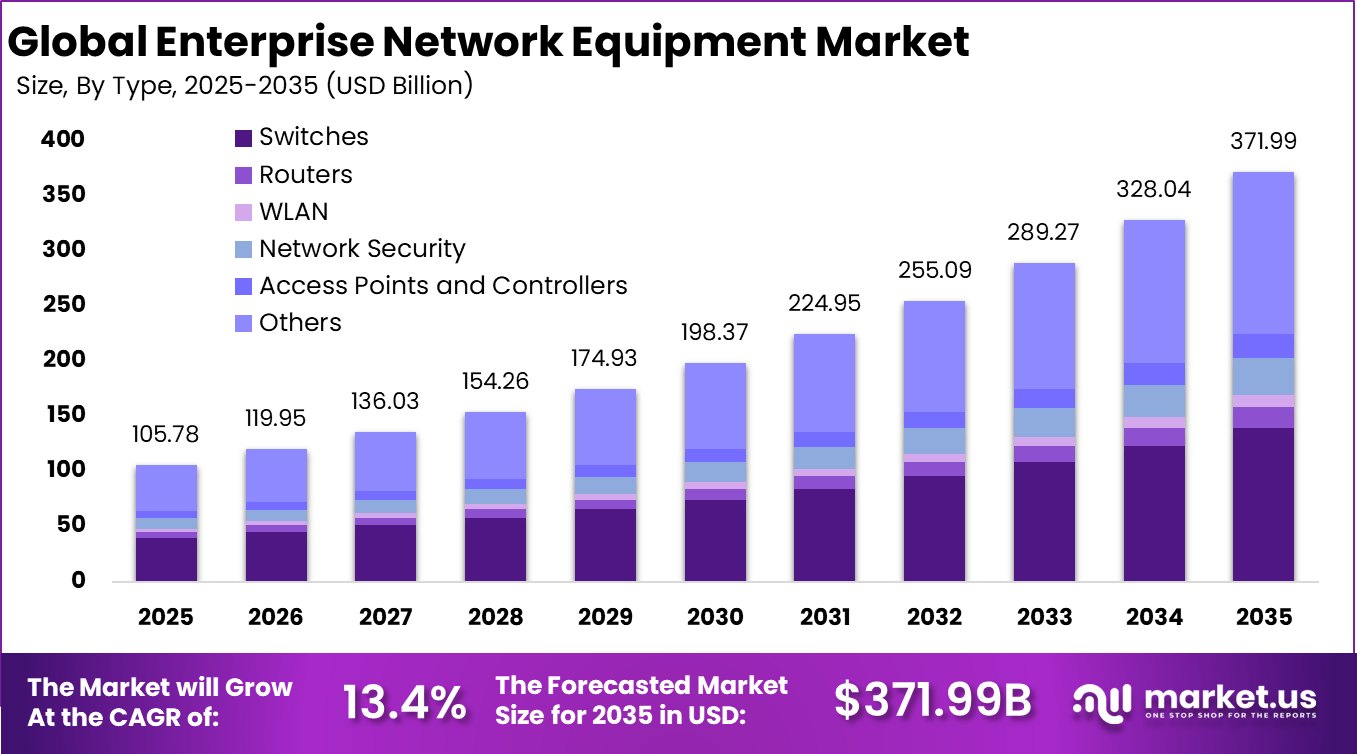
By Geography: North America
Emerging Trends Analysis
Opportunity Analysis
Key Market Segments
By Type
By Deployment Model
By Enterprise Size
By End-User Vertical
Key Regions and Countries
Key Players Analysis
Top Key Players in the Market
Recent Developments