

Report Overview
The Global Manufacturing Analytics Market generated USD 12.1 billion in 2025 and is predicted to register growth from USD 14.2 billion in 2026 to about USD 62 billion by 2035, recording a CAGR of 17.80% throughout the forecast span. In 2025, Asia Pacific held a dominan market position, capturing more than a 40.7% share, holding USD 4.90 Billion revenue.
The manufacturing analytics market is expanding as industrial enterprises move toward data driven production environments. Factories are increasingly equipped with sensors, connected machines, and digital control systems that generate large volumes of operational data. Analytics platforms convert this data into performance indicators that improve efficiency, reduce waste, and enhance product quality. As competition intensifies across global manufacturing hubs, data based decision making has become a strategic priority rather than an optional capability.
Digital transformation initiatives across industrial sectors are reinforcing demand for advanced analytics tools. Integration of enterprise resource planning systems, manufacturing execution systems, and industrial Internet of Things devices has created unified data ecosystems. These ecosystems allow real time monitoring of production lines and predictive assessment of equipment health. Manufacturing analytics is therefore positioned as a core enabler of smart factory development and operational resilience.
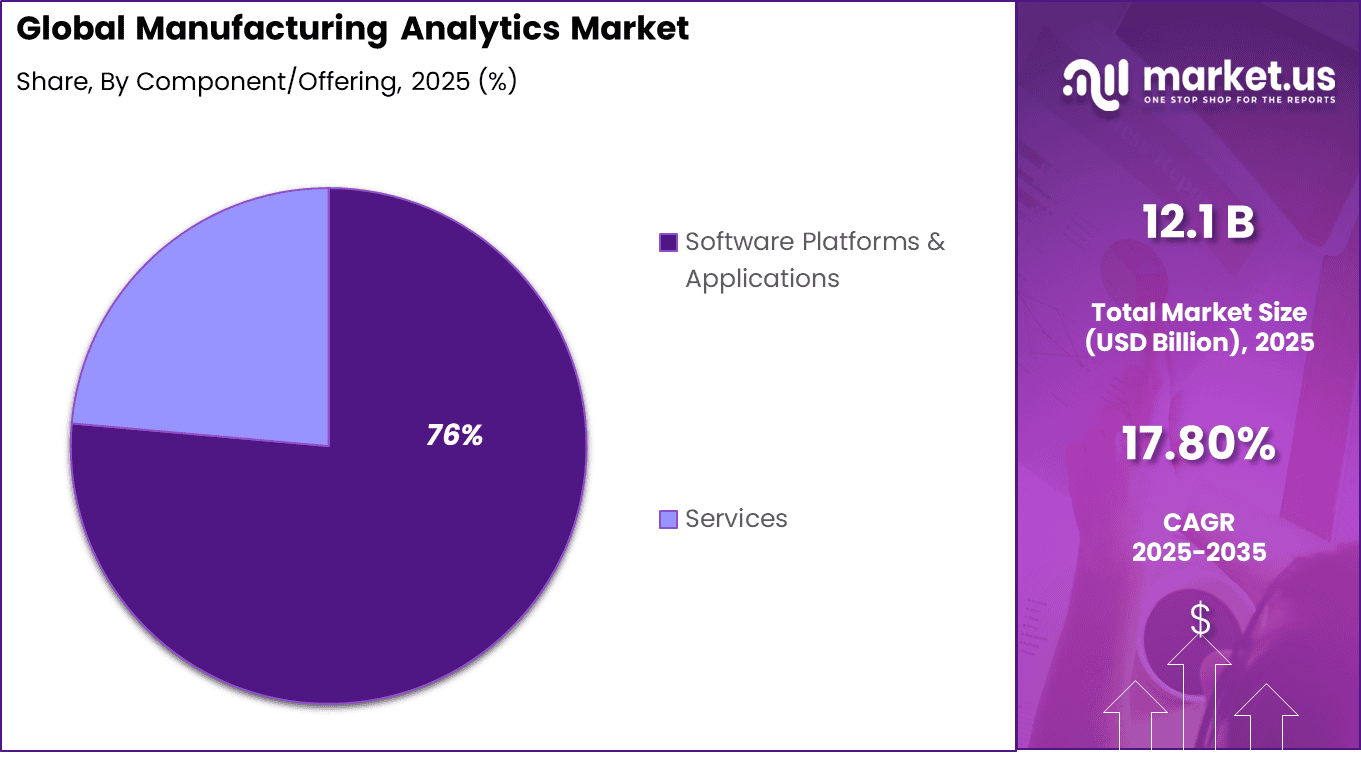
The dominance of software solutions indicates a shift toward intelligence-led manufacturing operations. Advanced analytics platforms integrate machine learning algorithms to improve forecasting accuracy and operational planning. Real-time visualization tools enable managers to respond quickly to production inefficiencies. Integration with enterprise resource planning and manufacturing execution systems strengthens cross-functional coordination.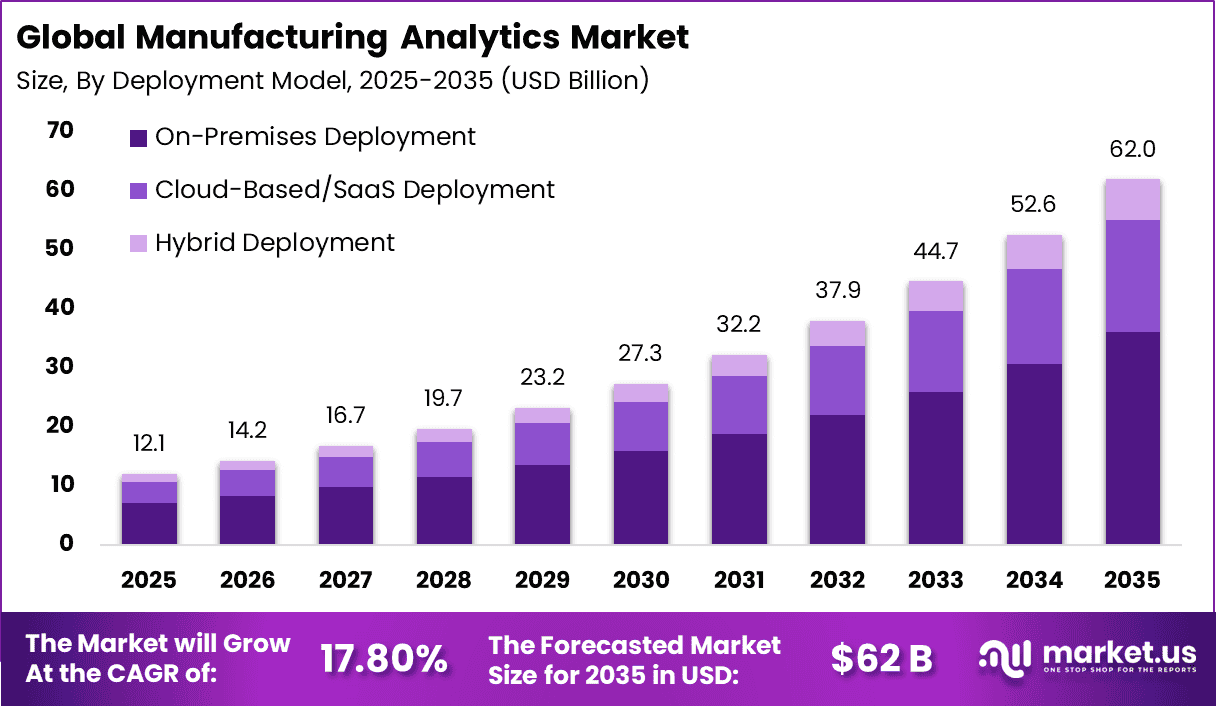
Recent Developments