

Report Overview
The Global Permethrin Market is expected to be worth around USD 534.0 Million by 2035, up from USD 300.6 Million in 2025, and is projected to grow at a CAGR of 5.9% from 2026 to 2035. Asia Pacific continues to lead market growth with its 42.6% share dominance.
The Permethrin Market is structured across grade, form, and application segments, reflecting its wide use in agriculture, public health, household care, and industrial protection. By grade, pharmaceutical, technical, and agricultural categories support differing purity and regulatory needs. Pharmaceutical-grade products are used in health-related treatments, while technical and agricultural grades supply large-scale pest-control and crop-protection applications. By form, liquid and powder variants serve different handling and formulation requirements. Liquid formats dominate many field and household uses due to easier application, while powder forms support manufacturing inputs and textile treatments.
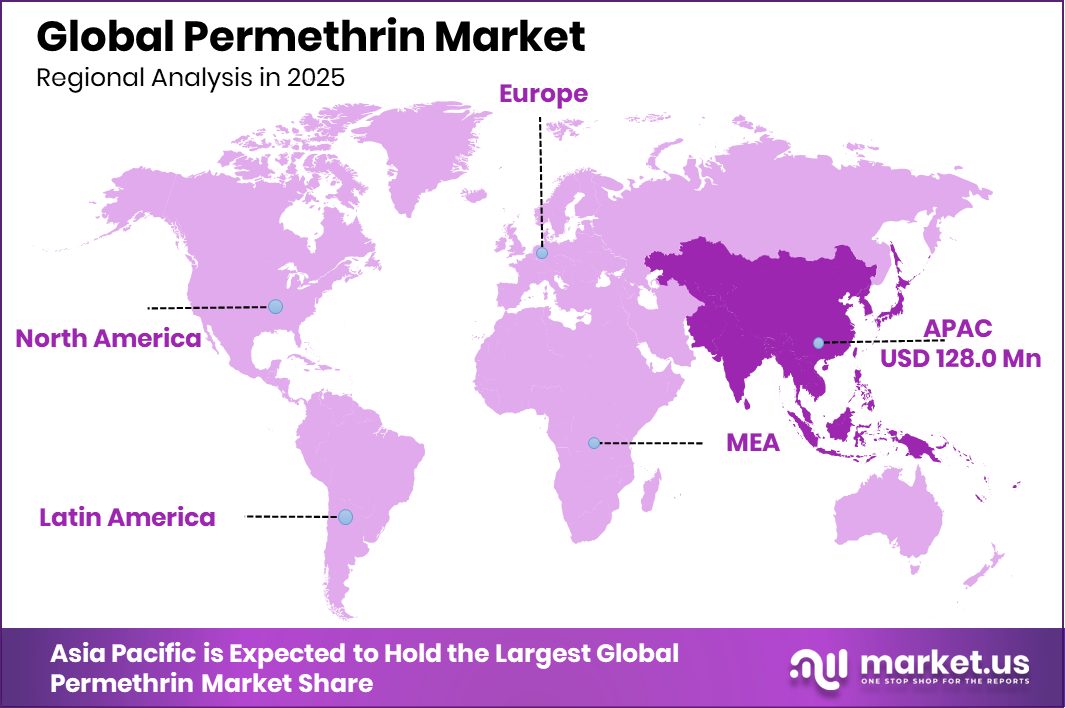
In the Asia Pacific, the permethrin market holds a strong 42.6% share. The Permethrin Market shows varied regional dynamics across North America, Europe, Asia Pacific, Middle East & Africa, and Latin America, reflecting differences in agricultural intensity, pest-control needs, and regulatory environments. Asia Pacific dominates the global landscape with a 42.6% market share valued at USD 128.0 Mn, supported by large-scale farming and high pest-management demand. North America continues to show steady usage due to structured vector-control programs and established commercial pest-control industries. Europe maintains moderate growth, driven by the regulated adoption of synthetic pyrethroids and rising demand for efficient crop protection across major farming nations. The Middle East & Africa region sees expanding consumption supported by increasing agricultural acreage and periodic pest outbreaks requiring reliable solutions. Latin America records steady uptake as countries strengthen crop protection practices in fruit, soybean, and vegetable cultivation. Overall, Asia Pacific remains the clear leader, reflecting its extensive agricultural base and dominant contribution to global permethrin consumption. In 2025, BASF SE continues to strengthen its position in the permethrin landscape through its long-standing expertise in chemical synthesis and formulation technologies. The company’s strong R&D culture enables consistent refinement of active ingredients, ensuring product reliability for agricultural and public-health applications. BASF’s emphasis on sustainable chemistry also aligns with the growing market preference for efficient yet environmentally conscious insecticide solutions. Its ability to scale production and integrate advanced manufacturing methods supports steady demand from global distributors. As regulatory environments evolve, BASF’s technical depth and compliance capabilities help maintain its competitive edge within the permethrin value chain. In 2025, Bayer AG remains an influential participant in the permethrin market, supported by its broad agricultural portfolio and long-standing experience in crop-protection chemistry. The company leverages a strong distribution network and field-level agronomic support to maintain engagement with growers seeking reliable pest-control solutions. Bayer’s ongoing optimization of synthetic pyrethroid formulations reinforces its positioning across key agricultural regions. With a reputation built on product performance and farmer-centric innovation, the company continues to contribute to the stability and evolution of the global permethrin supply landscape. In 2025, Syngenta Group plays a significant role in shaping permethrin developments by integrating its formulation expertise with a strong global footprint in crop-protection markets. The company’s technical capabilities allow it to deliver application-ready solutions suited for diverse farming environments. Syngenta’s deep engagement with growers helps refine field-performance requirements and adapt permethrin-based products accordingly. Its continued focus on product stewardship, application efficiency, and farmer training further enhances trust and repeat adoption. Collectively, the company contributes to strengthening market availability and supporting consistent usage across both developed and emerging agricultural regions.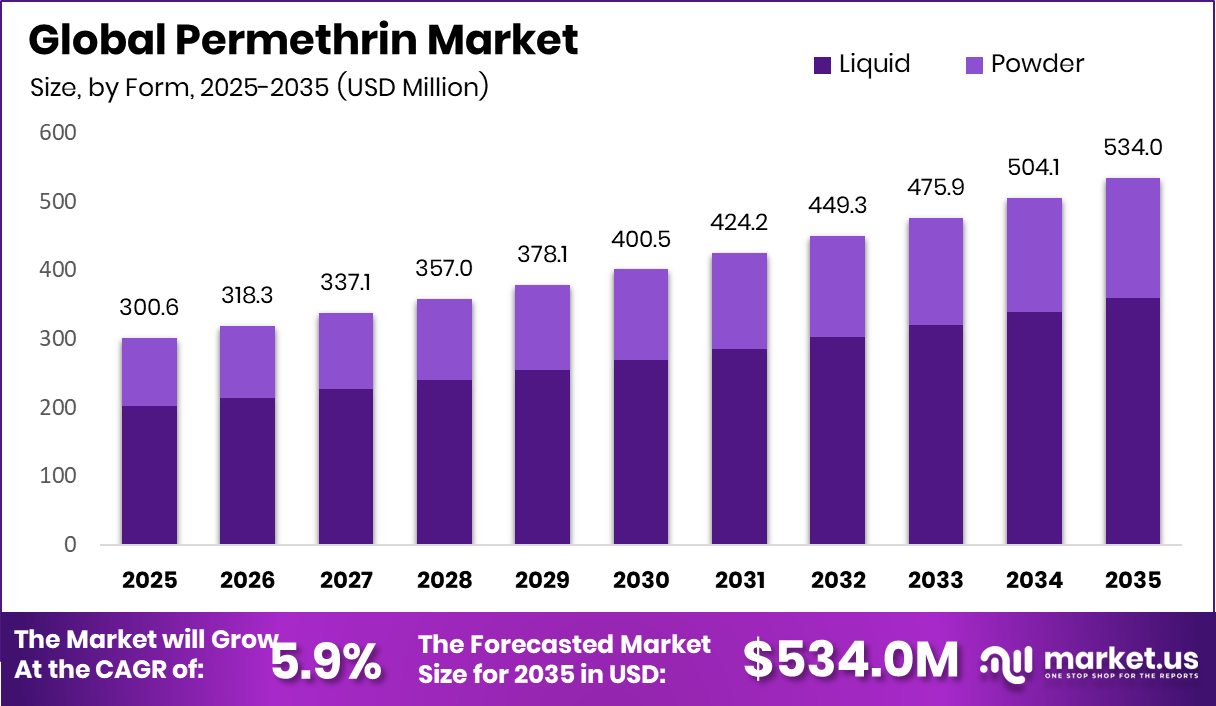
Regional Analysis
Key Regions and Countries
Key Players Analysis
Top Key Players in the Market
Recent Developments