

Report Overview
The U.S. Drug Utilization Management Market size is expected to be worth around US$ 89.8 Million by 2035 from US$ 41.2 Million in 2025, growing at a CAGR of 8.1% during the forecast period 2026-2035.
Rising healthcare expenditures and the need to ensure clinically appropriate medication use accelerate the U.S. drug utilization management market as payers implement strategies that balance cost control with optimal therapeutic outcomes.
Pharmacy benefit managers increasingly apply prior authorization protocols for high-cost specialty drugs in oncology and rare diseases, verifying medical necessity and documented response before granting coverage to prevent inappropriate utilization. These programs support step therapy requirements for chronic conditions such as rheumatoid arthritis and multiple sclerosis, directing patients to lower-cost alternatives before approving advanced biologics.
Educational initiatives for payers promote standardized outcome measurement in contracting. This opportunity enables the creation of dynamic authorization criteria based on performance metrics. Leading organizations are investing in analytics platforms optimized for value-based models. Overall, value-based expansion aligns with efforts to align incentives across the healthcare ecosystem. The number of value-based contracts for specialty drugs increased notably between 2022 and 2024 according to industry reports. Macroeconomic conditions affect the U.S. drug utilization management market by influencing healthcare spending, insurance plan budgets, and pharmacy operations. Rising inflation and higher interest rates increase operational costs for payers and pharmacy benefit managers, which can slow the adoption of advanced management tools. Geopolitical tensions disrupt global supply chains for specialty drugs and biosimilars, creating pricing volatility and administrative challenges. Current US tariffs on imported IT infrastructure and cloud hardware raise costs for system upgrades and analytics platforms. Smaller pharmacy networks face tighter margins and slower technology integration under these pressures. On the positive side, increasing demand for cost containment and evidence-based prescribing drives investments in automated utilization management solutions. Policy initiatives supporting value-based care further expand the market’s relevance and adoption. With strategic technology deployment and partnerships, the market continues to show sustainable growth and operational efficiency improvements. Implementation of real-time benefit tools is a recent trend in the market. In 2024, payers and electronic health record vendors have accelerated deployment of real-time benefit tools that provide immediate coverage and cost information at the point of prescribing. These systems integrate with pharmacy benefit manager data to display patient-specific formulary status and out-of-pocket costs. Manufacturers have focused on seamless connectivity to reduce prescribing friction. Clinical evaluations in 2024 demonstrated reduced prior authorization volumes with real-time tools. The implementation of real-time benefit tools is a major trend in utilization management. This development addresses longstanding challenges in medication access at the point of care. The trend emphasizes integration with electronic prescribing workflows for immediate feedback. Regulatory guidance in 2024 supported adoption of these tools in clinical systems. Industry collaborations refine data accuracy and timeliness for prescribers. These innovations aim to improve medication adherence while optimizing utilization management efficiency. Market leaders in the U.S. drug utilization management sector drive expansion by enhancing analytics capabilities, reinforcing payer–provider integrations, and developing predictive models to curb inappropriate prescribing. They secure long-term contracts with health plans and pharmacy benefit managers while refining prior authorization workflows to improve cost control and patient outcomes. CVS Health’s pharmacy benefit services unit oversees utilization protocols, leverages real-world evidence, and serves a broad base of commercial, government, and employer clients across the country. The organization prioritizes investments in automation and clinical decision support to streamline approvals and reduce administrative burden. Other competitors adopt specialty drug monitoring tools and collaborative care networks to strengthen formulary adherence and utilization efficiency. These concerted actions help firms deepen market penetration, optimize therapy value, and sustain revenue growth.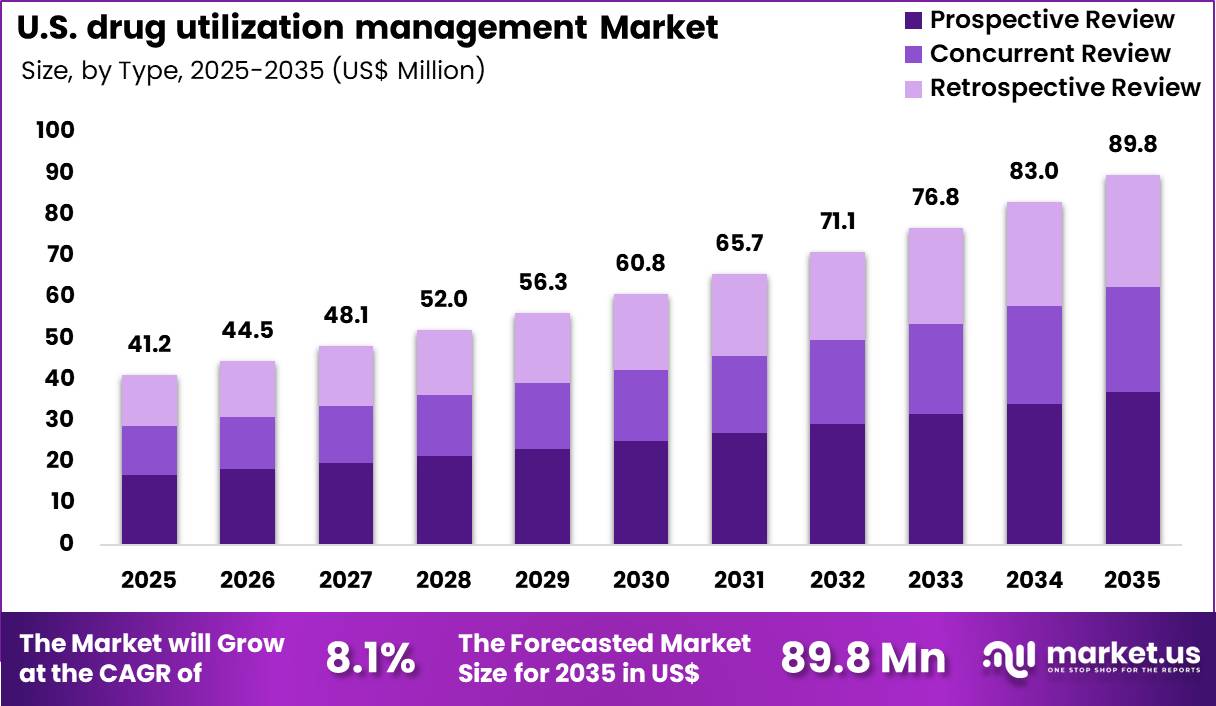
Impact of Macroeconomic / Geopolitical Factors
Latest Trends
Key Players Analysis
Top Key Players
Recent Developments