

Report Overview
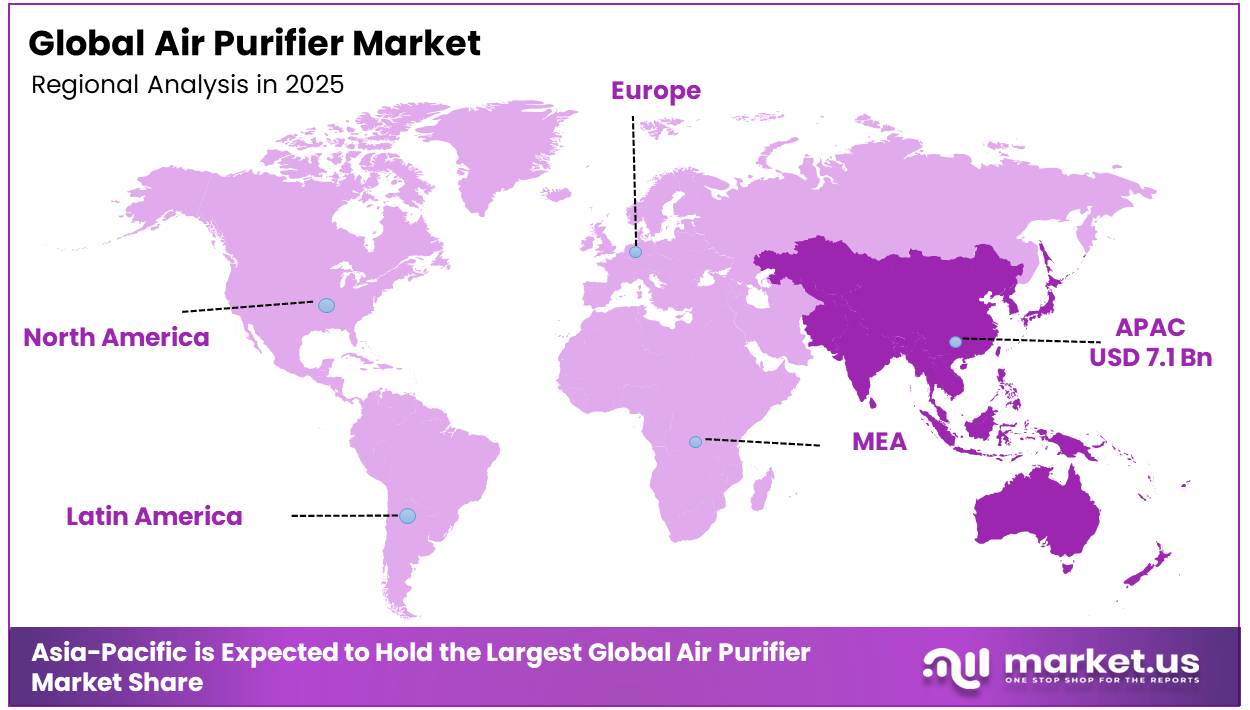
The Global Air Purifier Market size is expected to be worth around USD 37.0 Billion by 2035, from USD 18.3 Billion in 2025, growing at a CAGR of 7.3% during the forecast period from 2026 to 2035. In 2025, North America held a dominant market position, capturing more than a 34.8% share, holding USD 2.3 Billion revenue.
An air purifier is a device designed to improve indoor air quality by removing airborne pollutants such as dust, pollen, pet dander, smoke, and odors. It often consists of a fan that draws in ambient air and passes it through one or more filters to trap contaminants before circulating the cleaned air back. The market is largely driven by factors such as increasing air pollution, urbanization, and health awareness.
- In the European Union, 94% of the urban population remains exposed to fine particulate matter (PM2.5) levels exceeding World Health Organization (WHO) guideline levels.
The integration of sensors and real-time data tracking can optimize the performance of air purifiers, particularly in homes with variable pollution levels. For instance, smart air purifiers can automatically adjust filtration speed based on detected particle levels, thereby improving energy efficiency and prolonging filter life. In addition, smart air purifiers can be controlled via mobile applications, enabling consumers to track air quality remotely. This trend is driven by increasing urbanization, air quality concerns, and a desire for more personalized, real-time environmental control. Geopolitical Tensions Have Led to Increased Prices of Air Purifier. Current geopolitical tensions have exerted a significant impact on the air purifier market, primarily through their influence on supply chains and regional air quality concerns. The air purifier industry is highly dependent on specialized materials, particularly HEPA filter media and activated carbon, often sourced from concentrated manufacturing hubs. For instance, the geopolitical friction in East Asia has led to increased lead times for semiconductor chips, essential for smart sensor integration, affecting high-end purifier production schedules. Similarly, shifts in trade policy and tariffs on aluminum and plastic resins (used in chassis construction) have forced manufacturers to re-evaluate vendor diversity to avoid tariff-related price hikes on imported sub-assemblies. Additionally, geopolitical tensions have exacerbated air pollution concerns in certain regions, leading to heightened demand for air purifiers. In Southeast Asia, geopolitical instability, such as territorial disputes and industrial emissions linked to regional conflicts, has worsened air quality, particularly during periods of heightened geopolitical stress. The World Health Organization (WHO) reports that air pollution in conflict zones is often compounded by the destruction of infrastructure, contributing to long-term air quality degradation. Asia Pacific Held the Largest Share of the Global Air Purifier Market. In 2025, the Asia Pacific dominated the global air purifier market, holding about 38.7% of the total global consumption, driven by severe air pollution and rapid urbanization. The World Health Organization (WHO) reports that nearly 90% of the population in the Asia Pacific breathes air that exceeds safety standards. In major regional hubs such as Delhi and Beijing, PM2.5 concentrations frequently reach levels 10 to 15 times higher than WHO guidelines. This sustained exposure has transitioned air purifiers from luxury items to essential household health appliances. The Chinese government, in its 13th Five-Year Plan for Ecological and Environmental Protection, has made substantial efforts to improve air quality, which directly influences demand for air purifiers. Additionally, the growing middle class and rising awareness about health in countries such as China, Japan, and South Korea have further accelerated adoption. In Japan, the Ministry of the Environment has implemented air quality monitoring systems, heightening public sensitivity to indoor air quality and driving product demand across the region. Manufacturers of air purifiers invest in technological advancements, such as the development of smart air purifiers with IoT connectivity, remote monitoring, and automatic filtration adjustments, addressing consumer demand for more efficient and user-friendly products. In addition, they emphasize product innovation by incorporating advanced filtration technologies, such as HEPA, UV-C, and activated carbon filters, to effectively address a wider range of pollutants. Similarly, manufacturers often expand their distribution channels, including e-commerce platforms and partnerships with healthcare institutions, to reach broader consumer segments. Furthermore, they focus on enhancing brand reputation through certifications from environmental and health organizations, aligning products with increasing regulatory standards. Moreover, after-sales service and maintenance plans play a crucial role in fostering customer loyalty and repeat business. The Major Players in The Industry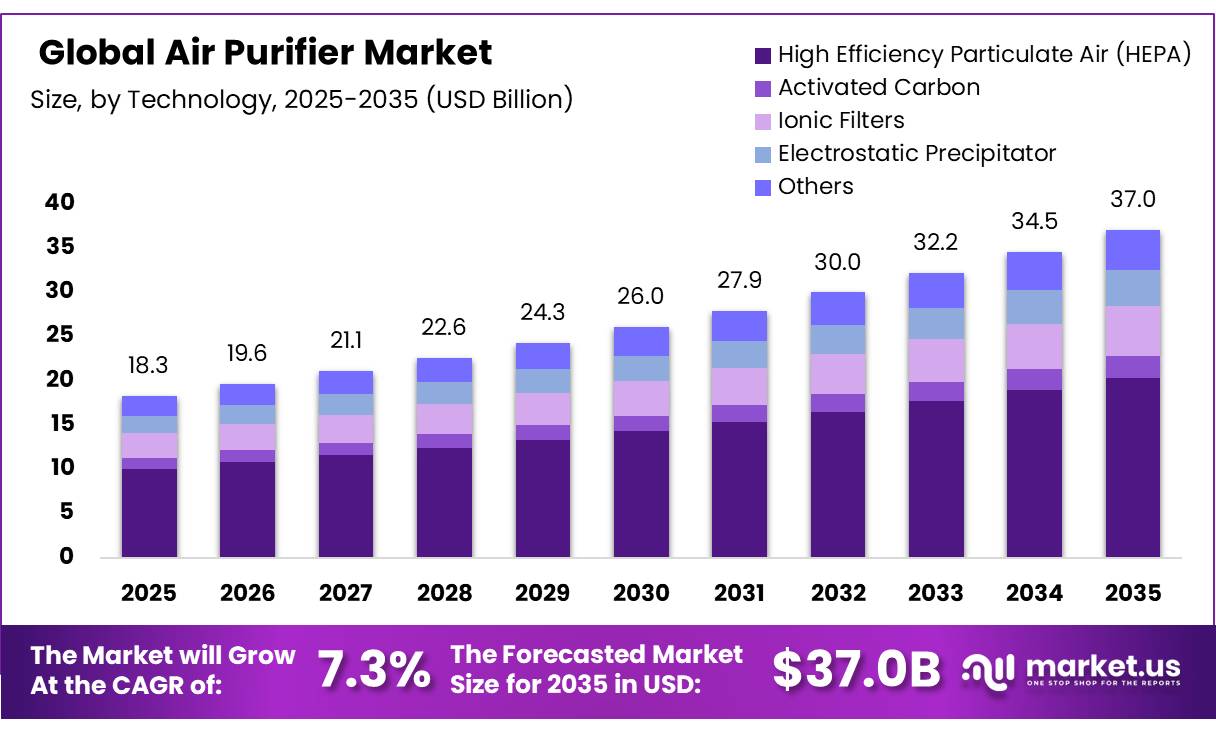
Geopolitical Impact Analysis
Regional Analysis
Key Regions and Countries
Key Players Analysis:
Key Development: