

Report Overview
The Global Shelter Medicine Services Market size is expected to be worth around US$ 7.3 Billion by 2035 from US$ 3.2 Billion in 2025, growing at a CAGR of 8.6% during the forecast period 2026-2035. In 2025, North America led the market, achieving over 42.2% share with a revenue of US$ 1.3 Billion.
Increasing pet overpopulation and the growing emphasis on animal welfare drive the Shelter Medicine Services market as veterinary professionals and organizations prioritize high-volume, high-quality care to reduce euthanasia rates and improve adoptability. Shelter veterinarians increasingly perform spay/neuter surgeries on large numbers of cats and dogs to control reproduction and prevent unwanted litters, using efficient protocols that minimize anesthesia time and surgical complications.
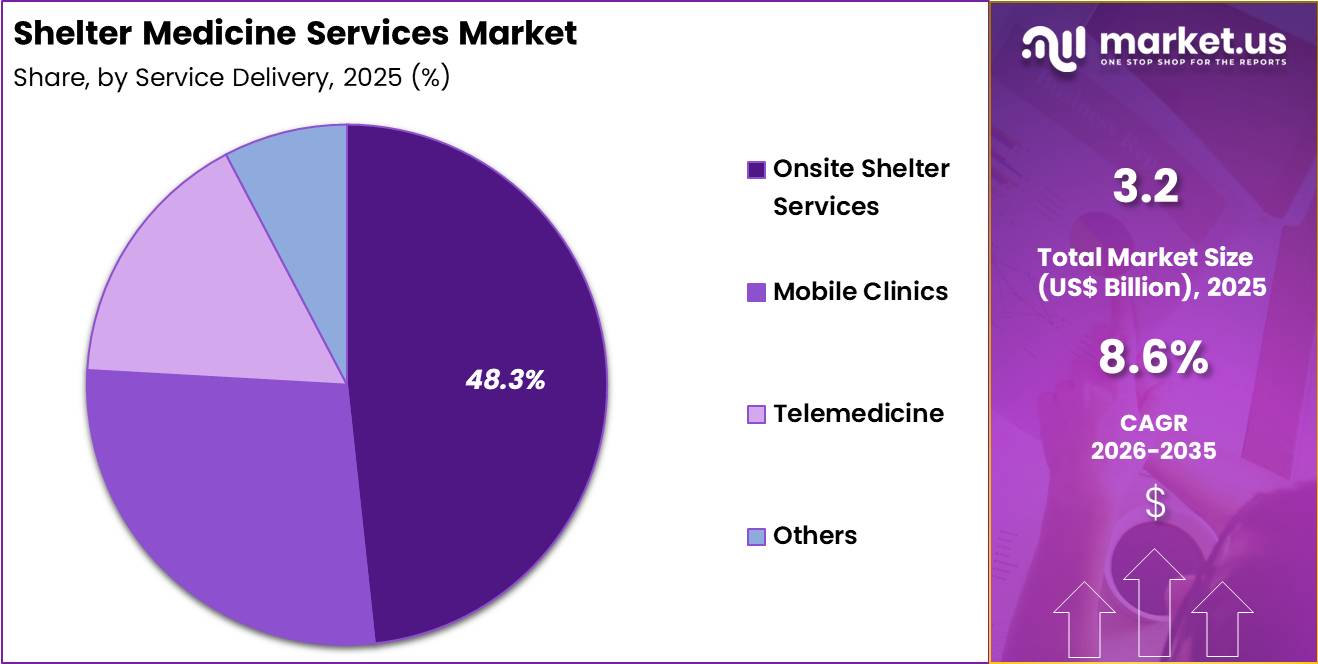
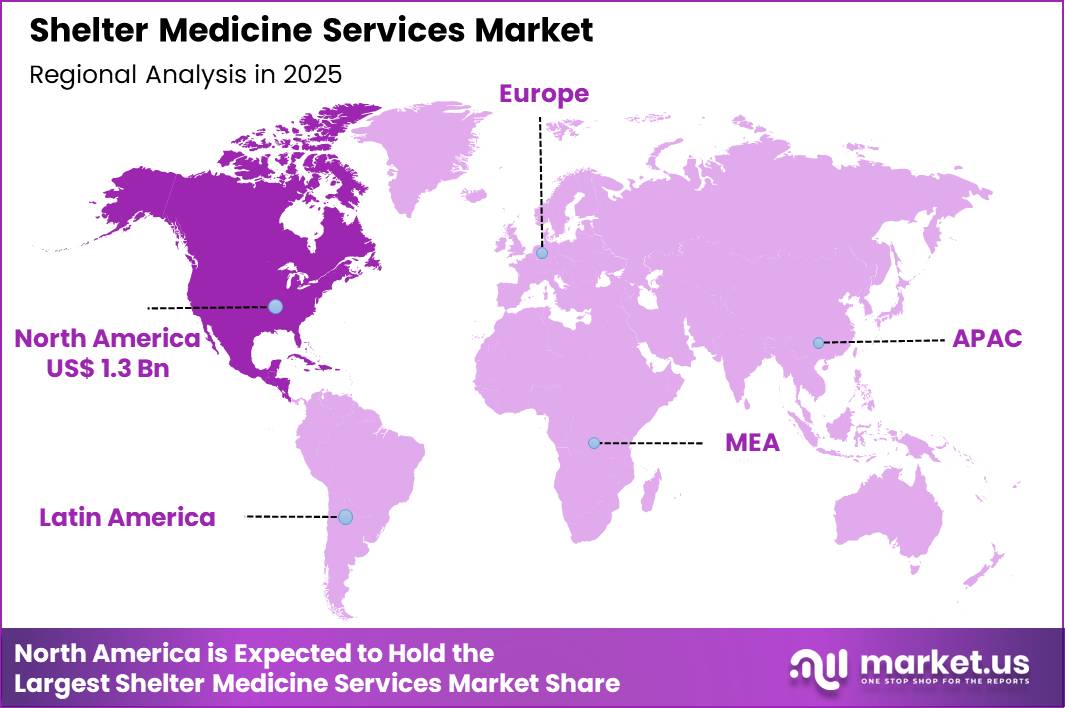
Preventive veterinary care accounted for 42.6% of growth within service type and dominate the shelter medicine services market due to the strong emphasis on disease prevention and early treatment in high-density animal environments. Shelters frequently manage large populations of animals that face elevated risk of infectious disease transmission, which encourages veterinary teams to prioritize vaccination, routine health screening, parasite control, and nutritional management. Preventive programs help reduce outbreaks and improve animal survival rates before adoption or relocation. The American Society for the Prevention of Cruelty to Animals reports that approximately 6.3 million companion animals enter shelters in the United States each year, which highlights the significant veterinary care demand within these facilities. Preventive medicine strategies therefore remain essential for maintaining animal health and reducing long-term treatment costs. This segment is expected to strengthen as shelters adopt structured population health programs and expand veterinary partnerships to improve disease control outcomes. Cats accounted for 35.1% of growth within animal type and dominate the shelter medicine services market due to the large number of stray and surrendered cats entering animal shelters each year. Feline populations often grow rapidly in urban environments, which increases the need for veterinary screening, vaccination programs, and sterilization procedures. Shelter veterinarians frequently address respiratory infections, parasitic diseases, and reproductive health issues among rescued cats. According to the ASPCA, millions of cats enter shelters annually, creating sustained demand for veterinary support services. High feline intake volumes encourage shelters to develop specialized care protocols for cats, including quarantine systems and vaccination programs. This segment is projected to expand as animal welfare organizations continue to implement large-scale trap-neuter-return programs and feline population control initiatives. Onsite shelter services accounted for 48.3% of growth within service delivery and dominate the shelter medicine services market because veterinary care delivered directly within shelters enables rapid treatment and continuous health monitoring of animals. Veterinary teams operating inside shelters manage intake examinations, vaccinations, disease screening, and minor surgical procedures without requiring external transportation of animals. This integrated service model improves operational efficiency and reduces stress for rescued animals. Shelters increasingly establish dedicated veterinary clinics within their facilities to support high patient volumes. Onsite services also allow veterinarians to monitor disease outbreaks and apply population medicine strategies immediately. This segment is anticipated to grow as shelters expand veterinary infrastructure and strengthen partnerships with nonprofit veterinary organizations that provide in-house clinical support. Municipal and city animal shelters accounted for 52.7% of growth within application and dominate the shelter medicine services market because local governments operate the majority of animal intake and welfare facilities. These shelters handle large numbers of stray, abandoned, and surrendered animals that require immediate veterinary attention. Municipal authorities allocate public funding to support vaccination, sterilization, and disease control programs in shelters. According to the ASPCA, millions of animals pass through municipal shelter systems annually, creating strong demand for veterinary services. Government-operated shelters also coordinate animal welfare policies, adoption programs, and public health monitoring related to animal populations. This segment is expected to remain dominant as municipalities expand animal welfare initiatives and invest in veterinary infrastructure that supports humane population management and disease prevention. Rising demand for spay/neuter and preventive care programs is driving the market. Shelter medicine services have experienced sustained growth through expanded high-volume spay/neuter initiatives and vaccination protocols in municipal and private animal welfare organizations. These programs address overpopulation while reducing shelter intake from stray litters. Veterinary teams perform thousands of sterilizations annually under optimized surgical workflows. The driver aligns with community efforts to lower euthanasia rates through proactive population control. Non-profit organizations report increased funding allocations for preventive medicine packages. The emphasis on herd health management in shelter environments supports routine diagnostic testing and parasite control. Practitioners utilize portable imaging and point-of-care analyzers to facilitate rapid assessments. The trend corresponds with legislative mandates in several states requiring sterilization prior to adoption. Enhanced public awareness of shelter animal welfare elevates expectations for comprehensive medical services. This factor reinforces the central role of veterinary intervention in shelter operations. Limited availability of veterinary specialists in shelter settings is restraining the market. Shelter medicine frequently operates with general practice veterinarians rather than board-certified specialists in shelter medicine or related fields. The shortage constrains implementation of advanced diagnostic and therapeutic protocols. Facilities encounter difficulties recruiting experienced shelter veterinarians due to salary differentials compared to private practice. The restraint limits capacity for complex case management including orthopedic and oncologic conditions. Training programs remain insufficient to meet current workforce needs. Shelters rely heavily on volunteer veterinary support, leading to inconsistent service availability. The factor contributes to prolonged length of stay for animals requiring specialized care. Resource allocation prioritizes emergency and preventive services over elective specialty procedures. This dynamic moderates the pace of clinical advancement in shelter environments. The limitation persists in influencing overall service quality and capacity expansion. Integration of shelter medicine into veterinary curriculum expansion is creating growth opportunities. Several accredited veterinary colleges have introduced dedicated shelter medicine rotations and elective courses since 2023, preparing graduates for shelter-specific practice. These programs include hands-on experience in high-volume surgery, infectious disease control, and behavioral assessment. Opportunities arise for partnerships between shelters and academic institutions to develop standardized training modules. The framework supports establishment of residency positions in shelter medicine. Graduates enter the workforce with targeted competencies in population-level health management. The development facilitates research collaborations on shelter-associated diseases and welfare metrics. Enhanced educational exposure increases the pipeline of veterinarians committed to shelter practice. Such initiatives enable shelters to access academic expertise for protocol development. The opportunity fosters innovation in low-cost, high-impact interventions. This structure positions the sector for improved professional capacity and service sophistication. Macroeconomic conditions influence the shelter medicine services market through public funding levels, nonprofit budgets, and donations that support animal welfare programs. Inflation increases expenses for veterinary medicines, vaccines, food supplies, and facility maintenance, which raises operational pressure for shelters. Higher interest rates reduce charitable contributions and limit funding for expansion of veterinary outreach and care programs. Geopolitical tensions disrupt global supply chains for veterinary drugs, diagnostic kits, and medical consumables used in animal shelters. Current US tariffs on imported veterinary supplies and equipment increase procurement costs for nonprofit organizations and municipal shelters. These pressures can restrict service capacity and delay upgrades to medical facilities within shelters. At the same time, organizations strengthen local partnerships with veterinary clinics and domestic suppliers to stabilize resources. Growing public awareness of animal welfare and adoption programs continues to support steady and confident market growth. Expansion of shelter veterinary telemedicine services is driving the market. Shelter organizations implemented structured telemedicine programs in 2024-2025 to provide remote consultations for non-emergent cases and follow-up care. These services utilize secure video platforms for triage, dermatology assessments, and behavioral evaluations. The expansion addresses gaps in on-site veterinary coverage during peak intake periods. Shelter staff receive real-time guidance on wound management and medication administration. The 2024-2025 development aligns with regulatory acceptance of telehealth in veterinary practice for shelter settings. Facilities report reduced transport requirements for specialty consultations. The model supports continuity of care for animals awaiting adoption or foster placement. Telemedicine integration enhances documentation and case tracking capabilities. The trend reflects adaptation to workforce constraints through technology-enabled care delivery. Overall, this advancement improves access to veterinary expertise in resource-limited shelter environments. North America is leading the Shelter Medicine Services Market North America accounted for 42.2% of the shelter medicine services market in 2025 as animal welfare organizations and veterinary institutions expanded clinical programs dedicated to the health management of sheltered and rescued animals. Municipal shelters, nonprofit rescue groups, and veterinary schools across the United States and Canada have strengthened preventive healthcare programs that include vaccination, disease surveillance, sterilization, and behavioral rehabilitation. According to Shelter Animals Count, about 6.3 million dogs and cats entered animal shelters and rescue organizations across the United States in 2023, highlighting the large population of animals requiring professional veterinary care and medical oversight. Growing public awareness regarding responsible pet adoption and animal welfare has increased funding and volunteer participation in shelter health initiatives. Veterinary universities are expanding training programs that specialize in shelter medicine, focusing on infectious disease management and population health strategies. Nonprofit organizations are also partnering with veterinary clinics to deliver mobile treatment services and community outreach programs. Advances in diagnostic tools and vaccination protocols have improved disease control in high-density shelter environments. Philanthropic funding and government support have strengthened infrastructure for shelter veterinary services. These developments collectively contributed to steady expansion of shelter-based veterinary healthcare services across North America in 2025. The Asia Pacific region is expected to experience the highest CAGR during the forecast period Asia Pacific is expected to experience notable growth during the forecast period as governments and nonprofit organizations strengthen animal welfare programs and veterinary services for stray and rescued animals. Many countries in the region face significant challenges related to large stray dog and cat populations, creating increased demand for organized shelter healthcare services. The World Health Organization estimates that there are about 200 million stray dogs globally, with a substantial proportion located across Asian countries, underscoring the importance of veterinary care and population control programs. Governments across India, Thailand, Indonesia, and other nations are expanding sterilization campaigns, vaccination drives, and animal rescue initiatives to improve public health and animal welfare. Veterinary colleges and nonprofit animal welfare organizations are establishing specialized shelter medicine training programs that focus on population management and infectious disease prevention. Urban municipalities are also partnering with veterinary professionals to operate shelters that provide medical treatment and rehabilitation for rescued animals. Growing awareness of humane animal management practices has encouraged public participation in adoption and foster care programs. Regional veterinary pharmaceutical suppliers are increasing production of vaccines and preventive medicines used in large-scale animal health programs. These developments are expected to support continued growth of organized shelter medicine services throughout Asia Pacific in the coming years. North America Europe Asia Pacific Middle East & Africa Latin America Key organizations in the Shelter Medicine Services Market expand their impact by strengthening veterinary outreach programs, improving disease control protocols, and partnering with animal welfare groups to enhance care for homeless animals. Institutions invest in training initiatives, vaccination campaigns, and mobile veterinary clinics that help shelters manage large animal populations more effectively. They also integrate data tracking systems and tele-veterinary support to improve treatment planning and disease surveillance in shelter environments. Maddie’s Fund represents a notable contributor to the Shelter Medicine Services Market and operates as a U.S.-based philanthropic organization that supports veterinary education, research, and community programs focused on improving outcomes for shelter animals. The organization collaborates with veterinary schools and shelters to advance evidence-based care and promote lifesaving programs for companion animals. Other service providers continue to expand partnerships, clinical training programs, and funding initiatives to strengthen veterinary care standards and long-term sustainability within the Shelter Medicine Services Market.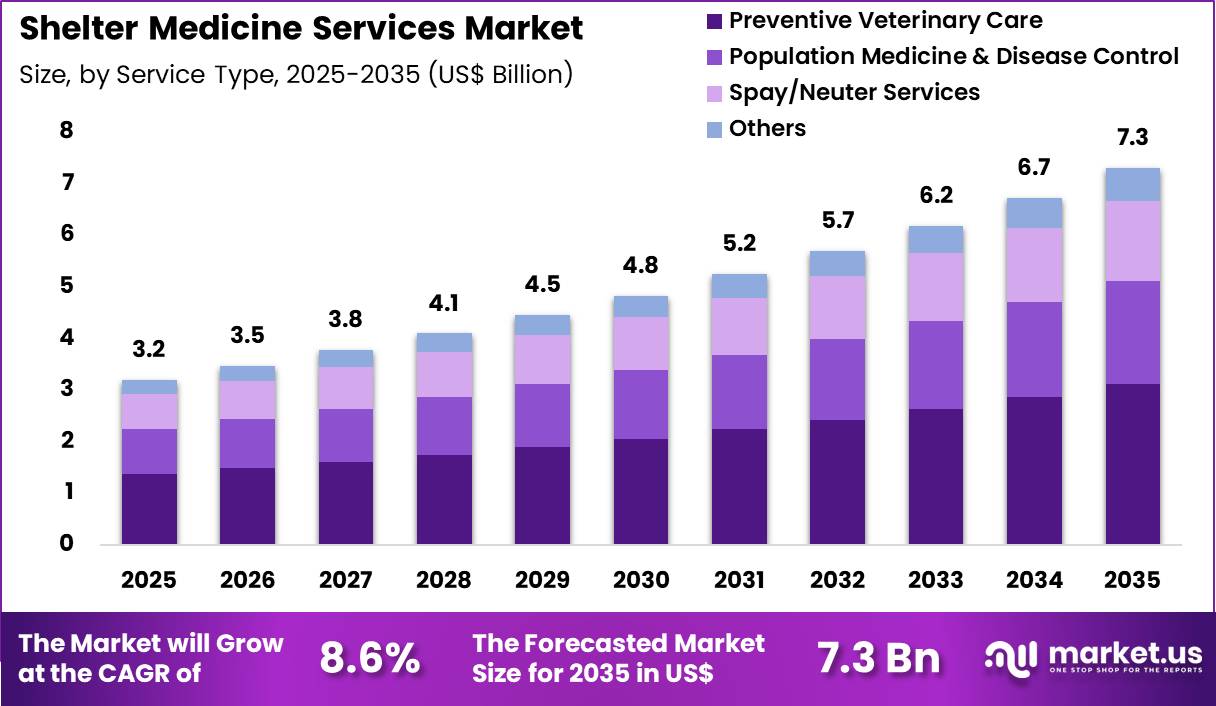
Key Takeaways
Service Type Analysis
Animal Type Analysis
Service Delivery Analysis
Application Analysis
Key Market Segments
By Service Type
By Animal Type
By Service Delivery
By Application
Drivers
Restraints
Opportunities
Impact of Macroeconomic / Geopolitical Factors
Latest Trends
Regional Analysis
Key Regions and Countries
Key Players Analysis
Top Key Players
Recent Developments