

Report Overview
Global Beard Care Products Market size is expected to be worth around USD 8.0 Billion by 2035 from USD 3.9 Billion in 2025, growing at a CAGR of 7.4% during the forecast period 2026 to 2035.
Beard care products include oils, waxes, creams, shampoos, and conditioners designed specifically for facial hair maintenance and skin health beneath the beard. This market covers both mass-market and premium formulations, serving a male grooming audience that now treats facial hair as a deliberate style statement rather than an afterthought.
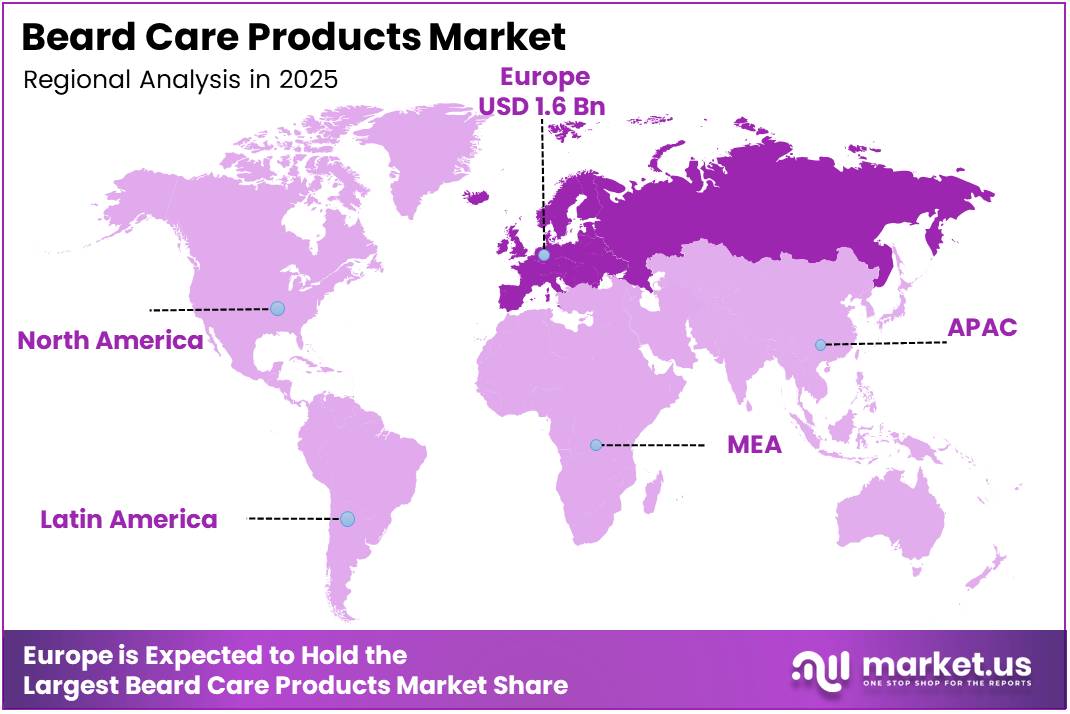
Celebrity and influencer-driven movements have become one of the most reliable demand generators in the beard care category. When recognized public figures attach their identity to a grooming brand, consumer trial accelerates in ways that traditional advertising cannot replicate. This dynamic compresses the typical new-brand awareness cycle and gives equity-partner-backed brands a credibility shortcut into crowded retail environments where shelf space and consumer attention are both scarce. Europe leads the global Beard Care Products Market with a 43.80% share, valued at USD 1.6 Billion. European male grooming culture carries deep historical roots in traditional barbering and personal presentation standards, particularly across the UK, Germany, France, and Italy. This cultural foundation sustains premium product demand and supports a sophisticated retail ecosystem that connects specialty grooming retailers, barbershops, and online-first brands. North America represents the second major demand hub for beard care products, driven by the rapid mainstreaming of beard culture across urban and suburban male populations. The US market in particular benefits from high e-commerce penetration, celebrity-endorsed grooming lines, and a large Millennial consumer base with established premium grooming spend. Direct-to-consumer brand architecture has proven especially effective in this market. Asia Pacific presents the strongest forward growth potential in the beard care category, anchored by rising disposable income, increasing male grooming awareness, and an expanding urban middle class across China, India, and Southeast Asia. Western beard styling trends are penetrating these markets through social media, creating entry points for both global and regional brands targeting male consumers with limited current access to specialized grooming products. Latin America shows clear structural readiness for beard care market expansion, with Brazil and Mexico leading urban male grooming adoption. Male consumers in these markets demonstrate strong affinity for style-driven personal care products, and e-commerce growth is accelerating product accessibility beyond major metropolitan retail centers. Natural and organic formulation preferences align closely with consumer values across Brazilian markets specifically. The Middle East and Africa region carries distinctive demand characteristics for beard care products, rooted in cultural and religious traditions that emphasize beard maintenance among male consumers. GCC markets — including Saudi Arabia and the UAE — concentrate premium grooming spend at levels that rival mature Western markets. Brand positioning that acknowledges local grooming traditions and halal-certified formulation standards gains meaningful consumer trust in this region. North America Europe Asia Pacific Latin America Middle East & Africa L’Oréal brings its global R&D infrastructure and multi-channel distribution capability to the beard care category, giving it a structural advantage over single-category specialists. Its ability to cross-leverage dermatological ingredient databases from its broader skincare portfolio allows it to develop clinically supported beard formulations faster than most competitors can. This R&D depth is a durable competitive position, not easily replicated by emerging brands. Beardo has built its market position through digital-native brand architecture and a strong direct-to-consumer presence across South Asian markets. Its approach targets a younger, aspirationally oriented male consumer who treats beard care as a lifestyle signal. Beardo’s competitive advantage lies in its agility — the brand moves faster from trend identification to product launch than legacy personal care conglomerates, enabling it to capture early-adopter segments ahead of larger incumbents. Unilever uses its global retail distribution network and category management capabilities to maintain broad beard care market coverage across price tiers. Its access to mass-market shelf space in hypermarkets and supermarkets across both developed and emerging markets positions it to capture the high-volume, lower-margin segments that premium-only brands cannot serve efficiently. Unilever’s scale enables cost structures that sustain competitive pricing without sacrificing investment in formulation quality. Edgewell Personal Care competes through targeted brand portfolio management, using distinct brand identities across grooming subcategories to address different male consumer profiles without cannibalizing within its own lineup. Its strategic positioning prioritizes specialty grooming credentials over broad personal care brand awareness, allowing it to command higher shelf authority in dedicated men’s grooming sections and specialty retail environments where beard care commands premium placement.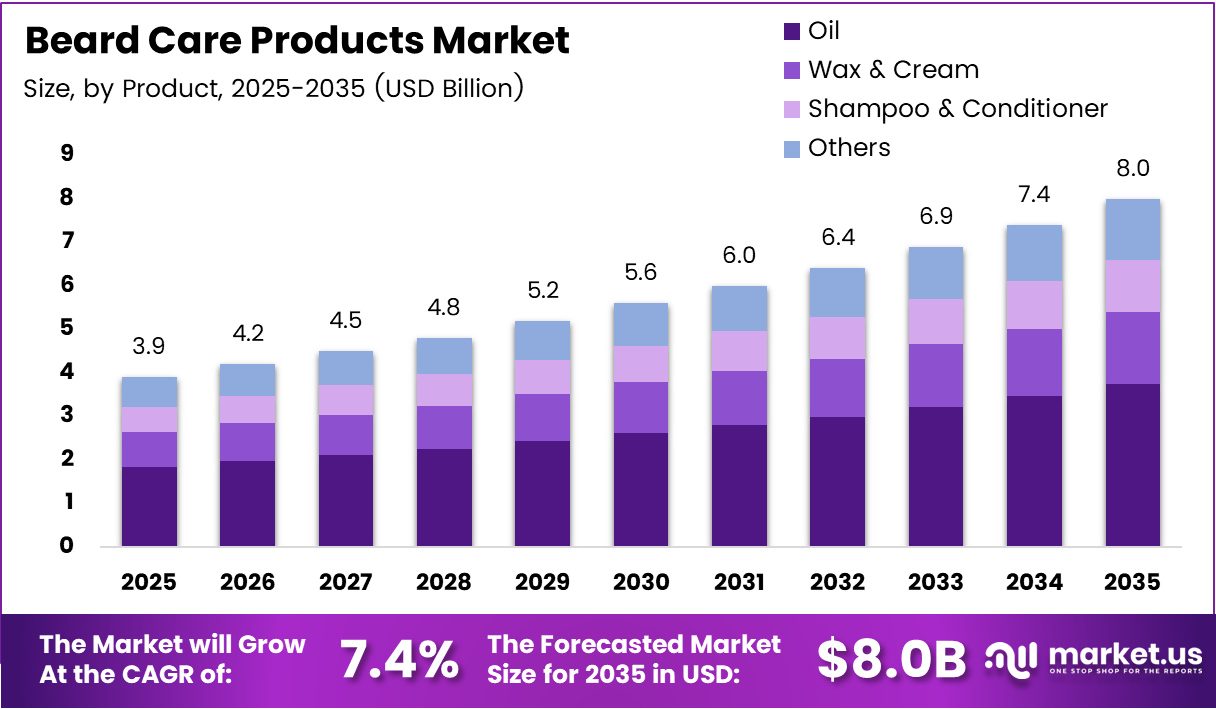
Regional Analysis
Europe Dominates the Beard Care Products Market with a Market Share of 43.80%, Valued at USD 1.6 Billion
North America Beard Care Products Market Trends
Asia Pacific Beard Care Products Market Trends
Latin America Beard Care Products Market Trends
Middle East and Africa Beard Care Products Market Trends
Key Regions and Countries
Key Company Insights
Key Players
Recent Developments