

Report Overview
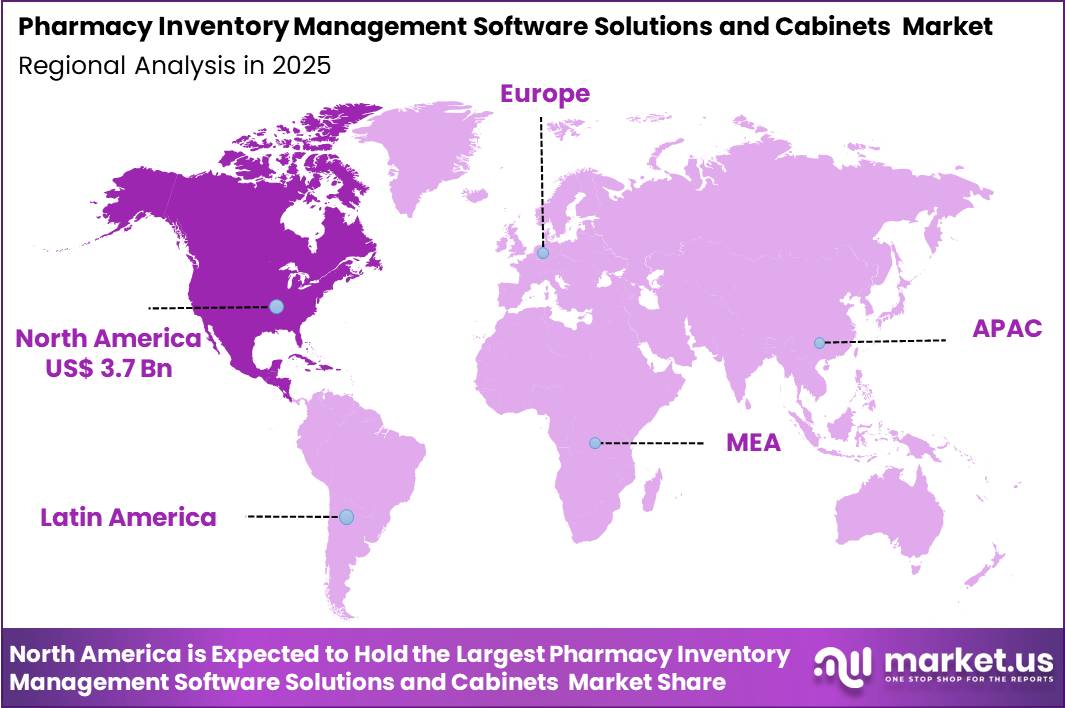
The Global Pharmacy Inventory Management Software Solutions and Cabinets Market size is expected to be worth around US$ 15.4 Billion by 2035 from US$ 7.0 Billion in 2025, growing at a CAGR of 8.2% during the forecast period 2026-2035. In 2025, North America led the market, achieving over 53.1% share with a revenue of US$ 3.7 Billion.
Growing demand for operational efficiency and patient safety accelerates the Pharmacy Inventory Management Software Solutions and Cabinets market as pharmacies and healthcare facilities require automated systems that optimize stock levels, reduce waste, and prevent medication errors.
Retail and hospital pharmacies increasingly deploy integrated software platforms to track medication usage in real time, forecasting demand based on prescription trends and seasonal patterns to maintain adequate supplies of high-turnover drugs such as antibiotics, analgesics, and cardiovascular agents.
The opportunity fosters partnerships with electronic health record vendors for seamless data flow. Stakeholders anticipate improved medication availability and cost containment. This advancement positions providers for scalable, data-informed inventory management. Healthcare providers increasingly rely on pharmacy inventory management software solutions and automated cabinets to control medication flow, yet macroeconomic pressures influence purchasing decisions across hospitals and pharmacies. Rising operational costs push health systems to scrutinize capital expenditures, which can slow upgrades of digital inventory platforms and automated dispensing infrastructure. Financing costs also affect expansion plans for smaller pharmacies that plan to modernize storage and tracking systems. Geopolitical uncertainty influences the supply of electronics, scanning modules, and specialized cabinet components used in automated pharmacy equipment. US tariffs on imported hardware such as sensors, processors, and cabinet electronics increase equipment acquisition costs for healthcare providers. These cost pressures may delay installations in budget-sensitive facilities. At the same time, hospitals seek stronger medication tracking, regulatory compliance, and waste reduction, which strengthens the business case for digital inventory systems. Continued emphasis on medication safety and operational efficiency keeps long-term demand for these solutions moving upward. Launch of next-generation automated dispensing cabinets with enhanced security features is driving the market. Major suppliers introduced updated dispensing cabinet models in 2025 featuring biometric authentication and advanced locking mechanisms. These systems incorporate touchscreen interfaces with improved user ergonomics for faster transaction completion. The launch addresses evolving requirements for controlled substance security in hospital environments. Pharmacies benefit from integrated camera surveillance and audit trail enhancements. The 2025 development aligns with increased regulatory emphasis on diversion prevention. Facilities report potential reductions in medication discrepancies through precise access controls. The innovation supports compliance with Joint Commission standards for secure storage. Early implementations demonstrate consistent performance in high-volume units. The advancement stimulates replacement cycles for aging cabinet fleets. Overall, this technological progression elevates safety and efficiency standards in pharmacy operations. North America is leading the Pharmacy Inventory Management Software Solutions and Cabinets Market North America accounted for 53.1% of the pharmacy inventory management software solutions and cabinets market in 2025 as hospitals and healthcare systems increasingly digitized medication storage and supply chain operations to improve safety and efficiency. Healthcare providers across the United States and Canada are integrating automated dispensing cabinets and inventory tracking software to monitor medication usage, reduce stock shortages, and prevent dispensing errors. According to the American Society of Health-System Pharmacists, more than 97% of U.S. hospitals used automated dispensing cabinets for medication distribution by 2022, highlighting widespread reliance on automated pharmacy storage technologies. Growing pressure to reduce medication errors and improve drug traceability has encouraged hospitals to adopt digital inventory platforms that track pharmaceuticals across multiple departments in real time. Healthcare organizations are also expanding centralized pharmacy management systems that integrate with electronic health records and clinical decision support tools. Pharmaceutical supply chain disruptions in recent years have further emphasized the need for real-time inventory monitoring to maintain adequate medication supplies. Technology vendors are introducing advanced cabinet systems with biometric authentication and automated stock alerts that improve medication security and workflow efficiency. Hospital pharmacies are also adopting predictive analytics to forecast medication demand and optimize procurement decisions. These developments collectively supported strong expansion of automated pharmacy inventory management systems across North America in 2025. The Asia Pacific region is expected to experience the highest CAGR during the forecast period Asia Pacific is expected to experience strong growth during the forecast period as healthcare infrastructure modernization and digital hospital initiatives accelerate across the region. Countries such as China, India, Japan, and South Korea are investing heavily in hospital information systems and automated pharmacy technologies to improve medication management and reduce operational inefficiencies. The World Health Organization reported in 2022 that medication errors cause at least USD 42 billion in global healthcare costs annually, encouraging healthcare systems to adopt technologies that strengthen medication safety and inventory control. Hospitals across the region are introducing automated dispensing cabinets and digital inventory software to improve drug storage, tracking, and distribution processes. Governments are also promoting smart hospital programs that integrate pharmacy automation with broader healthcare information systems. Rapid expansion of hospital networks and specialty clinics is increasing demand for efficient pharmaceutical supply management tools. Technology providers are developing cost-effective automated cabinet systems tailored for high-volume healthcare facilities in emerging markets. Universities and healthcare training institutions are strengthening pharmacy informatics programs to support digital medication management practices. These developments are expected to accelerate adoption of automated pharmacy inventory management technologies across Asia Pacific in the coming years. North America Europe Asia Pacific Middle East & Africa Latin America Key participants in the Pharmacy Inventory Management Software Solutions and Cabinets Market expand their presence by integrating automated dispensing cabinets with advanced inventory software that tracks medication usage, expiration dates, and stock levels in real time. Companies collaborate with hospitals and healthcare systems to implement centralized medication management platforms that reduce dispensing errors and improve operational efficiency in pharmacies. They also invest in cloud-based analytics tools and barcode verification technologies that strengthen medication traceability and regulatory compliance. Omnicell Inc. represents a prominent participant in the Pharmacy Inventory Management Software Solutions and Cabinets Market and operates as a U.S.-based healthcare technology company that develops automated medication dispensing systems, pharmacy automation software, and medication management solutions for hospitals and health systems. The company focuses on connected pharmacy platforms that optimize inventory control and medication distribution workflows. Industry competitors continue to introduce advanced automation cabinets, expand software capabilities, and strengthen healthcare partnerships to improve pharmacy operational efficiency and patient safety.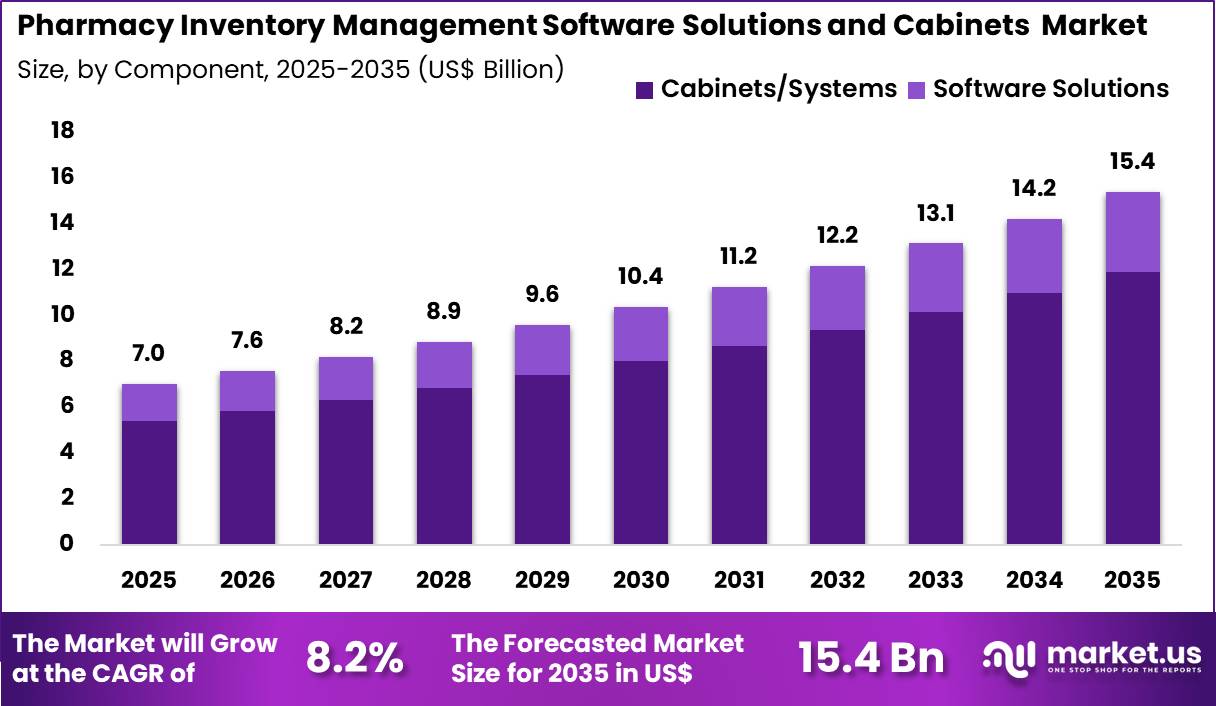
Impact of Macroeconomic / Geopolitical Factors
Latest Trends
Regional Analysis
Key Regions and Countries
Key Players Analysis
Top Key Players
Recent Developments