


Report Overview
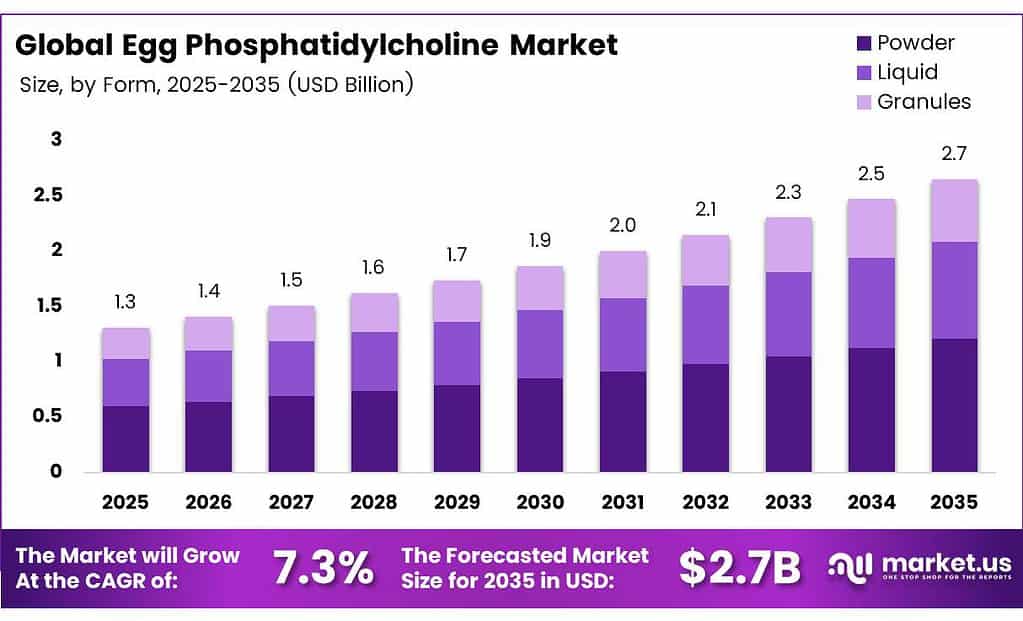
The Global Egg Phosphatidylcholine Market size is expected to be worth around USD 2.7 billion by 2035 from USD 1.3 billion in 2025, growing at a CAGR of 7.3% during the forecast period 2026 to 2035.
Egg phosphatidylcholine is a high-purity phospholipid derived from egg yolk. Manufacturers use it widely in pharmaceutical, nutraceutical, and cosmetic formulations. Its superior biocompatibility and emulsifying properties make it a preferred ingredient across liposomal drug delivery and injectable nutrition systems.
The market benefits from rising demand for condition-specific nutraceuticals targeting cognitive health, liver function, and perinatal nutrition. Consumers increasingly prefer natural phospholipids with high bioavailability. Moreover, the premiumization of preventive healthcare further accelerates adoption across dietary supplement formulations globally.
According to the World Integrated Trade Solution (WITS), the European Union’s lecithins and phosphoaminolipids exports reached $174,835,940 with a volume of 52,519,300 kg in 2019, establishing Europe as the largest global exporter. This signals robust manufacturing infrastructure and sustained pharmaceutical ingredient demand across the region.
The global trade value of lecithins and phosphoaminolipids reached $1.26 billion in 2024, reflecting strong cross-border demand across the pharmaceutical, food, and cosmetic industries. This figure underscores the growing commercial importance of egg phosphatidylcholine as a specialty lipid ingredient worldwide.
Pharmaceutical manufacturers drive significant demand for egg-derived phosphatidylcholine as a GMP-grade excipient. Injectable nutrition and modified-release drug formulations require pharmaceutical-grade phospholipids. Consequently, this segment contributes substantially to overall market revenue growth across North America and Europe.
Key Takeaways
- The Global Egg Phosphatidylcholine Market is valued at USD 1.3 billion in 2025 and is projected to reach USD 2.7 billion by 2035 at a CAGR of 7.3% during the forecast period from 2026 to 2035.
- The Powder segment dominates with a market share of 54.7% in 2025.
- The Emulsifier segment holds the leading position with a share of 43.1% in 2025.
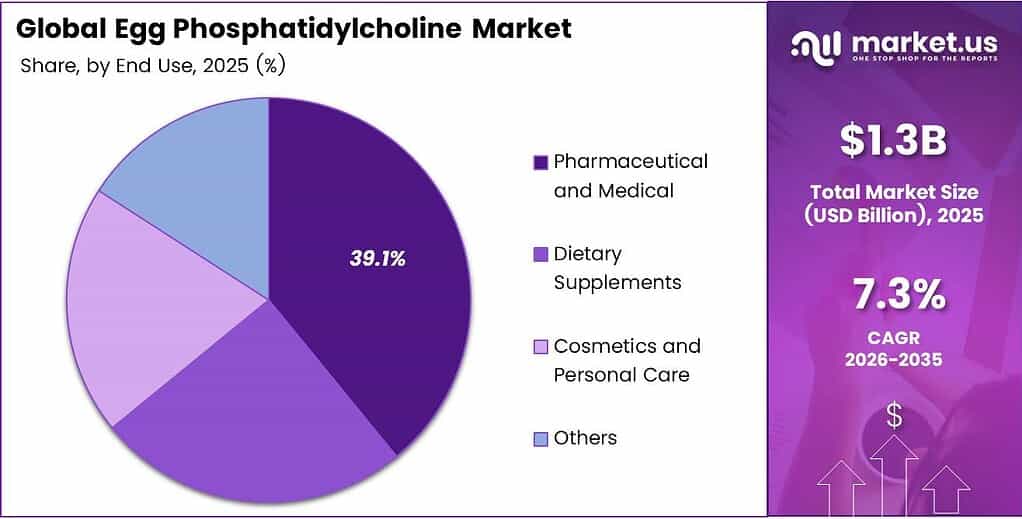
- The Pharmaceutical and Medical segment leads with a share of 39.1% in 2025.
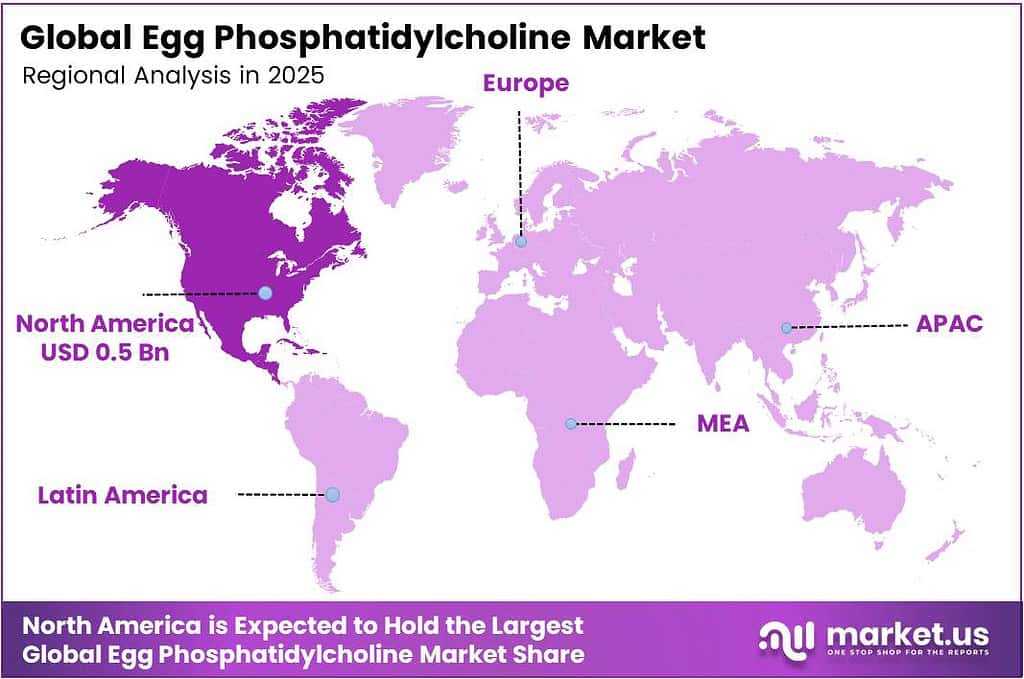
- North America holds the dominant regional share at 34.9%, valued at approximately USD 0.5 billion in 2025.
By Form Analysis
Powder dominates with 54.7% due to its superior shelf stability and ease of use in pharmaceutical and nutraceutical formulations.
In 2025, Powder held a dominant market position in the By Form segment of the Egg Phosphatidylcholine Market, with a 54.7% share. Powder-form phosphatidylcholine offers extended shelf life, precise dosing, and compatibility with dry-blend manufacturing processes. Additionally, clean-label dietary supplement brands widely prefer powder formats for encapsulation and tableting applications.
Liquid phosphatidylcholine serves pharmaceutical manufacturers requiring ready-to-use intermediates for parenteral emulsions and injectable formulations. Its fluid consistency supports seamless integration into lipid-based drug delivery systems. However, liquid forms require controlled storage conditions, which adds complexity to supply chain and cold-chain logistics management.
Granules offer a practical middle-ground option between powder and liquid formats. Manufacturers use granulated phosphatidylcholine in functional food applications and specialty supplement blends. Moreover, granules provide improved flowability and reduced dustiness during processing, making them suitable for high-volume nutraceutical production environments.
By Application Analysis
Emulsifier dominates with 43.1% due to its critical role in stabilizing lipid-water interfaces across food, pharmaceutical, and cosmetic industries.
In 2025, Emulsifier held a dominant market position in the By Application segment of the Egg Phosphatidylcholine Market, with a 43.1% share. Egg phosphatidylcholine functions as a highly effective natural emulsifier in parenteral nutrition, food products, and topical formulations. Its superior surface-active properties make it the ingredient of choice for pharmaceutical-grade emulsion systems globally.
Solubilizer applications leverage the amphiphilic nature of phosphatidylcholine to enhance the bioavailability of poorly water-soluble active compounds. Pharmaceutical developers increasingly use egg phosphatidylcholine as a solubilizing agent in oral and injectable drug formulations. Consequently, liposomal and micellar delivery systems drive consistent demand for high-purity solubilizer-grade material.
Moisturizer applications in cosmetics and personal care exploit the skin-conditioning and barrier-repair properties of egg phosphatidylcholine. Premium skincare brands incorporate it into serums, creams, and regenerative dermatological products. The Others category includes applications such as controlled-release matrices, lipid nanoparticles, and functional coating systems across multiple industries.
By End-use Analysis
Pharmaceutical and Medical dominate with 39.1% due to regulatory-driven demand for GMP-grade phospholipid excipients in drug manufacturing.
In 2025, Pharmaceutical and Medical held a dominant market position in the By End-use segment of the Egg Phosphatidylcholine Market, with a 39.1% share. Pharmaceutical companies rely on egg phosphatidylcholine for injectable lipid emulsions, liposomal drug carriers, and parenteral nutrition products. Its high biocompatibility and well-established safety profile support its central role in drug formulation science.
Dietary Supplements represent a fast-growing end-use segment driven by consumer demand for cognitive enhancement, liver support, and cardiovascular health products. Supplement manufacturers prefer egg-derived phosphatidylcholine for its superior phospholipid purity over soy-based alternatives. Additionally, physician-recommended formulations targeting memory and neurological function fuel consistent volume demand.
Cosmetics and Personal Care brands incorporate egg phosphatidylcholine into high-performance anti-aging and skin barrier restoration products. Its biomimetic lipid structure enhances transdermal penetration of active ingredients. The Others category captures emerging applications in veterinary medicine, functional foods, and advanced biomaterial research platforms globally.
Key Market Segments
By Form
- Powder
- Liquid
- Granules
By Application
- Emulsifier
- Solubilizer
- Moisturizer
- Others
By End-use
- Pharmaceutical and Medical
- Dietary Supplements
- Cosmetics and Personal Care
- Others
Emerging Trends
Liposomal Delivery and Precision Formulation Specifications Reshape Ingredient Sourcing
Pharmaceutical and nutraceutical companies increasingly adopt liposomal and targeted oral delivery formulations. Buyers now specify precise fatty acid profiles and peroxide value thresholds for incoming phospholipid batches. Moreover, liquid intermediates optimized for parenteral emulsions and ready-to-use pharmaceutical dispersions gain strong traction among injectable drug manufacturers globally.
Clean-Label Provenance and Traceability Standards Drive Procurement Practices
Procurement teams in Europe and North America increasingly prioritize animal welfare certifications, cage-free sourcing, and lot-level traceability. Premium powder-format phosphatidylcholine products leveraging clean-label positioning command higher price premiums in dietary supplement retail channels. Consequently, suppliers who demonstrate transparent supply chains and certified sourcing gain preferred vendor status with regulated-market buyers.
Drivers
Nutraceutical Demand and Pharmaceutical-Grade Excipient Requirements Accelerate Market Growth
Consumer demand for condition-specific nutraceuticals targeting cognitive function, liver health, and perinatal nutrition drives consistent volume growth for egg phosphatidylcholine. Simultaneously, pharmaceutical formulators require GMP-grade excipients for injectable nutrition and modified-release drug systems. India egg lecithin imports reached $6,696,791, with Germany accounting for 95.06% of supply, confirming reliance on European high-purity sources for pharmaceutical manufacturing.
Liposomal Drug Delivery and Preventive Healthcare Premiumization Expand Application Scope
Liposomal drug delivery systems and parenteral nutrition applications demand phospholipids with superior biocompatibility and oxidative stability. Egg phosphatidylcholine meets these stringent requirements, making it the preferred choice among biotech and specialty pharma developers. Additionally, rising consumer preference for high-bioavailability natural phospholipids within the preventive healthcare segment strengthens long-term commercial demand across key markets.
Restraints
Egg Yolk Supply Volatility and Feed Cost Inflation Create Raw Material Pricing Instability
Poultry disease outbreaks, including avian influenza cycles, intermittently disrupt egg yolk supply chains and elevate raw material costs. Feed cost inflation compounds pricing pressure on egg phosphatidylcholine manufacturers. India’s lecithin imports under HS Code 29232090 totaled $10,274,741 with an average import price of $9.54 per unit, reflecting the cost sensitivity embedded in global phospholipid supply chains.
Regulatory Complexity in Allergen Management Increases Compliance Burden for Manufacturers
Egg-derived ingredients trigger mandatory allergen labeling requirements across the EU, US, and other regulated markets. Manufacturers face heightened scrutiny around cross-contamination control in GMP environments during processing and packaging. Consequently, compliance investments in facility segregation, testing protocols, and documentation increase operating costs, particularly for smaller producers serving pharmaceutical-grade customers globally.
Growth Factors
Enzymatic Fractionation Technologies and Nano-Carrier Therapeutics Open New Commercial Pathways
Manufacturers implementing enzymatic fractionation and solvent-reduced purification technologies achieve enhanced oxidative stability in finished phospholipid products. These advanced processing methods improve product quality while reducing environmental impact. India’s lecithins and phosphoaminolipids exports grew to $209,543,510 with 52,465,800 kg volume in 2023, demonstrating significant expansion in global supply capacity from emerging producer nations.
Emerging Market Penetration and Strategic Pharma Partnerships Unlock Long-Term Revenue
Physician education programs and localized clinical marketing initiatives accelerate egg phosphatidylcholine adoption in emerging markets across Asia and Latin America. Strategic capacity expansion partnerships with pharmaceutical innovators strengthen supply reliability for advanced nano-carrier therapeutics. Moreover, traceable cage-free sourcing programs align with evolving European and North American procurement standards, creating competitive differentiation for quality-focused suppliers.
Regional Analysis
North America Dominates the Egg Phosphatidylcholine Market with a Market Share of 34.9%, Valued at USD 0.5 Billion
North America leads the global egg phosphatidylcholine market, holding a 34.9% share valued at approximately USD 0.5 billion in 2025. The region’s strong pharmaceutical manufacturing base, advanced nutraceutical industry, and high consumer spending on preventive health products drive sustained demand. Additionally, regulatory frameworks supporting GMP-grade lipid excipients reinforce supplier investments across the US and Canada.
Europe represents a highly significant market driven by Germany’s dominance in high-purity phospholipid manufacturing and the Netherlands’ role as a major global re-export and processing hub. Stringent EU allergen regulations and GMP compliance requirements support premium pricing for certified egg-derived phospholipids. Moreover, growing demand from the European pharmaceutical and cosmetic industries sustains consistent volume consumption across the region.
Asia Pacific records accelerating demand growth fueled by expanding pharmaceutical production capacity in China, India, and Japan. India has emerged as a major global exporter of phospholipid ingredients, supplying European pharmaceutical and nutraceutical markets at scale. Additionally, rising health awareness among middle-class consumers in China and Southeast Asia drives dietary supplement adoption, expanding the regional customer base.
Latin America shows growing potential driven by expanding nutraceutical consumption in Brazil and Mexico. Regional pharmaceutical manufacturers increasingly source egg phosphatidylcholine for injectable and oral lipid formulations. However, currency volatility and fragmented regulatory frameworks across countries create procurement challenges that slow market penetration compared to North America and Europe.
Key Regions and Countries
North America
- US
- Canada
Europe
- Germany
- France
- The UK
- Spain
- Italy
- Rest of Europe
Asia Pacific
- China
- Japan
- South Korea
- India
- Australia
- Rest of APAC
Latin America
- Brazil
- Mexico
- Rest of Latin America
Middle East & Africa
- GCC
- South Africa
- Rest of MEA
Key Players Analysis
Lipoid GmbH is a leading European manufacturer of high-purity egg and soy phospholipids for pharmaceutical, nutraceutical, and cosmetic applications. The company maintains dedicated GMP manufacturing facilities and supplies pharmaceutical-grade egg phosphatidylcholine globally. Its deep expertise in lipid purification and formulation science positions it as a preferred supplier for parenteral nutrition and liposomal drug delivery applications.
Kewpie Corporation is a Japan-based specialty ingredients company with significant capabilities in egg yolk phospholipid extraction and purification. The company leverages its integrated egg processing operations to produce high-purity phosphatidylcholine for pharmaceutical and dietary supplement markets. Moreover, Kewpie’s research investments in functional lipid applications have expanded its commercial presence across Asian and international health ingredient markets.
NOF AMERICA CORPORATION supplies pharmaceutical-grade lipid excipients, including egg-derived phosphatidylcholine, to drug delivery and biotech companies across North America and globally. The company focuses on high-value niche applications such as liposomal formulations, lipid nanoparticles, and specialty emulsifiers. Its technical support capabilities and custom-grade manufacturing strengthen long-term relationships with pharmaceutical innovators and contract development organizations.
American Lecithin Company specializes in lecithin and phospholipid ingredients for food, pharmaceutical, and nutraceutical end markets across North America. The company offers a broad portfolio of egg and soy phospholipid products tailored to specific formulation requirements. Additionally, its customer-focused technical service model and flexible product customization capabilities support growing demand from dietary supplement and functional food manufacturers.
Top Key Players in the Market
- Lipoid GmbH
- Kewpie Corporation
- NOF AMERICA CORPORATION
- American Lecithin Company
- Cargill
- Jena Bioscience GmbH
- RAJVI ENTERPRISE
Recent Developments
- In June 2024, NOF AMERICA CORPORATION entered a strategic supply agreement with a leading North American biotech firm to provide customized GMP-compliant egg phosphatidylcholine grades for advanced lipid nanoparticle therapeutic formulations.
- In September 2024, American Lecithin Company introduced a traceable cage-free egg phospholipid ingredient line developed in response to growing European and North American procurement requirements for animal welfare-certified supply chains.
- In November 2024, Cargill expanded its phospholipid ingredient portfolio by adding pharmaceutical-grade egg phosphatidylcholine variants, reinforcing its position in the specialty lipid excipient market serving injectable nutrition manufacturers globally.









