


Report Overview
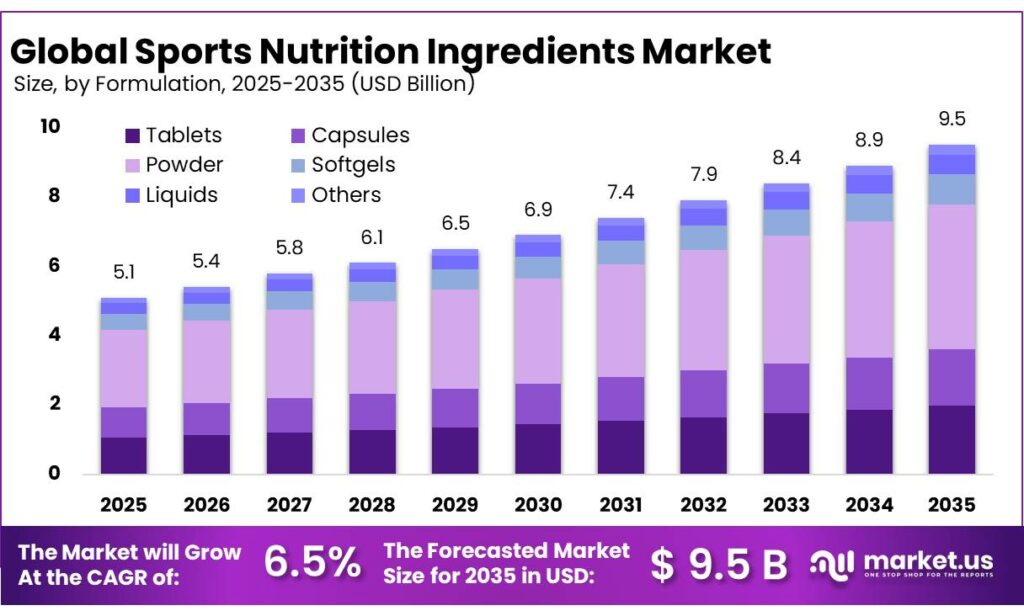
The Global Sports Nutrition Ingredients Market size is expected to be worth around USD 9.5 Billion by 2035, from USD 5.1 Billion in 2025, growing at a CAGR of 6.5% during the forecast period from 2026 to 2035. In 2025, North America held a dominant market position, capturing more than a 45.8% share, holding USD 2.3 Billion revenue.
The sports nutrition ingredients industry is positioned at the intersection of performance nutrition, active-lifestyle food, and preventive health. In practical terms, the category is increasingly shaped by high-quality proteins, amino acids, electrolyte systems, functional carbohydrates, vitamins, minerals, fibers, and microbiome-support ingredients used across powders, ready-to-drink shakes, bars, gels, and hydration beverages.
 , nearly 31% of the global adult population (around 1.8 billion people) are still physically inactive, which has pushed governments and health bodies to actively promote exercise and better lifestyles.
This gap has created a strong push toward fitness programs, gym memberships, and structured training, which directly increases the need for sports nutrition ingredients. As more people begin working out, they naturally look for ways to improve stamina, muscle recovery, and performance, leading them toward protein, amino acids, and hydration-based products. Another report highlights that over 80% of adolescents and 27% of adults do not meet recommended activity levels, showing huge untapped potential where even small behavioral changes can boost supplement consumption.
Growing Supplement Consumption Among Active Consumers Supporting Market Expansion
Another strong driver is the rising use of dietary and sports supplements among both athletes and regular consumers. Research indicates that around 71.95% of athletes consume sports or fitness supplements, with protein products being the most commonly used at about 59%. This clearly shows how deeply supplements are already integrated into training routines.
Even more striking, some studies suggest that over 84% of participants use supplements for performance or health reasons, highlighting that usage is not limited to professionals but is spreading across general fitness communities. In addition, another dataset shows that over 90% of athletes report using at least one dietary supplement, which reflects strong dependency on these products for performance and recovery.
Restraints
Safety Concerns and Product Contamination Limiting Consumer Trust
One of the biggest challenges holding back the sports nutrition ingredients market is the growing concern around product safety and contamination. Many consumers today are becoming more careful about what they consume, especially after repeated warnings from trusted organizations. The U.S. Food and Drug Administration has clearly stated that dietary supplements are not reviewed for safety before they are sold, which means unsafe products can reach the market first and be removed later only after issues are found.
This lack of pre-check creates real risks. For example, between 2007 and 2016, the FDA identified 776 dietary supplements from over 145 companies that were contaminated with drugs or harmful substances. These included steroids and unapproved chemicals, which can cause serious health problems. In addition, a recent 2026 consumer study found that more than two-thirds of tested protein powders contained higher levels of lead than considered safe for daily intake, raising strong concerns among regular users.
Mislabeling and Lack of Regulation Creating Market Challenges
Another major issue is the lack of strict regulation and frequent mislabeling of sports nutrition products. Unlike medicines, supplements are often regulated as food products, which means companies do not always need to prove their effectiveness or full safety before selling them. This creates a situation where the actual content of a product may not always match what is written on the label.
Research shows that contamination and mislabeling are not rare cases. Studies indicate that 12% to 58% of dietary supplements may contain undeclared substances, which is a significant concern for both athletes and regular consumers. In sports specifically, around 6.4% to 8.8% of doping cases have been linked to contaminated supplements, showing how serious the issue can become.
Opportunity
Growing Demand for Plant-Based and Clean Protein Ingredients Creating New Opportunities
One of the most promising growth opportunities in the sports nutrition ingredients market is the rising shift toward plant-based and clean protein sources. Consumers today are becoming more conscious about what they eat, not just for fitness but also for long-term health and environmental impact. According to the Food and Agriculture Organization (FAO), plant-based protein consumption per person increased by more than 6% between 2020 and 2023, showing a clear change in dietary habits.
Government initiatives and food policies are also supporting this movement. Several countries in Europe and other regions are actively promoting plant-based diets as part of their climate and health strategies. These efforts are encouraging food manufacturers to innovate and develop better plant-based formulations. As a result, sports nutrition brands are expanding their product lines to include vegan protein powders and clean-label supplements.
Expansion of Functional and Personalized Nutrition Driving Ingredient Innovation
Scientific guidelines also support this shift. According to global nutrition recommendations, the standard protein intake is around 0.8 grams per kilogram of body weight, but this is considered a minimum level and often not enough for physically active individuals. This gap creates demand for specialized sports nutrition ingredients that can support higher activity levels and performance goals.
Technology is also playing a role in this transformation. With better research and ingredient development, companies are now able to offer blends that combine protein with vitamins, minerals, and functional compounds. This makes products more appealing to a wider audience, including non-athletes who are simply looking to stay healthy.
Regional Insights
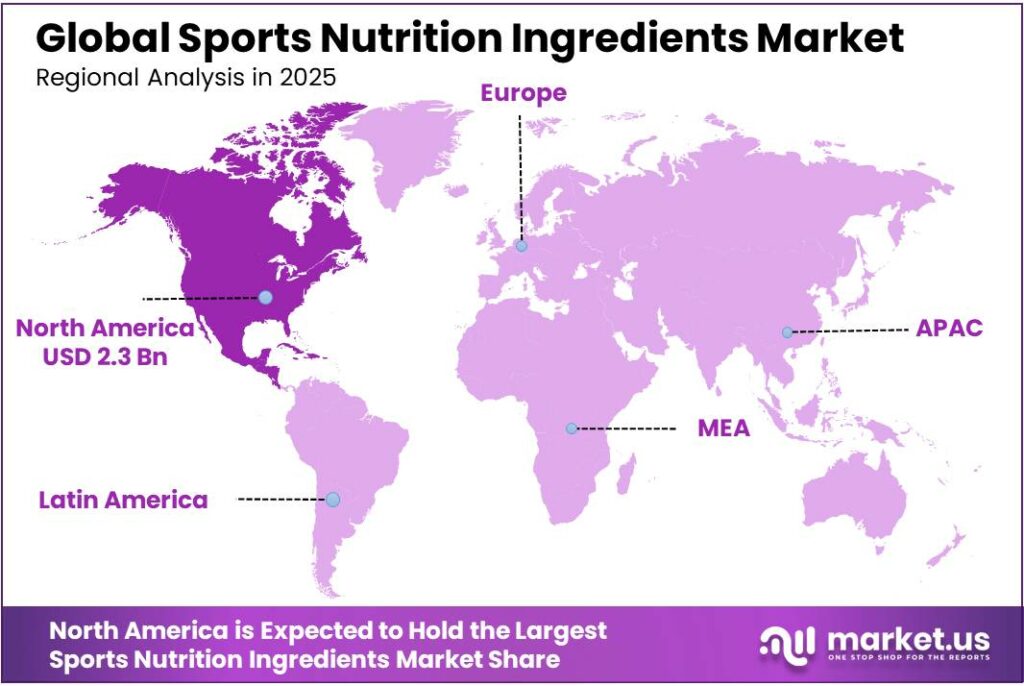
North America dominates the Sports Nutrition Ingredients market with 45.8% share, valued at USD 2.3 Bn, driven by strong fitness culture and high supplement consumption
North America continues to lead the Sports Nutrition Ingredients market, holding a dominant 45.8% share valued at USD 2.3 Bn, supported by a well-established fitness ecosystem and high consumer awareness around health and performance. The region benefits from a strong base of active consumers, including athletes, gym users, and lifestyle fitness adopters, which keeps demand for protein powders, amino acids, and functional ingredients consistently high.
The U.S. plays a major role, contributing a significant portion of regional demand, with estimates showing it accounts for over 80% of the regional revenue, reflecting its deep-rooted fitness culture and high spending on supplements.
Key Regions and Countries Insights
- North America
- US
- Canada
- Europe
- Germany
- France
- The UK
- Spain
- Italy
- Rest of Europe
- Asia Pacific
- China
- Japan
- South Korea
- India
- Australia
- Rest of APAC
- Latin America
- Brazil
- Mexico
- Rest of Latin America
- Middle East & Africa
- GCC
- South Africa
- Rest of MEA
Key Players Analysis
Abbott holds a strong position in nutrition with a wide global presence across 160+ countries. Its nutrition segment contributes nearly 30% of total company revenue, with sports and performance nutrition forming a growing part. The company invests heavily in R&D, allocating about 7% of annual revenue to innovation. Its product reach extends to 100+ formulations, including specialized nutrition products. Over 50% of its nutrition sales come from adult-focused offerings, supporting its strong role in performance and recovery-based nutrition markets.
PepsiCo plays a major role in the sports nutrition space through its diversified portfolio and large-scale operations. The company operates in 200+ countries, with its nutrition and functional product segment contributing around 20% of total revenue. It invests nearly USD 800 million annually in research and product development. Its sports and protein-based brands have seen growth of over 10% year-on-year in recent periods. With a strong retail and distribution network covering millions of outlets, PepsiCo ensures high product availability globally.
BA Sports Nutrition, LLC operates with a focused portfolio in performance-based supplements, targeting active consumers and athletes. The company has expanded its product lines across 10+ core supplement categories, including protein and pre-workout formulas. It maintains distribution in 20+ countries, supported by strong online sales channels contributing nearly 60% of total revenue. Around 70% of its customer base falls within the 18–35 age group, showing strong youth engagement. Continuous product launches, averaging 5–7 annually, help maintain steady growth and market visibility.
Top Key Players Outlook
- BA Sports Nutrition, LLC
- Abbott
- Quest Nutrition
- PepsiCo
- Mondelēz International, Inc.
- The Coca Cola Company
- FitLife Brands
- GNC Holdings, Inc.
- Nutra Holdings
- Nutrivend
Recent Industry Developments
In 2025, PepsiCo reported USD 93.9 billion in total net revenue in 2025, up 2.0% from USD 91.9 billion in 2024, showing that the company still has strong scale to support innovation and distribution in functional beverages.
Abbott reported USD 44.328 billion in total worldwide sales in 2025, while its Nutrition business generated USD 8.451 billion, showing how large its nutrition platform is within the company.









