


Report Overview
The telecom data mesh platform market is gaining strong momentum as operators shift toward decentralized data architectures to manage rising data complexity and real-time service demands. The market is valued at USD 2.56 billion in 2025 and is projected to reach USD 24.81 billion by 2035, expanding at a CAGR of 25.50%.
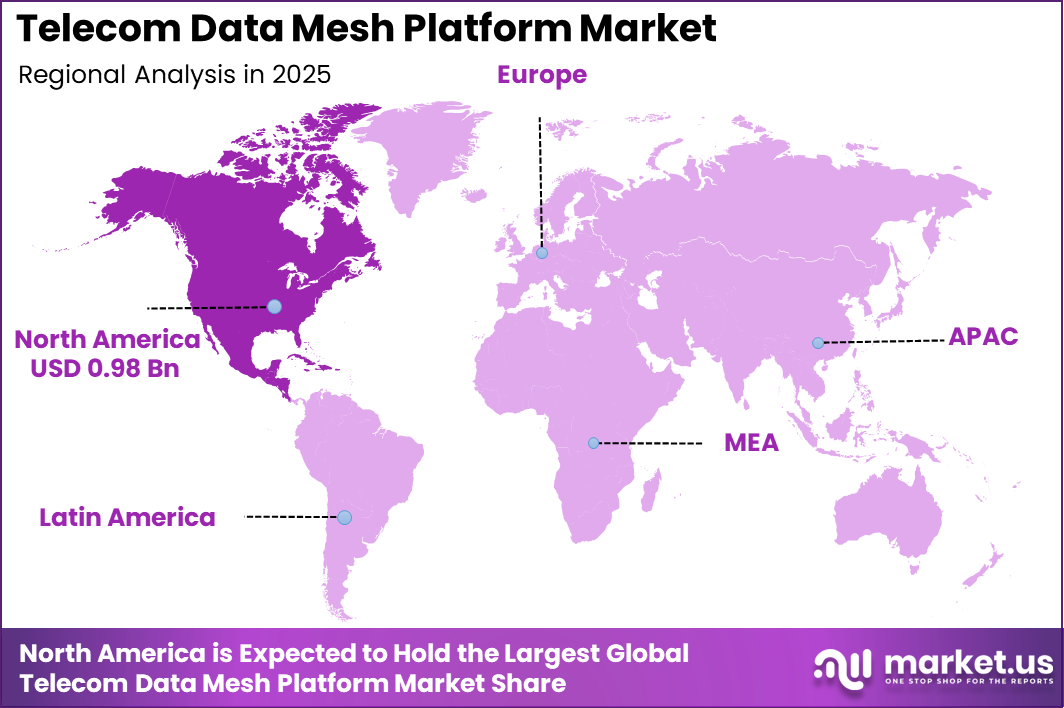
North America leads the global landscape with a 38.6% share, accounting for USD 0.98 billion in 2025. Within the region, the US holds a significant position with USD 0.84 billion and is expected to reach USD 5.89 billion by 2035, growing at a CAGR of 21.5%.
From a client perspective, this growth reflects a clear transition toward data-driven telecom ecosystems where agility, scalability, and domain-based data ownership are becoming critical. Telecom providers are increasingly adopting data mesh platforms to break down data silos and enable faster decision-making across network operations, customer management, and service innovation. The rising adoption of 5G, IoT, and edge computing is further increasing the volume and velocity of data, making traditional centralized systems less efficient.
Clients evaluating this market are likely to benefit from platforms that offer improved data accessibility, governance, and interoperability across distributed environments. As competition intensifies, investing in data mesh solutions is anticipated to support operational efficiency, enhance customer experience, and unlock new revenue streams through advanced analytics and real-time insights.
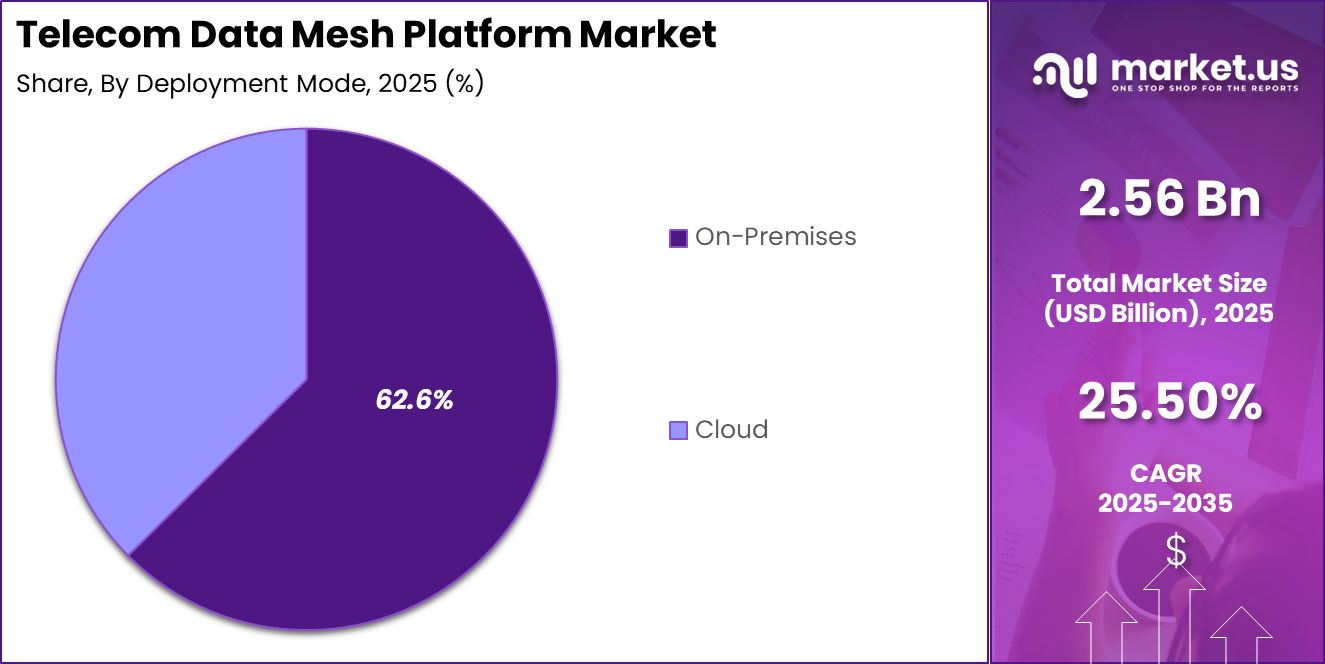
The future of telecom data ecosystems is expected to be shaped by massive growth in network traffic, connectivity, and real-time data processing needs. Global mobile data traffic has already reached around 200 exabytes per month in 2025 and is projected to exceed 480 exabytes per month by 2031, reflecting more than double the growth in data volumes. This rapid increase is closely linked to the expansion of 5G, where global subscriptions are expected to reach about 6.3 billion by 2030, covering a majority of mobile users worldwide. Data intensity per user is also rising sharply, with average smartphone data usage projected to grow from about 21 GB per month in 2023 to nearly 56 GB per month by 2029. In parallel, 5G networks are anticipated to carry nearly 80% of total mobile data traffic by 2030, highlighting a shift toward high-speed, data-heavy applications. Fixed wireless access connections are also expanding, expected to reach around 350 million globally by 2030, further increasing distributed data flows across telecom networks. These trends indicate a strong need for decentralized data frameworks, as telecom operators will handle increasingly complex and high-volume data environments. Platforms supporting distributed data ownership and real-time analytics are expected to play a critical role in managing future telecom infrastructure efficiently. The telecom data mesh platform market is expected to witness strong expansion as telecom operators continue shifting toward decentralized and domain-driven data architectures. The increasing rollout of 5G networks, edge computing, and IoT connectivity is generating large volumes of distributed data, which is encouraging operators to move away from centralized data systems. This transition is anticipated to improve data accessibility, enable faster analytics, and support real-time decision-making across network operations and customer services. Telecom providers are increasingly focusing on improving operational efficiency and service agility, which is driving the adoption of modern data platforms. Data mesh frameworks are expected to support better data governance, scalability, and interoperability, helping organizations manage complex data environments more effectively. The growing demand for personalized services, predictive maintenance, and network optimization is also contributing to market expansion. In addition, regulatory requirements around data privacy and localization are encouraging telecom companies to adopt structured and controlled data management approaches. As competition intensifies, investments in advanced data platforms are projected to remain a strategic priority, enabling telecom operators to enhance service delivery, reduce operational costs, and unlock new revenue opportunities through data-driven innovation. The telecom data mesh platform market is experiencing rapid growth due to the increasing need for efficient data management across complex telecom environments. Telecom operators are handling vast amounts of structured and unstructured data generated from network operations, customer interactions, and connected devices. This rising data volume is encouraging the adoption of decentralized data architectures that enable faster processing and improved data accessibility across different business units. Growth is further supported by the expansion of 5G infrastructure and the rising deployment of IoT devices, which are continuously generating real-time data streams. Telecom companies are focusing on improving network performance, reducing downtime, and enhancing customer experience, which is driving demand for advanced data platforms. Data mesh solutions are helping organizations shift from traditional centralized systems to more flexible and scalable frameworks, allowing domain-specific teams to manage and utilize data independently. Additionally, increasing investments in cloud technologies and data analytics are supporting market expansion by enabling seamless data integration and governance. As telecom networks become more data-intensive, the adoption of data mesh platforms is expected to accelerate, helping operators improve decision-making, optimize operations, and maintain competitiveness in a rapidly evolving digital landscape. The telecom data mesh platform market shows a clear dominance of software, accounting for 68.5% of the total share. This segment leads due to the growing need for advanced data integration, governance, and analytics tools that support decentralized data environments. Telecom operators are increasingly relying on software-driven platforms to manage large-scale, real-time data flows efficiently. On-premises deployment holds a 62.6% share, reflecting a strong preference for data control, security, and compliance. Telecom companies manage sensitive network and customer data, which encourages them to maintain infrastructure within their own environments. This approach is expected to remain relevant where regulatory requirements and data sovereignty concerns are great. Network management leads the application segment with 40.7%, driven by the need for real-time monitoring, optimization, and predictive maintenance of telecom networks. Data mesh platforms are increasingly supporting faster insights and improved operational efficiency in network operations. Large enterprises dominate with a 75.5% share, as they operate complex telecom infrastructures and require scalable data solutions. Telecom operators represent the leading end-user segment with 45.6%, supported by their central role in managing vast telecom data ecosystems and driving adoption of advanced data architectures. Software accounts for 68.5% of the telecom data mesh platform market, reflecting its central role in enabling decentralized data architectures across telecom environments. This dominance is due to the increasing need for advanced data integration, real-time analytics, and governance capabilities that allow telecom operators to manage large volumes of distributed data efficiently. Software platforms help in breaking data silos, improving accessibility, and enabling domain-driven data ownership, which is becoming critical for modern telecom operations. The software segment is expected to maintain its leading position as telecom companies continue investing in automation, artificial intelligence, and cloud-native technologies. These platforms support faster decision-making, network optimization, and improved customer experience by providing actionable insights from complex datasets. On the other hand, the services segment plays a supportive but important role, focusing on implementation, consulting, and maintenance. Telecom operators rely on service providers to ensure smooth deployment, integration with existing systems, and ongoing performance optimization. As adoption increases, demand for specialized services is anticipated to grow, particularly in areas such as system customization, training, and long-term support, helping organizations maximize the value of their data mesh investments. On-premises deployment holds a dominant 62.6% share in the telecom data mesh platform market, driven by the need for high data security, control, and regulatory compliance. Telecom operators manage highly sensitive network and customer data, which encourages them to deploy solutions within their own infrastructure. This approach allows better control over data governance, system performance, and integration with legacy systems that are still widely used across telecom networks. The on-premises model is expected to remain strong in environments where data sovereignty and strict compliance requirements are critical. Telecom companies prefer this deployment mode to ensure reliability and minimize risks related to external data access. However, the cloud segment is gaining steady traction as operators increasingly explore scalable and flexible data solutions. Cloud deployment supports faster implementation, cost efficiency, and easier access to advanced analytics and AI capabilities. It also enables telecom providers to manage growing data volumes without heavy upfront infrastructure investments. As hybrid strategies emerge, many telecom companies are expected to combine on-premises control with cloud scalability, creating a balanced approach to data management that supports both security and innovation in evolving telecom ecosystems. Large enterprises account for 75.5% of the telecom data mesh platform market, reflecting their strong capability to invest in advanced data infrastructure and manage complex data ecosystems. This dominance is due to the large volume of data generated across extensive telecom operations, including network management, customer interactions, and service delivery. These organizations require scalable and high-performance platforms to ensure efficient data processing, governance, and real-time analytics across multiple business units. Large telecom operators are expected to continue leading adoption as they focus on improving operational efficiency, enhancing customer experience, and supporting next-generation technologies such as 5G and IoT. Their ability to integrate data mesh platforms with existing systems and leverage advanced analytics provides a competitive advantage in managing dynamic telecom environments. On the other hand, small and medium enterprises are gradually adopting these platforms as awareness and accessibility increase. These organizations are expected to focus on cost-effective and flexible solutions, often leveraging cloud-based models to manage data more efficiently. As digital transformation expands across the telecom sector, adoption among smaller enterprises is anticipated to grow steadily, supported by simplified deployment options and evolving service offerings. Telecom operators account for 45.6% of the telecom data mesh platform market, making them the leading end-user segment. This dominance is driven by their direct involvement in managing large-scale network infrastructure and handling massive volumes of real-time data. Data mesh platforms help telecom operators improve network performance, enable faster decision-making, and support advanced use cases such as predictive maintenance and service optimization. Internet service providers are also adopting data mesh solutions to manage increasing data traffic and improve service reliability. These providers rely on efficient data management to ensure consistent connectivity and enhance customer satisfaction. Managed service providers are gaining traction as they support telecom companies in implementing, managing, and optimizing data platforms. Their role is becoming more important as telecom operators seek external expertise to handle complex data environments. The other segment includes enterprises and niche telecom players that are gradually adopting data mesh platforms to improve operational efficiency and data accessibility. As data-driven strategies expand across the telecom industry, all end-user segments are expected to increase their investment in decentralized data solutions. North America accounts for 38.6% of the telecom data mesh platform market, with a regional value of 0.98 billion USD in 2025, reflecting its strong leadership in digital infrastructure and advanced data technologies. This dominance is driven by the early adoption of decentralized data architectures and the presence of large telecom operators that continuously invest in modernizing their data ecosystems. The region benefits from high data consumption, widespread 5G deployment, and a mature cloud and analytics environment, all of which support the adoption of data mesh platforms. The growth in North America is further supported by increasing demand for real-time data processing and improved network performance. Telecom companies in the region are focusing on enhancing customer experience, optimizing operations, and reducing latency through advanced data solutions. Strong regulatory frameworks around data security and privacy also encourage structured data management approaches, further driving adoption. Additionally, the presence of advanced IT infrastructure and a skilled workforce enables faster implementation of complex data platforms. As telecom networks continue to evolve with increasing data volumes and connected devices, North America is expected to maintain its leading position, supported by continuous investments in innovation and data-driven strategies. Data mesh platforms provide the flexibility required to handle distributed data environments efficiently. There is also a significant opportunity in integrating artificial intelligence and machine learning capabilities, which can enhance predictive analytics and automate network operations. Emerging markets present additional potential, as telecom infrastructure continues to expand and data consumption rises. Furthermore, the increasing need for personalized services and real-time insights is encouraging telecom companies to invest in advanced data platforms. As organizations seek to improve scalability and interoperability, the demand for data mesh solutions is expected to grow steadily across the telecom sector. A key trend shaping the telecom data mesh platform market is the shift toward domain-oriented data ownership, where different business units manage their own data independently. This approach improves agility and reduces dependency on centralized teams. Another important trend is the growing adoption of cloud-native and hybrid deployment models, allowing telecom companies to balance scalability with data control. The integration of artificial intelligence and automation is also becoming more common, enabling faster data processing and improved operational efficiency. Real-time analytics is gaining traction as telecom operators focus on delivering instant insights for network optimization and customer engagement. Additionally, there is a rising emphasis on data governance and compliance, driven by increasing regulatory requirements. These trends are collectively transforming how telecom companies manage and utilize data, supporting the long-term evolution of decentralized data ecosystems. The competitive landscape of the telecom data mesh platform market is shaped by large telecom operators and technology providers investing heavily in network modernization and data infrastructure. In the US alone, total wireless connections reached around 579 million, with nearly half already operating on 5G networks, highlighting the scale at which operators compete to manage and monetize data efficiently. This intense competition is pushing companies to adopt advanced data architectures that support real-time processing and distributed data ownership. Infrastructure investment is another key competitive factor. Major telecom players are allocating substantial capital to strengthen their data capabilities, with one leading operator announcing plans to invest over 250 billion USD in network and data infrastructure over five years to support AI, cloud, and connectivity growth. In addition, North America recorded over 314 million 5G connections, covering about 83% of the population, reflecting strong competitive pressure to expand coverage and enhance data handling capacity. Technology differentiation is also critical, as companies compete on speed, latency, and data processing capabilities. With 5G speeds reaching up to 20 Gbps in ideal conditions and significantly lower latency, telecom providers are focusing on high-performance data systems to stay competitive. This environment is driving continuous innovation and strategic partnerships across the telecom ecosystem. 0评论2026-09-15 0评论2026-09-15 0评论2026-09-15 0评论2026-09-15 0评论2026-09-15 0评论2026-09-12 0评论2026-09-12 0评论2026-09-12 0评论2026-09-12 0评论2026-09-12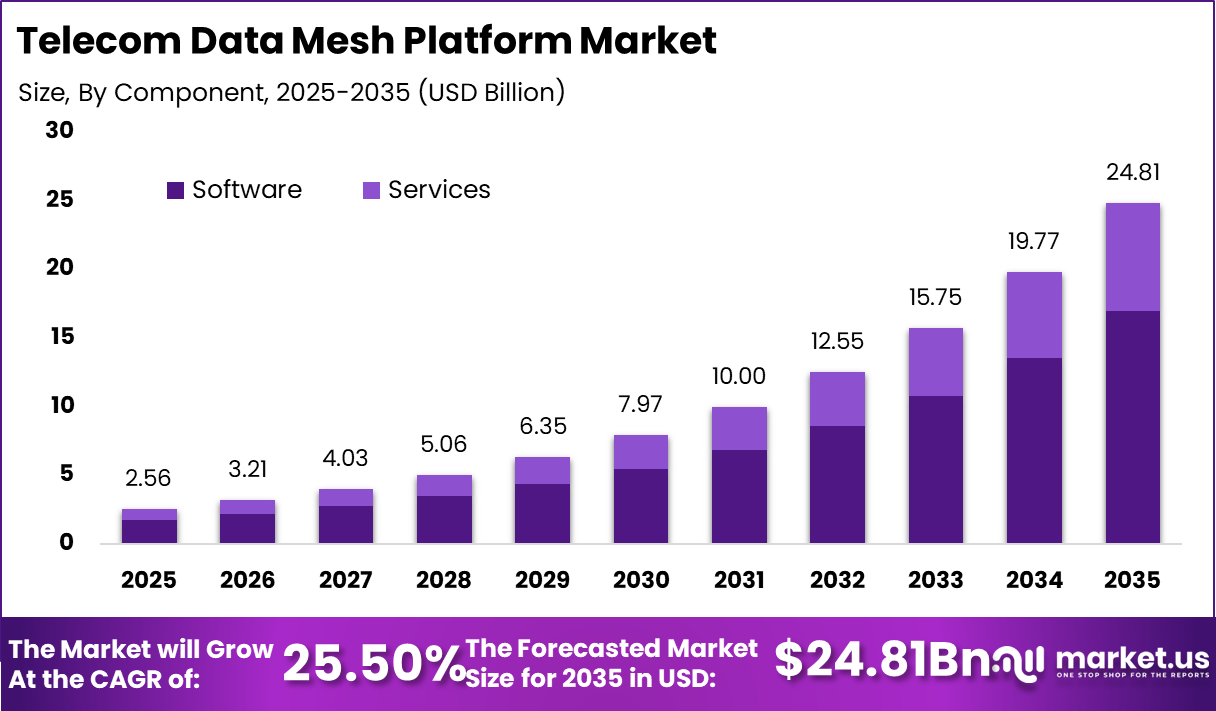
Future Predictions
Market Outlook
Growth Analysis
Key Market Segments
Research-Based Segments
By Component
By Deployment Mode
By Application
By Organization Size
By End-User
By Component Analysis
By Deployment Mode Analysis
By Organization Size Analysis
By End-User Analysis
Regional Analysis
Trending Factors
Competitive Analysis
Top Key Players in the Market
Recent Developments









