


Report Overview
The Global League Management Software Market size is expected to be worth around USD 3.96 billion by 2035, from USD 1.24 billion in 2025, growing at a CAGR of 12.3% during the forecast period from 2025 to 2035. North America held a dominant market position, capturing more than a39.8% share, holding USD 0.49 billion in revenue.
The League Management Software market refers to digital platforms designed to manage and automate the operations of sports leagues, clubs, and tournaments. These solutions support functions such as scheduling, player registration, communication, performance tracking, and financial management within a centralized system. League management software enables administrators to streamline operations, reduce manual coordination, and improve overall efficiency in managing teams and competitions.
Top driving factors for this market are closely linked to the growing digitization of sports ecosystems and the rising participation in organized sports activities. The increasing number of amateur and youth leagues has created a strong need for structured management tools that can handle scheduling, communication, and data tracking efficiently. Additionally, the shift toward cloud based platforms has improved accessibility and scalability, encouraging adoption across small and mid sized organizations.
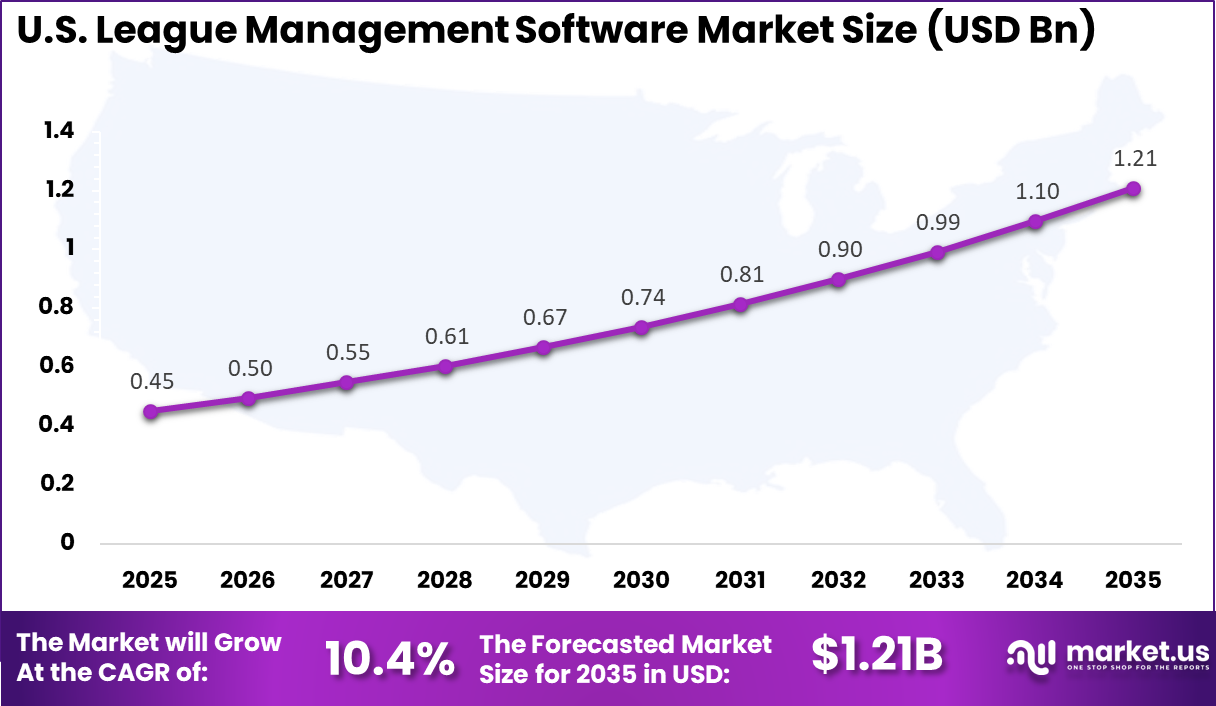
In 2025, the software segment held a dominant position in the league management software market, accounting for 63.4% share. This leadership reflects the growing use of digital platforms to manage scheduling, registrations, communications, and performance tracking in a more organized manner. Sports organizations are increasingly shifting from manual systems to software-based solutions to improve operational control and reduce administrative complexity. The rising need for centralized data access has further supported the strength of this segment. The software segment is also benefiting from demand for platforms that can support multiple functions within a single system. These solutions help users manage teams, fixtures, payments, reporting, and participant records through one interface. Such capabilities improve efficiency and create a more consistent management process across leagues and tournaments. For Instance, in October 2025, LeagueApps launched Android and iOS app upgrades with Admin Mode for on-the-go oversight. Admins can now handle schedules, check-ins, and chats right from their phones, including a new week view calendar to spot conflicts early. This mobile push helps software users manage leagues without being tied to a desk. In 2025, leagues and associations accounted for a leading 41.5% share in the league management software market. This dominance is supported by the growing need among organized sports bodies to manage competitions, registrations, and communication through structured digital systems. Leagues and associations often handle large participant bases and multiple events, making software platforms highly valuable for daily operations. The use of these tools helps improve coordination, visibility, and administrative accuracy. The segment is also gaining support from the increasing complexity of league operations and stakeholder expectations. Associations are using management software to improve scheduling efficiency, maintain accurate records, and deliver better experiences for teams and participants. Real-time updates and automated workflows are helping reduce delays and human error. For instance, in March 2026, SportsEngine added printable game sheets for soccer admins in Season Management. Leagues can now pull rosters, scores, and discipline notes into PDFs straight from the dashboard, simplifying game-day prep for multi-team associations. It saves hours that used to go into manual printouts. In 2025, professional sports held a dominant 44.7% share of the league management software market. This leading position reflects the sector’s need for efficient systems that can manage high-value competitions, team logistics, and event coordination. Professional sports organizations require reliable digital platforms to support scheduling, compliance, player records, and communication across multiple stakeholders. The pressure to maintain operational efficiency and service quality is driving software adoption in this segment. Professional sports users are also investing in these platforms to improve decision-making and streamline administrative tasks. League management software helps reduce manual workload while supporting better visibility into match planning, team activities, and tournament operations. As professional competitions become more structured and commercially important, the need for dependable management tools continues to grow. This trend is reinforcing the segment’s strong market position. For Instance, in March 2026, TeamSnap expanded community investments for pro-adjacent youth programs that feed into professional pipelines. Their platform now supports bigger events with pro-style analytics, helping end-users like semi-pro leagues track performance and engage fans just like the big leagues do. In 2025, North America held a dominant market position, capturing 39.8% share in the league management software market. This regional leadership is supported by the strong presence of organized sports leagues, professional associations, and technology-driven sports operations. Sports bodies across the region are increasingly adopting software platforms to improve efficiency, participant engagement, and event coordination. For instance, in February 2026, SportsEngine, from NBC Sports Next, enhanced its enterprise compliance suite with automated background checks, becoming the go-to for large U.S. organizations managing athlete safety. This Minnesota innovation reinforces North America’s 60% global market hold in sports league software. The United States market was valued at USD 0.45 billion in 2025 and is projected to grow at a CAGR of 10.4%. This growth is being supported by continued investments in sports administration tools and the modernization of league operations. Professional and amateur sports organizations are seeking solutions that improve scheduling, communication, and data management. For instance, in February 2026, LeagueApps enhanced its dominance in the U.S. league management software market by launching AI-powered scheduling tools that cut admin time by 40%. The New York-based platform now serves over 5,000 youth leagues across the U.S., solidifying its leadership through seamless mobile integration and real-time analytics for organizers. A key emerging trend in the league management software market is the transition toward cloud-based and mobile-first platforms. Organizations are increasingly adopting solutions that allow real-time access to schedules, registrations, and communication through web and mobile applications. This shift supports decentralized operations, where administrators, coaches, and participants can manage activities without relying on physical systems. The move toward cloud environments also enables automatic updates, scalability, and easier data sharing across stakeholders. Another important aspect of this trend is the focus on user experience and self-service capabilities. Platforms now offer features such as online registration, digital payments, automated scheduling, and instant notifications. These capabilities reduce manual workload and improve participant engagement. As user expectations evolve, league management software is becoming more intuitive, interactive, and aligned with consumer-grade digital experiences. Cloud technology is a major driver, supporting 75% of installations due to its cost efficiency and scalability. Organizations avoid heavy infrastructure investments while still managing large events effectively. Cloud access also allows teams and managers to coordinate remotely, making league operations more flexible and responsive. Data analytics is integrated into 55% of league management tools, offering deep insights into player performance and fan behavior. These insights help leagues refine strategies, improve team selection, and increase merchandise sales. This data driven approach strengthens competitiveness and supports smarter decision making across all levels. North America Europe Asia Pacific Latin America Middle East & Africa Sports organizations are increasingly shifting from manual processes to digital platforms to manage leagues more efficiently. Software helps streamline scheduling, registrations, communication, and reporting in one place. This improves coordination and reduces errors, allowing organizers to focus more on improving the overall experience for players, teams, and fans. The growing need for real time updates and better decision making is also supporting this shift. Digital systems provide quick access to information, helping organizers respond faster to changes. As leagues become more structured and competitive, the demand for reliable management tools continues to increase across different levels of sports. For instance, in October 2025, SportsEngine rolled out fresh tools last fall to make team chats and game tracking smoother. Coaches now edit messages in full view and add custom fields for quick updates. This helps leagues ditch notebooks for apps that sync scores on the spot. Real-time stats keep everyone on the same page during busy seasons. Many organizations hesitate to adopt league management software due to concerns about data privacy and security. These platforms handle sensitive information related to players, payments, and operations. Fear of data misuse or breaches creates caution, especially among smaller leagues that may not have strong technical safeguards in place. There is also growing pressure to follow strict data protection rules, which adds complexity to adoption. Organizations must ensure compliance while managing their systems, which can be challenging. This creates hesitation in decision making and slows down the transition toward fully digital league management solutions. For instance, in March 2025, LeagueApps updated its rules on handling player details to give users more say over shared info. Folks can now opt out of certain data uses and check what gets passed along. This comes as teams worry about family info in group chats staying safe. The focus is on clear consent before any sharing. The rise of amateur and community sports is creating strong opportunities for league management software. Local clubs, schools, and small associations are organizing more events and competitions. They need simple and effective tools to manage registrations, schedules, and communication, which increases demand for easy to use software solutions. These groups are also looking to improve participant experience and engagement. Digital platforms help them stay organized and communicate better with players and parents. As participation continues to grow, software providers have a chance to offer tailored solutions that meet the needs of smaller and developing sports communities. For instance, in September 2025, Playpass added quick setup for community tournaments with mobile check-ins. Hobby leagues in parks use it to handle sign-ups and live updates for families. It fits right into casual play, helping organizers focus on fun over paperwork. Growth in local events keeps demand high for these basics. Implementing league management software can be challenging, especially for organizations with limited technical knowledge. Setting up the system, migrating data, and training users requires time and effort. This can slow down adoption and create resistance among staff who are used to traditional methods of managing leagues. Another difficulty is integrating new software with existing processes and tools. Organizations may face issues in aligning workflows, which can affect daily operations. Without proper support and training, it becomes harder to use the system effectively, limiting the full benefits of digital league management solutions. For instance, in October 2025, SportsEngine’s new stat tools brought configurable views and permissions, but linking them across devices and roles creates setup headaches. Staff need time to learn mobile tweaks and privacy toggles, slowing the shift. Many leagues weigh this hassle against sticking with simple paper methods. In the League Management Software market, SportsEngine, LeagueApps, and TeamSnap are among the leading players due to their broad platform capabilities. These companies offer scheduling, registration, communication, and payment tools that support smooth league operations. LeagueRepublic and GameDay also hold a strong place by helping sports organizations manage fixtures, results, and participant engagement more effectively. Active Network, Sports Signup, and Blue Sombrero contribute strongly to the market with solutions focused on registration management and administrative efficiency. Their platforms help clubs and leagues reduce manual work while improving the user experience for players, parents, and organizers. Team Cowboy, Upper Hand, and Stack Sports also support market growth through tools designed for team coordination, facility booking, and operational control. Playpass, GotSport, and LeagueLineup are recognized for serving leagues that need flexible management systems and digital event support. LeagueAthletics continues to be relevant with features that help local sports organizations manage websites, payments, and team communication from one platform. Other key players are also strengthening the market by offering niche features, better mobile access, and more scalable solutions for amateur and professional sports leagues.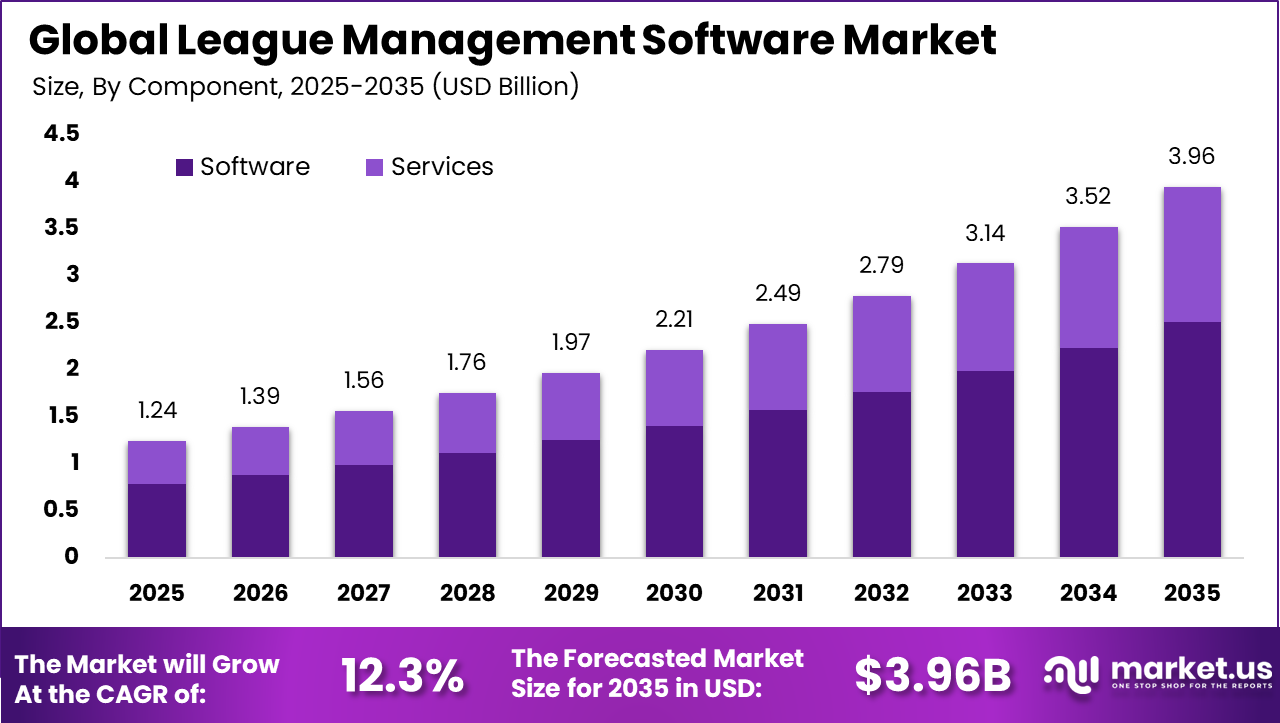
Key Takeaway
By Component Analysis
By Application Analysis
By End-User Analysis
By Region Analysis
Emerging Trend Analysis
Growth Factors
Key Market Segments
By Component
By Application
By End-User
Key Regions and Countries
Drivers
Digital Transformation in Sports
Restraint
Data Privacy Concerns
Opportunities
Expansion of Amateur and Community Sports
Challenges
High Implementation Complexity
Key Players Analysis
Top Key Players in the Market
Recent Developments









