


Report Overview
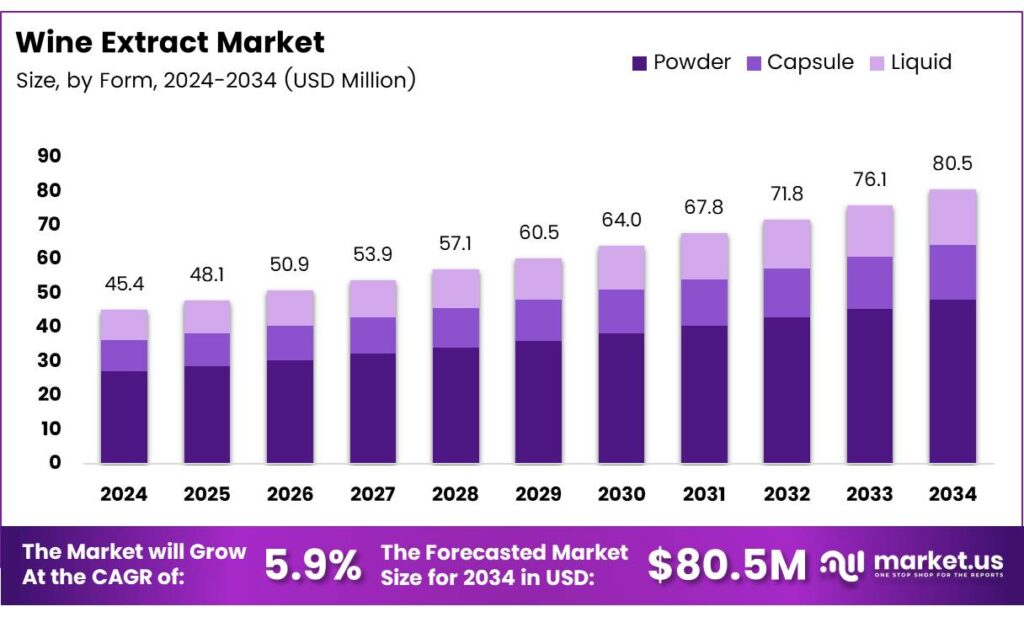
The Global Wine Extract Market size is expected to be worth around USD 80.5 million by 2034, from USD 45.4 million in 2024, growing at a CAGR of 5.9% during the forecast period from 2025 to 2034.
The Wine Extract Market covers the recovery and concentration of bioactive compounds from grapes and winery by-products for commercial use. Broadly, wine extracts include polyphenols, flavonoids, tannins, anthocyanins, and resveratrol applied across nutraceuticals, functional foods, cosmetics, and pharmaceuticals. Consequently, this market connects agriculture, food processing, and bio-based ingredient manufacturing.
Wine extract represents both an ingredient and a sustainability solution. Producers increasingly valorize grape skins, seeds, pomace, and lees generated during winemaking. Therefore, wine extract manufacturing reduces waste while improving margins. This circular-economy alignment strengthens supplier acceptance among food, wellness, and personal care formulators seeking natural antioxidants.
- Statistical data highlights the strength of the raw-material base supporting wine extract growth. Raw grapes contain 81% water, nearly 18% carbohydrates, and about 1% protein, with negligible fat content. According to FAO, 71% of global grape production is used for winemaking, while 27% is consumed fresh and 2% is processed into raisins.
Winemaking generates large volumes of extract-ready by-products that support industrial scalability. Grape pomace represents around 15–20% of winemaking residues, followed by yeast lees at 3.5–8.5%, grape stalks at 2.5–7.5%, and grape seeds at 3–6%, forming the core sourcing base for wine extract production.
Growth prospects remain stable because demand for clean-label and plant-derived ingredients continues expanding globally. Wine extracts support antioxidant claims, cardiovascular wellness positioning, and anti-aging formulations. Moreover, functional beverage and dietary supplement brands increasingly prefer grape-derived polyphenols due to traceability, familiarity, and regulatory acceptance across mature and emerging markets.
Key Takeaways
- The Global Wine Extract Market is projected to grow from USD 45.4 million in 2024 to USD 80.5 million by 2034, registering a 5.9% CAGR during 2025–2034.
- Powder is the leading form segment, accounting for a dominant share of 49.2% in 2024 due to its stability and formulation flexibility.
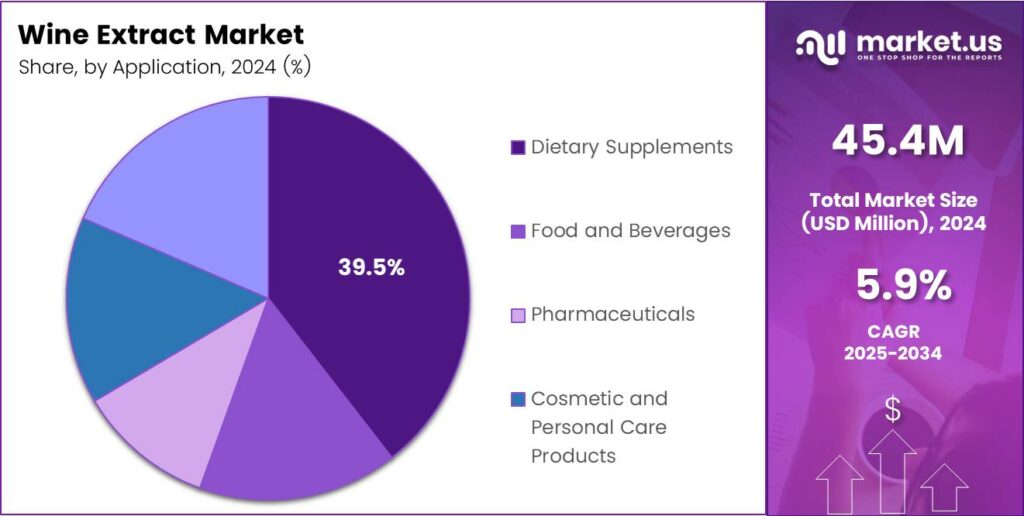
- Dietary Supplements represent the largest application segment with a market share of 39.5% in 2024, driven by demand for natural antioxidants.
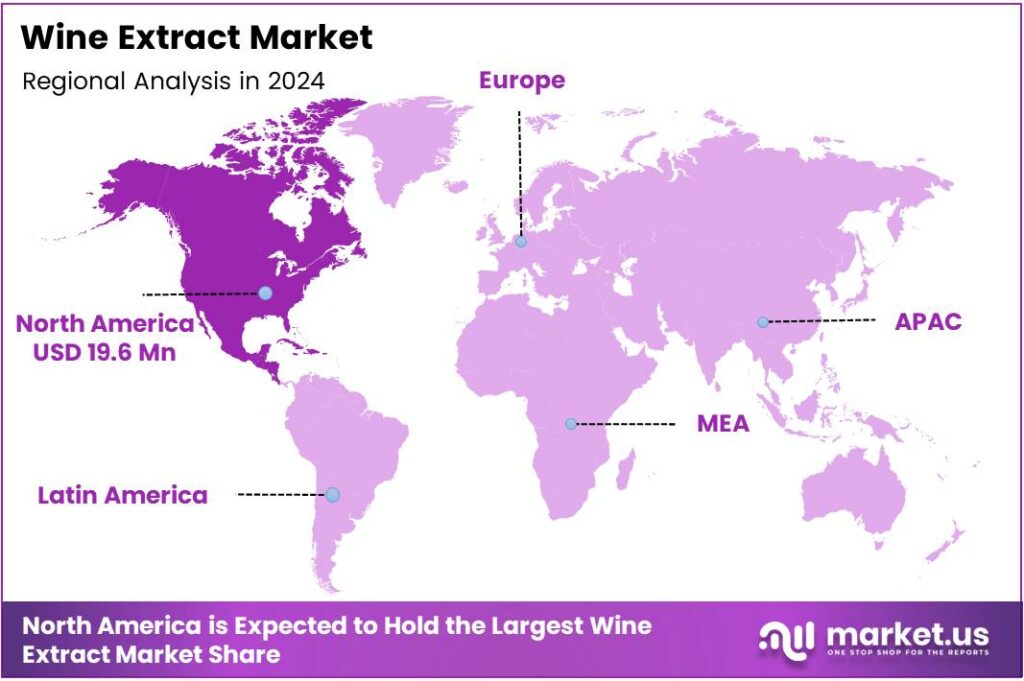
- North America dominates the global market, holding a share of 43.2% and reaching a value of USD 19.6 million in 2024.
By Form Analysis
Powder dominates with 49.2% due to its stability, easy handling, and wide compatibility across supplement and food formulations.
In 2024, Powder held a dominant market position in the By Form Analysis segment of the Wine Extract Market, with a 49.2% share. Primarily, powder wine extracts are preferred for their longer shelf life and transport efficiency. Moreover, manufacturers value precise dosing and consistent polyphenol concentration across nutraceutical and functional food applications.
Capsule wine extracts continue to gain relevance as demand rises for convenient, pre-measured supplement formats. Gradually, capsules support controlled intake and improved consumer compliance, especially in daily wellness routines. Additionally, this form reduces formulation complexity for brands targeting premium antioxidant and resveratrol supplement segments.
Liquid wine extracts remain important due to faster absorption and formulation flexibility. Consequently, they are widely used in beverages, tinctures, and cosmetic bases. Furthermore, liquids enable rapid blending with other bioactive ingredients, supporting innovation in functional drinks and topical personal care products.
By Application Analysis
Dietary Supplements dominate with 39.5% due to strong demand for natural antioxidants supporting heart, skin, and metabolic health.
In 2024, Dietary Supplements held a dominant market position in the By Application Analysis segment of the Wine Extract Market, with a 39.5% share. Increasingly, consumers seek plant-based antioxidants for daily wellness. Therefore, wine extracts rich in polyphenols and resveratrol align well with preventive health and clean-label supplement trends.
Food and beverage applications are expanding steadily as manufacturers enrich functional drinks, confectionery, and fortified foods. Notably, wine extracts offer natural color, flavor depth, and antioxidant benefits. As a result, they support product differentiation while meeting rising demand for naturally sourced functional ingredients.
Pharmaceutical usage focuses on wine extract bioactives for cardiovascular and anti-inflammatory research. Meanwhile, Cosmetic and Personal Care Products adopt these extracts for anti-aging and skin-protective formulations. Lastly, Other applications include animal nutrition and research uses, supporting diversified but smaller-volume demand across niche industries.
Key Market Segments
By Form
- Powder
- Capsule
- Liquid
By Application
- Dietary Supplements
- Food and Beverages
- Pharmaceuticals
- Cosmetic and Personal Care Products
- Others
Emerging Trends
Clean-Label Products and Sustainable Sourcing Shape Market Trends
One major trend in the wine extract market is the strong shift toward clean-label products. Food, supplement, and cosmetic brands are clearly listing natural ingredients to gain consumer trust. Wine extracts fit well into this trend due to their plant-based origin. Wine extracts are being formulated into customized blends to meet these preferences.
- The International Organisation of Vine and Wine (OIV), global wine production reached 237 million hectoliters, creating a steady supply of grape skins and seeds used for extracts. These by-products are now seen as valuable functional ingredients rather than waste.
Sustainability is another important factor shaping the market. Producers increasingly use grape skins, seeds, and pomace left after winemaking. This reduces waste and improves resource efficiency, which is attractive to environmentally conscious buyers. Personalized nutrition is also influencing demand. Consumers now seek supplements tailored to specific health needs, such as heart support or skin health.
Drivers
Rising Demand for Natural Antioxidants Drives Wine Extract Market Growth
The wine extract market is mainly driven by the rising demand for natural and plant-based ingredients. Wine extracts are rich in polyphenols and antioxidants, which are widely linked with heart health and anti-aging benefits. As consumers prefer clean-label and natural products, manufacturers are increasing the use of wine extracts in supplements and functional foods.
- People are spending more on dietary supplements to manage lifestyle-related health issues. Wine extract is often used in capsules, powders, and functional drinks because it fits well with daily wellness routines. The International Organisation of Vine and Wine (OIV) reported climate-related production fluctuations of over 10% year-to-year in major wine-producing regions. Such variability directly affects extract yield and consistency.
The food and beverage industry also plays an important role. Wine extracts are used as natural colorants, flavor enhancers, and preservatives. Food producers prefer them over synthetic additives to meet stricter labeling rules and consumer expectations. The cosmetics and personal care industry supports market growth. Wine extracts are valued for skin-protecting and anti-aging properties.
Restraints
High Production Costs and Quality Variations Restrain Market Expansion
One major restraint in the wine extract market is the high cost of production. Extracting active compounds from grapes and wine by-products requires advanced processing technologies. These processes increase manufacturing costs, which can limit adoption, especially among small producers.
- The International Food Information Council (IFIC) states that over 60% of consumers actively look for antioxidant benefits when choosing functional beverages. Wine extract aligns well with this demand due to its natural origin and scientific backing.
Wine extract depends heavily on grape harvests and wine production volumes. Seasonal variations, climate changes, and crop diseases can affect supply consistency. This creates pricing instability for manufacturers. Quality variation is also a key concern. The composition of wine extract can differ based on grape variety, region, and extraction method.
Growth Factors
Expansion in Nutraceutical and Functional Food Applications Creates Opportunities
The wine extract market has strong growth opportunities in the nutraceutical sector. Increasing interest in immunity, heart health, and anti-aging supplements supports wider use of wine-derived antioxidants. Manufacturers can develop targeted products using standardized extracts.
Functional foods and beverages offer another major opportunity. Wine extracts can be added to juices, teas, dairy alternatives, and energy drinks to enhance nutritional value. This aligns well with the growing demand for health-focused everyday foods.
Sustainable sourcing also creates new potential. Wine extracts are often produced from winery by-products such as grape pomace and seeds. Using these materials supports circular economy goals and attracts sustainability-focused brands and consumers.
Regional Analysis
North America Dominates the Wine Extract Market with a Market Share of 43.2%, Valued at USD 19.6 million
North America held the leading position in the Wine Extract Market due to strong demand for natural antioxidants in dietary supplements, functional foods, and nutraceutical formulations. In 2024, the region accounted for 43.2% of global consumption, reaching a value of USD 19.6 million. High consumer awareness of polyphenols, resveratrol, and clean-label ingredients continues to support steady market expansion.
Europe represents a mature and well-established market, supported by extensive wine production and efficient utilization of winery by-products. The region benefits from strong sustainability regulations that promote circular use of grape pomace and lees for extract production. Rising demand from cosmetics, functional beverages, and pharmaceutical applications continues to sustain stable growth.
Asia Pacific is emerging as a high-growth region driven by expanding nutraceutical, herbal supplement, and functional food industries. Increasing health awareness among urban populations has accelerated demand for natural antioxidants and plant-derived extracts. Growing investments in food processing infrastructure and rising adoption of Western dietary supplements support market development.
The Middle East and Africa region shows gradual growth, supported by increasing interest in natural health products and functional nutrition. Demand is mainly driven by dietary supplements and cosmetic applications rather than food and beverages. Limited local wine production restricts raw material availability, but imports of standardized extracts support market continuity. Awareness of natural polyphenols is slowly improving across key urban markets.
Key Regions and Countries
North America
- US
- Canada
Europe
- Germany
- France
- The UK
- Spain
- Italy
- Rest of Europe
Asia Pacific
- China
- Japan
- South Korea
- India
- Australia
- Rest of APAC
Latin America
- Brazil
- Mexico
- Rest of Latin America
Middle East & Africa
- GCC
- South Africa
- Rest of MEA
Key Players Analysis
Hangzhou Greensky Biological Tech. Co., Ltd. is typically positioned as a supply-oriented manufacturer that can serve nutraceutical and functional-ingredient buyers looking for standardized grape and wine-derived extracts. In 2024, its advantage is operational scale and the ability to support OEM/private-label demand with consistent batches, documentation, and export-ready packing.
Diana Naturals Inc. stands out for working closely with food and beverage formulation needs, where taste, color, and stability matter as much as active content. During 2024, the company’s perceived strength is application support—helping brands translate wine-extract benefits into clean-label beverages, dairy, and wellness foods without compromising sensory profiles.
Xi’an Chinwon Biotech Inc. fits buyers seeking a broad botanical portfolio, where wine extract is purchased alongside other plant actives for capsules, tablets, and blends. In 2024, the commercial edge is flexibility in specifications and packaging formats, appealing to supplement brands that frequently adjust dosages, claims positioning, and finished-product SKUs.
GRAP’SUD is often viewed as a grape-value-chain specialist linked to regional sourcing and by-product utilization, which aligns well with “upcycled” and sustainability narratives. In 2024, this positioning helps meet rising customer expectations for traceability, origin storytelling, and responsible sourcing—especially for European buyers and premium wellness brands.
Top Key Players in the Market
- Hangzhou Greensky Biological Tech. Co., Ltd.
- Diana Naturals Inc.
- Xi’an Chinwon Biotech Inc.
- GRAP’SUD
- Ethical Naturals, Inc.
- VDF FutureCeuticals, Inc.
Recent Developments
- In 2024, Hangzhou Greensky Biological Tech. Co., Ltd. specializes in natural plant extracts. While direct mentions of wine or grape extracts in recent updates are limited, they are active in the broader botanical extract sector, which could overlap with wine-related polyphenols or resveratrol sources.
- In 2024, Diana Naturals, now under Symrise’s Diana Food brand, focuses on natural ingredients from fruits, vegetables, and wines. They offer wine ingredients, including red and white wine concentrates and powders, with various taste profiles suitable for food and beverage applications. These products emphasize clean-label declarations and ease of use in wet or dry formats.









