


Report Overview
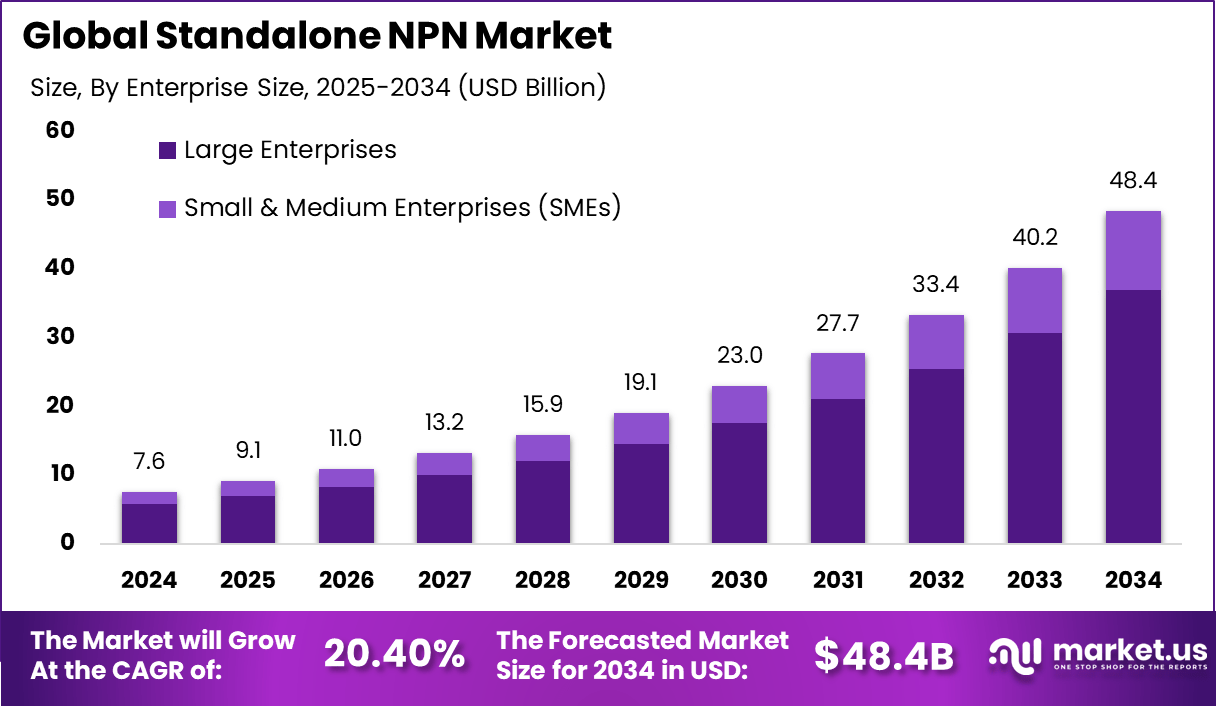
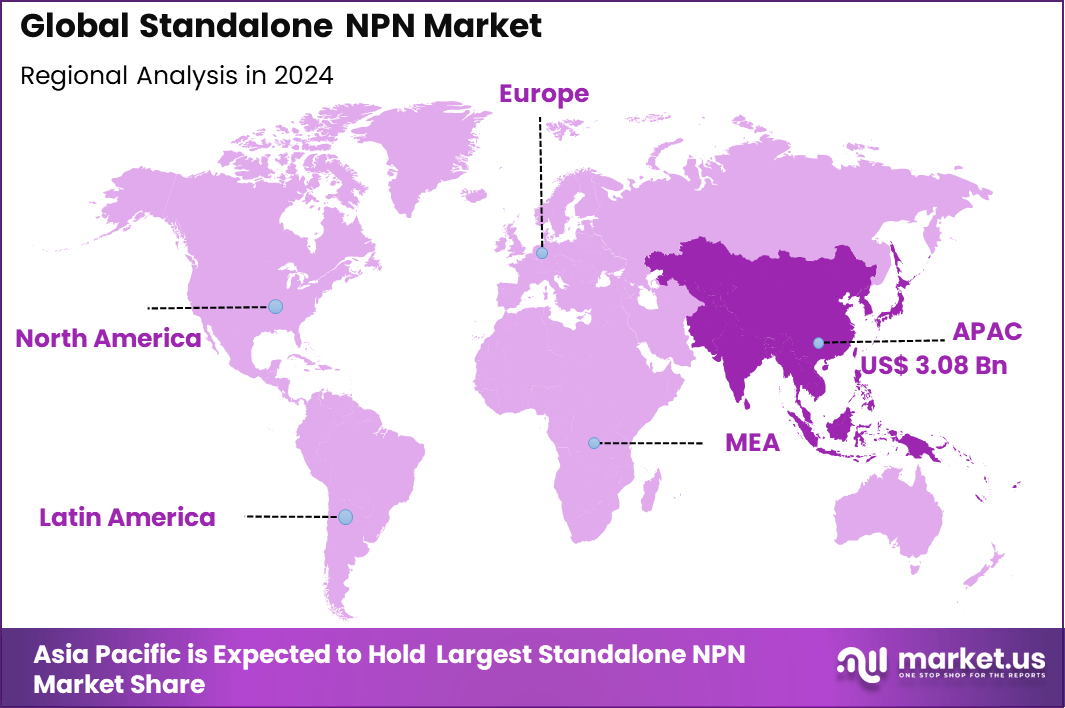
The Global Standalone NPN Market generated USD 7.6 billion in 2024 and is predicted to register growth from USD 9.1 billion in 2025 to about USD 48.4 billion by 2034, recording a CAGR of 20.40% throughout the forecast span. In 2024, Asia Pacific held a dominan market position, capturing more than a 40.8% share, holding USD 3.08 Billion revenue.
The standalone NPN market refers to discrete NPN (Negative-Positive-Negative) bipolar junction transistors that are manufactured and sold as individual components rather than as part of integrated circuits. These devices serve as fundamental switching and amplification elements in a wide range of electronic applications. Their role in signal processing, power regulation, and control functions has sustained steady demand across consumer electronics, industrial automation, automotive electronics, and telecommunications.
Strong demand for electronic products across industries is a primary driver of the standalone NPN market. Consumer electronics such as audio amplifiers, power supplies, and control circuits rely on discrete transistors for core functions. Industrial automation and robotics use NPN components where robust switching and signal control are needed under varying environmental conditions. Growth in connected devices and IoT deployments also contributes to transistor demand, as more sensing and control circuits are deployed at the network edge.
Advances in semiconductor fabrication and packaging technologies have strengthened standalone NPN device performance while reducing cost. Improved wafer processing and impurity control have enhanced transistor gain, response speed, and thermal stability. Packaging developments, including surface mount and compact form factors, facilitate integration into modern circuit designs with space constraints. These innovations enable NPN transistors to remain competitive within evolving electronics design practices.
Top Market Takeaways
- By spectrum type, licensed spectrum took 52.7% of the standalone NPN market, as it offers secure and reliable connections for private networks.
- By component, radio access network held 41.2% share, providing the core wireless infrastructure for factory coverage.
- By enterprise size, large enterprises captured 76.3%, deploying NPNs for big-scale automation and IoT needs.
- By end-user, manufacturing led with 43.8%, using standalone NPNs for real-time robot control and smart factories.
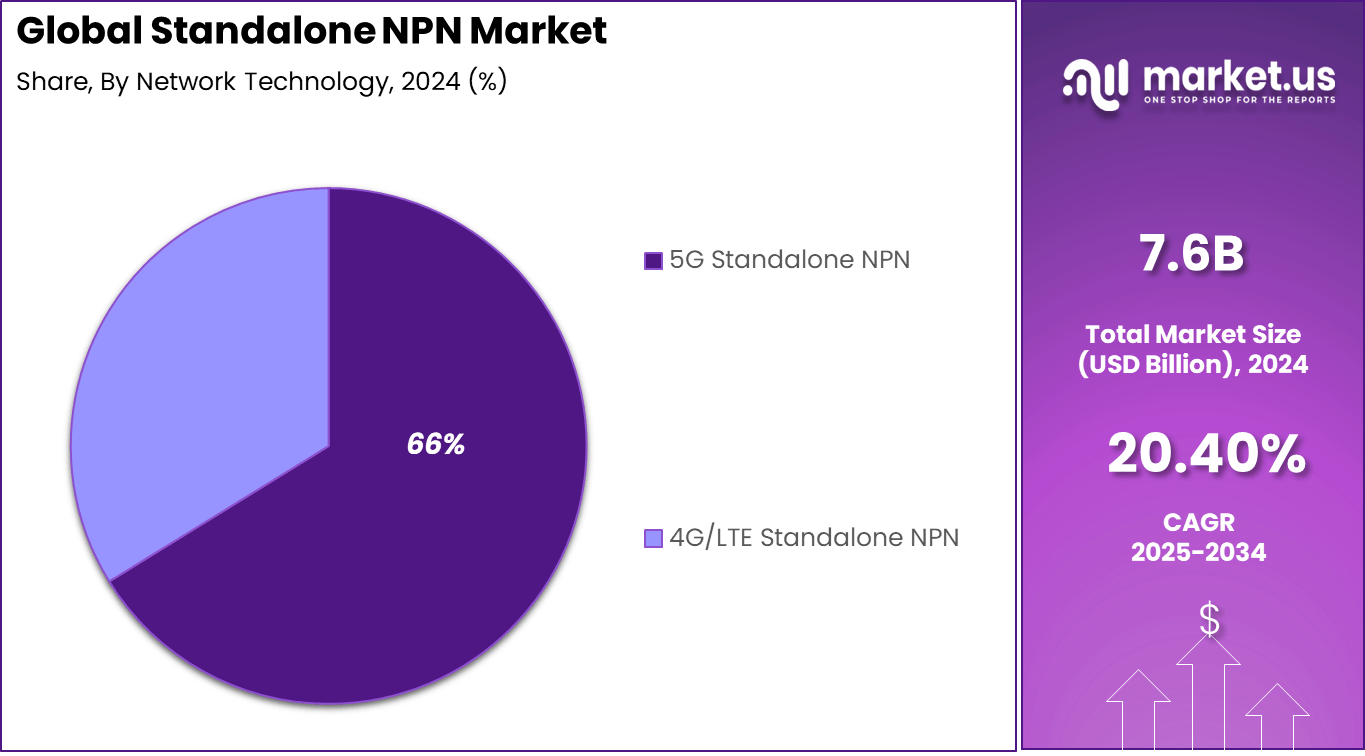
- By network technology, 5G standalone NPN accounted for 66.2%, enabling low-latency and slicing for industrial apps.
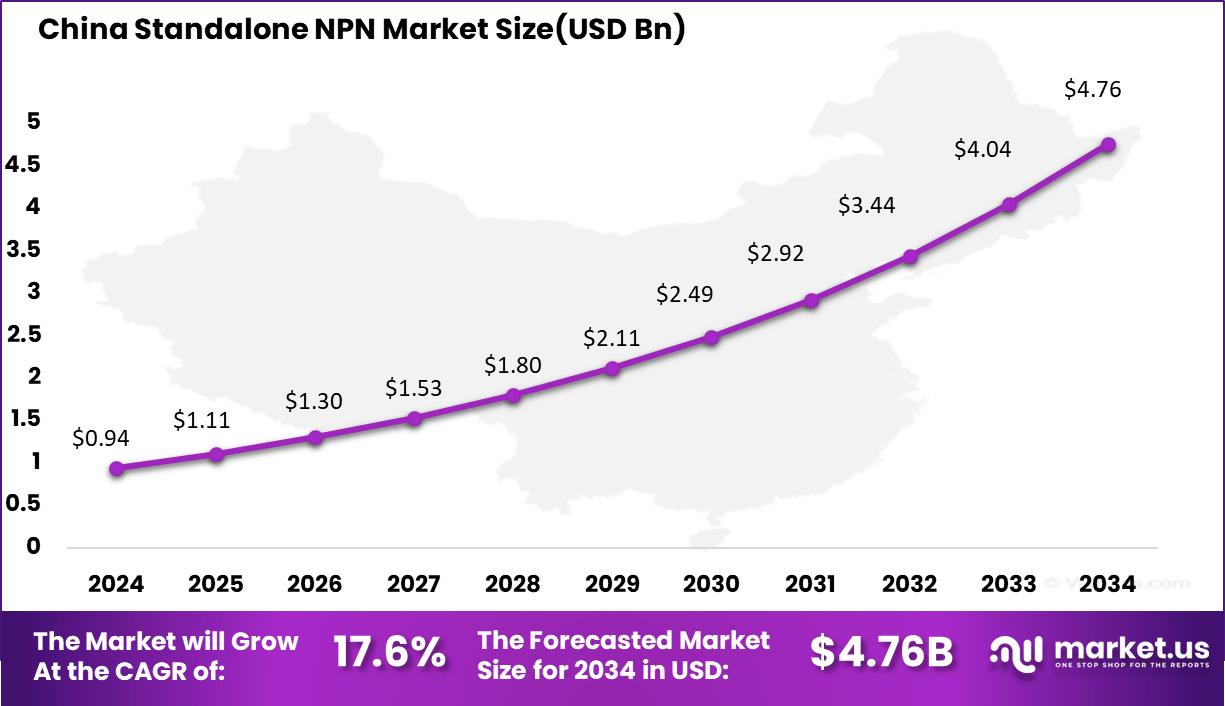
- Asia-Pacific had 40.8% of the global market, with China at USD 0.94 billion in 2025 and growing at a CAGR of 17.6%.
Quick Facts
Adoption Rate Statistics
- Global adoption of 5G non-public networks is accelerating, with average annual uptake projected to peak at 82.2% by early 2026.
- Service providers are adopting 5G Standalone at a pace three to five times faster than earlier network generations, supported by a more mature device and ecosystem landscape.
- Market traction continues to strengthen, as private mobile network customer references have expanded at a 34% CAGR since 2020.
- Investment momentum is rising, with annual spending on private 5G networks for vertical industries expected to grow at about 41% CAGR between 2025 and 2028.
Usage and Deployment Statistics
- By the end of Q3 2025, more than 1,907 organizations worldwide were deploying private LTE or 5G networks across 84 countries.
- Around 48% of private mobile network deployments now include 5G, while LTE remains widely used for stable and long-running operational use cases.
- Manufacturing leads sector adoption with a 27.8% share in 2024–2025, driven by automation, robotics, and real-time monitoring needs.
- Healthcare is the fastest-growing vertical, projected to expand at a 49.1% CAGR through 2034, supported by connected care and critical communications.
- Other active sectors include education, mining, and defense, where reliability and low latency are essential.
Operational Impact Statistics
- Standalone non-public network deployments can reduce total cost of ownership by up to 53%, achieved through virtualization and lower capital and operating expenses.
- Enterprises report 20% to 90% productivity gains in manufacturing and quality control processes after deploying private 5G networks.
- Cost benefits are material, including 55% labor cost savings in warehousing operations and up to 40% lower operating expenses at rail terminals.
Spectrum Type Analysis
Licensed spectrum accounts for 52.7%, showing its importance in standalone NPN deployments. Enterprises prefer licensed spectrum due to higher reliability and controlled usage rights. This spectrum type reduces interference risks in industrial environments. It supports stable network performance for mission-critical operations. Licensed access also improves network security.
Adoption of licensed spectrum is driven by regulatory clarity and predictable performance. Enterprises operating private networks require consistent connectivity. Licensed spectrum supports quality of service requirements. It is well suited for long-term industrial deployments. This sustains steady demand.
Component Analysis
Radio Access Network components hold 41.2%, reflecting their central role in standalone NPN infrastructure. RAN enables direct communication between devices and the private network. It supports low-latency and high-capacity connectivity. Efficient RAN deployment is critical for network performance. Coverage and reliability depend heavily on RAN design.
Growth in this segment is driven by expanding private network installations. Enterprises invest in robust RAN setups to support automation. RAN components allow customization based on site requirements. They integrate with core network functions. This supports consistent adoption.
Enterprise Size Analysis
Large enterprises represent 76.3% of the Standalone NPN market, showing that adoption is strongest among organizations with complex operational needs. These enterprises operate large facilities and require secure, high-performance connectivity to support digital transformation initiatives. Standalone NPNs allow them to customize network parameters based on specific business requirements.
Large enterprises also benefit from the scalability and control offered by private networks. They can manage data traffic internally and reduce reliance on public networks. The strong share of this segment reflects how large organizations are leading investment in private wireless infrastructure to support automation, efficiency, and operational resilience.
End-User Analysis
Manufacturing accounts for 43.8% of end-user adoption, making it the largest industry segment in the Standalone NPN market. Manufacturing environments require reliable connectivity for machines, sensors, and automated systems. Standalone NPNs support real-time data exchange and enable advanced manufacturing processes.
The use of private networks in manufacturing helps reduce downtime and improve production efficiency. Manufacturers rely on low-latency and secure networks to manage critical operations. The strong presence of this segment reflects the industry’s focus on smart factories and connected production environments.
Network Technology Analysis
5G standalone NPN technology accounts for 66% of the market, indicating strong adoption of next-generation network capabilities. This technology provides ultra-low latency, high bandwidth, and support for massive device connectivity. Enterprises prefer standalone 5G networks because they operate independently of public network cores.
Standalone 5G NPNs enable advanced use cases such as autonomous systems, real-time analytics, and immersive industrial applications. The dominance of this segment reflects enterprise demand for future-ready network infrastructure that supports high performance and operational flexibility.
Investment Opportunities
Investment opportunities in the standalone NPN market exist in enhancing production capacity and improving wafer processing technologies. Foundries that specialise in bipolar device manufacturing can attract interest by optimising yields and energy efficiency.
Development of differentiated product lines, such as transistors with extended temperature ranges or specialised gain characteristics, may capture niche segments with higher margins. Partnerships with electronic design automation and component distribution networks can strengthen market reach.
Opportunities also exist in expanding distribution channels to support aftermarket and repair segments, especially in regions with growing electronics maintenance demand. Collaboration with educational and prototyping communities can foster early adoption and brand loyalty among future engineers. Investments in recycling and end-of-life component recovery could address sustainability expectations and reduce waste in large-scale deployments.
Business Benefits
Businesses that incorporate standalone NPN transistors benefit from simplified circuit design and dependable performance characteristics. These components offer a stable baseline for amplification and switching roles without requiring complex integration. Operational continuity is improved through easy maintenance and replacement in field deployed systems.
Predictable cost structures for discrete components assist in accurate pricing and manufacturing planning. Manufacturers and distributors benefit from a broad installed base of electronic systems that require discrete parts for servicing and upgrades.
The availability of standard form factors and performance grades simplifies inventory management. Electronic design teams gain flexibility by selecting component specifications that precisely match application needs. Overall, the use of standalone NPN devices supports reliable production schedules and responsive aftermarket support.
Common usage areas
- Signal amplification in consumer electronics and small control circuits
- Switching applications in industrial automation and power management boards
- Current regulation and control in embedded and IoT devices
- Audio and sensor interface circuits requiring stable gain control
- Educational and prototyping use for learning and testing electronic designs
Emerging Trends
| Key Trend | Description |
|---|---|
| Wide Bandgap Semiconductors | Adoption of GaN and SiC based NPN transistors improves efficiency and power handling for high frequency applications. |
| 3D Packaging Technologies | Advanced 3D packaging enables higher density and compact integrated circuits using NPN components. |
| AI Driven Design Optimization | Artificial intelligence enhances transistor design and manufacturing processes to improve performance and yield. |
| Advanced Packaging Innovations | Wafer level and fan out packaging improves integration with sensors and passive components. |
| GaN Based High Power Variants | High power NPN variants support demanding applications such as RF systems and power amplification. |
Growth Factors
| Key Factors | Impact |
|---|---|
| Electronics Miniaturization | Smaller electronic devices increase demand for compact and high performance NPN transistors. |
| Automotive Electronics Boom | Growth in electric vehicles and ADAS drives demand for reliable switching and power components. |
| Energy Efficiency Push | Low power NPN transistor designs support regulatory requirements and battery based applications. |
| Industrial Automation Rise | Industrial IoT and robotics systems require fast switching transistors for control and automation. |
| Consumer Devices Expansion | Smartphones and wearable devices drive higher volumes of NPN transistors for signal amplification. |
Key Market Segments
By Spectrum Type
- Licensed Spectrum
- Unlicensed Spectrum
- Hybrid Spectrum
By Component
- Core Network
- Radio Access Network (RAN)
- Management & Orchestration Software
- Services
By Enterprise Size
- Small & Medium Enterprises (SMEs)
- Large Enterprises
By End-User Industry
- Manufacturing
- Energy & Utilities
- Transportation & Logistics
- Healthcare
- Government & Defense
- Others
By Network Technology
- 5G Standalone NPN
- 4G/LTE Standalone NPN
Regional Analysis
Asia Pacific accounted for 40.8% share, supported by strong semiconductor manufacturing activity and high demand for discrete components across consumer electronics, automotive electronics, and industrial equipment. Standalone NPN transistors are widely used in signal amplification, switching, and power management applications, which remain critical in high volume electronics production.
Demand has been driven by large scale production of smartphones, home appliances, and industrial control systems across the region. The presence of a well established electronics supply chain has enabled cost efficient production and steady adoption.
China reached a market value of USD 0.94 Billion and is projected to grow at a 17.6% CAGR, reflecting strong domestic demand and expanding semiconductor self reliance efforts. Standalone NPN transistors are widely used in local electronics manufacturing, including power supplies, lighting systems, and industrial electronics. Growth has been supported by rising production of electric vehicles, charging infrastructure, and smart devices.
Key Regions and Countries
- North America
- US
- Canada
- Europe
- Germany
- France
- The UK
- Spain
- Italy
- Russia
- Netherlands
- Rest of Europe
- Asia Pacific
- China
- Japan
- South Korea
- India
- Australia
- Singapore
- Thailand
- Vietnam
- Rest of APAC
- Latin America
- Brazil
- Mexico
- Rest of Latin America
- Middle East & Africa
- South Africa
- Saudi Arabia
- UAE
- Rest of MEA
Driver Analysis
A key driver of the Standalone NPN market is the demand for secure, reliable connectivity in industrial and enterprise environments. Many industries require network isolation to protect sensitive data and ensure continuity of operations. Standalone NPNs provide a controlled environment that reduces exposure to public network vulnerabilities. As enterprises place greater emphasis on digital transformation and secure operations, investment in dedicated network infrastructure continues to rise.
Another market driver is the growth of industrial IoT applications that depend on consistent, low-latency communication. Use cases such as automated robotics, remote monitoring, and real-time process control require robust network performance. Standalone NPNs are designed to meet these technical requirements with dedicated spectrum and tailored network policies. This capability supports operational efficiency and innovation in manufacturing, logistics, and energy sectors.
Restraint Analysis
One restraint in the market is the high cost of deploying and maintaining standalone NPN infrastructure. Building a dedicated network requires investment in spectrum, hardware, and skilled personnel for installation and management. These costs can be significant for medium and small enterprises with limited IT budgets. As a result, some organizations may delay or scale back full standalone deployments in favor of shared or hybrid connectivity solutions.
Another restraint is the technical complexity involved in integrating standalone NPNs with existing enterprise systems. Network planners must ensure compatibility with operational technology platforms, security systems, and legacy IT assets. This integration often requires customized engineering work and coordination across internal teams. These technical hurdles can lengthen deployment timelines and increase project risks.
Opportunity Analysis
There is strong opportunity in developing managed standalone NPN services that reduce the burden of network operation for enterprises. Managed service offerings can include network design, deployment, monitoring, and support, allowing organizations to benefit from private networks without needing extensive in-house expertise. This service model can accelerate adoption among businesses that lack dedicated network staff.
Another opportunity lies in expanding the use of standalone NPNs to services beyond traditional industrial applications. Sectors such as healthcare, education, and public safety can benefit from dedicated networks that support mission-critical connectivity, telemedicine, remote learning, and emergency services. Tailored solutions for these verticals can open new revenue streams and support broader market growth.
Challenge Analysis
A significant challenge for the market is ensuring interoperability with evolving communication standards. Standalone NPNs rely on technologies such as 5G and advanced networking protocols that are continuously updated. Ensuring compatibility across equipment vendors and standards updates requires ongoing testing and upgrades. This need for continual adaptation can complicate long-term planning for network owners.
Another challenge is managing regulatory and spectrum allocation issues in different regions. Standalone NPN deployment often involves navigating local spectrum licensing rules and compliance requirements, which can vary widely by country. Delays or uncertainty in regulatory approvals can slow network rollout and increase costs. Overcoming these regulatory complexities is necessary to support global market expansion.
Competitive Analysis
ON Semiconductor, STMicroelectronics, and Infineon Technologies lead the standalone NPN market by offering high reliability bipolar transistors for switching, amplification, and signal conditioning applications. Their products are widely used in automotive electronics, industrial controls, and power management circuits. These companies focus on thermal stability, long lifecycle support, and consistent electrical performance.
Nexperia, Texas Instruments, Toshiba Corporation, Vishay Intertechnology, and ROHM Semiconductor strengthen the market with broad portfolios of low noise and high gain NPN transistors. Their solutions support consumer electronics, communication devices, and industrial automation systems. These providers emphasize energy efficiency, compact packaging, and supply chain reliability.
Diodes Incorporated, Microchip Technology, Renesas Electronics, Littelfuse, and other players expand the landscape with cost effective and application specific NPN devices. Their offerings address niche voltage, current, and temperature requirements. These companies focus on design flexibility and quick design in support. Continued use of discrete transistors in legacy and emerging circuits sustains stable growth in the standalone NPN market.
Top Key Players in the Market
- ON Semiconductor
- STMicroelectronics
- Nexperia
- Infineon Technologies
- Texas Instruments
- Toshiba Corporation
- Vishay Intertechnology
- Diodes Incorporated
- Rohm Semiconductor
- Fairchild Semiconductor
- Microchip Technology
- Panasonic Corporation
- Renesas Electronics
- Central Semiconductor
- Littelfuse
- Alpha & Omega Semiconductor
- Sanken Electric
- Hitachi
- Others
Future Outlook
Demand for Standalone NPN solutions is expected to grow steadily as industries seek dedicated and reliable private network infrastructure for critical operations. These networks are being adopted in manufacturing, logistics, ports, and utilities to support secure connectivity, low latency communication, and better control over data traffic.
Rising use of automation, connected machines, and real time monitoring is supporting this trend. In the coming years, improvements in network management tools, device compatibility, and integration with enterprise IT systems are likely to make standalone NPN deployments easier and more cost effective.
Recent Developments
- September, 2025 – STMicroelectronics rolled out a new pilot line in Tours, France, to push forward next-generation chip manufacturing tech, which ties into powering efficient Non-Public Networks (NPN) setups as private 5G demand heats up in industrial spots.
- December, 2025 – Renesas kicked off sampling for its groundbreaking 3nm R-Car Gen 5 platform, a multi-domain SoC that boosts low-latency compute for NPN-enabled automotive and factory automation over private 5G.









