


Report Overview
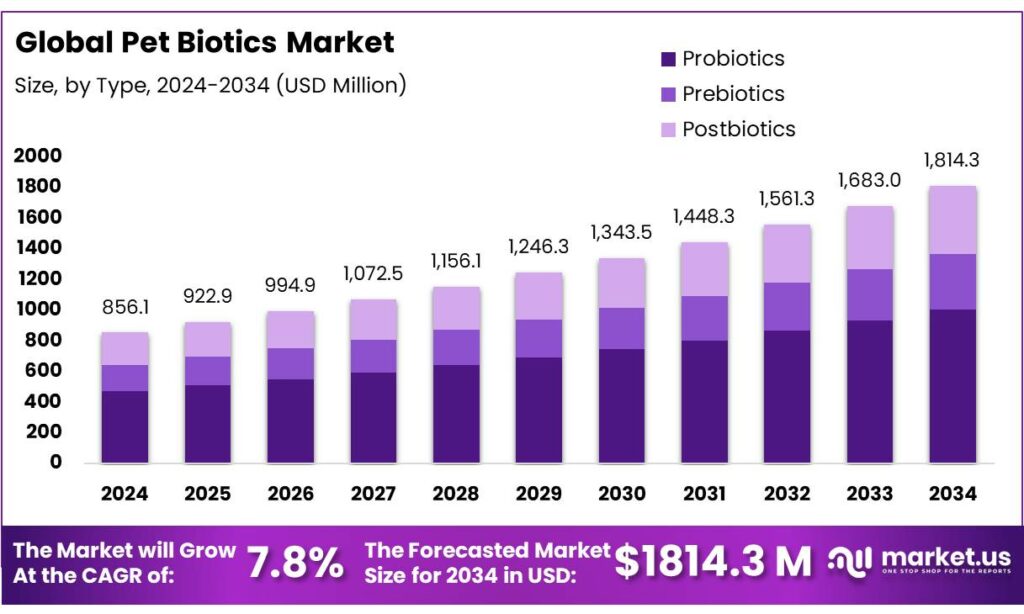
The Global Pet Biotics Market size is expected to be worth around USD 1814.3 Million by 2034, from USD 856.1 Million in 2024, growing at a CAGR of 7.8% during the forecast period from 2025 to 2034. In 2024 North America held a dominant market position, capturing more than a 39.4%share, holding USD 1.2 Billion in revenue.
Pet biotics are supplements, such as prebiotics, probiotics, and postbiotics, that support a healthy gut microbiome in dogs and cats, improving digestion, boosting immunity, and promoting overall wellness by balancing gut bacteria, providing beneficial microbes, or delivering beneficial compounds. Its market is experiencing significant growth, driven by an increasing focus on pet health and wellness. Probiotics and synbiotics are widely used to support pets’ gastrointestinal health, immunity, and overall vitality, with probiotics being the most popular due to their direct and observable benefits. While dry food is the primary medium for delivering biotics, due to its stability and ease of use, there is also growing interest in supplements and treats.
The humanization of pets, particularly in regions of North America, has spurred demand for high-quality, science-backed health solutions. However, the market faces challenges such as regulatory uncertainty, supply chain disruptions, and concerns over the technical stability of biotic formulations, particularly in liquid forms. While dogs are the primary beneficiaries of biotics, the market is expanding across other pets, as owners seek more holistic approaches to animal care.
- According to the American Veterinary Medical Association (AVMA), the total number of pet dogs in the U.S. was estimated at 89.7 million, and pet cats numbered 73.8 million. In 2024, approximately 66% of U.S. households owned at least one pet, with dogs being the most common, 45.5% of households, followed by cats with 32.1%. As the number of pet owners increases, it creates more opportunities in the market of biotics.
Key Takeaways
- The global pet biotics market was valued at USD 856.1 million in 2024.
- The global pet biotics market is projected to grow at a CAGR of 7.8% and is estimated to reach USD 1814.3 Million by 2034.
- On the basis of types of pet biotics, probiotics dominated the market, constituting 55.6% of the total market share.
- Based on the form of pet biotics, dry biotics dominated the market, with a substantial market share of around 65.3%.
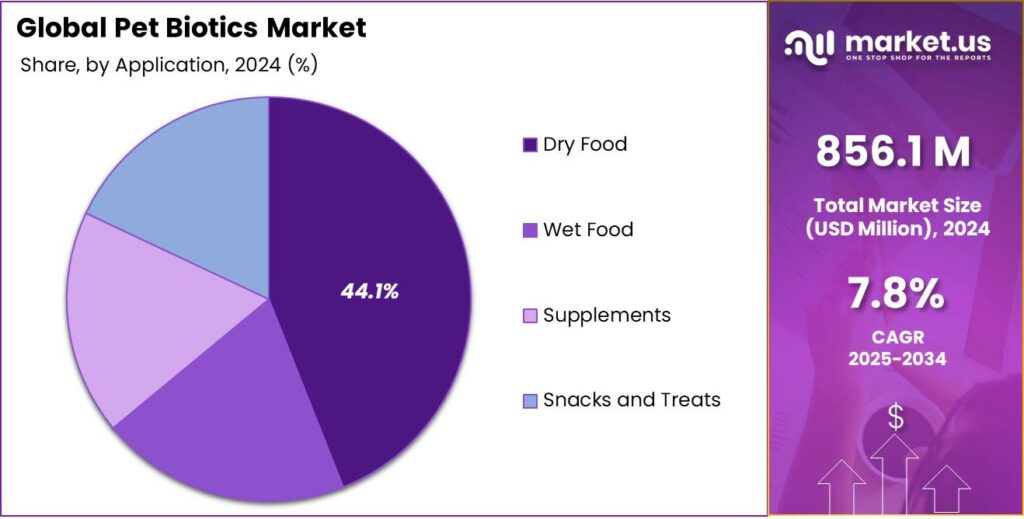
- Based on the application of pet biotics, dry food led the market, comprising 44.1% of the total market.
- Among the pet types, dogs held a major share in the pet biotics market, 61.9% of the market share.
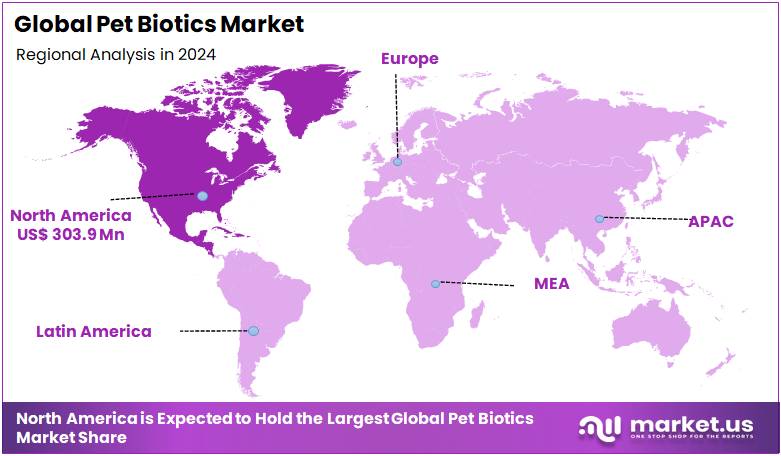
- In 2024, North America was the most dominant region in the pet biotics market, accounting for 37.8% of the total global consumption.
Type Analysis
Probiotics Are a Prominent Segment in the Pet Biotics Market.
The pet biotics market is segmented based on types into probiotics, prebiotics, and postbiotics. The probiotics led the pet biotics market, comprising 55.6% of the market share, as they offer more immediate and direct benefits in terms of gut health and digestion. Probiotics consist of live beneficial bacteria that help restore and maintain a balanced microbiome, particularly in pets experiencing gastrointestinal issues such as diarrhea or constipation. This immediate effect is easier to observe and measure, making probiotics a go-to solution for many pet owners.
In contrast, prebiotics are fibers that feed beneficial bacteria but do not directly impact the microbiome in the same visible way. Postbiotics, which are byproducts of probiotic fermentation, are relatively less understood and not as widely studied in pets. Consequently, the proven efficacy and clear benefits of probiotics have led to their more common use in pet health products, while prebiotics and postbiotics are often considered supplementary options.
Form Analysis
Dry Biotics Dominated the Pet Biotics Market.
On the basis of the form of the pet biotics, the market is segmented into dry and liquid. The dry biotics dominated the pet biotics market, comprising 65.3% of the market share, due to their greater stability, convenience, and ease of storage. Probiotic strains in dry forms, such as powders, capsules, or treats, have a longer shelf life and are less prone to degradation, particularly when stored at room temperature.
In contrast, liquid biotics often require refrigeration and have a shorter shelf life due to the increased risk of microbial growth or potency loss over time. Additionally, dry biotics are easier to incorporate into pet food or treats, ensuring consistent and accurate dosing. Furthermore, the pet owners prefer the simplicity of dry biotics, as they are less likely to cause mess or spillage, making them more practical for daily use.
Application Analysis
Dry Food Held a Major Share of the Pet Biotics Market.
Based on the applications of the pet biotics, the market is divided into dry food, wet food, supplements, and snacks and treats. Dry food dominated the market, with a notable market share of 44.1%, due to the superior stability and ease of incorporation into the manufacturing process. Dry food, with its low moisture content, creates an ideal environment for preserving the viability of probiotics and other biotics over time. In contrast, the higher moisture content in wet food can lead to quicker degradation of live bacteria, reducing their effectiveness.
Moreover, dry food provides a consistent and controlled way to deliver biotics in precise amounts with every meal, ensuring that pets receive the appropriate dosage. While supplements and treats may contain biotics, they are often not as efficient in long-term, consistent delivery compared to dry food, which is a daily staple in most pets’ diets.
Pet Type Analysis
Pet Biotics Were Mostly Utilized by the Dogs.
Among the pet types, 61.9% of the total global consumption of pet biotics is for dogs. Biotics are more commonly used for dogs than for cats or other pets due to differences in dietary needs, digestive systems, and the prevalence of certain health issues. Dogs, being omnivores, often face a broader range of gastrointestinal problems such as diarrhea, constipation, and food sensitivities, making probiotics and other biotics more beneficial for managing these conditions.
Additionally, in 2025, approximately 30% of households globally have a dog, totaling between 700 million to 1 billion dogs. Furthermore, dogs are more likely to consume dietary supplements when mixed into food or treats, whereas cats, characteristically more finicky eaters, may resist changes to their diet or unfamiliar supplements.
Key Market Segments
By Type
- Probiotics
- Prebiotics
- Postbiotics
By Form
- Dry
- Liquid
By Application
- Dry Food
- Wet Food
- Supplements
- Snacks and Treats
By Pet Type
- Dog
- Large Breeds
- Medium Breeds
- Small Breeds
- Cat
- Others
By Functionality
- Digestive Health
- Immune Support
- Skin & Coat
- Weight Management
- Oral/Dental Health
- Others
Drivers
Scientific Evidence Supporting Use of Biotics for Pets Drives the Pet Biotics Market.
The growing amount of scientific evidence supporting the use of biotics for pets has significantly contributed to the expansion of the pet biotics market. Probiotic and prebiotic supplements have been shown to improve gastrointestinal health, boost immunity, and enhance overall well-being in animals. For instance, studies indicate that probiotics can help alleviate symptoms of gastrointestinal disorders such as diarrhea and constipation in pets, improving digestion and nutrient absorption. Similarly, prebiotics have been demonstrated to support gut health by fostering beneficial gut flora.
- A dog’s digestive system hosts approximately 100 trillion microorganisms, which is roughly 10 times more bacteria than cells in their entire body, and it weighs about 1-2% of the dog’s total body weight, and performs crucial functions.
Additionally, the use of biotics in managing conditions such as inflammatory bowel disease has become increasingly common. As pet owners become more aware of these benefits, the demand for biotic-based supplements has surged, reflecting an increasing trend toward preventive and holistic pet care. Furthermore, a multi-strain complex, a blend of Lactobacillus plantarum, Lactobacillus acidophilus, Bifidobacterium bifidum, and Enterococcus faecium, is observed to work better than individually, as 85% of dogs showed digestive improvement, 78% had enhanced stool quality, 65% demonstrated immune benefits, and 40% showed additional benefits, like coat quality and energy.
Restraints
Regulatory Uncertainty Might Pose a Challenge to the Pet Biotics Market.
Regulatory uncertainty, along with concerns about the technical stability of biotics, present significant challenges to the pet biotics market. The lack of standardized regulations for pet supplements, particularly for probiotics and prebiotics, means that formulations and dosages can vary widely, creating confusion and potential safety risks. For instance, while some probiotic strains are well-documented for their effectiveness, others may not have sufficient scientific backing, leading to inconsistent product quality.
A study by the National Institutes of Health (NIH) revealed that on labels of 32% of the products available in the market, one or more organisms were misspelled, and about only 27% of the products that had specific claims of viable organisms met or exceeded their label claim. Furthermore, the technical stability of biotics, particularly probiotics, can be affected by factors such as storage conditions and shelf life, diminishing their efficacy. The manufacturers face increasing pressure to ensure product consistency while navigating the evolving regulatory landscape.
Opportunity
Pet Humanization Creates Opportunities in the Pet Biotics Market.
The growing trend of pet humanization, where pets are increasingly treated as family members, has created significant opportunities within the pet biotics market. Pet owners are now more inclined to invest in high-quality, health-focused products for their pets, mirroring their own health-conscious choices. This shift is evident in the increasing preference for natural, functional foods and supplements, with biotics playing a central role.
For instance, studies show that over 50% of pet owners are opting for dietary supplements, including probiotics and prebiotics, to support their pets’ health. This humanization trend is reflected in the rising demand for pet products that cater to specific health needs, such as gut health, immunity, and joint support. Furthermore, more of the dog owners now seek out products with scientifically-backed ingredients, showing a preference for clinically proven biotics that mirror human health solutions. This growing focus on wellness has opened up new avenues for pet biotics companies to cater to an informed and health-conscious market.
Trends
Rapid Adoption of Synbiotics.
The rapid adoption of synbiotics, products that combine probiotics and prebiotics, has become a prominent trend in the pet biotics market, as pet owners seek more comprehensive solutions to enhance their pets’ health. Synbiotics are increasingly favored for their synergistic effect, which promotes a balanced gut microbiota and supports digestion, immune function, and overall vitality.
For instance, a case study on dogs with chronic liver disease by the National Institutes of Health (NIH) revealed that dogs treated with a synbiotic complex showed a significant reduction in ALT activity and clinical resolution of gastrointestinal signs. Furthermore, the integration of synbiotics in pet food and supplements aligns with the broader trend of personalized pet care, where pet owners are actively seeking products that address specific health concerns. As consumer awareness of the benefits of synbiotics grows, the market for these combined products continues to expand, driven by the demand for scientifically backed, holistic pet health solutions.
Geopolitical Impact Analysis
Increased Prices of Pet Biotics Amidst Severe Geopolitical Tensions.
The geopolitical tensions have had a notable impact on the pet biotics market. The disruption of global supply chains, particularly due to trade restrictions, tariffs, and border controls, has caused delays in the availability of raw materials essential for producing pet biotics, such as specific probiotic strains and high-quality prebiotic fibers. For instance, tariffs enforced by the United States on imported goods have affected the market negatively due to rising prices and supply issues of various pet care products, as the United States is the largest market for the products.
Similarly, in 2024, heightened instability in the Red Sea, stemming from Middle Eastern conflicts, prompted many vessels to avoid the Suez Canal and reroute around the Cape of Good Hope, which has magnified logistical tailbacks and inflated freight charges for Asian exporters, often forcing firms to push up retail prices. In contrast, geopolitical tensions have sparked a shift towards local sourcing and production, as brands look to mitigate risks associated with global supply chain disruptions. This has led to a growing trend of regional suppliers gaining market traction, offering more consistent and secure delivery of pet health products.
Regional Analysis
North America Held the Largest Share of the Global Pet Biotics Market.
In 2024, North America dominated the global pet biotics market, holding about 37.8% of the total global consumption, driven by a combination of high pet ownership rates, a growing focus on pet health, and a strong preference for natural and functional products. For instance, in the United States, nearly 66% of households own a pet, and an increasing number of pet owners are prioritizing wellness-oriented products, including probiotics and prebiotics.
Additionally, the prevalence of pet health concerns such as obesity, allergies, and digestive issues has spurred demand for biotics-based supplements. According to a report by the American Pet Products Association, supplement use has surged 56% among dog owners and 70% among cat owners since 2023, signaling a sustained, long-term commitment to proactive care, with probiotics being among the most popular. Furthermore, the region’s advanced veterinary infrastructure, greater availability of specialized products, and higher disposable income further contribute to North America’s dominant market position.
Key Regions and Countries
- North America
- The US
- Canada
- Europe
- Germany
- France
- The UK
- Spain
- Italy
- Russia & CIS
- Rest of Europe
- APAC
- China
- Japan
- South Korea
- India
- ASEAN
- Rest of APAC
- Latin America
- Brazil
- Mexico
- Rest of Latin America
- Middle East & Africa
- GCC
- South Africa
- Rest of MEA
Key Players Analysis
Companies in the pet biotics market focus on several strategic activities to boost sales and expand market reach. They invest in product innovation, developing new formulations that cater to specific pet health concerns, such as digestive issues, skin allergies, or immunity support, which includes incorporating a wider range of probiotics, prebiotics, and synbiotics to address diverse pet needs. In addition, the companies focus on enhancing distribution channels by partnering with veterinary clinics, pet retailers, and online platforms to reach a larger customer base. Furthermore, many companies invest in the expansion of their manufacturing facilities as demand for biotics grows.
Key Development
- In February 2024, Kerry launched Plenibiotic, a rice-derived postbiotic ingredient derived from Lactobacillus casei subsp. 327, which is shelf-stable, tolerant of various environments and temperatures, and is suitable for low-dose formulations, making it versatile for a variety of supplements for humans and pets.
- In November 2025, Cargill announced the completion of a major expansion at its Engerwitzdorf, Austria facility, increasing production capacity for its Micronutrition & Health Solutions business by 50%. This expansion focuses on performance-enhancing nutrition solutions, including postbiotics, phytogenics, and enzymes, for animal feed.
The major players in the industry
- Kerry Group plc
- Cargill, Incorporated
- Dsm-Firmenich
- ADM
- International Flavors & Fragrances Inc.
- Kemin Industries, Inc.
- BENEO GmbH
- Ingredion
- Alltech
- Lallemand Inc.
- Phileo by Lesaffre
- BIO-CAT
- Sanzyme Biologics
- Verb Biotics
- Other Key Players









