


Report Overview
The Global Male Aesthetics Market size is expected to be worth around USD 11.8 Billion by 2034, from USD 5.9 Billion in 2024, growing at a CAGR of 7.2% during the forecast period from 2025 to 2034.
The Male Aesthetics Market encompasses a comprehensive range of cosmetic procedures and treatments specifically designed for men seeking aesthetic enhancement. This dynamic sector includes surgical interventions like rhinoplasty, liposuction, and hair transplantation, alongside non-invasive treatments such as botulinum toxin injections, dermal fillers, and laser therapies. The market addresses male-specific aesthetic concerns while catering to evolving grooming standards and appearance consciousness among modern men.
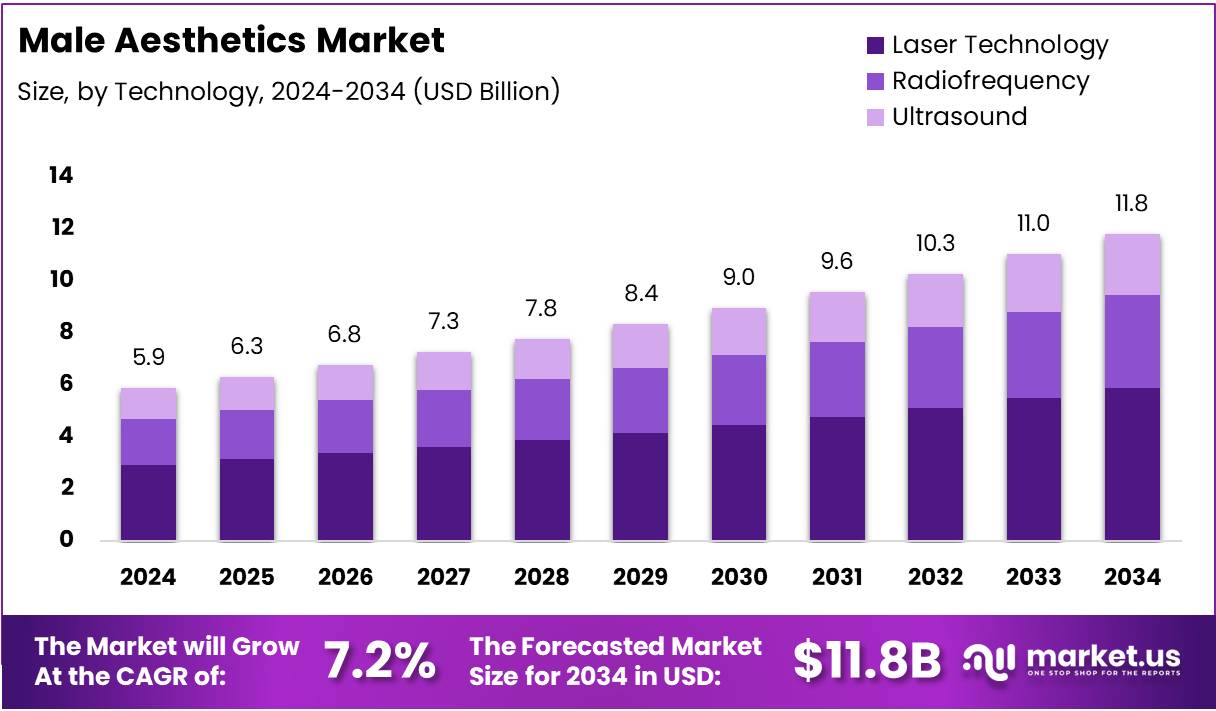
The male aesthetics sector has experienced remarkable expansion, fundamentally transforming from a niche segment into a mainstream industry. This growth trajectory reflects changing societal attitudes toward male grooming and self-care. Moreover, increasing disposable incomes and reduced stigma surrounding cosmetic enhancements have accelerated market penetration. Digital influence and social media exposure have further normalized aesthetic procedures among male demographics across various age groups.
Several compelling opportunities are reshaping this market landscape. Technological advancements in minimally invasive procedures have significantly reduced recovery times, making treatments more accessible to working professionals. Additionally, personalized treatment protocols tailored to masculine facial structures and body compositions are gaining traction. The expanding middle-class population in emerging economies presents substantial untapped potential for market expansion and diversification.
Regulatory bodies worldwide are implementing stringent guidelines to ensure patient safety and treatment efficacy. Governments are establishing comprehensive certification requirements for practitioners and facilities offering aesthetic services. Furthermore, increased oversight on marketing practices protects consumers from misleading claims. These regulatory measures ultimately enhance industry credibility while maintaining ethical standards across aesthetic medicine practices.
The market has witnessed substantial momentum recently, demonstrating sustained demand for male-focused aesthetic solutions. Research reveals that men represented approximately 16.1% of all aesthetic surgeries globally, totaling around 4.7 million procedures. Furthermore, statistics indicate a 70% increase in men’s aesthetic treatments since 2021, clearly illustrating growing acceptance and demand. Men pursue aesthetic treatments primarily to counteract ageing (35%), look their best for special occasions (31%), or enhance their appearance for holidays (28%), demonstrating diverse motivational factors driving market expansion.
Key Takeaways
- The Global Male Aesthetics Market is projected to grow from USD 5.9 Billion in 2024 to USD 11.8 Billion by 2034, at a 7.2% CAGR.
- By Technology, Laser Technology leads the market with a 44.9% share in 2024, reflecting strong adoption of energy-based treatments.
- By Treatment Frequency, Maintenance/Booster procedures dominate with a 51.4% market share in 2024, highlighting preference for ongoing aesthetic care.
- By Age Group, Middle-Aged Adults account for the largest share at 49.8% in 2024, driven by anti-aging and professional appearance needs.
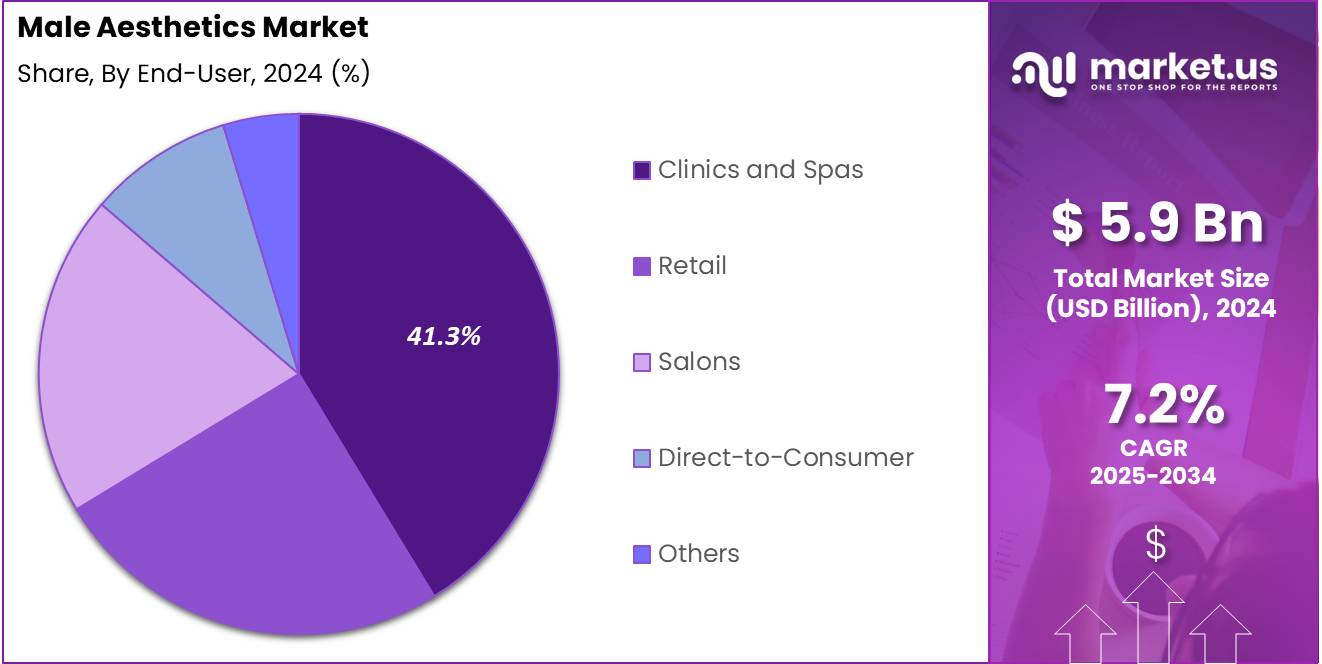
- By End-User, Clinics and Spas hold a leading 41.3% share in 2024, supported by professional expertise and advanced infrastructure.
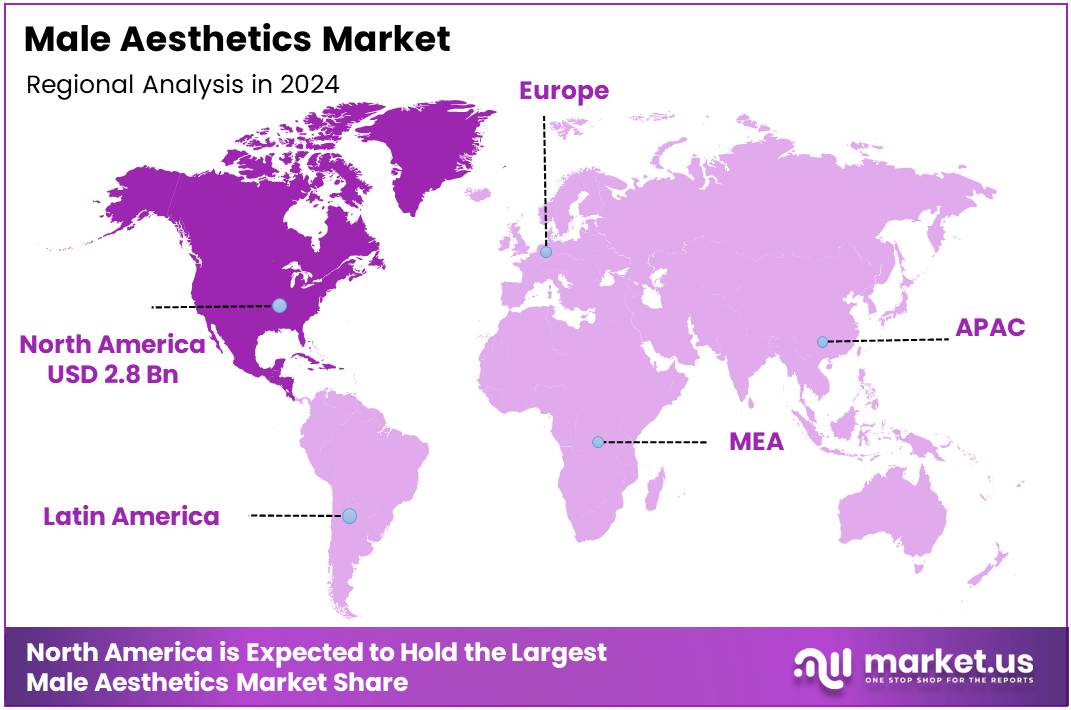
- North America dominates the market with a 48.2% share, valued at USD 2.8 Billion, positioning it as the largest regional market.
By Technology Analysis
Laser Technology dominates with 44.9% due to its proven efficacy and precision in male aesthetic procedures.
In 2024, Laser Technology held a dominant market position in the By Technology segment of Male Aesthetics Market, with a 44.9% share. This leadership stems from its versatility across multiple treatment applications including hair removal, skin resurfacing, and tattoo removal. Men increasingly prefer laser-based solutions because they deliver consistent, measurable results with minimal downtime. Advanced laser systems offer customizable intensity levels that cater specifically to male skin characteristics, which tend to be thicker and more resilient than female skin.
Radiofrequency technology has gained substantial traction among male consumers seeking skin tightening and body contouring solutions. This method works by heating deeper skin layers to stimulate collagen production, effectively addressing concerns like sagging skin and fine lines. Men appreciate radiofrequency treatments for their comfortable experience and absence of recovery period, allowing them to return immediately to daily activities.
Ultrasound technology represents an emerging option in male aesthetics, particularly for targeted fat reduction and muscle toning. This approach uses focused sound waves to break down fat cells and tighten tissue without incisions. Men favor ultrasound treatments for sculpting specific areas like the abdomen and jawline, appreciating the natural-looking results that develop gradually over several weeks.
By Treatment Frequency Analysis
Maintenance/Booster treatments dominate with 51.4% due to growing awareness about sustained aesthetic results.
In 2024, Maintenance/Booster treatments held a dominant market position in the By Treatment Frequency segment of Male Aesthetics Market, with a 51.4% share. This preference reflects a fundamental shift in male grooming philosophy toward preventive care and long-term investment in appearance. Men increasingly understand that maintaining results requires periodic touch-ups and follow-up sessions rather than expecting permanent outcomes from initial treatments. The subscription-based models offered by many clinics have made maintenance protocols more accessible and financially manageable.
One-Time treatments appeal to men seeking immediate solutions for specific concerns or those new to aesthetic procedures. These single-session options typically address isolated issues like removing a particular blemish or reducing localized fat deposits. The one-time approach attracts budget-conscious consumers and those testing aesthetic services before committing to ongoing treatment plans.
Series-Based treatments involve predetermined packages of multiple sessions designed to achieve comprehensive results. Men opt for series-based protocols when addressing more complex concerns requiring gradual improvement, such as significant skin texture issues or extensive hair removal. These structured programs provide clear expectations regarding timeline, costs, and anticipated outcomes, appealing to goal-oriented male consumers.
By Age Group Analysis
Middle-Aged Adults dominate with 49.8% due to heightened focus on maintaining youthful appearance and professional image.
In 2024, Middle-Aged Adults held a dominant market position in the By Age Group segment of Male Aesthetics Market, with a 49.8% share. These men possess greater disposable income and recognize the competitive advantage of maintaining a youthful, energetic appearance in professional environments. They commonly seek treatments addressing wrinkles, skin laxity, and age spots while also investing in preventive measures. The middle-aged segment values proven, reliable treatments that deliver natural-looking results without obvious signs of intervention.
Young Adults represent a rapidly growing segment as aesthetic consciousness develops earlier in life. This group, generally aged 25 to 40, approaches treatments with a preventive mindset, addressing early signs of aging and maintaining optimal skin health. Young adult men frequently seek solutions for acne scarring, body sculpting, and hair loss prevention, driven by social media influence and heightened grooming standards.
Senior Adults aged 60 and above increasingly embrace aesthetic treatments to maintain active lifestyles and social engagement. This demographic focuses on rejuvenating procedures that address advanced aging signs like deep wrinkles, significant skin laxity, and volume loss. Senior men appreciate treatments offering safety profiles suitable for mature skin and realistic enhancement expectations.
By End-User Analysis
Clinics and Spas dominate with 41.3% due to professional expertise and comprehensive service offerings.
In 2024, Clinics and Spas held a dominant market position in the By End-User segment of Male Aesthetics Market, with a 41.3% share. These establishments provide controlled environments where trained professionals deliver treatments using advanced equipment and medical-grade products. Men prefer clinics and spas because they offer personalized consultations, customized treatment plans, and safety protocols that ensure optimal outcomes. The clinical setting instills confidence among male consumers who prioritize results and want assurance that procedures follow established medical standards.
Retail channels provide accessible entry points for men beginning their aesthetic journeys through over-the-counter products and devices. This segment includes specialty stores and pharmacies offering skincare lines, anti-aging creams, and portable treatment devices. Retail appeals to men seeking convenience, discretion, and the ability to research products independently before purchasing.
Salons traditionally focused on hair services now expand into aesthetic treatments like facials, grooming procedures, and basic skincare services. Men appreciate the familiar, relaxed salon environment for maintaining regular grooming routines while exploring aesthetic enhancements in a less clinical setting.
Direct-to-Consumer platforms leverage e-commerce and telemedicine to deliver aesthetic solutions directly to men’s homes. This channel offers subscription boxes, personalized skincare regimens, and virtual consultations that eliminate geographical barriers. Men value the privacy, convenience, and often competitive pricing that direct-to-consumer models provide.
Others encompass emerging channels including mobile aesthetic services, workplace wellness programs, and boutique studios specializing in specific treatments. These alternative venues cater to niche preferences and convenience-focused consumers seeking flexible appointment options outside traditional settings.
Key Market Segments
By Technology
- Laser Technology
- Radiofrequency
- Ultrasound
By Treatment Frequency
- Maintenance/Booster
- One-Time
- Series-Based
By Age Group
- Middle-Aged Adults
- Young Adults
- Senior Adults
By End-User
- Clinics and Spas
- Retail
- Salons
- Direct-to-Consumer
- Others
Drivers
Increasing Societal Acceptance of Male Grooming Drives Market Growth
The male aesthetics market is growing rapidly as society becomes more accepting of men caring about their appearance. Traditional views that discouraged male grooming are disappearing, especially among younger generations who see self-care as normal and necessary. This cultural transformation is creating a billion-dollar market opportunity globally.
Technology improvements are making aesthetic procedures safer and more effective for men. Modern treatments like advanced lasers and specialized injectables designed for male skin deliver natural results with minimal downtime. These innovations make procedures more appealing to first-time male users. Cutting-edge devices now target male-specific concerns like jawline definition and hair restoration more precisely than ever.
Urban lifestyles are changing male grooming habits significantly. City professionals face competitive pressure to look youthful and well-groomed for career success. Dating apps and image-focused careers push men to invest in their appearance. Busy urban men want quick, effective aesthetic solutions that fit their schedules and deliver noticeable improvements. The fast-paced metropolitan environment makes appearance maintenance a professional necessity rather than vanity.
Restraints
Social Stigma and Cultural Barriers Restrain Market Growth
Despite progress, social stigma remains a major challenge in the male aesthetics market. Many men fear judgment from peers and family when seeking appearance treatments. Traditional masculinity norms still discourage grooming beyond basic hygiene in conservative communities. Men worry about being seen as vain, creating psychological barriers to trying aesthetic services. This fear of ridicule prevents millions of interested men from booking their first consultation.
Limited awareness about male-specific treatments further restricts growth. Many men don’t realize procedures are designed specifically for male facial structure and skin types. Misinformation about pain, femininity, or unnatural results discourages potential clients. Since aesthetic marketing has historically targeted women, men lack information about available options. The absence of male-focused education and relatable success stories makes decision-making difficult for interested consumers. Educational gaps leave men uncertain about which treatments suit their needs best.
Growth Factors
Rising Demand for Non-Invasive Treatments Creates Growth Opportunities
The male aesthetics market offers significant opportunities as men prefer non-invasive procedures. Treatments like laser hair removal and microneedling appeal to those wanting results without surgery or downtime. Quick “lunch-break procedures” work perfectly for busy professionals who can get treatments during work hours. The no-surgery approach removes major adoption barriers for hesitant first-time male clients.
Specialized men-only clinics represent another promising opportunity. These dedicated spaces eliminate discomfort men feel in female-dominated environments. Male-exclusive clinics offer privacy and services addressing masculine concerns, gaining popularity in major cities. Creating comfortable, masculine-designed spaces encourages reluctant men to explore aesthetic options confidently.
Younger men embracing preventive care creates long-term potential. Men in their twenties and thirties now invest in anti-aging treatments early rather than waiting. This preventive approach builds lifetime customer relationships and drives demand for male-specific skincare products and early intervention procedures. Starting aesthetic care young maximizes long-term results and establishes loyal customer bases.
Emerging Trends
Growing Preference for Natural-Looking Results Shapes Market Trends
Men prefer subtle enhancements over dramatic changes in aesthetic treatments. The goal is refreshed appearance without obvious intervention signs. This no one should know mentality drives demand for conservative approaches and skilled practitioners understanding masculine features. Achieving invisible improvements requires specialized expertise in male facial anatomy and aging patterns.
Social media and celebrities significantly influence male grooming trends. Male influencers openly discussing skincare and treatments normalize these practices. Platforms like Instagram showcase real results, making procedures more relatable. Celebrity endorsements reduce stigma and encourage men to explore aesthetic options. Digital transparency breaks down traditional barriers preventing men from seeking professional aesthetic help.
Personalization is becoming crucial in male aesthetics. Providers recognize men’s skin differs in thickness and aging patterns. Customized treatments consider individual facial structures and male-specific concerns like beard care. Advanced diagnostic tools create tailored protocols that enhance natural masculine features rather than alter them completely. Technology-driven customization ensures every treatment respects and reinforces masculine characteristics authentically.
Regional Analysis
North America Dominates the Male Aesthetics Market with a Market Share of 48.2%, Valued at USD 2.8 Billion
North America holds the leading position in the global male aesthetics market, commanding a substantial market share of 48.2% with a valuation of USD 2.8 billion. The region’s dominance is driven by growing acceptance of cosmetic procedures among men, high disposable incomes, and advanced healthcare infrastructure. The United States leads regional growth with changing societal perceptions, increasing awareness of aesthetic treatments, and widespread availability of minimally invasive procedures.
Europe Male Aesthetics Market Trends
Europe represents a significant market for male aesthetics, characterized by progressive attitudes toward men’s grooming and aesthetic enhancement. Key markets including the United Kingdom, Germany, and France demonstrate strong adoption of non-surgical procedures such as botulinum toxin injections and dermal fillers. The market is supported by well-established healthcare systems and increasing normalization of aesthetic procedures across various age groups.
Asia Pacific Male Aesthetics Market Trends
The Asia Pacific region is emerging as a rapidly growing market driven by rising disposable incomes, urbanization, and evolving beauty standards. Countries such as South Korea, Japan, China, and India are witnessing substantial growth in male grooming consciousness. The region’s expansion is fueled by social media influence, K-pop culture, and a thriving medical tourism industry offering competitive pricing for aesthetic treatments.
Middle East and Africa Male Aesthetics Market Trends
The Middle East and Africa region is experiencing gradual growth, with Gulf Cooperation Council countries leading the expansion. The market is supported by high-income populations in the UAE and Saudi Arabia, luxury-oriented consumer behavior, and increasing awareness about aesthetic treatments. Cultural sensitivities and varying economic development levels across African nations present both opportunities and challenges for market penetration.
Latin America Male Aesthetics Market Trends
Latin America demonstrates moderate growth with Brazil and Mexico as key contributors. The region’s expansion is driven by a culture that values physical appearance, increasing middle-class purchasing power, and growing popularity of body contouring procedures. The market benefits from affordable treatment options, skilled practitioners, and growing medical tourism from North American countries seeking cost-effective solutions.
Key Regions and Countries
North America
- US
- Canada
Europe
- Germany
- France
- The UK
- Spain
- Italy
- Rest of Europe
Asia Pacific
- China
- Japan
- South Korea
- India
- Australia
- Rest of APAC
Latin America
- Brazil
- Mexico
- Rest of Latin America
Middle East & Africa
- GCC
- South Africa
- Rest of MEA
Key Male Aesthetics Company Insights
The global male aesthetics market in 2024 has witnessed remarkable evolution, driven by shifting societal perceptions and increased acceptance of aesthetic procedures among men. Leading industry players have strategically positioned themselves to capitalize on this growing demographic, introducing innovative solutions tailored specifically to male patients unique anatomical and aesthetic requirements.
Stryker Corporation maintains a prominent position in the male aesthetics sector through its comprehensive portfolio of medical technologies and surgical equipment. The company’s expertise in precision instruments and minimally invasive solutions has enabled practitioners to deliver enhanced outcomes for male patients seeking facial contouring and body sculpting procedures.
Zimmer Biomet Holdings, Inc. has established itself as a key contributor to the male aesthetics landscape, leveraging its extensive experience in orthopedic and surgical technologies. The company’s focus on advanced materials and regenerative solutions has supported the development of long-lasting aesthetic interventions that appeal to the male demographic seeking natural-looking results.
Solta Medical by Bausch Health Companies Inc. has demonstrated significant influence through its portfolio of energy-based aesthetic devices and technologies. The company’s non-invasive treatment platforms have resonated with male consumers who prefer minimal downtime procedures, addressing concerns ranging from skin laxity to body contouring with proven efficacy.
Abbvie Inc. has emerged as a formidable player in the injectable aesthetics segment, offering neurotoxin and dermal filler solutions increasingly adopted by male patients. The company’s clinical research initiatives and targeted marketing strategies have successfully destigmatized aesthetic treatments among men, contributing to broader market acceptance and sustained revenue growth across multiple geographic regions.
Top Key Players in the Market
- Stryker Corporation
- Zimmer Biomet Holdings, Inc.
- Solta Medical by Bausch Health Companies Inc.
- Abbvie Inc.
- Alma Lasers, Ltd.
- Cartessa Aesthetics
- Cutera, Inc.
- Galderma SA
- Johnson & Johnson Services Inc.
- Merz Aesthetics, Inc.
Recent Developments
- In December 2025, Honasa Consumer Limited, the parent company of Mamaearth, announced the acquisition of BTM Ventures.This move strengthens Honasa’s portfolio in the fast-growing men’s grooming and personal care segment, targeting premium urban consumers.
- In December 2025, L’Oréal doubled its stake in Galderma to 20% as part of its long-term medical aesthetics strategy.The investment supports leadership in injectables, particularly fillers and toxins used for male jawline sculpting and facial definition.
- In June 2025, Unilever completed the acquisition of Dr. Squatch in a landmark deal valued at approximately $1.5 billion.The acquisition enhances Unilever’s presence in the premium male grooming space, driven by demand for natural and lifestyle-focused brands.
- In October 2024, Allergan Aesthetics (AbbVie) received FDA approval for BOTOX Cosmetic to treat moderate to severe platysma bands.This approval expands treatment options for men seeking a sharper jawline and more defined neck aesthetics.









