


Report Overview
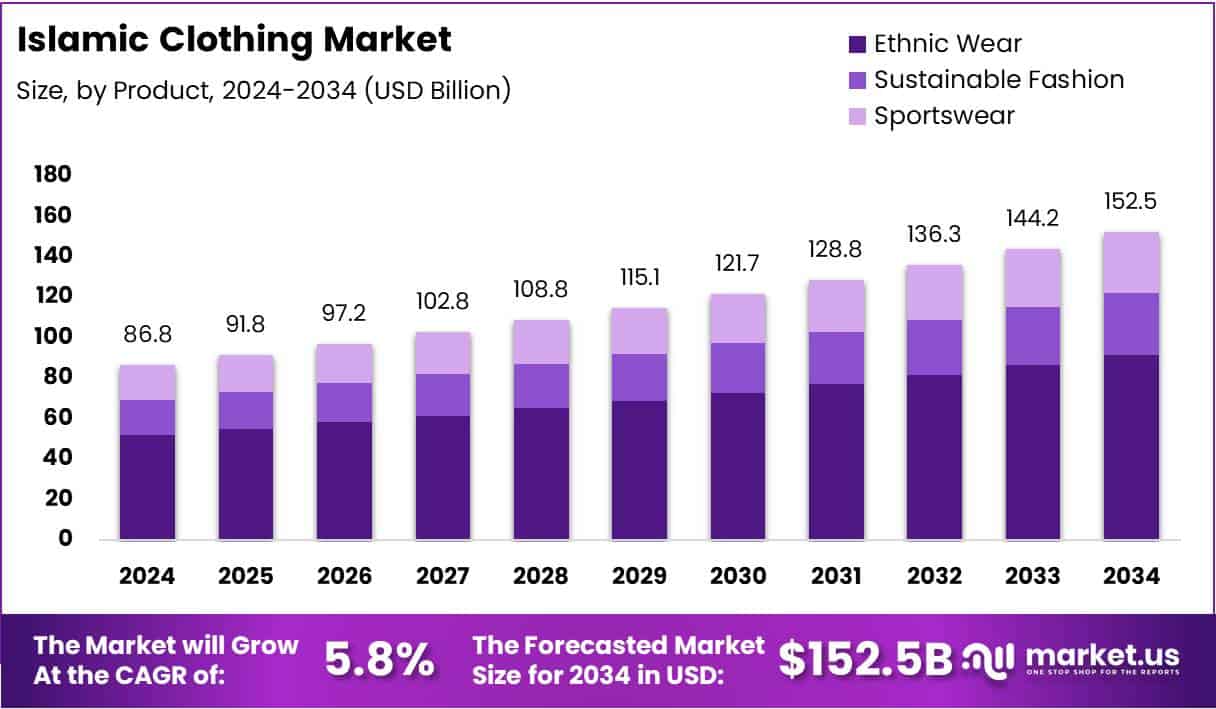
The Global Islamic Clothing Market size is expected to be worth around USD 152.5 Billion by 2034, from USD 86.8 Billion in 2024, growing at a CAGR of 5.8% during the forecast period from 2025 to 2034.
The Islamic Clothing Market refers to apparel designed to meet modesty requirements guided by Islamic principles. It includes abayas, hijabs, tunics, long dresses, and modern modest-wear styles. This market is expanding as consumers seek clothing that blends cultural identity, comfort, and contemporary fashion preferences across global retail channels.
Moving ahead, the market continues to grow as rising disposable incomes and digital commerce accelerate access to modest fashion. Increasing awareness of style diversification and cultural representation is encouraging shoppers to explore updated Islamic clothing options. As a result, brands are adopting modern cuts, lightweight materials, and versatile designs.
Furthermore, new opportunities are emerging as the market shifts toward sustainability, fabric innovation, and climate-friendly designs. Many consumers prefer breathable textiles, ethically sourced materials, and durable fabrics that support everyday lifestyles. This trend strengthens demand for eco-conscious modest wear, creating room for product differentiation within Islamic clothing categories.
Additionally, government support and regulatory encouragement are helping improve industry visibility and production capacity. Investments in textile hubs, fashion events, and entrepreneurship programs are promoting local manufacturing and export potential. These initiatives are also attracting emerging designers who focus on modest fashion and consumer-centric apparel formats.
Moreover, changing consumer expectations are shaping new strategic priorities within the Islamic Clothing Market. In 2019, 93% of Muslim women in the UK expressed that a modest-wear line would make them feel acknowledged by mainstream fashion, indicating a rising need for better representation and inclusive retail offerings across global markets.
Likewise, sustainability-focused behavior is strengthening across Muslim-majority regions. Muslim consumers in Southeast Asia reported that 67% prefer brands offering sustainable or ethical fabrics, signaling a clear growth opportunity for eco-friendly Islamic clothing. This shift reinforces the demand for modest fashion that aligns with faith, comfort, and environmental responsibility.
Key Takeaways
- Global Islamic Clothing Market expected to reach USD 152.5 Billion by 2034, driven by steady growth across major segments.
- Ethnic Wear leads the product segment with a dominant share of 58.9% in 2024.
- Women represent the largest end-use segment, accounting for 69.3% of total demand.
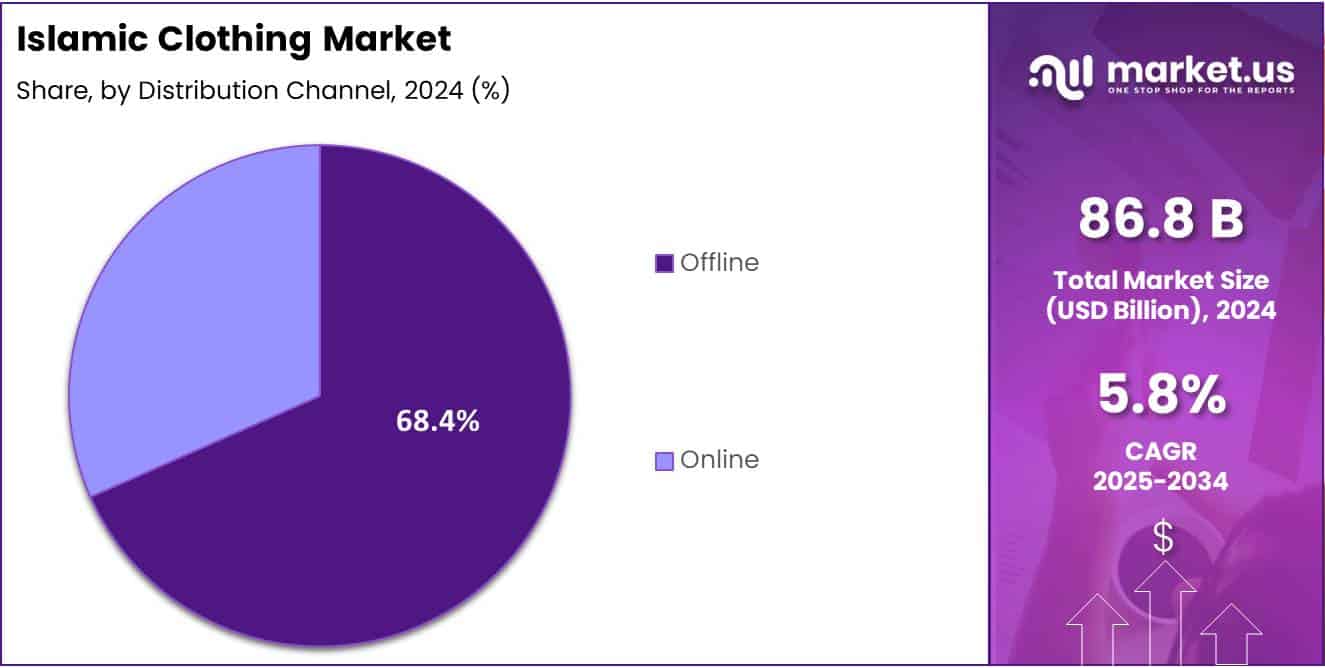
- Offline retail remains the top distribution channel with a strong 68.4% market share in 2024.
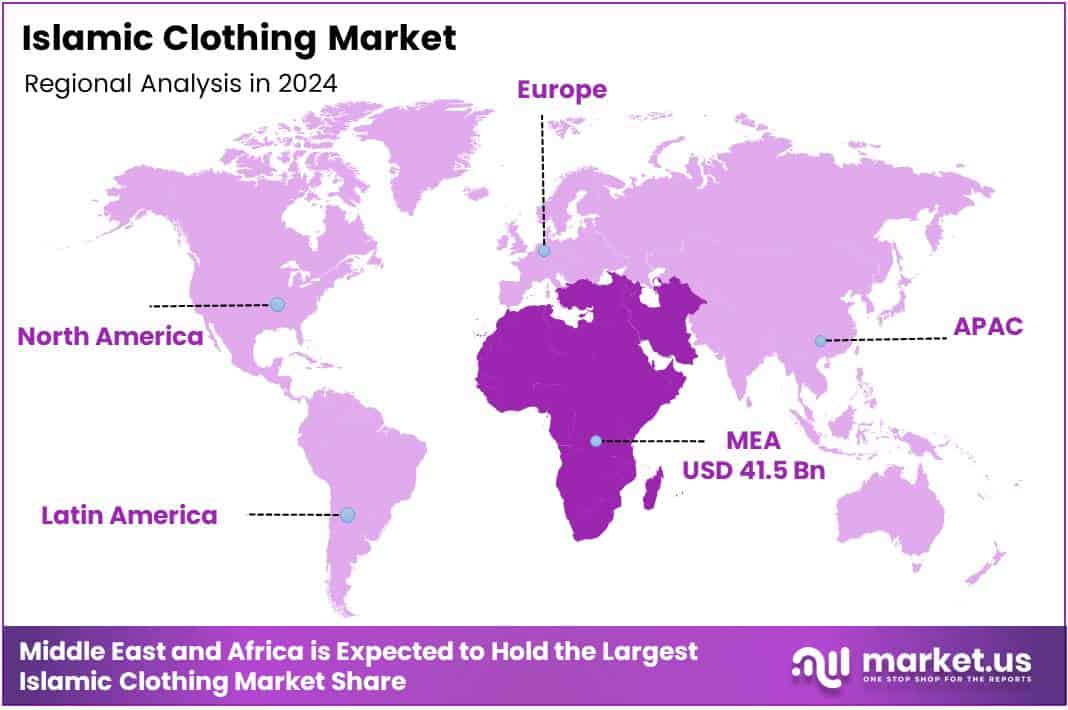
- Middle East & Africa dominates regionally with a market share of 47.9% valued at USD 41.5 Billion.
By Product Analysis
Ethnic Wear dominates with 58.9% due to its deep cultural relevance and rising preference for modest fashion.
In 2024, Ethnic Wear held a dominant market position in the By Product segment of the Islamic Clothing Market, with a 58.9% share. This category gained momentum as consumers prioritized culturally rooted garments. Moreover, rising celebrations, lifestyle shifts, and digital visibility strengthened its demand across diverse global communities.
Sustainable Fashion gained traction in the By Product segment as consumers increasingly adopted eco-friendly apparel. This segment advanced as brands introduced organic fabrics and ethical production models. Furthermore, buyers valued transparency, recycled materials, and long-lasting clothing, encouraging broader adoption across environmentally conscious demographics.
Sportswear expanded steadily in the By Product segment as fitness participation increased among modest wear consumers. This category grew as brands optimized stretchable, breathable, and movement-friendly designs. Additionally, the rise of athleisure trends encouraged buyers to integrate modest sports apparel into daily wear, supporting consistent category growth.
By End Use Analysis
Women dominate with 69.3% driven by rising modest fashion preferences and higher spending on apparel.
In 2024, Women held a dominant market position in the By End Use segment of the Islamic Clothing Market, with a 69.3% share. This segment strengthened as women increasingly adopted stylish modest wear. Moreover, evolving wardrobe choices, social influence, and online exposure propelled the category’s strong marketplace performance.
Men contributed consistently to the By End Use segment as demand for comfortable and culturally aligned attire increased. This segment advanced through modernized designs and rising awareness of modest fashion trends. Additionally, growth in formal, casual, and occasion-wear collections supported steady adoption in domestic and international markets.
By Distribution Channel Analysis
Offline dominates with 68.4% due to strong consumer trust and in-store product experience.
Offline stores held a dominant position in the By Distribution Channel segment, with a 68.4% share. This segment thrived as shoppers preferred physical evaluation of fabric, fit, and craftsmanship. Additionally, personalized service, trusted retail environments, and regional store expansion supported strong and sustained market leadership.
In 2024, Online channels grew steadily in the By Distribution Channel segment of the Islamic Clothing Market as consumers valued convenience and variety. The segment gained traction due to digital catalogues, social commerce trends, and improved delivery networks, helping more buyers transition toward seamless online purchasing experiences.
Key Market Segments
By Product
- Ethnic Wear
- Sustainable Fashion
- Sportswear
By End Use
- Women
- Men
By Distribution Channel
- Online
- Offline
Drivers
Expanding Muslim Youth Population with Lifestyle Aspirations Drives Market Growth
The Islamic clothing market is gaining strong momentum as a growing youth population seeks fashion that aligns with both faith and modern lifestyle. This group values modesty but also wants stylish, comfortable, and expressive clothing, prompting brands to create trend-focused designs. Their rising influence is shaping product innovation and expanding demand in urban markets.
Additionally, the need for modest sportswear and activewear is increasing as more consumers adopt fitness-oriented lifestyles. Young Muslims, in particular, prefer apparel that supports movement while meeting modesty expectations. This shift is encouraging brands to offer breathable fabrics, layered designs, and performance-ready clothing tailored to active users.
The expanding female workforce is also a key growth driver. As more women join professional roles, the requirement for everyday modestwear that balances comfort, professionalism, and cultural preferences continues to rise. This trend is boosting demand for office-ready abayas, tunics, and hijabs that support daily routines without compromising modesty.
Together, these factors are reshaping the Islamic clothing industry by creating consistent, lifestyle-driven demand. The blend of youth influence, fitness engagement, and women’s workforce participation is strengthening market opportunities and encouraging brands to diversify their offerings for long-term growth.
Restraints
Limited Standardization in Modestwear Size and Fit Restrains Market Growth
The Islamic clothing market continues to face pressure from the lack of consistent sizing and fit across product categories. Consumers often struggle to find garments that match their body measurements, leading to low satisfaction and increased return rates. This irregularity makes shoppers less confident, especially when buying modestwear online. As a result, growth in digital channels remains slower than expected.
In addition, the absence of unified size guidelines creates challenges for brands aiming to scale. Without standardized fits, product development becomes more complex and costly. This slows the introduction of new collections and affects overall inventory planning. Improving size consistency is essential to strengthen consumer trust and support long-term market adoption.
The market also experiences a restraint due to its heavy reliance on traditional retail channels. Many modestwear purchases still occur in physical stores, which limits accessibility for consumers living in remote or smaller regions. This dependence restricts the market’s ability to expand quickly and respond to rising global demand.
Furthermore, traditional retail formats face higher operating costs, reducing pricing flexibility. As consumer habits shift toward online and omnichannel shopping, the slow transition away from physical stores delays broader market growth and limits the industry’s scalability.
Growth Factors
Integration of Sustainable and Ethical Material Sourcing Creates New Growth Paths
The Islamic clothing market is seeing strong opportunities as brands adopt sustainable and ethical materials. Consumers are increasingly choosing eco-friendly fabrics, which encourages companies to invest in cleaner production methods. This shift supports long-term brand value and builds trust among environmentally aware buyers.
Rising demand for customizable and tailored modestwear is another major growth area. Shoppers want clothing that fits their lifestyle, size, and cultural preferences. This trend opens space for brands to offer made-to-measure options, digital fitting tools, and personalized designs. As a result, companies can strengthen customer loyalty and create premium pricing opportunities.
Global e-commerce platforms entering modest fashion are also expanding market access. Their wide reach helps brands showcase collections to buyers across regions, improving visibility and sales. These platforms offer secure payment options, faster delivery, and easy returns, which boosts customer confidence. This digital push supports stronger cross-border trade and accelerates market expansion.
Together, these opportunities create a modern, flexible, and consumer-focused market environment. Sustainability, personalization, and digital retailing are shaping the future of modest fashion, allowing companies to innovate and build competitive advantages.
Emerging Trends
Fusion of Contemporary Streetwear with Modest Fashion Shapes Market Trends
The fusion of modern streetwear with modest fashion is becoming a major trend in the Islamic clothing market. Consumers, especially young buyers, are looking for styles that balance modesty with a contemporary look. This shift is motivating brands to introduce fresh silhouettes and comfortable everyday designs.
At the same time, influencer-driven modest fashion campaigns are gaining strong visibility. Social media personalities are helping shape buying decisions by showcasing styling ideas and real-life use cases. Their reach is encouraging higher engagement, making modest fashion more aspirational for global audiences.
Another key trend is the rising use of smart textiles in modest apparel. Features such as breathable fabrics, temperature-control materials, and UV-protective layers are becoming more common. These innovations are improving comfort while maintaining modesty, making them appealing for everyday and active use.
These trends are transforming the overall look and feel of Islamic clothing. The market is shifting toward fashion-forward, functional, and digitally influenced collections. This evolution is creating broader consumer acceptance and allowing brands to tap into new lifestyle-oriented segments.
Regional Analysis
Middle East and Africa Dominates the Islamic Clothing Market with a Market Share of 47.9%, Valued at USD 41.5 Billion
In 2024, the Middle East and Africa led the Islamic Clothing Market with a strong 47.9% share, driven by deep cultural adherence and rising lifestyle spending. The region’s market value reached USD 41.5 Billion, supported by steady demand for traditional and contemporary modestwear. Growing urbanization and higher youth participation further strengthen overall consumption patterns across key countries.
North America Islamic Clothing Market Trends
North America shows rising interest in modest fashion due to growing cultural diversity and increasing consumer awareness of inclusive apparel. Demand is expanding across online platforms, supported by enhanced design innovation and modern styling preferences. The region also benefits from shifting consumer values toward comfort, versatility, and cultural expression.
Europe Islamic Clothing Market Trends
Europe continues to develop as a key growth region, backed by a multicultural population and strong fashion-forward adoption of modestwear. Consumers prefer premium-quality fabrics and contemporary silhouettes, which drive consistent spending. Expanding digital retail channels and ethical fashion awareness further support the market’s upward trend.
Asia Pacific Islamic Clothing Market Trends
Asia Pacific experiences rapid expansion due to its large Muslim population and increasing youth-driven fashion choices. Growing urban incomes and strong online retail penetration enhance access to a wide variety of modestwear. Regional designers are also shaping new trends, blending cultural styles with modern aesthetics.
Latin America Islamic Clothing Market Trends
Latin America shows gradual but steady growth. The rise in cultural inclusivity and expanding urban communities is boosting modestwear acceptance. Online shopping platforms are helping consumers access a broader apparel range, supporting long-term market development across select countries.
U.S. Islamic Clothing Market Trends
The U.S. market reflects increasing demand for modest and functional apparel, influenced by rising consumer diversity and lifestyle-driven choices. Growth is supported by online retail expansion and evolving awareness of modest-fashion categories. Preferences for comfortable, contemporary designs continue to shape product adoption across major cities.
Key Regions and Countries
North America
- US
- Canada
Europe
- Germany
- France
- The UK
- Spain
- Italy
- Rest of Europe
Asia Pacific
- China
- Japan
- South Korea
- India
- Australia
- Rest of APAC
Latin America
- Brazil
- Mexico
- Rest of Latin America
Middle East & Africa
- GCC
- South Africa
- Rest of MEA
Key Islamic Clothing Company Insights
The global Islamic Clothing Market in 2024 reflects a growing shift toward modern modestwear, and several leading companies are shaping this evolution. Each player contributes unique strengths that enhance product diversity, digital reach, and consumer engagement across regions.
Aab Collection continues to influence the premium modest fashion space by focusing on clean aesthetics and high-quality fabrics. Its design approach appeals to modern consumers seeking minimal yet culturally rooted apparel. The brand’s expanding online presence further strengthens its position in key markets.
Modanisa plays a crucial role in accelerating e-commerce adoption within Islamic fashion. With a wide assortment of modestwear categories, the platform enhances accessibility for global buyers. Its marketplace model also supports smaller modestwear labels, making it an important enabler of ecosystem growth.
Haute Hijab remains a strong name in the premium hijab and accessories segment. The company’s focus on innovation in materials and craftsmanship positions it well among consumers valuing comfort and durability. Its digital-first strategy helps maintain strong engagement among younger audiences.
SUKAINA brings a contemporary approach to abayas and everyday modestwear, offering designs that balance tradition with modern lifestyle needs. Its curated collections appeal to fashion-forward consumers looking for updated silhouettes. The brand’s emphasis on thoughtful detailing enhances its competitive edge.
An-Nahar strengthens the market with its broad selection of culturally inspired garments, ensuring continued demand for traditional attire. SHUKR Islamic Clothing supports category development through functional everyday clothing that blends modesty with comfort. Haf & Haf adds further product diversity by catering to varied regional preferences, reinforcing the market’s inclusive growth momentum.
Top Key Players in the Market
Key Players
- Aab Collection
- Modanisa
- Haute Hijab
- SUKAINA
- An-Nahar
- SHUKR Islamic Clothing
- Haf & Haf
Recent Developments
- In March 2025, Aya raised US$ 1.6 million to scale its modest fashion offerings.It also aimed to strengthen market unification in Saudi Arabia through expanded product reach.
- In Q1 2024, Uniqlo introduced a modestwear line with designer Hana Tajima to serve Muslim consumers.This launch helped the brand strengthen its appeal in the growing global modest-fashion category.
- In October 2025, Touché Privé secured US$ 5 million in Sharia-compliant financing from Amplify Growth Partnership.The funding supported its expansion efforts across key modest-fashion markets.









