


Report Overview
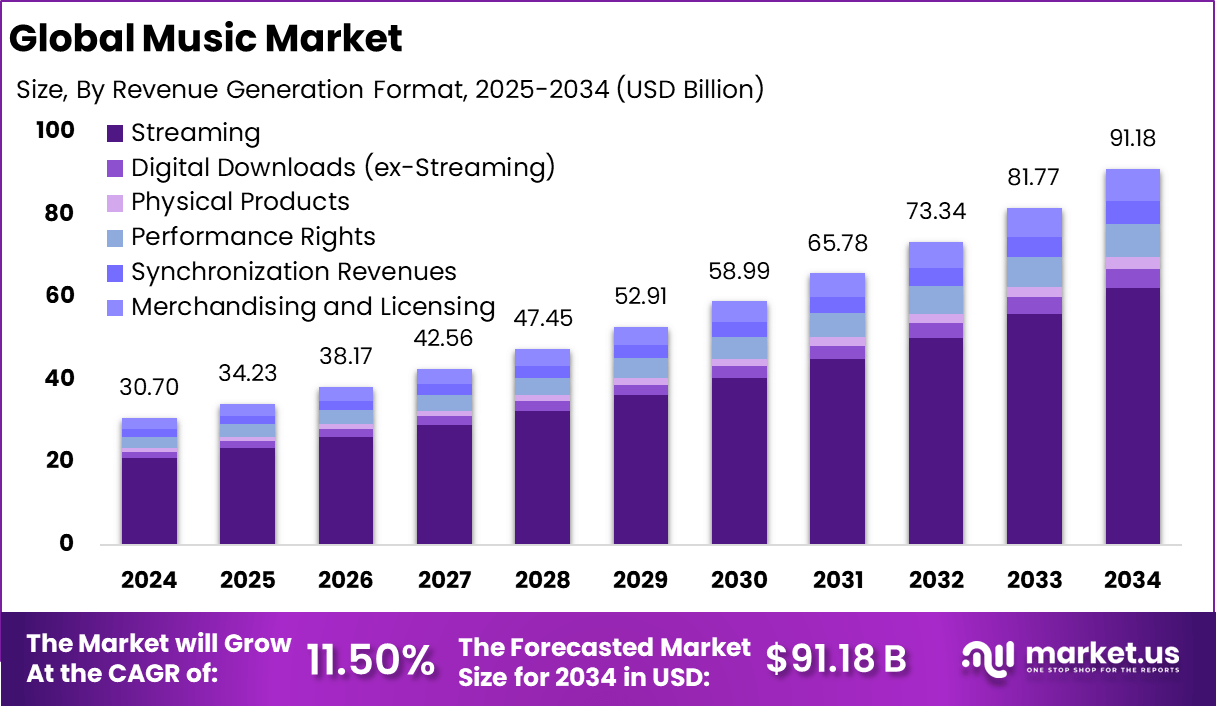
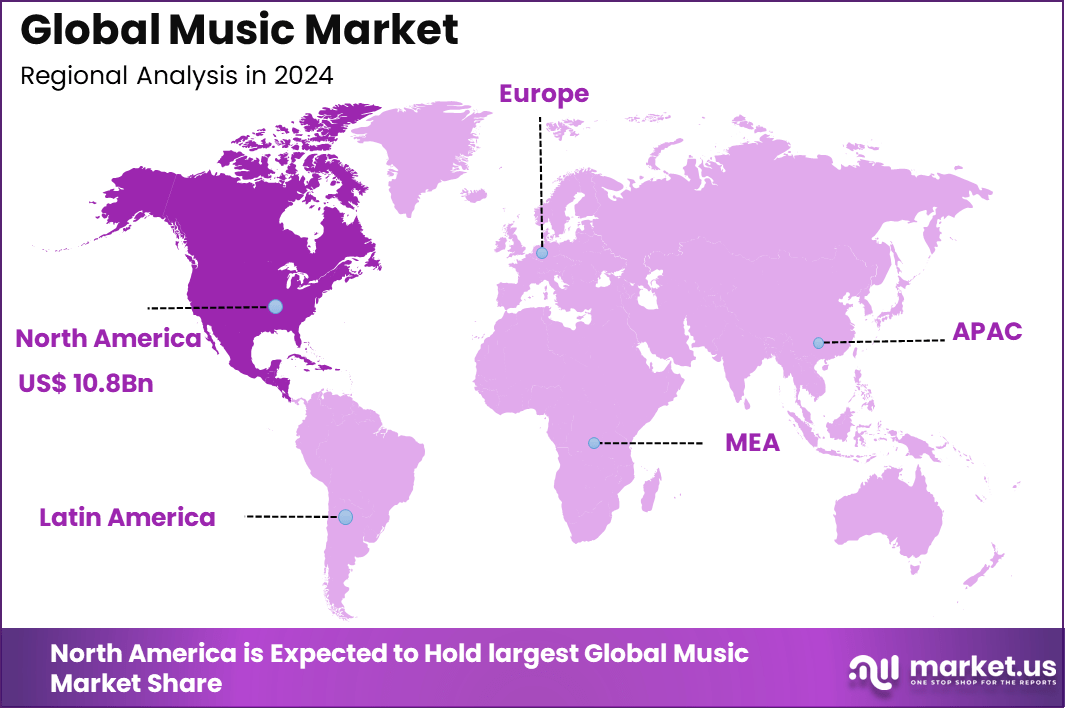
The Global Music Market generated USD 30.7 Billion in 2024 and is predicted to register growth to about USD 91.18 Billion by 2034, recording a CAGR of 11.50% throughout the forecast span. In 2024, North America held a dominan market position, capturing more than a 35.2% share, holding USD 10.80 Billion revenue.
The music market has expanded steadily as digital streaming becomes the primary way audiences consume songs, albums and audio content. Growth is supported by rising smartphone use, wider internet access and increasing demand for flexible, on demand listening experiences. The market has transitioned from physical media to digital formats, with most revenue now concentrated in streaming and online distribution.
The growth of the market can be attributed to increasing adoption of subscription based streaming platforms, rising consumption of short form and curated playlists and stronger integration of music into social and gaming environments. Advances in recommendation algorithms, smart speakers and connected devices also support continual engagement. Globalisation of music discovery through social media and digital marketing further accelerates listener growth.
Technology adoption is a critical element reshaping the music industry. Artificial intelligence aids in music creation and curation, while blockchain technology improves transparency regarding ownership and royalties. Virtual and augmented reality are expanding live performance formats and fan engagement. These technologies not only enhance user experience but also empower artists with new tools for creativity and revenue generation.
Key reasons for adopting these technologies include the desire for efficiency in music production, improved fan engagement through personalized content, and enhanced monetization methods such as direct-to-fan platforms and tokenized royalties. Technologies like AI help reduce production costs and speed up creative processes, while blockchain fosters trust and fairness in royalty distribution, which is vital for industry sustainability.
Key Takeaways
- Streaming dominates the music market, generating about 68.4% of total revenue.
- Among all music genres, Pop holds the leading position, capturing roughly 26.5% of overall consumption.
- Onlineplatforms represent the largest distribution channel, comprising about 88.3% of music market distribution.
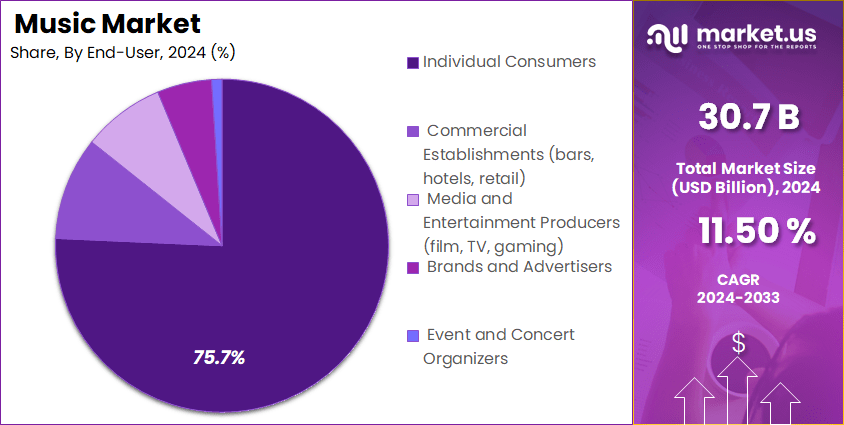
- Within the end-user landscape, Individual consumers form the largest group, contributing around 75.7% of total music market revenue.
- North America holds about 35.2% of the global music market, reflecting strong digital infrastructure and mature music consumption habits.
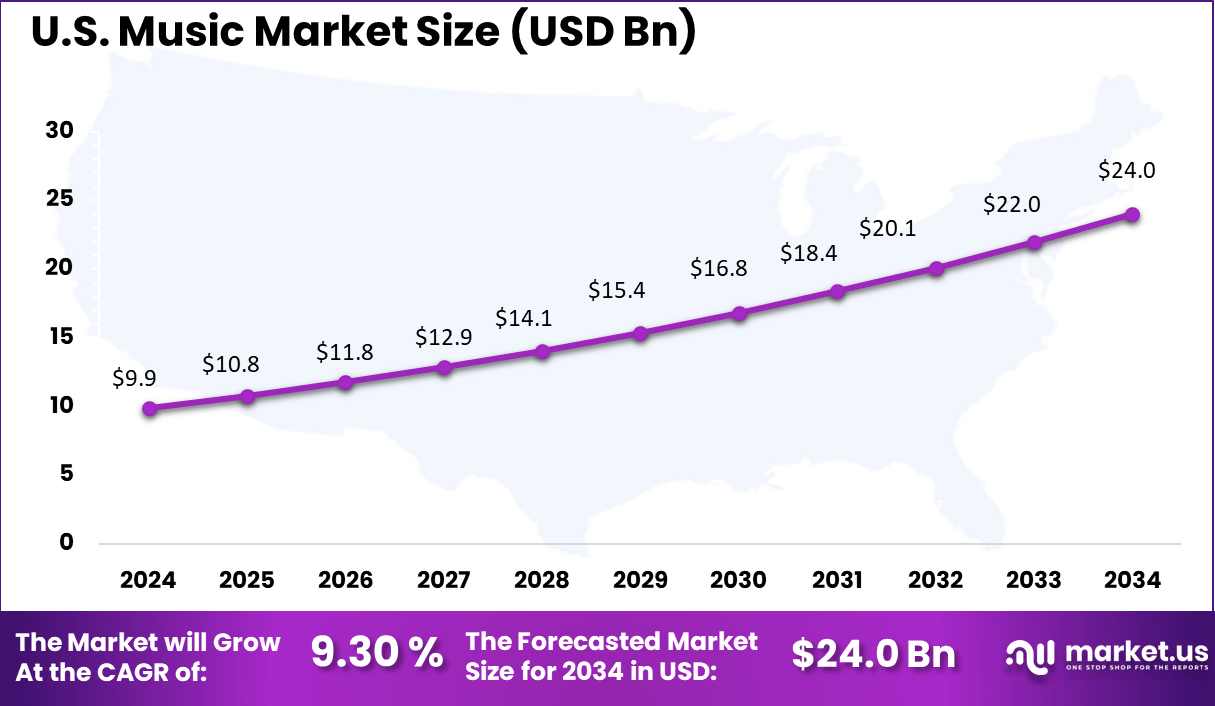
- The USmarket specifically generates around USD9.86billion, growing at a CAGR of 9.3%.
Global Industry and Revenue
- Global revenue: Recorded music revenues reached USD 29.6 billion in 2024, marking the tenth straight year of growth, according to the International Federation of the Phonographic Industry.
- Dominant format: Streaming remained the leading revenue source, accounting for 69.0% of global recorded music revenues in 2024 after a 9.5% annual increase.
- Paid subscribers: There were 752 million paid subscription users worldwide by the end of 2024.
- Largest market: The United States continued to be the world’s largest market for music consumption and revenue generation.
Adoption Rate and Usage Statistics
- Global user penetration: Music streaming penetration is expected to reach 13.34% in 2025, with a projected increase to 14.75% by 2030, reflecting steady global expansion of digital listening.
- Average listening time: In high-engagement markets such as India, listeners stream music for an average of 24.4 hours per week, showing strong daily usage patterns.
- Platform dominance: Spotify leads in global paid subscribers, while YouTube remains the largest overall music platform with 2.1 billion active users who consume music content.
- Physical media trends: Vinyl records recorded their 18th consecutive year of growth in 2024, growing 4.6% year over year. Asia remains the largest market for physical music formats, even as digital streaming continues to dominate.
By Subscribers (Mn)
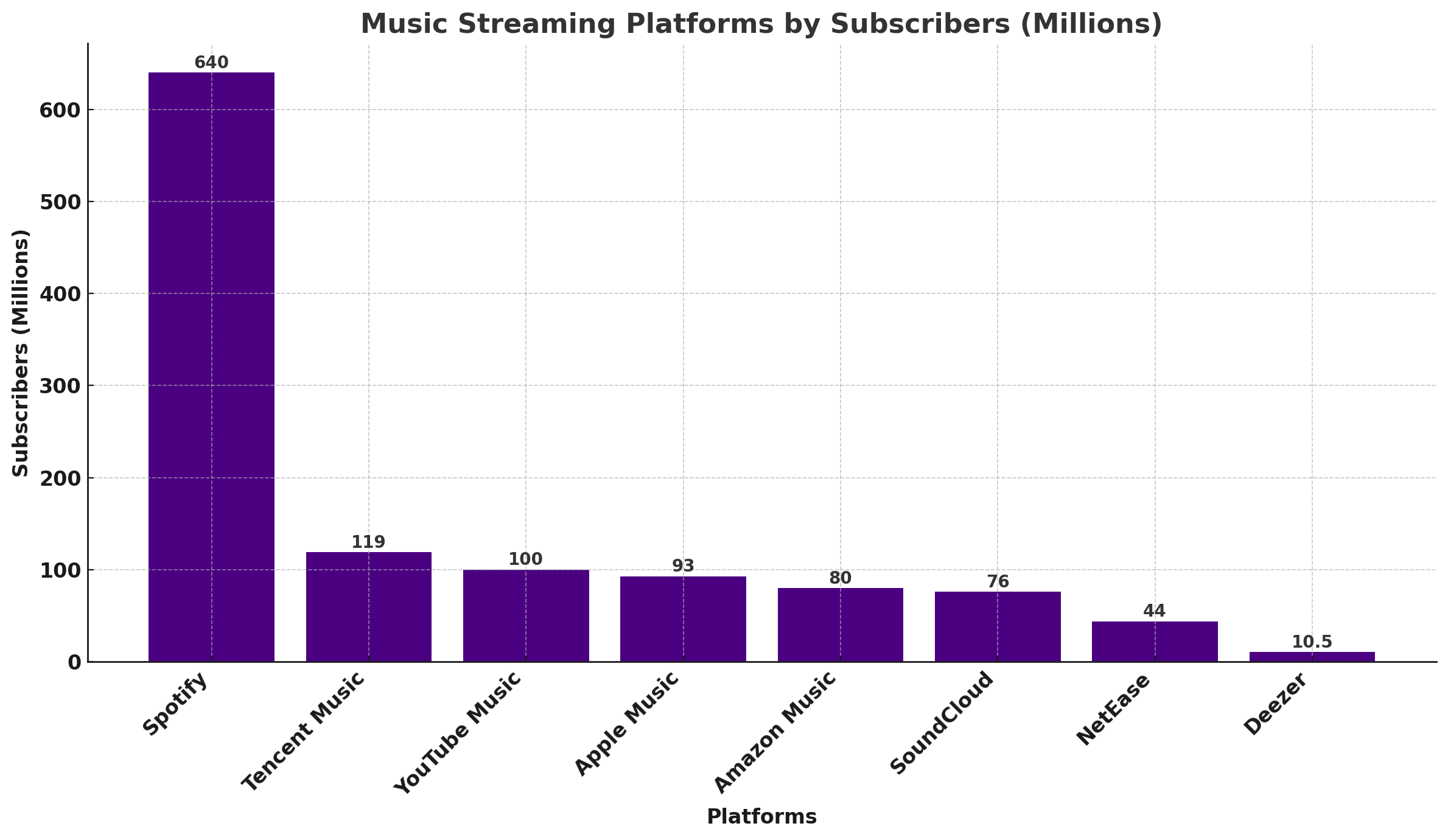
Based on data from FrontmanPhilosophy, the global music streaming landscape in 2025 is defined by clear subscriber concentration among a few major platforms with Spotify leading at 640 million users.
U.S Music Market Size
In the United States, music industry revenue reaches around USD 9.86 billion, highlighting its importance as one of the largest national markets worldwide. The US market continues to expand with a healthy CAGR of 9.3%, driven by diverse revenue streams such as streaming, live performances, and digital music sales. Investment in technology like immersive audio and AI-powered recommendation systems further propels growth, keeping North America at the forefront of global music trends.
In 2024, North America holds a substantial portion of the global music market, commanding approximately 35.2% of the total share. This region benefits from a large number of music enthusiasts, a mature digital infrastructure, and extensive music consumption across various formats. The market’s strong position is supported by an active live music culture, numerous festivals, and a significant presence of influential artists and music labels.
By Revenue Generation Format
In 2024, Streaming dominates the music market, accounting for 68.4% of revenue generation. This prominence is fueled by consumer preference for convenient, on-demand access to vast libraries of music. Streaming platforms continuously evolve, offering personalized recommendations, curated playlists, and subscription tiers that attract broad audiences.
As streaming penetrates deeper into global markets, its role as the main revenue engine solidifies, outpacing physical sales and downloads. Moreover, the steady growth of streaming underlines changing consumption habits where access matters more than ownership. Streaming enables consumers to enjoy music anytime and anywhere, supported by widespread internet and mobile device use, making it the preferred format for music fans worldwide.
Genre
In 2024, Pop music leads the genre segment with a 26.5% share, reflecting its widespread appeal across different demographics. Its catchy and accessible sound maintains steady popularity, driving streaming numbers and concert attendance alike. Pop’s mass appeal helps it dominate playlists and radio rotations, reinforcing its importance in the music industry.
This genre’s influence extends beyond music into culture and advertising, keeping it at the forefront of market trends. Pop artists often lead innovations in music production and marketing, ensuring the genre’s relevance in a rapidly evolving landscape.
Distribution Channel
In 2024, Online platforms overwhelmingly account for 88.3% of music distribution, reflecting the digital shift in how music reaches listeners. These platforms include streaming services, digital download stores, and social media channels, which offer vast reach and flexibility to both artists and consumers. The dominance of online channels is a sign of changing consumer behavior, favoring instant access and social sharing over traditional physical formats.
The integration of new technologies such as AI for personalized music discovery enhances user experiences on these platforms. Artists and labels benefit from this reach and data, supporting more targeted marketing and fan engagement strategies.
By End User
In 2024, Individual consumers represent the largest end-user segment with 75.7% share, driven by growing demand for personalized entertainment. Music streaming has become deeply integrated into daily life, with users accessing music on smartphones, computers, and connected devices. The ease of use, combined with personalized playlists and offline listening options, fuels this segment’s significance.
This consumer-driven growth encourages platforms to innovate continually in user experience and content offerings. The trend also signals opportunities for leveraging data analytics to better understand listener preferences and habits for future content and service improvements.
Key Market Segments
- By Revenue Generation Format
- Streaming
- Digital Downloads (ex-Streaming)
- Physical Products
- Performance Rights
- Synchronization Revenues
- Merchandising and Licensing
- By Genre
- Pop
- Rock
- Hip-Hop / Rap
- Electronic / Dance
- Classical
- Jazz
- Country
- Latin
- By Distribution Channel
- Online Platforms
- Offline / Brick-and-Mortar Retail
- By End User
- Individual Consumers
- Commercial Establishments (bars, hotels, retail)
- Media and Entertainment Producers (film, TV, gaming)
- Brands and Advertisers
- Event and Concert Organizers
Emerging Trends
| Key Trends | Description |
|---|---|
| Streaming Dominance | Streaming continues to lead the global music landscape, supported by platforms offering personalized discovery tools that make music widely accessible and enhance artist visibility. |
| Genre Blending & Microgenres | Artists are increasingly combining diverse styles to create new sounds, giving rise to microgenres that attract wide listener groups and thrive especially across social media platforms. |
| Integration of AI in Music | AI is being used to support music creation and production through tools that reduce production time and cost, expanding creative opportunities for both emerging and established artists. |
| Live and Virtual Experiences | Live music remains relevant, while virtual and interactive formats continue gaining traction as audiences seek immersive digital concert experiences. |
| Independent Artists Rising | Independent musicians increasingly leverage digital platforms to publish, promote, and monetize their work without relying on traditional labels, strengthening their audience reach and commercial potential. |
Growth Factors
| Key Factors | Description |
|---|---|
| Digital Platform Surge | The increasing use of digital platforms is accelerating music market expansion by offering wider accessibility, convenience, and strong engagement among younger streaming-focused audiences. |
| Expanding Live Music Sector | Rising attendance at concerts and festivals continues to drive revenue growth, as consumers spend more on live experiences despite higher ticket prices. |
| Global Middle-Class Growth | Higher disposable incomes in emerging regions, particularly across Asia, are stimulating greater spending on music consumption and related services. |
| Technological Advances | Improved mobile connectivity, smart devices, and AI-enabled music services are enhancing personalization and widening user access, strengthening overall engagement. |
| Strategic Alliances & Partnerships | Collaborations between record labels and technology providers are improving distribution, rights management, and monetization, supporting sustained industry expansion. |
Driver Analysis
Growth of Digital Music Streaming
The adoption of digital music streaming platforms is the biggest driver for the music industry today. More affordable smartphones and easier internet access allow more people worldwide to listen to music anytime, anywhere. This rise in streaming is changing how music is consumed, with paid subscriptions and ad-supported models expanding rapidly.
Streaming also allows music to reach new audiences through personalized recommendations and social sharing. These platforms create new revenue sources for artists and labels beyond traditional album sales, making streaming the center of industry revenue. This driver is backed by growing subscriber numbers and technology improvements enhancing the music experience.
Restraint Analysis
Royalty and Artist Compensation Issues
One of the main restraints holding back the music industry is disputes over fair pay for artists. The streaming revenue model pays artists only small fractions of a cent per stream, making it hard for many to earn a living. This causes tension between streaming services, record labels, and artists, affecting morale and sustainability in the industry.
Additionally, piracy and copyright infringement remain significant problems in certain regions, cutting into music creators’ rightful earnings. The music ecosystem needs clearer and more balanced royalty structures to ensure creators are fairly compensated, or this issue may slow market growth.
Opportunity Analysis
Expansion into New Tech and Platforms
The music industry has exciting opportunities from integrating music with emerging technologies like gaming, virtual reality, and social media platforms. Licensing music for these new uses creates fresh revenue streams beyond traditional sales or streaming.
Immersive audio experiences and AI tools for music creation also offer innovative ways to engage listeners and diversify offerings. These advancements allow artists to reach audiences in novel ways and create interactive experiences. Expanding into these tech-driven segments can boost revenues and help the industry adapt to changing consumer behaviors.
Challenges
Impact of AI on Music Creation and Distribution
Artificial intelligence presents a major challenge for the music industry. While AI can help in discovering talent and producing content, AI-generated music threatens to flood the market with machine-made tracks. This could reduce opportunities and income for human artists who struggle to compete with low-cost AI content.
The rise of AI also raises complex questions around copyright, ownership, and ethical use of creative work. Without clear regulations, AI might marginalize genuine artists and reduce music diversity. Balancing AI innovation with protecting creators is critical for the industry’s future.
Key Players Analysis
Universal Music Group, Sony Music Entertainment, and Warner Music Group lead the global music market with extensive catalogs, strong artist networks, and advanced distribution capabilities. Their strategies focus on streaming growth, global licensing, and investments in digital rights management. These companies continue to strengthen revenue through expanded partnerships with major platforms and enhanced promotional ecosystems.
BMG, Kobalt, Spotify, Apple Music, Amazon Music, and YouTube Music expand the competitive landscape with diverse digital-first models. Their platforms emphasize personalized recommendations, subscription services, and targeted audience engagement. Music streaming growth is supported by large user bases and strong technological ecosystems. These players focus on improving discovery tools, expanding regional content, and strengthening monetization options.
Tencent Music, Deezer, Tidal, SoundCloud, Pandora, NetEase Cloud Music, Anghami, Melon, Yandex Music, Boomplay, JioSaavn, KKBOX, Believe, CD Baby, and others widen the market through localized content strategies and creator-centric tools. Their offerings support emerging artists, regional genres, and community-based music experiences. These companies invest in social listening features, independent distribution, and flexible monetization models.
Top Key Players in the Market
- Universal Music Group N.V.
- Sony Music Entertainment (Sony Corporation of America)
- Warner Music Group Corp.
- BMG Rights Management GmbH
- Kobalt Music Group Ltd.
- Spotify Technology S.A.
- Apple Inc. (Apple Music)
- Amazon.com, Inc. (Amazon Music)
- Alphabet Inc. (YouTube Music)
- Tencent Music Entertainment Group
- Deezer S.A.
- Tidal Music AS
- SoundCloud Global Limited and Co. KG
- Pandora Media, LLC (Sirius XM Holdings Inc.)
- NetEase Cloud Music (NetEase, Inc.)
- Anghami Inc.
- Melon Company (Kakao Entertainment)
- Yandex Music LLC
- Boomplay Music Group Limited
- JioSaavn LLC
- KKBOX Inc.
- Curb Records, Inc.
- Believe S.A.
- CD Baby, Inc.
- Others
Recent Developments
- October 2025 – Universal Music Group signed an industry-first strategic agreement with AI music platform Udio, collaborating on new licensed AI music creation and streaming experiences. This followed their ongoing $775 million acquisition of Downtown Music, which faces regulatory scrutiny in the EU over competition concerns.
- February 2025 – Kobalt Music launched KOSIGN, a music publishing platform that empowers artists and songwriters with transparent, flexible royalty management and direct licensing, addressing a large underserved market.









