


Report Overview
The Global Connected Living Room Market size is expected to be worth around USD 138.6 Billion by 2033, from USD 59.1 Billion in 2023, growing at a CAGR of 8.9% during the forecast period from 2024 to 2033.
Connected Living Room refers to the integration of various smart devices, technologies, and services within a residential space to create an interconnected and immersive entertainment and lifestyle experience. It involves the seamless connectivity and interaction between devices such as smart TVs, streaming devices, gaming consoles, home audio systems, voice assistants, and other IoT-enabled devices.
The connected living room market is experiencing significant growth, driven by advancements in technology and changing consumer behaviors towards home entertainment. This market includes the sale of smart devices and systems designed for the living room, including smart TVs, streaming devices, soundbars, and home theater systems that offer internet connectivity and smart features.
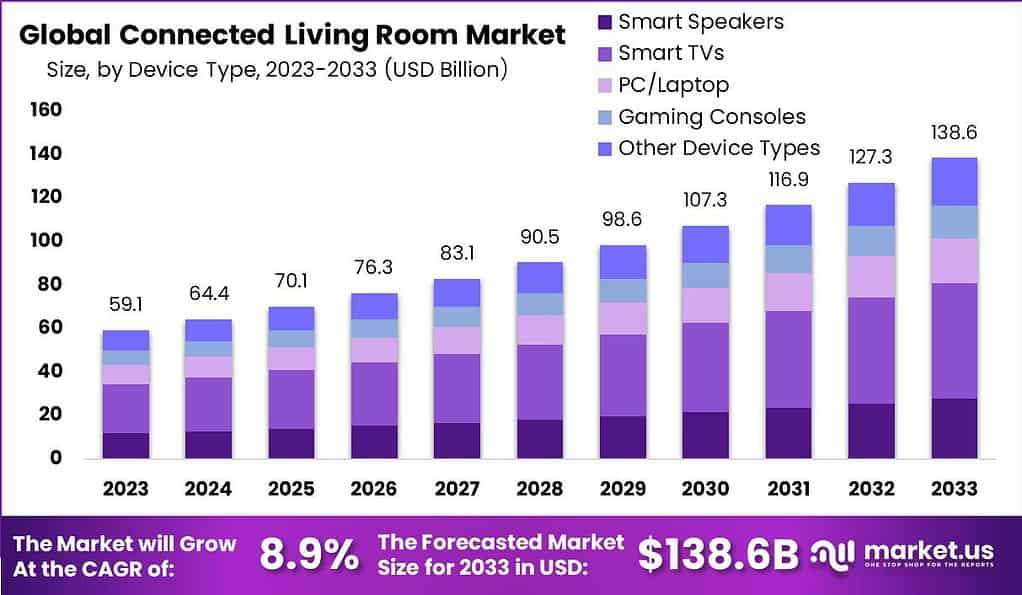
The expansion of this market can be attributed to factors such as the increasing availability of high-speed internet, the growing demand for streaming services, and the continuous innovation in smart home technology. As consumers seek more integrated and immersive entertainment experiences at home, the market for connected living room devices is expected to continue its upward trajectory, offering substantial opportunities for manufacturers and service providers in this space.
Key Takeaways
- Connected Living Room Market size is expected to be worth around USD 138.6 Billion by 2033, from USD 59.1 Billion in 2023, growing at a CAGR of 8.9%
- In 2023, the Smart TVs segment held a dominant market position within the connected living room market, capturing more than a 38.3% share.
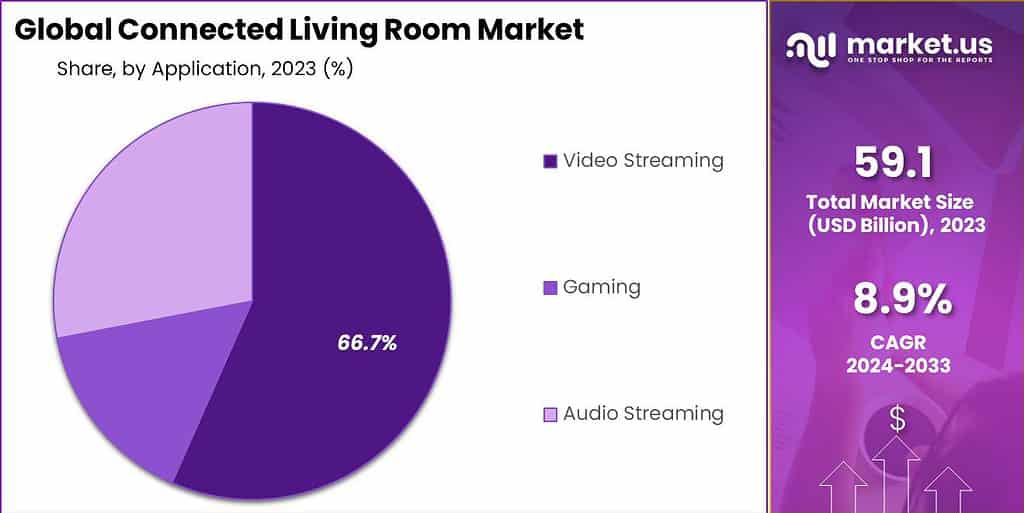
- In 2023, the Video Streaming segment held a dominant position in the Connected Living Room Market, capturing more than a 66.7% share.
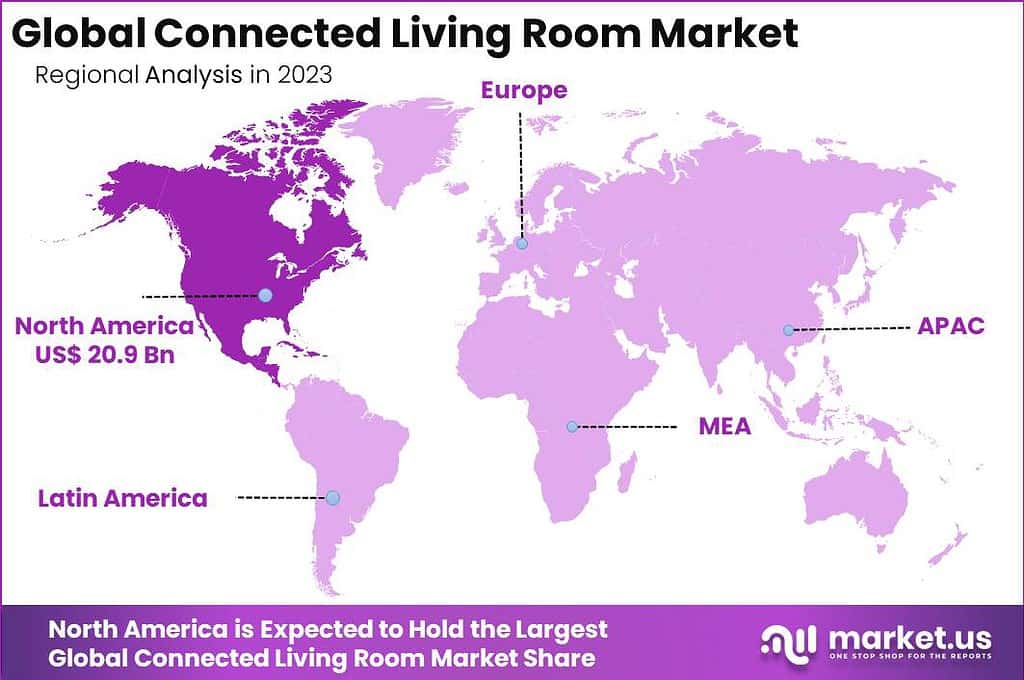
- In 2023, North America held a dominant market position in the Connected Living Room segment, capturing more than a 35.4% share
- Sales of smart TVs with built-in voice assistants and connected capabilities are projected to increase by 25% in 2023. These intelligent TVs enhance the living room experience by enabling interactive features and seamless integration with other devices.
- Approximately 43% of households in the United States already have at least one streaming media device connected to their living room TV as of 2022. These devices allow users to access a wide range of content, from streaming services to online videos.
- The demand for connected lighting solutions in living rooms is expected to grow by 30% in 2024. These systems offer personalized ambiance and energy-efficient control, enhancing both aesthetics and functionality.
- 51% of consumers express interest in integrating their living room entertainment systems with other smart home devices, such as security cameras and climate control systems. This integration provides a seamless and holistic home automation experience.
- Consumers are willing to pay a premium for connected living room solutions that prioritize privacy and security. 67% of users value enhanced privacy features, ensuring their data remains protected.
- The adoption of connected home theater systems – complete with integrated voice control and smart home integration – is expected to increase by 28% in 2023. These systems offer immersive audiovisual experiences.
- Demand for connected living room solutions equipped with advanced analytics – such as personalized content recommendations and usage tracking – is projected to grow by 40% in 2024. These insights enhance user experiences.
- The need for seamless whole-home entertainment experiences drives the demand for connected living room solutions that support multi-room audio and video streaming. This segment is expected to grow by 32% in 2023.
Device Type Analysis
In 2023, the Smart TVs segment held a dominant market position within the connected living room market, capturing more than a 38.3% share. This significant market share can be attributed to the widespread adoption of smart TVs as the central entertainment hub in households around the globe.
Smart TVs have become increasingly popular due to their ability to offer direct access to a wide array of streaming services, internet browsing capabilities, and integration with other smart home devices. Consumers value the convenience of accessing all their entertainment content through a single device, which has propelled the demand for smart TVs. Additionally, advancements in technology have made smart TVs more affordable and accessible to a broader audience, further boosting their market dominance.
The leadership of the Smart TVs segment in the connected living room market is also reinforced by continuous innovation and the integration of cutting-edge technologies. Features such as 4K and 8K resolution, high dynamic range (HDR) content, and improved user interfaces have enhanced the viewing experience, making smart TVs even more attractive to consumers.
Moreover, smart TVs now often come equipped with voice recognition and artificial intelligence capabilities, allowing for voice-controlled operations and personalized content recommendations. This has not only improved user engagement but also fostered a more interactive and convenient living room environment. The combination of these factors has solidified the Smart TVs segment’s leading position in the market, with a strong outlook for sustained growth in the coming years.
Application Analysis
In 2023, the Video Streaming segment held a dominant position in the Connected Living Room Market, capturing more than a 66.7% share. This substantial market share can be attributed to the increasing demand for on-demand entertainment services, fueled by the proliferation of high-speed internet and the widespread adoption of smart TVs and streaming devices.
The convenience of accessing a vast library of content from the comfort of one’s living room has significantly contributed to the segment’s growth. Additionally, the rise in subscription-based platforms, such as Netflix, Amazon Prime, and Disney+, has played a crucial role in driving consumer preference towards video streaming. These platforms have continuously enhanced their content offerings, making video streaming an integral part of daily entertainment for consumers worldwide.
The leading position of the Video Streaming segment is further reinforced by technological advancements and the integration of artificial intelligence to improve user experiences. Features such as personalized recommendations, high-definition (HD) and ultra-high-definition (UHD) streaming capabilities, and interactive content have enriched the video streaming experience, attracting more users.
Moreover, the ongoing global shift towards digitalization and the increase in consumer spending on entertainment options that offer convenience and a wide range of content have solidified video streaming’s status as the forefront of the Connected Living Room Market.
Key Market Segments
By Device Type
- Smart Speakers
- Smart TVs
- PC/Laptop
- Gaming Consoles
- Other Device Types
By Application
- Video Streaming
- Gaming
- Audio Streaming
Driver
Integration of Advanced Technologies
The integration of advanced technologies such as AI, IoT, and voice recognition into connected living room devices acts as a significant driver for the market. These technologies enhance user experiences by enabling smart automation, personalized content recommendations, and voice-controlled operations, making the living room environment more interactive and convenient. For instance, smart TVs equipped with AI can learn from users’ viewing habits to suggest tailored content, improving engagement.
IoT devices allow seamless control over the living room environment, from lighting to temperature, using a smartphone or voice commands. This technological evolution not only attracts tech-savvy consumers but also encourages the adoption among a broader audience, seeking convenience and a futuristic living experience. Consequently, the demand for connected living room devices is surging, propelling market growth.
Restraint
Privacy and Security Concerns
Privacy and security concerns regarding connected living room devices pose significant restraints to market growth. As these devices often collect personal data to provide customized services, they become prime targets for cyber-attacks and data breaches. Consumers are increasingly wary of the risks associated with smart devices, including unauthorized access and misuse of personal information.
The apprehension about the potential vulnerability of smart home ecosystems to hacking and the lack of robust security measures in some products can deter potential buyers. Moreover, the regulatory landscape around data protection and privacy is becoming stricter, compelling manufacturers to invest heavily in security features, which can increase product costs. This restraint highlights the critical need for industry players to address privacy and security concerns to foster consumer trust and encourage market adoption.
Opportunity
Rising Demand for Home Entertainment
The growing consumer appetite for home entertainment presents a lucrative opportunity for the connected living room market. With more people seeking entertainment options within the comfort of their homes, there is an increasing demand for integrated entertainment systems that offer a seamless and immersive experience.
The proliferation of high-quality video streaming services, advanced gaming consoles, and digital platforms offering diverse content has fueled this trend. This shift presents a unique opportunity for market players to develop and market integrated solutions that cater to the evolving entertainment needs of consumers. By offering products that combine high-quality audio and video streaming, gaming, and smart home connectivity, companies can tap into the expanding market segment seeking comprehensive home entertainment solutions.
Challenge
Interoperability and Compatibility Issues
Interoperability and compatibility issues among different brands and types of connected living room devices pose a significant challenge to the market. Consumers often find it difficult to integrate new devices with existing ones due to varying standards and protocols. This lack of seamless connectivity can lead to a fragmented user experience, deterring potential buyers from investing in smart living room technologies.
Furthermore, the rapid pace of technological advancements means that devices can become obsolete quickly, exacerbating compatibility issues. To overcome this challenge, industry stakeholders must work towards developing universal standards and protocols that ensure devices from different manufacturers can communicate and work together efficiently. Addressing these interoperability issues is crucial for the market’s growth, as it would enhance user satisfaction and encourage the adoption of connected living room devices.
Growth Factors
- Technological Advancements: The integration of advanced technologies like AI, IoT, and smart connectivity in living room devices enhances user experience through automation and personalized content, contributing significantly to market growth.
- Increase in Demand for Smart TVs: The adoption of smart TVs equipped with internet connectivity has opened up new avenues for content consumption, acting as a pivotal growth factor for the connected living room market.
- Consumer Preferences for Home Entertainment: A shift towards home-based entertainment options, especially during recent times, has led to an increased demand for connected living room setups, further propelling market growth.
- Innovations in Display and Audio Equipment: Advancements in display technology and the development of superior sound systems have enhanced the entertainment experience, driving consumer interest and market expansion.
Top Emerging Trends
- Online Media Streaming Popularity: The surging popularity of online media streaming platforms like Netflix and Amazon Prime is significantly influencing the market’s direction, emphasizing the importance of connected devices for a seamless entertainment experience.
- Growth in Second-screen Devices: The rising preference for using second-screen devices, such as smartphones and tablets, alongside primary entertainment sources like TVs, is shaping market trends.
- Integration of User-Interactive Features: Devices that offer interactive features, providing personalized and engaging experiences, are becoming increasingly popular among consumers.
- Wireless and Connectivity Breakthroughs: Significant advancements in wireless and connectivity technologies are enabling more efficient and user-friendly living room setups, influencing market dynamics.
Top Use Cases
- Video and Audio Streaming: The connected living room market is heavily dominated by video and audio streaming applications, driven by the consumers’ growing subscription to on-demand services and their preference for live event streaming.
- Gaming: The integration of gaming consoles into the living room setup has become a key use case, catering to the rising demand for home entertainment and multiplayer gaming experiences.
- Smart Home Automation: Connected living rooms are increasingly being integrated with smart home automation systems, allowing users to control lighting, temperature, and security systems for enhanced convenience and efficiency.
- Educational and Work-related Activities: With the rise of remote work and online education, connected living rooms are also serving as spaces for learning and productivity, facilitated by advanced computing devices and connectivity solutions.
Regional Analysis
In 2023, North America held a dominant market position in the Connected Living Room segment, capturing more than a 35.4% share. This leadership can be attributed to several key factors, including the region’s high penetration of advanced technology, significant consumer spending on entertainment and media, and a strong presence of leading technology companies.
The demand for Connected Living Room in North America was valued at USD 20.9 billion in 2023 and is anticipated to grow significantly in the forecast period. North America’s advanced infrastructure, which supports high-speed internet and widespread adoption of smart devices, has facilitated seamless integration of connected living room technologies. Furthermore, the region’s consumers exhibit a high degree of digital literacy, making them more inclined towards adopting technologies that enhance the convenience and quality of home entertainment.
The region’s technological ecosystem, characterized by the presence of major technology giants and innovative startups, continually drives advancements in the connected living room space. Innovations in IoT (Internet of Things) and AI (Artificial Intelligence) technologies have been pivotal in evolving the user experience by offering personalized and interactive media consumption options.
Additionally, the strong regulatory framework and policies supporting digital transformation have further propelled the market growth. This conducive environment has led to the development of a robust market for connected devices such as smart TVs, streaming devices, and advanced audio systems, underpinning the growth of the connected living room market in North America.
Key Regions and Countries Covered in this Report:
- North America
- The US
- Canada
- Europe
- Germany
- France
- The UK
- Spain
- Italy
- Russia
- Netherland
- Rest of Europe
- APAC
- China
- Japan
- South Korea
- India
- New Zealand
- Singapore
- Thailand
- Vietnam
- Rest of Asia Pacific
- Latin America
- Brazil
- Mexico
- Rest of Latin America
- Middle East & Africa
- South Africa
- Saudi Arabia
- UAE
- Rest of MEA
Key Players Analysis
The Connected Living Room market has seen significant evolution, driven by technological advancements and changing consumer preferences. Key players in this market have played a pivotal role in shaping the landscape and pushing the boundaries of innovation. Companies such as Samsung Electronics, Sony Corporation, LG Electronics, and Panasonic Corporation have emerged as frontrunners.
The strategic collaborations and partnerships among these key players with content providers and software developers have further enriched the connected living room experience, offering consumers a wide array of entertainment choices and convenience features.
Top Market Leaders
- Samsung Electronics Co., Ltd.
- Apple Inc.
- Sony Corporation
- Google LLC
- Hitachi, Ltd.
- LG Corporation
- Panasonic Corporation
- Amazon.com, Inc.
- Microsoft Corporation
- Roku, Inc.
- Vizio, Inc.
- Koninklijke Philips N.V.
- Other Key Players
Recent Developments
- In March 2023, Apple introduced a new color variant for the iPhone 14 and iPhone 14 Plus, aiming to diversify the product lineup with enhanced design and durability features, including the Ceramic Shield front cover and improved battery life. This launch emphasizes the company’s commitment to blending aesthetic appeal with technological advancements
- LG: At CES 2023, LG showcased its new webOS 23 platform for smart TVs, which features improved personalization and AI capabilities. In July 2023, LG launched its new line of soundbars featuring Dolby Atmos and DTS:X support for an immersive home theater experience.
- Roku: Roku announced a new partnership with Comcast in March 2023 to integrate the Xfinity Stream app with Roku devices. This allows Xfinity subscribers to access their cable TV channels through the Roku platform.









