


Report Overview
The Global Defibrillator Market size is expected to be worth around USD 27.5 Billion by 2033, from USD 12.8 Billion in 2023, growing at a CAGR of 7.92% during the forecast period from 2024 to 2033.
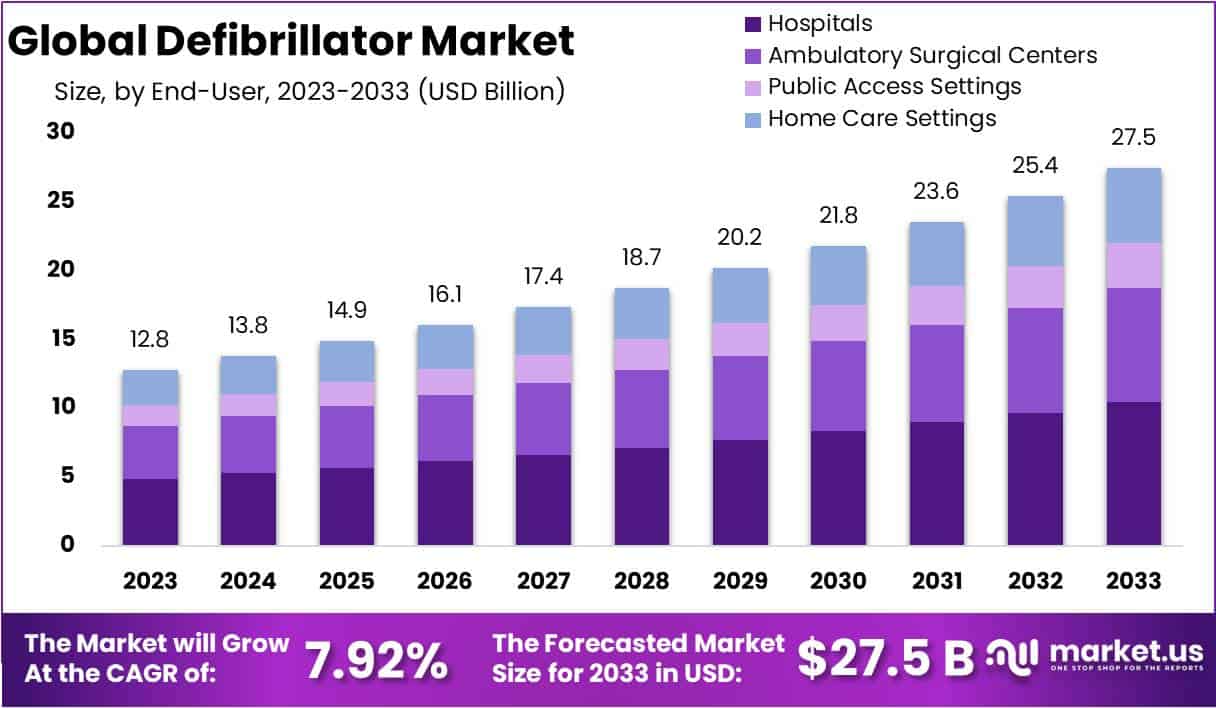
The defibrillators market is a collection of medical devices that deliver an electric shock to the heart to restore its rhythm. They can be used for treating cardiac arrest, which occurs when the heart suddenly stops beating. You can find defibrillators in various settings like hospitals, clinics, or emergency medical service (EMS) vehicles. Market growth is being spurred on by rising cardiovascular disease prevalence rates, technological advances in defibrillator technology, and rising demand for portable and automated external defibrillators.
Key Takeaways
- Market Size and Growth: In 2023, the global defibrillator market amounted to USD 12.8 billion with compound annual growth estimated at 7.92% until 2033.
- Product type: Implantable cardioverters represent the fastest compound rate and makeup 60.8% of revenue share in 2023.
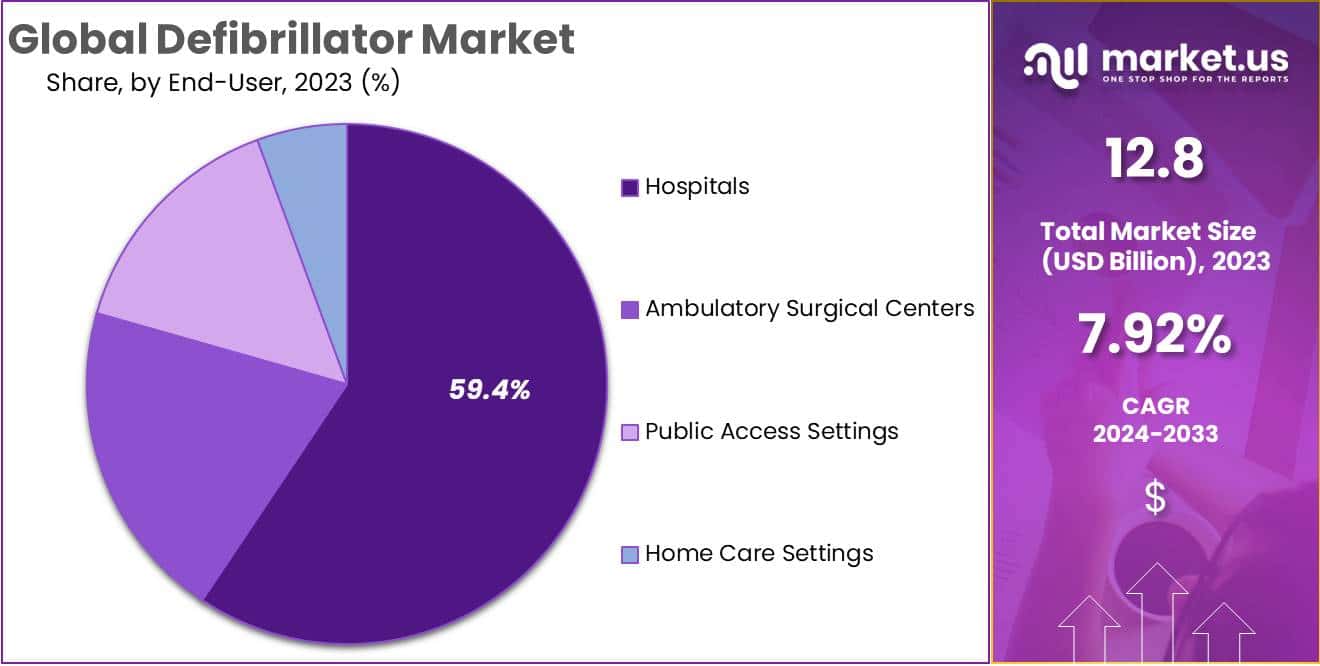
- End User: Hospital and surgeries is projected to hold 60.8% revenue share and compound annual growth of 7.8% during the forecast period for defibrillator sales globally.
- Drivers: Key factors driving the defibrillator market include rising prevalence of cardiovascular diseases, technological innovations in defibrillators technology, government initiatives and an aging population.
- Restrictions: High defibrillator costs, the need for skilled healthcare providers to operate them and device failure risk are key constraints on the defibrillator market.
- Defibrillator market growth opportunities: With smaller, more portable defibrillators becoming available and their integration with other medical technologies, defibrillators offer immense growth prospects in terms of growth opportunities for defibrillators as a market segment.
- Wearable defibrillators have become an increasingly popular solution among individuals at high risk of sudden cardiac arrest, providing constant monitoring of heart rhythms and immediate treatment should an issue arise.
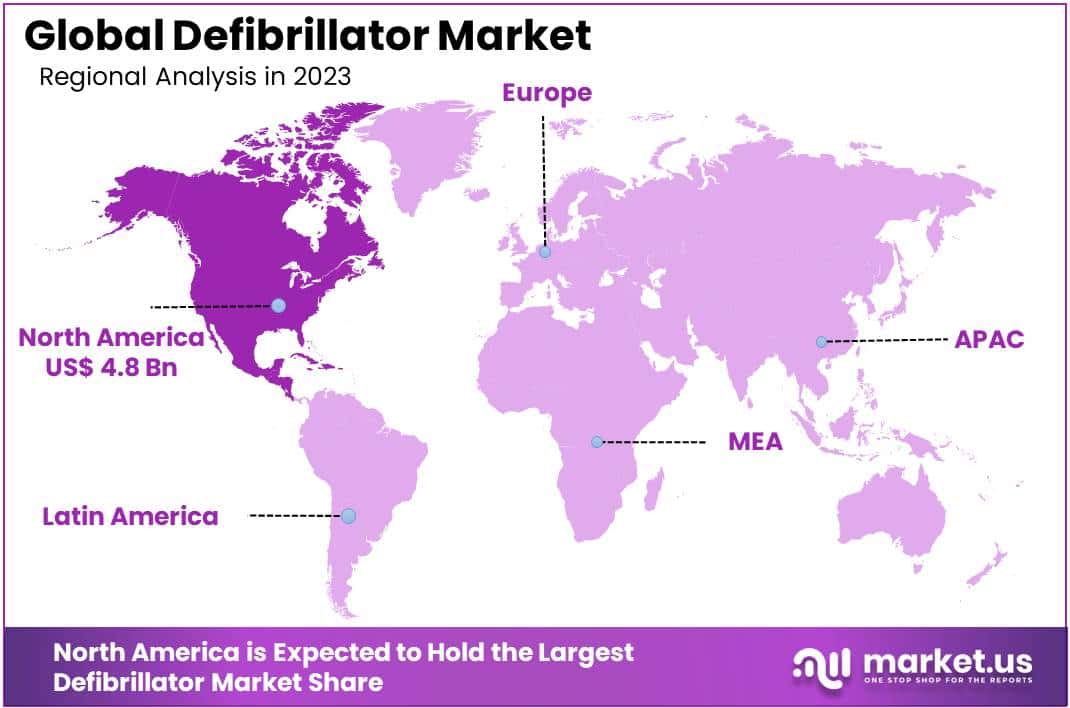
- Regional Analysis: North America holds the largest share in the global defibrillator market with 38.1% market share and holds USD 4.8 Billion market value for the year; the Asia Pacific region is expected to experience the fastest compound annual compound annual compounded rate at 7.92% CAGR.
Product Type Analysis
The Implantable Cardioverter Segment Accounted for the Largest Market Share in Defibrillator Market
Based on product type, the market for defibrillator market is segmented into implantable cardioverters (T-ICDs S-ICDs CRT-D), external defibrillators (automated external defibrillator manual and semi-automatic external defibrillators), wearable external defibrillator, and other device types. Among these types, the implantable cardioverter segment is the most dominant in the Global Defibrillator Market, with a projected CAGR of 7.92%. The total revenue share of implantable cardioverter defibrillators is 60.8% in 2023. The implantable cardioverter is dominant because of the increased incidence of cardiovascular diseases and advancement in ICDs.
External Defibrillators are the Most Lucrative Segment in the Forecasted Period
Followed by external defibrillators, the market share is 59.4% in 2023, and it is expected to grow with a CAGR of 9.3 in upcoming years. Owing to the increasing availability of AEDs in public places, such as airports, malls, and sports arenas, has driven the growth of the external defibrillator market. Overall, the defibrillator market is expected to grow steadily due to the increasing prevalence of cardiovascular diseases and the growing adoption of advanced medical technologies.
End-User Analysis
The Hospital and Surgeries Segment Accounted for the Largest Market Share in the Defibrillator Market
Based on end-users, the market is segmented into hospitals, ambulatory surgical centers, public, access settings, home and care settings, and alternate care market. Among these end-users, the hospital and surgeries segment is estimated to be the most dominant segment in the Global Defibrillator Market, with the largest revenue share of 58.5% and a projected CAGR of 7.92% during the forecast period. Hospitals and surgical centers are the primary locations where defibrillators are used to treat patients with cardiovascular diseases.
The Public Access Segment is the Most Lucrative Segment in the Forecasted Period
The public access segment is expected to grow significantly in the coming years due to the increasing demand for defibrillators in emergency settings and the growing adoption of wearable defibrillators in home care.
Key Market Segments
By Product Type
- Implantable Cardioverter
- T-ICDs
- S-ICDs
- CRT_D
- External Defibrillators
- Automated External Defibrillator
- Manual and Semi-Automatic External Defibrillator
- Wearable External Defibrillator
- Other Device Types
By End-User
- Hospitals
- Ambulatory Surgical Centers
- Public Access Settings
- Home and Care Settings
Drivers
Unhealthy Dietary Habits, Advancements in Defibrillator Technology, Government Initiatives, Aging Population are Driving the Market Growth.
With the rise in sedentary lifestyles and unhealthy dietary practices, the prevalence of cardiac diseases such as arrhythmia and sudden cardiac arrest (SCA) has gone up. This has spurred an uptick in demand for defibrillators since they are the primary treatment option for these conditions. Innovations in defibrillator technology have allowed manufacturers to produce more sophisticated and efficient devices; wearable defibrillators in particular have allowed those at high risk for SCA to lead more active lives – further increasing demand for these devices.
Governments and other organizations worldwide are taking measures to increase the availability of defibrillators in public places like airports, train stations, and shopping malls. This has caused a surge in demand for defibrillators on the market as aging populations become more susceptible to cardiac diseases – thus driving up demand for defibrillators. Furthermore, an aging population has increased implantable cardioverter defibrillators (ICDs) being implanted.
Restraints
Defibrillators are Expensive, They Require Trained Healthcare Professionals, and Defibrillators carry the risk of failure.
Defibrillators can be expensive, which can limit their adoption in certain markets. The high cost of these devices can also limit their availability in developing countries, where healthcare infrastructure may be limited. The successful use of defibrillators requires trained healthcare professionals. The shortage of trained professionals can limit the adoption of these devices, particularly in rural areas and developing countries. Like all medical devices, defibrillators carry a risk of failure. Device failure can result in serious harm to patients, which can limit the adoption of these devices. Manufacturers must ensure that their products meet rigorous safety standards to minimize this risk.
Opportunity
Development of Smaller, More Portable Devices, Integrate Defibrillators with Other Medical Technologies.
Emerging markets present significant growth potential, as healthcare infrastructure and access to services improve. There is room for innovation in the defibrillator market, particularly through smaller, more portable devices. Furthermore, integration between defibrillators and other medical technologies like telemedicine or electronic health records could improve patient outcomes.
Wearable technology continues to advance at an impressive rate while becoming more cost-effective; there is also a growing trend towards preventive healthcare which involves using technology to identify and manage health risks before they become serious issues.
Trends
Wearable Defibrillators are increasingly popular.
Wearable defibrillators have become increasingly popular, particularly among individuals at high risk of sudden cardiac arrest. These devices allow continuous monitoring of heart rhythms and provide immediate treatment if required. There is an increasing trend toward the integration of defibrillators into Electronic Health Records (EHRs), which allows real-time data monitoring and improved clinical decision-making.
Governments and other organizations are taking initiatives to increase access to defibrillators in public places like airports or train stations – driving growth in the market for public-access defibrillators.
Regional Analysis
North America Generated the Highest Revenue and Dominated the Defibrillator Market.
North America is estimated to be the most dominant market in the global defibrillator market, with the largest market share of 38.1%, and is expected to register a CAGR of 8.2% during the forecast period. North America is the leading market for defibrillators, with the United States accounting for most sales.
This region’s market is driven by factors such as an increasing prevalence of cardiac diseases, modern healthcare infrastructure, and favorable reimbursement policies. Furthermore, there are numerous established players within this space amid fierce competition.
Asia Pacific is Anticipated to Grow Faster in the Forecast Period Due to the Large Population.
On the other hand, APAC is estimated to be the fastest-growing region in the global defibrillator market, with the highest CAGR of 7.8%. The Asia-Pacific region is the fastest-growing market for defibrillators, driven by factors such as a large patient population, increasing healthcare spending, and a growing focus on preventive healthcare.
Key Regions
- North America
- The US
- Canada
- Mexico
- Western Europe
- Germany
- France
- The UK
- Spain
- Italy
- Portugal
- Ireland
- Austria
- Switzerland
- Benelux
- Nordic
- Rest of Western Europe
- Eastern Europe
- Russia
- Poland
- The Czech Republic
- Greece
- Rest of Eastern Europe
- APAC
- China
- Japan
- South Korea
- India
- Australia & New Zealand
- Indonesia
- Malaysia
- Philippines
- Singapore
- Thailand
- Vietnam
- Rest of APAC
- Latin America
- Brazil
- Colombia
- Chile
- Argentina
- Costa Rica
- Rest of Latin America
- Middle East & Africa
- Algeria
- Egypt
- Israel
- Kuwait
- Nigeria
- Saudi Arabia
- South Africa
- Turkey
- United Arab Emirates
- Rest of MEA
Key Players Analysis
Companies holding a significant market share are actively involved in product innovation, partnerships, mergers, and acquisitions to maintain their position. According to recent market reports, Medtronic plc holds the largest share in global defibrillator sales followed by Boston Scientific and Philips Healthcare. The market is projected to expand at an even pace due to factors such as the rising prevalence of cardiac diseases; the growing geriatric population; rising demand for public access defibrillators; and technological advances within defibrillator devices.
Market Key Players
- Medtronic plc
- Philips Healthcare
- Boston Scientific Corporation
- Abbott Laboratories
- Nihon Kohden Corporation
- LivaNova plc
- Schiller AG
- Asahi Kasei Corporation
- Stryker Corporation
- Cardiac Science Corporation
- Jude Medical, Inc.
- MicroPort Scientific Corporation
- Koninklijke Philips N.V.
- Progetti Srl
- MS Westfalia GmbH
- AMI Italia
- AXION Ltd.
- Bexen Cardio
- CU Medical Systems
- METsis Medikal
- Mediana Co. Ltd.
- Mindray Medical International Ltd.
- BPL Medical Technologies
- Metrax GmbH – PRIMEDIC
- Element Science Inc.
- Avive Solutions Inc.
- Jeevtronics Pvt. Ltd.
- HeartHero Inc.
- Shenzhen Comen Medical Instruments Ltd.
Recent Developments
- In December 2023, Abbott Laboratories made headlines by revealing their acquisition of TactiCor, a company specializing in cutting-edge leadless pacemakers and defibrillators. This strategic move strengthens Abbott’s presence in the growing market for minimally invasive cardiac rhythm management devices.
- In November 2023, Boston Scientific Corporation secured FDA approval for their new EMBLEM MRI S-ICD system. This innovative subcutaneous implantable cardioverter defibrillator is MRI-compatible, broadening the options for patients who need both defibrillator protection and access to MRI scans.
- In October 2023, Medtronic plc introduced the LIFEPAK CR3 defibrillator, featuring advanced diagnostics and remote monitoring capabilities to enhance patient outcomes. This follows their earlier release of the CR2 model in 2021.
- In September 2023, Nihon Kohden Corporation joined forces with BioTelemetry, Inc. to collaboratively develop and bring to market a cloud-based remote monitoring system for their defibrillators. This partnership aims to enhance patient care and reduce hospital readmissions.









