


Report Overview
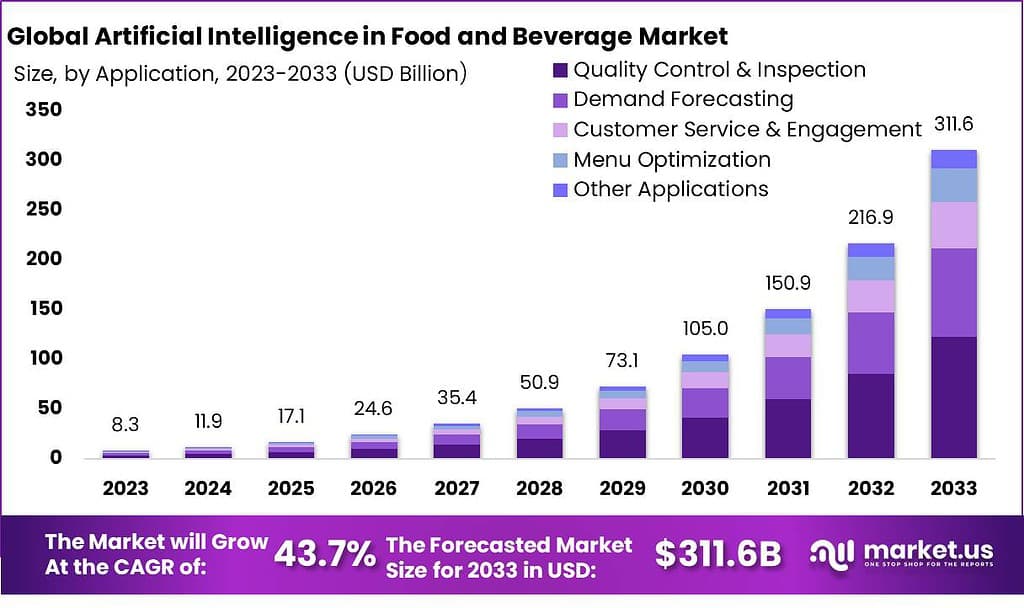
The Global AI in Food and Beverage Market is anticipated to be USD 311.6 billion by 2033. It is estimated to record a steady CAGR of 43.7% in the Forecast period 2024 to 2033. It is likely to total USD 8.3 billion in 2023.
Artificial Intelligence (AI) is becoming an increasingly prevalent component of food and beverage businesses’ operations and product creation processes. AI refers to computer systems which are capable of performing tasks that normally require human intelligence such as visual perception, speech recognition and decision-making. There are various ways that AI is helping food and beverage businesses improve their operations while creating better products.
Artificial Intelligence (AI) in the food and beverage industry is like having smart helpers in the kitchen and at the grocery store. It’s all about using computer programs and machines that can think and learn to make food-related tasks easier and better. AI can help farmers grow more food, make cooking quicker and tastier, and even suggest what you might like to eat next! It’s like having a food expert right at your fingertips, helping you with everything from growing ingredients to creating delicious recipes.
Note: Actual Numbers Might Vary In The Final Report
AI is also being used to create new food and beverage products. Algorithms can analyze recipe ingredients and quantities to predict flavor profiles and textures. This allows for faster development of new products to meet consumer demand. Some companies are using AI to create personalized nutrition plans and custom foods tailored to an individual’s health needs.
In restaurants and food service, AI helps with inventory management, logistics, and predictive ordering. By analyzing sales data and food consumption patterns, AI systems can forecast future demand more accurately. This reduces waste and ensures the right amount of ingredients and products are ordered and available for preparation. AI assistants like chatbots can handle customer orders and reservations efficiently.
Key Takeaways
- Market Size and Growth: Artificial Intelligence in Food and Beverage Market is projected to reach USD 311.6 billion by 2033 with compound annual growth rate of 43.7% from 2024-2033; estimated market size in 2023 being USD 8.3 billion.
- Role in Product Development: AI is facilitating the development of new food and beverage products by predicting flavor profiles and textures, allowing for faster innovation and catering to evolving consumer demands.
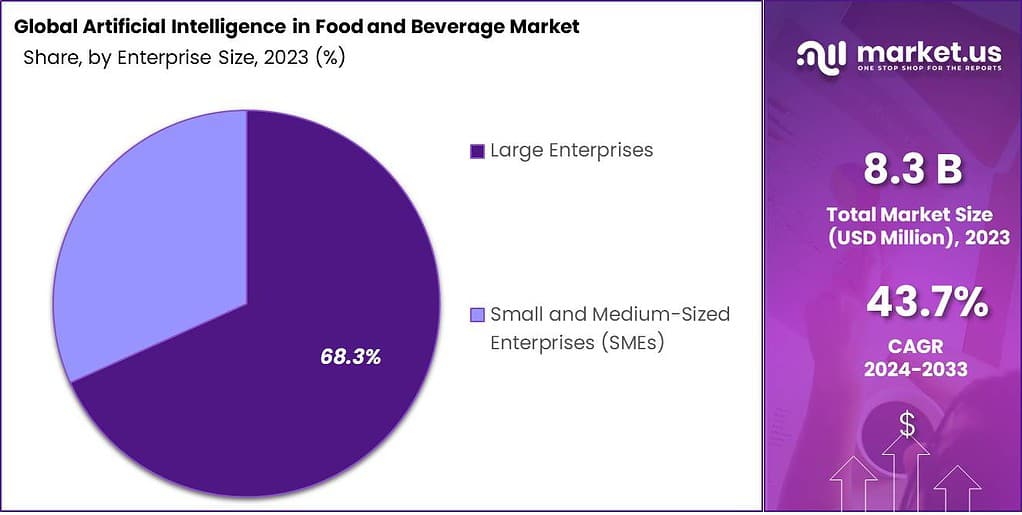
- Impact on Enterprise Size: Large enterprises currently dominate the AI market in food and beverage, with more than a 68.3% share. However, the adoption of cost-effective AI tools by SMEs is gradually bridging the gap, allowing them to streamline operations and improve competitiveness.
- Key Application Insights: Quality control and inspection hold a dominant market share (39.5%) followed by demand forecasting. AI’s role in customer service and engagement, as well as menu optimization, is increasingly recognized in enhancing brand reputation and driving customer satisfaction.
- End-User Distribution: Food and beverage manufacturers currently lead the market (74.2%), leveraging AI to optimize production efficiency and ensure product safety. Restaurants and food service providers are also increasingly adopting AI for improved customer experiences and operational efficiency.
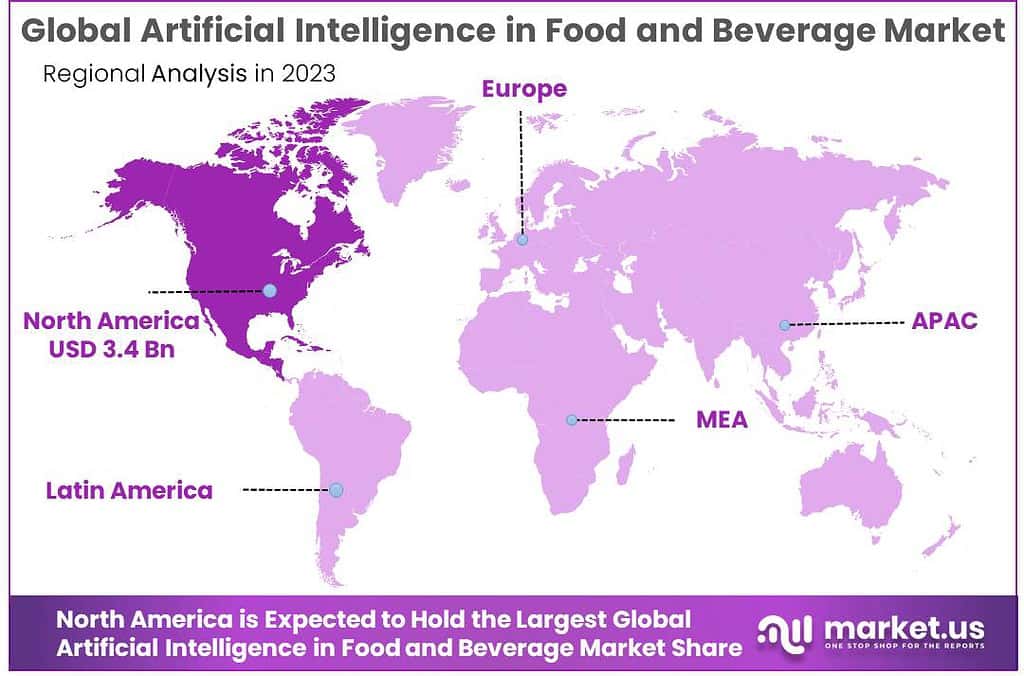
- Regional Analysis: North America is at the forefront of AI adoption in the food and beverage market, accounting for over 41.8% of the global market share in 2023. The region’s advanced technological infrastructure and emphasis on innovation contribute to its leading position.
- Key Players: Leading companies such as Oracle Corporation, ABB Ltd., Honeywell International Inc., and IBM Corporation are driving AI adoption and technological advancements within the food and beverage industry.
- Drivers: Efficiency enhancement and the demand for personalized experiences are key drivers for AI adoption, while data security concerns and integration complexities pose significant challenges.
- Opportunities and Challenges: North America presents growth opportunities for AI-driven food tech startups, while ongoing advancements in AI algorithms offer possibilities for tailored AI solutions. However, regulatory compliance adherence and resource allocation and integration remain challenging for businesses.
Enterprise Size Insights
In 2023, Large Enterprises held a dominant market position, capturing more than a 68.3% share in the Artificial Intelligence (AI) in the Food and Beverage market. This notable market share is primarily attributed to the extensive resources and robust infrastructure that large enterprises possess, enabling them to invest significantly in advanced AI technologies and implementations. With cost-effective and scalable AI tools becoming readily available to SMEs, more are adopting AI applications in their production processes, customer engagement efforts, and ultimately to gain a competitive advantage in a dynamic food and beverage market.
AI solutions’ adaptability has allowed SMEs to streamline their operations, improve decision-making processes, expand market presence, and establish themselves more rapidly – ultimately having an overall positive effect on overall growth and development of AI in Food and Beverage market. AI technologies continue to develop and become more readily accessible, thus narrowing the disparity in adoption rates between large enterprises and SMEs.
In contrast, Small and Medium-Sized Enterprises (SMEs) have gradually begun recognizing the transformative potential of AI, albeit at a slower pace. Although SMEs face resource constraints and budgetary limitations, the growing awareness of AI’s benefits has prompted an increasing number of SMEs to explore and integrate AI solutions tailored to their specific operational requirements. With the availability of cost-effective and scalable AI tools, SMEs are gradually embracing AI-driven applications to optimize production processes, enhance customer engagement, and gain a competitive edge in the dynamic food and beverage market.
The flexibility and adaptability offered by AI solutions have empowered SMEs to streamline their operations, improve decision-making processes, and expand their market presence, fostering a gradual but significant impact on the overall growth and development of the AI in Food and Beverage market.
As AI technologies continue to evolve and become more accessible, the disparity between the AI adoption rates of large enterprises and SMEs is expected to narrow. Large enterprises are increasingly recognizing the potential for collaboration and partnerships with SMEs to foster innovation and drive collective growth within the industry.
Simultaneously, SMEs are actively seeking opportunities to leverage AI solutions and bridge the technological gap, enhancing their competitiveness and market relevance. This collaborative approach is projected to foster a more inclusive and diversified AI ecosystem within the Food and Beverage market, creating new avenues for synergistic partnerships, technological advancements, and sustainable growth across enterprises of all sizes.
Note: Actual Numbers Might Vary In The Final Report
Application Insights
In 2023, Quality Control & Inspection held a dominant market position, capturing more than a 39.5% share in the Artificial Intelligence (AI) in the Food and Beverage market. This significant market share can be attributed to the critical role of AI in ensuring stringent quality standards and seamless inspection processes within the industry. Advanced AI-powered systems have revolutionized quality control by integrating sophisticated image recognition and data analysis techniques, enabling real-time identification and rectification of potential product defects and discrepancies. This pivotal role in upholding product integrity has propelled the demand for AI-driven quality control solutions, fostering consumer trust and brand reliability for businesses across the food and beverage sector.
Demand Forecasting, another key application segment, follows closely, accounting for a substantial market share in 2023. With the dynamic nature of consumer preferences and market trends, accurate demand forecasting has become indispensable for optimizing production and inventory management. AI’s predictive analytics capabilities leverage historical data, consumer behavior insights, and market dynamics to provide precise demand forecasts, facilitating efficient resource allocation and minimizing operational costs.
This strategic advantage has prompted an increased adoption of AI-driven demand forecasting solutions, enabling businesses to streamline their supply chains and ensure timely product delivery, thereby enhancing overall operational efficiency and profitability. Furthermore, Customer Service & Engagement has emerged as a pivotal application segment in the AI in Food and Beverage market, contributing significantly to the industry’s growth trajectory. In an era where personalized consumer experiences are paramount, AI-powered customer service and engagement solutions have redefined the way businesses interact with their customers.
Through the implementation of AI-driven chatbots and virtual assistants, businesses can provide seamless and tailored customer support, streamline order processing, and offer personalized product recommendations, fostering lasting customer loyalty and satisfaction. The integration of AI in customer service and engagement has thus become instrumental in enhancing brand reputation and fostering meaningful customer relationships for businesses within the food and beverage industry.
Similarly, Menu Optimization has garnered notable attention within the market, with its role in assisting food and beverage businesses in designing appealing and profitable menus. By leveraging AI algorithms to analyze consumer preferences, sales data, and industry trends, businesses can curate menu offerings that align with evolving customer tastes and dietary preferences.
This strategic approach enables businesses to optimize their product offerings, introduce innovative culinary creations, and maximize profitability through targeted menu modifications and additions. The application of AI in menu optimization has thus become an essential tool for businesses to stay competitive and cater to the ever-changing demands of their discerning customer base.
Lastly, the “Other Applications” segment encompasses a wide array of AI applications, including supply chain management, food safety compliance, recipe development, and workforce management. The versatility of AI in addressing diverse operational challenges has led to its widespread integration across various operational facets of the food and beverage industry.
AI-driven solutions have streamlined complex processes, enhanced productivity, and ensured regulatory compliance, thereby fostering overall growth and innovation within the sector. As businesses continue to recognize the transformative potential of AI across these multifaceted applications, the segment is expected to witness further advancements and substantial contributions to the overall development of the AI in Food and Beverage market.
End-User Insights
In 2023, the Food & Beverage Manufacturers found themselves in a leading market position, securing over 74.2% of the Artificial Intelligence (AI) in the Food and Beverage industry. This substantial share signifies the crucial role played by AI in transforming production methods, fostering product creativity, and ensuring stringent quality control measures across the manufacturing sector.
AI-driven technologies have empowered food and beverage manufacturers to optimize production efficiency, ensure product safety and compliance, and introduce innovative product offerings tailored to evolving consumer preferences. The integration of AI has streamlined various manufacturing operations, including ingredient sourcing, recipe development, and packaging, thereby enhancing overall productivity and profitability for food and beverage manufacturers.
Restaurants & Food Service Providers, another key end-user segment, have increasingly recognized the transformative potential of AI in enhancing customer experiences and operational efficiency. By leveraging AI-driven solutions, restaurants and food service providers can streamline order management, personalize customer interactions, and optimize menu offerings to cater to diverse consumer preferences.
AI-enabled technologies facilitate efficient inventory management, dynamic pricing strategies, and seamless customer engagement, thereby enhancing overall service quality and customer satisfaction. The adoption of AI in the restaurant and food service sector has fostered a more seamless and immersive dining experience, creating new avenues for customer engagement and brand differentiation in an increasingly competitive market landscape.
Furthermore, the “Other End-Users” segment encompasses a diverse array of entities, including food retailers, distributors, and online food delivery platforms, among others. This segment has witnessed a gradual but steady integration of AI-driven solutions to optimize supply chain management, enhance product visibility, and improve customer engagement. AI technologies enable real-time data analysis, personalized marketing strategies and streamlined logistics management, facilitating efficient order fulfillment and enhancing customer satisfaction.
The adoption of AI among these diverse end-users reflects the industry’s growing emphasis on leveraging technology to streamline operations, enhance customer experiences, and drive overall business growth in the dynamic and competitive food and beverage market.
Drivers
- Efficiency Enhancement: AI implementation is driven by the need to enhance operational efficiency, optimize supply chain management, and reduce overall operational costs within the food and beverage industry.
- Customized Experiences: The rising consumer demand for personalized experiences has led businesses to integrate AI for tailored product recommendations, personalized menu options, and individualized customer engagement strategies.
Restraints
- Data Security Concerns: Despite the benefits of AI, concerns surrounding data privacy and security have posed challenges for businesses, necessitating stringent data protection measures and regulatory compliance protocols to ensure consumer trust and data integrity.
- Integration Complexities: The integration of AI technologies into existing operational frameworks, coupled with the shortage of skilled professionals proficient in AI implementation, has presented challenges for businesses, hindering seamless AI adoption and implementation.
Opportunities
- Startup Growth Potential: North America presents promising opportunities for the growth of AI-driven food tech startups, fostering innovation in product development, supply chain optimization, and personalized consumer engagement, thus diversifying the competitive landscape and fostering industry-wide innovation.
- Advancements in AI Algorithms: Ongoing advancements in AI algorithms and machine learning techniques offer opportunities for businesses to develop more sophisticated and tailored AI solutions, catering to the unique operational requirements and consumer preferences within the North American food and beverage market.
Challenges
- Regulatory Compliance Adherence: Compliance with evolving regulatory standards and industry-specific guidelines pertaining to AI usage in food production and service poses a challenge for businesses, requiring continuous adaptation and adherence to stringent regulatory protocols.
- Resource Allocation and Integration: The integration of AI technologies poses implementation challenges for businesses, requiring dedicated resources, comprehensive training, and operational restructuring to ensure seamless integration and effective utilization of AI-driven solutions within the food and beverage sector.
Key Market Segments
By Application
- Quality Control & Inspection
- Demand Forecasting
- Customer Service & Engagement
- Menu Optimization
- Other Applications
Enterprise Size
- Small and Medium-Sized Enterprises (SMEs)
- Large Enterprises
End-User
- Food & Beverage Manufacturers
- Restaurants & Food Service Providers
- Other End-Users
Geopolitical and Recession Impact Analysis
North America’s stable geopolitical environment, coupled with its robust technological infrastructure and strong market fundamentals, positions the region to withstand potential geopolitical disruptions and economic downturns. While fluctuations in global trade dynamics and geopolitical uncertainties may impact the supply chain and sourcing strategies within the food and beverage industry, the region’s resilience and capacity for technological innovation are expected to mitigate potential recessionary impacts, fostering sustained growth and resilience within the North American AI in the Food and Beverage market.
Regional Analysis
In 2023, North America leads the global Artificial Intelligence (AI) in the Food and Beverage market, contributing to more than 41.8% of the total share. The demand for Artificial Intelligence (AI) in the Food and Beverage in North America was valued at US$ 3.4 billion in 2023 and is anticipated to grow significantly in the forecast period. This prominent position is a reflection of the region’s advanced technological infrastructure, strong emphasis on innovation, and high adoption rates of AI solutions within the food and beverage industry. The proactive approach of businesses in North America towards integrating AI technologies has propelled the region to the forefront of AI adoption, fostering industry-wide transformation and driving the evolution of the food and beverage sector.
With its advanced technological landscape, consumer-oriented market dynamics, and supportive regulatory frameworks, North America remains at the forefront of AI adoption and integration within the global food and beverage market. The region’s emphasis on innovation, coupled with the increasing consumer demand for convenience, sustainability, and personalized experiences, positions North America as a key driver of AI integration and transformative growth, shaping the future of the food and beverage industry.
Note: Actual Numbers Might Vary In The Final Report
Key Regions and Countries Covered in this Report
- North America
- The US
- Canada
- Europe
- Germany
- France
- The UK
- Spain
- Italy
- Russia
- Netherlands
- Rest of Europe
- APAC
- China
- Japan
- South Korea
- India
- Australia
- New Zealand
- Singapore
- Thailand
- Vietnam
- Rest of APAC
- Latin America
- Brazil
- Mexico
- Rest of Latin America
- Middle East & Africa
- South Africa
- Saudi Arabia
- UAE
- Rest of MEA
Key Players Analysis
Key Players Analysis in the Artificial Intelligence (AI) in the Food and Beverage market provides insights into the leading companies shaping the industry landscape. These key players have demonstrated a strong commitment to innovation and have played a pivotal role in driving the adoption of AI technologies within the food and beverage sector.
Top Players
- Oracle Corporation
- ABB Ltd.
- Honeywell International Inc.
- Rockwell Automation, Inc.
- IBM Corporation
- Nvidia Corporation
- Aboard Software
- TOMRA
- Analytical Flavor Systems
- Staqu Technologies
- Other Key Players
Recent Development
- In May 2022, FANUC America, a leading company specializing in CNCs, robotics, and ROBOMACHINEs, introduced the new DR-3iB/6 STAINLESS delta robot designed for primary food handling and picking. This new robot aims to maximize production efficiencies without compromising food safety.
- In April 2022, Pudu Robotics, a global leader in commercial service robots, unveiled the PUDU A1, its first compound delivery robot specifically designed for use in restaurant settings. The PUDU A1 incorporates food recognition, positioning, and grasping technology. It integrates a mechanical arm into the restaurant scenario, bridging the gap between the kitchen and the dining table. The robot calculates the space where dishes are to be placed and correctly positions them on the table, utilizing real-time obstacle avoidance path planning.









