


Report Overview
The Global Energy-based Non-invasive Medical Aesthetic Treatment System Market size is expected to be worth around USD 11.6 Billion by 2033, from USD 4 Billion in 2023, growing at a CAGR of 11.2% during the forecast period from 2024 to 2033.

Energy-based non-invasive medical aesthetic treatment systems, utilizing technologies such as lasers, radio frequency, and ultrasound, cater to the enhancement of cosmetic appearance by treating conditions like scars, skin laxity, and unwanted hair. These treatments encompass a range of non-invasive and minimally-invasive procedures conducted primarily by dermatologists, plastic surgeons, and other specialized physicians.
In recent years, the demand for aesthetic treatments, especially body contouring and other cosmetic enhancements, has surged. Notably, non-invasive procedures have seen increasing popularity. According to a 2018 report by the American Society for Aesthetic Plastic Surgery, there was a 4.2% increase in non-surgical procedures from the previous year, emphasizing a growing trend towards less invasive treatment methods.
Energy-based non-invasive systems are particularly noted for their reduced pain levels compared to other treatments. Further, the strategic combination of these devices with injectables like fillers and neuromodulators often yields superior outcomes, allowing for simultaneous treatments in many cases. This approach refutes earlier concerns that lasers might negatively affect fillers, as current medical expert consensus shows no such adverse effects.
The market for energy-based non-invasive medical aesthetic systems is poised for significant growth. Factors contributing to this expansion include heightened awareness of physical aesthetics, advancements in treatment technologies, and an increase in disposable income, particularly in developing countries. This growth is also fueled by major players in the industry focusing on the development of innovative and more efficient technologies. The expanding middle-class demographic and its disposable income are playing pivotal roles in the market’s expansion, underscoring the correlation between economic improvement and increased expenditure on aesthetic treatments.
Key Takeaways
- Market Expected Worth: USD 11.6 Billion by 2033, from USD 4 Billion in 2023, growing at 11.2% CAGR (2024-2033).
- Non-invasive Procedures Surge: 4.2% increase in non-surgical procedures in 2018.
- Laser Dominance: 28% market share in 2023; favored for skin rejuvenation, hair removal, and pigmentation reduction.
- Skin Rejuvenation Leads: 44% market share in 2023, driven by anti-aging demand.
- North America Leads: Holds over 30% market share; Europe and Asia-Pacific follow.
- Laser Cost Barrier: Laser skin resurfacing can cost $1,600-$2,400 per session, limiting accessibility.
- Technology Growth Opportunities: Innovations enhance results, reduce treatment times, and attract wider clientele.
- Personalized Treatment Trend: Increasing adoption, with over 60% of patients preferring customized procedures.
- Europe Market Growth: Driven by awareness and regulatory policies; significant market portion.
- Asia-Pacific Fastest Growth: Rising middle-class population and healthcare investments propel market expansion.
Device Type Analysis
In 2023, the Laser segment held a dominant market position in the Device Type Segment of the Energy-based Non-invasive Medical Aesthetic Treatment System Market, capturing more than a 28% share. This prominence can be attributed to the extensive adoption of laser technologies for a variety of aesthetic treatments including skin rejuvenation, hair removal, and pigmentation reduction. The efficiency, safety, and relatively short recovery time associated with laser treatments have fueled their popularity among both practitioners and patients.
Additionally, advancements in laser technology have led to the development of more sophisticated devices that can address a range of skin concerns with greater precision and minimal side effects. The introduction of fractionated lasers and non-ablative options has expanded the utility of laser treatments, making them suitable for a wider demographic, including individuals with darker skin tones who were previously at a higher risk of complications from traditional laser therapies.
Market growth is further supported by a rising awareness of aesthetic procedures and an increasing emphasis on non-invasive treatment modalities in the cosmetic industry. This trend is complemented by a growing demographic of aging individuals seeking anti-aging treatments to mitigate the effects of aging such as wrinkles and skin laxity, which lasers can effectively treat.
Looking ahead, the laser segment is anticipated to continue its growth trajectory, driven by ongoing innovations and the expanding application scope of laser technologies in medical aesthetics. Companies active in this segment are increasingly investing in research and development to introduce more efficient and less invasive solutions, which is expected to further enhance market growth.
Application Analysis
In 2023, the Skin Rejuvenation segment held a dominant market position in the Application Segment of the Energy-based Non-invasive Medical Aesthetic Treatment System Market, capturing more than a 44% share. This dominance is attributable to the growing consumer demand for anti-aging treatments and the increasing awareness of aesthetic appearances. Advanced technologies such as laser, intense pulsed light (IPL), and radiofrequency have significantly contributed to the segment’s growth by offering effective and safe solutions for skin rejuvenation.
Following closely, the Hair Removal application also demonstrated substantial market uptake, driven by the rising preference for non-invasive and long-lasting hair removal solutions. The advancement in devices that offer painless and quicker treatments has made this application highly popular among both male and female consumers.
The Leg Vein Treatment segment has observed a steady increase in market share, supported by an aging population and the higher prevalence of venous disorders. Innovations in treatment technologies, such as endovenous laser therapy (EVLT), have enhanced the efficacy and comfort of procedures, propelling market growth.
Other applications, including tattoo removal and acne treatment, have also seen notable adoption, although they constitute a smaller portion of the market. These segments are expected to grow, fueled by technological innovations and expanding treatment modalities that appeal to a broader demographic.

Key Market Segments
Device Type
- Injectables
- Body Contouring Devices
- Phototherapy Devices
- RF Devices
- Laser
- Other Device Types
Application
- Skin Rejuvenation
- Hair Removal
- Leg Vein Treatment
- Other Applications
Drivers
Rising Demand for Aesthetic Enhancements
A significant driver of the global market for energy-based non-invasive medical aesthetic treatment systems is the increasing demand for aesthetic enhancements. This demand is fueled by a growing awareness of cosmetic procedures and the societal emphasis on appearance and youthfulness. Technologies such as laser, intense pulsed light (IPL), and radiofrequency have gained popularity for their efficacy in providing non-surgical solutions for skin rejuvenation, body contouring, and anti-aging treatments.
According to the American Society of Plastic Surgeons, non-invasive cosmetic procedures have seen a 200% increase since 2000, reflecting the growing acceptance and demand for aesthetic treatments. Laser treatments alone accounted for approximately 2.6 million procedures in the U.S. in 2020, underscoring their popularity in the aesthetic field.
Restraints
High Cost of Procedures
A primary restraint in the market is the high cost associated with these non-invasive treatments. While they offer less downtime and are generally safer than invasive procedures, the expense can be prohibitive for many potential patients. This factor limits the accessibility of treatments, particularly in less affluent regions, thereby restraining market growth.
For example, the average cost of laser skin resurfacing can range from $1,600 to $2,400 per session, depending on the treatment’s complexity and the equipment used. This pricing structure makes it less accessible for individuals without disposable income, thus limiting market expansion in economically diverse regions.
Opportunities
Technological Advancements
The continuous technological advancements in energy-based non-invasive treatment systems present significant opportunities for market growth. Innovations that offer improved results, shorter treatment times, and greater comfort during procedures can attract a broader clientele. Additionally, emerging technologies that can treat a wider range of skin types and conditions broaden the market’s potential.
Trends
Shift Towards Personalized Treatments
A notable trend in the market is the shift towards personalized aesthetic treatments. Practitioners are increasingly using energy-based systems that can be tailored to individual patient needs, considering factors like skin type, condition severity, and desired outcomes. This personalized approach not only improves patient satisfaction and outcomes but also enhances the perceived value of non-invasive treatments, encouraging more people to opt for these advanced cosmetic procedures.
The demand for personalized treatments is expected to increase, as highlighted by industry forecasts predicting that more than 60% of patients prefer customized non-invasive treatments over standard procedures.
Regional Analysis
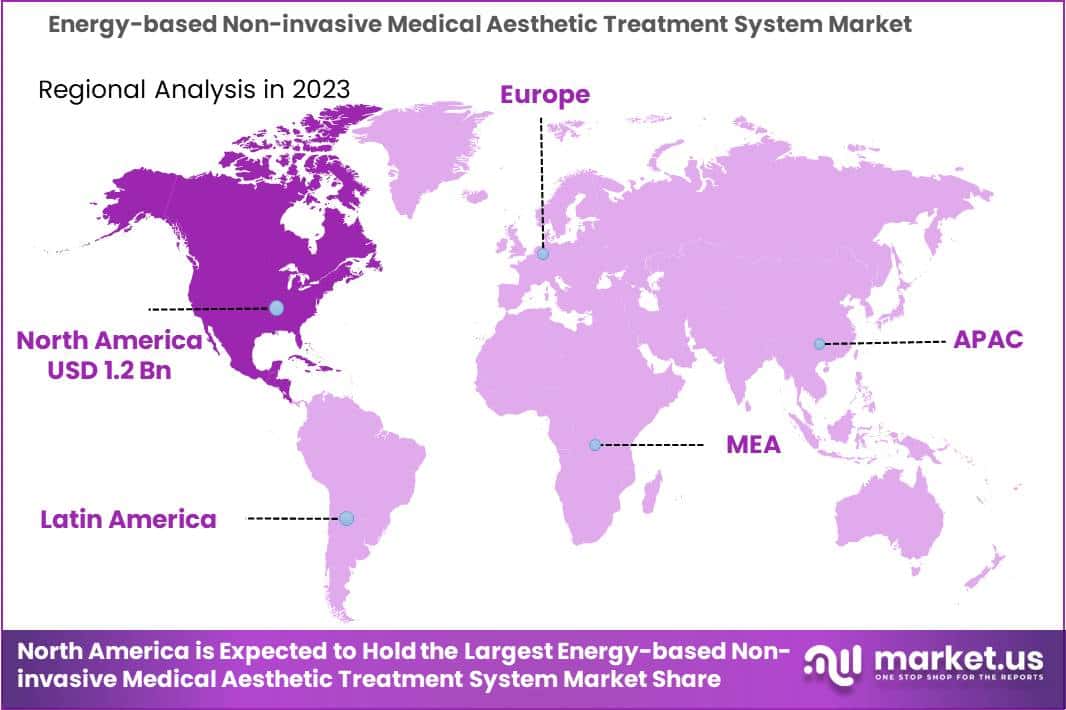
In 2023, North America held a dominant market position, capturing more than a 30% share and holds USD 1.2 billion market value for the year. This supremacy can be attributed to the high adoption rates of advanced aesthetic technologies and the presence of a robust healthcare infrastructure. Additionally, the region benefits from the presence of leading market players who are actively engaged in research and development activities, further driving the proliferation of energy-based non-invasive medical aesthetic treatment systems.
Europe follows North America, representing a significant portion of the global market. The growth in this region is driven by increasing awareness about non-invasive aesthetic procedures and rising disposable incomes, particularly in countries such as Germany, France, and the UK. Furthermore, the European market is supported by favorable regulatory policies that streamline the approval process for innovative aesthetic treatments.
The Asia-Pacific region is projected to exhibit the fastest growth rate during the forecast period. This surge is fueled by the growing middle-class population and increasing investments in healthcare infrastructure. Countries like China, Japan, and South Korea are at the forefront, capitalizing on the trend of medical tourism combined with competitive pricing of aesthetic treatments. The region’s market expansion is also bolstered by rising awareness and cultural acceptance of cosmetic procedures.
Latin America and the Middle East & Africa, while holding smaller shares, are anticipated to witness modest growth. These regions show potential due to improving healthcare systems, economic development, and increasing access to treatment options. The market in these areas could see further expansion with targeted marketing strategies and educational programs about the benefits of non-invasive treatments.
Key Regions
- North America
- The US
- Canada
- Mexico
- Western Europe
- Germany
- France
- The UK
- Spain
- Italy
- Portugal
- Ireland
- Austria
- Switzerland
- Benelux
- Nordic
- Rest of Western Europe
- Eastern Europe
- Russia
- Poland
- The Czech Republic
- Greece
- Rest of Eastern Europe
- APAC
- China
- Japan
- South Korea
- India
- Australia & New Zealand
- Indonesia
- Malaysia
- Philippines
- Singapore
- Thailand
- Vietnam
- Rest of APAC
- Latin America
- Brazil
- Colombia
- Chile
- Argentina
- Costa Rica
- Rest of Latin America
- Middle East & Africa
- Algeria
- Egypt
- Israel
- Kuwait
- Nigeria
- Saudi Arabia
- South Africa
- Turkey
- United Arab Emirates
- Rest of MEA
Key Players Analysis
In the energy-based non-invasive medical aesthetic treatment system market, several key players significantly influence the industry’s trajectory. Bausch Health Companies Inc. is a leader, known for its expansive range of advanced laser and light-based technologies and a strategy focused on global expansion and enhancing the user experience. Allergan, with its strong R&D capabilities, develops technologies that address a wide array of aesthetic concerns, emphasizing safety and efficacy to retain a competitive edge.
Syneron Medical Ltd. merges radiofrequency with laser technology to produce versatile and effective aesthetic devices, playing a vital role in market trends. Hologic Inc. boosts its market share by continuously refining its aesthetic devices and targeting international markets. Venus Concept Canada Corp. focuses on delivering innovative and customer-oriented solutions, quickly adapting to market demands. Together with other key industry participants who introduce specialized products, these companies drive market growth by focusing on technological advancements and meeting evolving consumer expectations for non-invasive aesthetic solutions.
Market Key Players
- Bausch Health Companies Inc.
- Allergen
- Syneron Medical Ltd
- Hologic Inc.
- Venus Concept Canada Corp.
- Lumenis Ltd.
- Cutera Inc.
- Galderma
- Merz
- AbbVie Inc.
Recent Developments
- March 2024: Syneron Medical Ltd. acquired Eloquens, a company specializing in body contouring devices using radiofrequency technology. This acquisition is seen as an expansion of Syneron’s product offerings in the non-invasive fat reduction sector.
- December 2023: Hologic Inc. introduced the BTL Exilis Ultra 360, a new device that combines radiofrequency with ultrasound for non-invasive body sculpting and skin tightening. The launch responds to increasing market demands for multi-modality treatment options.
- October 2023: AbbVie Inc. formed a strategic partnership with Alma Lasers, known for their energy-based aesthetic devices. This collaboration marks AbbVie’s potential foray into the medical aesthetics market, focusing on the integration of Alma’s established product range.
- July 2023: Merz received FDA approval for its Accent Prime device, employing radiofrequency technology for non-invasive body contouring and cellulite reduction. This approval further solidifies Merz’s standing in the body aesthetics market segment.









