


Report Overview
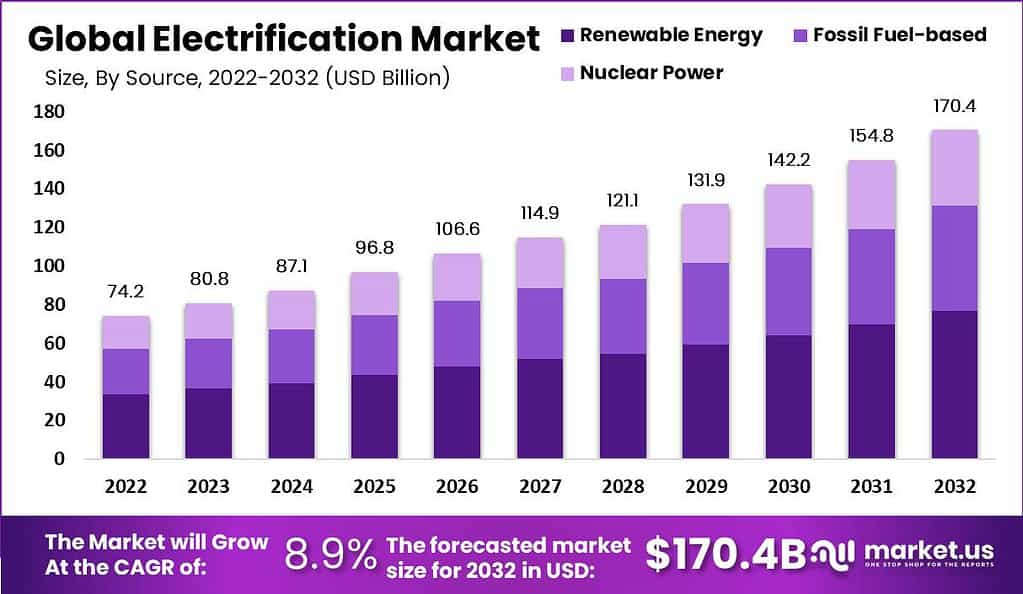
The Global electrification market size is expected to be worth around USD 170.4 billion by 2032 from USD 80.8 billion in 2023, growing at a CAGR of 8.9% during the forecast period from 2023 to 2032.
The conversion of a non-electric energy source into electricity at the point of final consumption is known as electrification. It is a rising trend in global energy markets. The combination of introducing new electric end-use technologies and various policy objectives in jurisdictions is driving this trend. Additionally, electrification is an essential option for achieving net zero goals, as it has a significant potential to decarbonize energy supply chains and reduce emissions.
Growing inclination towards electrified sources, mainly in the transportation sector, is anticipated to enhance the growth of the electrification market over the forecast period. This is largely due to rising concerns over pollution as well as climate change. Moreover, electrification can be utilized in several industries and sectors, including commercial and residential buildings, smart transportation, and industrial manufacturing.
Note: Actual Numbers Might Vary In The Final Report
Key Takeaways
- Market Growth Projection: By 2032, it is anticipated that the global electrification market will reach approximately USD 170.4 billion, growing at an anticipated compound annual growth rate of 8.9% during its forecast period from 2023-2032.
- Dominance of Renewable Energy: Renewable energy was the clear leader of electrification market in 2022, driven by pressure to reduce greenhouse gas emissions and rising environmental concerns. The segment is expected to witness substantial growth due to technological advancements in solar PV production and energy storage systems.
- Challenges in Building Electrification: Building electrification poses financial and technical challenges, including the need for smart EV chargers and managing non-uniform and complex building structures. These challenges might restrain the market’s growth during the forecast period.
- Technological Advancements Driving Opportunities: Technological advancements in energy storage systems and smart grid technology are creating significant growth opportunities in the electrification market. These advancements aim to integrate renewable energy sources into the grid efficiently and enhance electric power transmission, generation, and distribution.
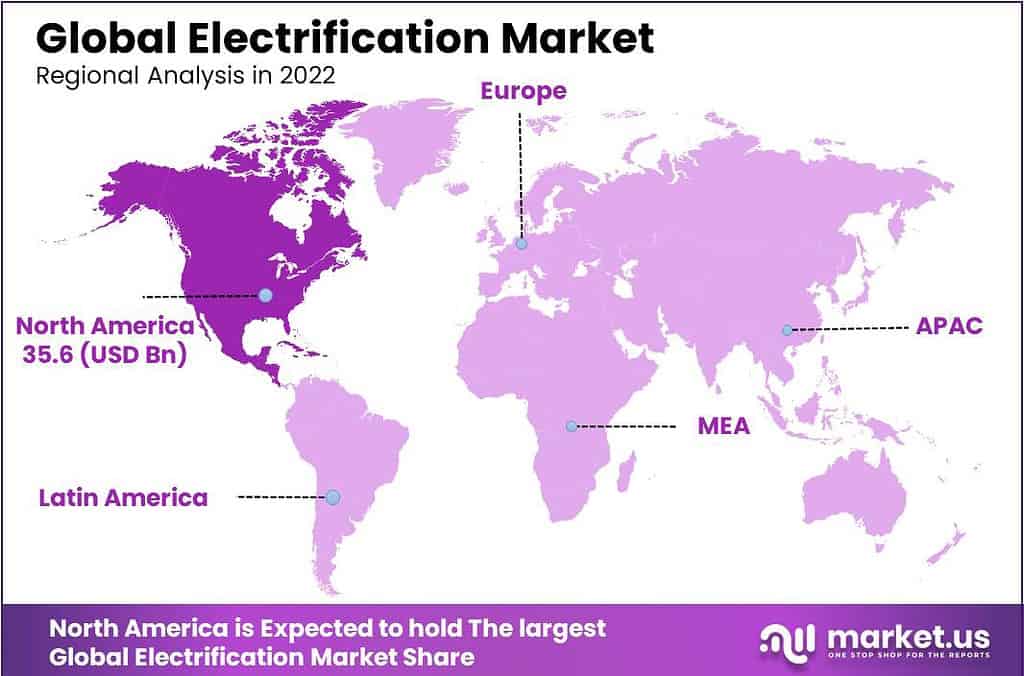
- Regional Analysis: North America led the electrification market in 2022, owing to early technology adoption and the implementation of electrification-related policies. However, the Asia-Pacific region is anticipated to exhibit the fastest CAGR during the forecast period, primarily due to increasing urbanization and the subsequent demand for electrification solutions.
- Key Market Players: Prominent industry players in the electrification market include ABB Ltd., Siemens, Powersys Solutions, ZAPI GROUP, Enel S.p.A., Duke Energy Corporation, Schneider Electric SE, General Electric Company, and ICF International, Inc., among others.
Source Analysis
The renewable energy segment dominated the market with the maximum revenue share
Based on source, the market for electrification is segmented into renewable energy; fossil fuel-based, and nuclear power. Among these sources, the renewable energy segment dominated the global electrification market in 2022. This is largely due to the rising pressure to reduce greenhouse gas emissions and growing environmental concerns. Moreover, the environmental regulations in both developing and developed countries is also anticipated to contribute to the segment growth in coming years. The technological improvements in solar PV production and energy storage systems are likely to present huge prospects for segment growth.
The fossil fuels segment is projected to expand at a significant CAGR over the forecast period. The increased population worldwide has led to an increase in demand for energy, particularly in emerging economies. Still, fossil fuels are the primary source of energy and presently supplies around 80% of the energy requirement across the globe. Also, the rise in the middle-class population in emerging economies has increased energy demand. As a result, the fossil fuels segment is expected to grow potentially.
Application Analysis
The transportation segment dominated the global electrification market in 2022
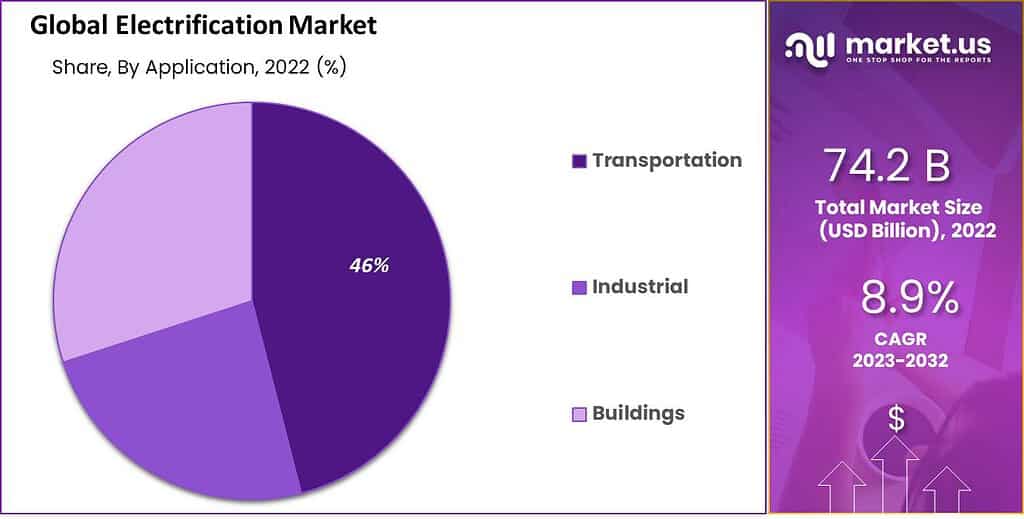
By application, the market is further divided into industrial, buildings, and transportation. Among these applications, the transportation segment accounted for the largest revenue share in 2022. As awareness about air pollution and climate change is rising, the pressure to reduce carbon emissions in the transportation sector is increasing. Electrification of transportation is one of the main solutions to this problem, particularly with the use of electric vehicles (EVs).
Furthermore, policies and incentives are being increasingly implemented by several countries in order to promote the usage of EVs as well as other electric transportation technology. In addition, these include credits, tax breaks, and requirements for which automakers create a definite number of zero-emission automobiles. All these factors are expected to support the segment’s growth.
The building segment is accounted as the fastest expanding segment during the forecast period. This significant growth may result due to the technological possibilities that are well developed in the construction industry, as well as the heat pumps that are currently the most popular heating system in lately constructed residential places.
Note: Actual Numbers Might Vary In The Final Report
Key Market Segments
Based on Source
- Renewable Energy
- Fossil Fuel-based
- Nuclear Power
Based on Application
- Industrial
- Buildings
- Transportation
Drivers
Increased focus on the implementation of policies by various economies to boost the market growth
Several nations are approaching electrification from different perspectives, with the aim of either increasing the demand for electricity or the (renewable) electricity share in the total energy supply. Some countries, mainly emerging countries, are also addressing the distribution network and setting targets for the percentage of the population which is connected to the electricity grid or increasing the capacity of the system. Recently, Sweden published a strategy concentrated only on electrification and further how to enable it. It concentrates on the expansion of the EV charging network, increasing grid capacity, and developing the wind energy sector. Similarly, Japan issued an inclusive response regarding the power shortages.
In recent years, several regions have been engaged in strengthening their network of electricity, including the European Union, U.S, Hungary, and India, having well-established funds to achieve this. Australia and Canada have started to fund smart- and micro-grid demonstration projects to improve the reliability and resilience of the power grid. Some countries, such as India and Australia, have launched education and information campaigns to increase public awareness regarding electrification and its potential. Hence, the increase in electrification-related policy measures is expected to propel the global electrification market growth during the forecast period.
Restraints
Difficulties related to building electrification and grid responsiveness hinder the market growth
Buildings must have smart EV chargers that match their usage with renewable as well as output other clean energy. As electrification turns an even larger portion of creating the eventual energy consumption into electricity, it represents two different difficulties for the electrification market. The first is financial; that is, utilities and resource aggregators must ensure their value proposals to residential and commercial consumers are capable enough to win their support. This often requires an early investment in smart equipment as well as the willingness to change one’s energy-using habits.
The second difficulty is a technical challenge related to electrification that lies in the non-uniformity and complexity of buildings, thereby making it more challenging for their management in a scalable manner. Presently, commercial load control is facing a similar challenge as that of housing load control in the past ten years, where it is reliable on the manual involvement from residents or the retrofit devices installation, like air conditioner load switch. As a result, this is likely to restrict the electrification market growth during the forecast period.
Opportunity
Advancements in technologies
Technological advancement is a major factor creating numerous growth opportunities in the electrification market. These advancements in energy storage systems for cost reduction and increased efficiency make it easy to combine renewable energy sources into the grid. Furthermore, the improvement of smart grid technology has significantly opened up endless possibilities for improved electric power transmission, generation, and distribution.
It can be more quickly installed as compared to conventional grids and also occupy less area because of its adaptability. The aim of the smart grid design model is to make the grid more observable, improve the security and performance of the power system, make assets controllable, and particularly improve the financial elements of planning, operations, and maintenance. These advancements are likely to create massive growth opportunities in the near future.
Trends
Rising use of electrification in various sectors
In buildings, electrification includes the use of electric heating and cooling systems and other electrical appliances such as water heaters, lights, and refrigerators. In the transportation sector, electrification involves the use of EVs such as buses, cars, and trucks and supports the infrastructure such as charging stations. In the industrial sector, electrification involves the utilization of electric-powered equipment and machinery, as well as other electrified systems for the production and manufacturing processes. The preferential shift towards electrification is largely driven by the concerns over air pollution and climate change, as also the advancement in technology as well as decreasing costs of renewable energy sources.
Regional Analysis
North America held the highest revenue share in 2022
Based on region, the market for electrification is divided into North America, Europe, Asia Pacific, Latin America, and Middle East & Africa. Among these regions, North America dominated the global electrification market with the highest revenue share. This is largely due to the earlier adoption of technologies in North America. Additionally, there are numerous policies being implemented in this region that are related to electrification.
Moreover, the Ministry of Natural Resources also announced the funding for the placement of EV chargers in Canada. In addition, the Zero-Emission Vehicle Infrastructure Program (ZEVIP) aims to increase access to EV charging and would fund these improvements. After choosing the receivers by each TAF, and action center, EV chargers would be installed in public areas.
Asia-Pacific is anticipated to expand at the fastest CAGR over the forecast period. This can be highly attributed to the rising urbanization across this region. As more people are shifting toward cities, the demand for electrification solutions in transportation, buildings, as well as other areas is expected to increase.
Note: Actual Numbers Might Vary In The Final Report
Key Regions and Countries Covered in this Report:
- North America
- The US
- Canada
- Europe
- Germany
- France
- The UK
- Spain
- Italy
- Russia
- Netherland
- Rest of Europe
- APAC
- China
- Japan
- South Korea
- India
- Australia
- New Zealand
- Singapore
- Thailand
- Vietnam
- Rest of APAC
- Latin America
- Brazil
- Mexico
- Rest of Latin America
- Middle East and Africa
- South Africa
- Saudi Arabia
- UAE
- Rest of MEA
Key Players Analysis
Emerging key players are highly focused on the implementation of several growth strategies to expand their portfolio and market presence. Moreover, they are concentrated on research and development activities, technological advancements, and innovations. They are also involved in partnerships, collaborations, mergers & acquisitions, and competitive pricing. This forms the competitive landscape among the key players, thereby contributing to the market growth of electrification. Listed below are some of the most prominent electrification industry players.
Market Key Players
- ABB Ltd.
- Siemens
- Powersys Solutions
- ZAPI GROUP
- Enel S.p.A.
- Duke Energy Corporation
- Schneider Electric SE
- General Electric Company
- ICF International, Inc.
- Other Key Players
Recent Developments
- In May 2022, the launch of the PNG Electrification Global Information System Platform was announced by U.S. Agency for International Development. The Electrification Global Information System (GIS) platform would support their off-grid energy suppliers in Papua New Guinea (PNG) to achieve more than 50% of electrification by 2030.
- In September 2020, Mahindra Electric stated that the MESMA 48 platform (its electrification solution) is currently available to the rest of the world. It is a highly used EV technology solution architecture in the company. The platform is largely scalable and has powered over 11,000 EVs on Indian streets to date. It can power several vehicles, including three-wheelers, motorcycles, and even small cars.









